Feeds:
Posts
Comments

Archive for the ‘Uncategorized’ Category

Zachary Sampson has a nice article at the Globe today. It’s about a project in Boston enlisting passersby to help create a mural.

The mural “was created by artist Ernest McKinley English. He joined with ArtLifting — a Boston organization that works with homeless and disabled artists — to organize the project, which he said was meant to foster collaboration. …

“Liz Powers, cofounder of ArtLifting, said English’s vision dovetails with her organization’s purpose. ‘Both Ernest and ArtLifting have the mission of bringing people together through art, building community through art,’ she said.”

The mural “held a hidden message that would be revealed upon completion. …

“The part-in-a-whole ethic resonated with many of the artists who worked on the piece, both amateur and professional.

“ ‘I think the greatest message,’ [artist Randy] Nicholson said, ‘is as a community, we can accomplish what we can’t as individuals.’ ” More here.

Years ago, Suzanne and John helped paint a beautiful mural about our town for the commuter rail station. Their names were included in the credits and we always felt proud reading them when we passed by.

Photo: Michele McDonald for the Boston Globe
Sisters work on paint-by-numbers mural outside the Prudential Center.

Read Full Post »

An Imperial Elegy
by Wilfred Owen

Not one corner of a foreign field
But a span as wide as Europe;
An appearance of a titan’s grave,
And the length thereof a thousand miles,
It crossed all Europe like a mystic road,
Or as the Spirits’ Pathway lieth on the night.
And I heard a voice crying
This is the Path of Glory.

@-> @-> @->
Born in Shropshire, England, poet Wilfred Owen is best known for telling the truth of what he saw in World War I, a war joined too lightheartedly by many of his countrymen 100 years ago. He  died at the Sambre-Oise Canal a week before the Armistice was signed.

Read more about Owen here.

Photo: Suzanne’s Mom
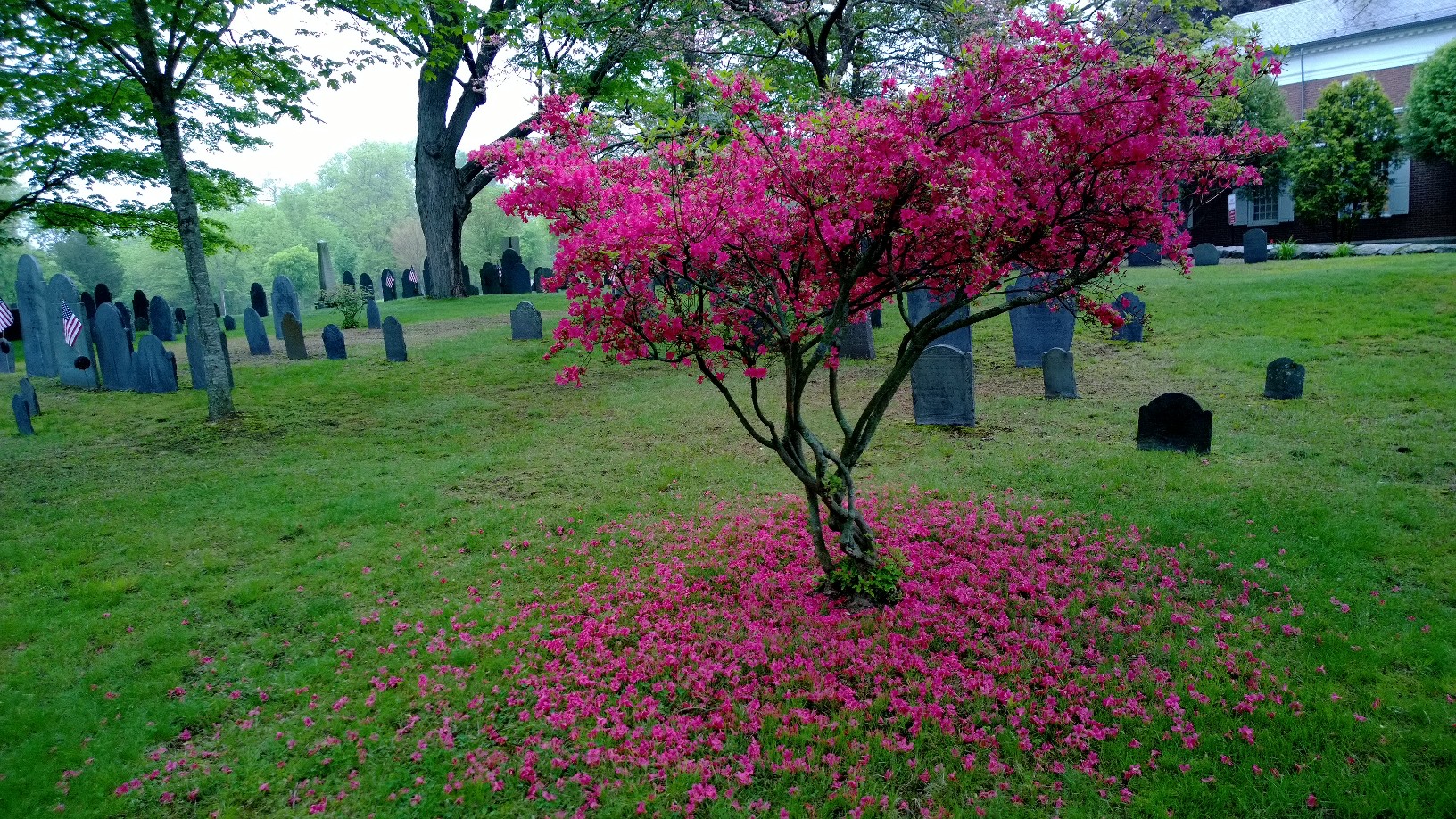
Azalea moving to the next phase

azalea-moving-to-next-stage

Read Full Post »

If you like trompe l’oeil painting — that sleight of hand that makes you think you are seeing one thing when it’s really another — you will love “invisible” architecture.

Writes Mallika Rao at the Huffington Post, ” ‘Invisible’ architecture isn’t a novel concept … But it’s an evolving one. Given the pace of technological change, an architect is never done finding fresh ways to make a building disappear.”

Consider the picture below.

“The revelation is the technology the architects chose not to use,” says Rao. “No fancy LEDs or futuristic materials are needed to build “Invisible Barn,” as the parallelogram-shaped structure pictured in Socrates Sculpture Park is known. The brainchild of the New York-based architecture firm stpmj, it’s designed to be made of wood and sheeted with mirror film, at a cost of $5,000.

“The idea is to ‘blur the perceptual boundary’ between object and setting, according to a statement sent by the architects to The Huffington Post. Niches built into the structure mean the experience changes the closer you get — up close, you can see where true birch trees turn into reflected ones. …

“If it seems whimsical, that’s because the idea was hatched for the Folly contest, an annual event held by the Architectural League of New York. The name references the age-old concept of the ‘architectural folly,’ a fanciful, small building typically set in a garden as a conversation starter.” More here.

Photo: stpmj, an architecture firm

Read Full Post »

Photo: Thomas Ondrey/The Plain Dealer
Zumba instructor Kelly Perkins, center, leads a group dance-walking  through Shaker Heights on Friday. The local version of the craze was organized by Shaker resident Jennifer Lehner.

Mary Ann is one of Cleveland’s biggest boosters. This week she’s been posting on Facebook about a dance-walk outing she joined Friday.

Janet Cho at the Cleveland Plain Dealer interviewed dance-walk organizer Jennifer Lehner.

“The idea came out of a backyard barbecue,” Cho writes. Lehner “was chatting with her friend Karen Katz, wife of Fire Food & Drink’s Doug Katz, about the fun YouTube video where WNBC television reporter Ben Aaron convinces New Yorkers to strut their stuff with him down the city streets.

” ‘We should do that!’ Katz said.

” ‘About one hour later I went home and bought the dancewalkfitness.com domain, set up the website and the Facebook page,’ she said. ‘You know, that’s just how I roll.’ …

“Lehner envisions tying the dance-walks in with her monthly Flash Cashers events, since the group might end up having lunch at a local restaurant after the workout.

“Flash-Cashers summons consumers to descend upon a local Shaker Heights-area business to spend at least $20 each during the cash mob event, giving the merchant a welcome one-night boost and increasing awareness among residents who may never have stepped foot in the store before.” Read more at the Cleveland Plain Dealer, here.

And here is Ben Aaron, who started the whole thing.

Read Full Post »

David Guttenfelder seems to get into North Korea and take pictures there more than anyone else, but what are you allowed to take pictures of in North Korea?

When Guttenfelder isn’t attending any official event, he improvises. He may have invented an art form in North Korea — artifact photography. He snaps bunches of plastic flowers in a hotel room, dinner menus, concert programs and labels them as “artifacts,” numbered.

No wonder he is involved with a new artifact museum, mmuseumm, which features the kooky things people collect.

Consider Toothpaste Tubes from Around the World, collected by Tucker Viemeister.  Says Viemeister, “Although I come from a ‘Crest family,’ I got my first tube of foreign toothpaste in Finland in 1985. We were shopping for normal stuff (Marimekko and toiletries). I saw a tube of toothpaste that’s [got a] name as long as the tube! They have long words in Finland.

“As I traveled around, I’d sample the toothpaste around the world. It was fun to buy and fit easily in my bag. Meanwhile it was an easy gift!

“I noticed that toothpaste is a universal media for indigenous people – a veritable blank canvas — both graphics on the generic tube and the flavors of the paste. French brands are more gourmet, Asian is more fruity, while American is very sharp (it this stereotyping?).” More here.

The museum is in Cortlandt Alley between Franklin St. and White St. in Manhattan.

(I wonder if my collection of wooden thread spools is extensive enough for a museum. I am afraid I lost the varied European toilet papers I collected on a trip at age 15.)


Read Full Post »

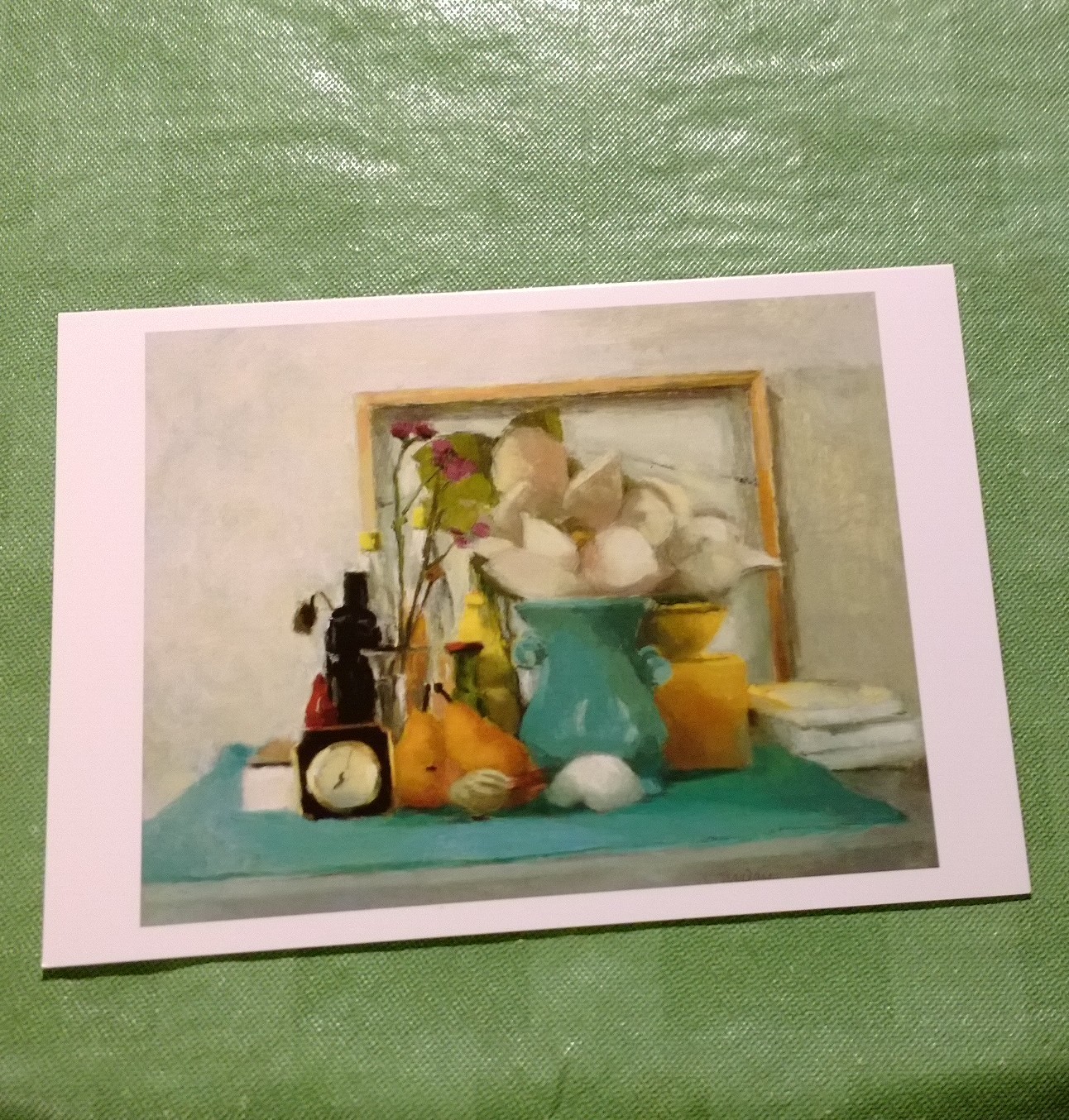
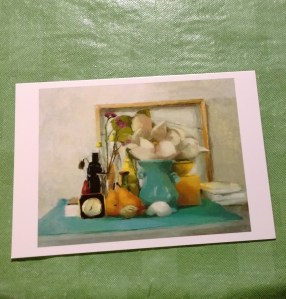
Fyfe-Day-repertoire-with-frame-cardGreeting card of Meredith Fyfe Day’s “Repertoire with Frame.”

Back in the early 1990s, I worked for Meredith Fyfe Day at Harte-Hanks newspapers, where we whipped into shape tottering stacks of press releases of wildly varying literacy.

That was Meredith’s day job. She was also a working artist. My husband and I have long enjoyed her shows, several of which were at the Whistler House Museum of Art in Lowell when Meredith was the artist in residence.

Recently a friend of hers tagged her on Facebook, which was how I learned that the Lowell Sun wrote an article on her latest artistic venture.

Reporter Debbie Hovanasian writes at the Sun, that Meredith “was recently awarded a grant from the Parker Foundation. The result is ‘Making Art with Artists,’ and Fife Day, who teaches painting at Middlesex Community College, couldn’t be more thrilled.

“During her prior experience teaching art to young students,’I could see the kids blossoming, even the tough kids who said they didn’t like art. I would encourage them and it would light a spark. They’d come back with such enthusiasm, and I fell in love with seeing that change in children,’ she said.

” ‘Making Art with Artists’ is a seven-week summer program offered on Tuesdays and Thursdays at no cost at Christ Church United on East Merrimack Street [Lowell, MA] …  with emphasis on fourth- to eighth-graders, she said.

“The program facilitates the teaching of art to under-resourced and under-served children, Fife Day said. The four teachers are experienced, working artists who will make a presentation of their own work to the students in two successive classes. …

“One of the program’s goals is for the children to adapt the techniques of the artists in order to make their own artwork as well as collaborative artwork, using their own and combined imaginations, Fife Day explained. It also aims to give children a positive alternative to high-risk behavior by giving them high quality educational opportunities …

“Fife Day is currently seeking community donors — food or funds — for a lunch program, which she plans to offer free of charge to the budding artists, a cost not covered within the grant.

“The day is structured so that the students work on individual projects in the morning and group projects in the afternoon. There’s also yoga after lunch and free time early morning and late afternoon, during which Fife Day is exploring having musicians and other volunteers willing to donate their time to entertain or supervise the children.

” ‘It’s about giving the children hope and letting them have fun believing in themselves, knowing that the next day can be as much fun as this one,’ she said.” More here.

Photo: Lowell Sun
Art by Meredith Fyfe Day

Read Full Post »

At the radio show Living on Earth, Steve Curwood recently interviewed Gary Cook of Greenpeace about an effort to get tech companies to be greener.

CURWOOD: “Back in 2012, you criticized Apple for using carbon-intensive energy from coal plants to power its servers. …

COOK: “Just after we spoke, they made a commitment to be 100 percent renewably powered, and as the end of last year, they even made that goal. So, it’s been quite a big shift.

CURWOOD: “100 percent renewable energy. How’s that possible?

COOK: “It requires some effort. Apple has done a lot in North Carolina where they have their largest data center in terms of deploying two different solar farms and an onsite fuel cell that’s powered with biogas energy, so it’s all renewable. They have several other data centers. … In Oregon they’re using wind; in Nevada they’re using solar.

“So they’ve actually shown a commitment from the top, been very aggressive, probably the most aggressive of any of the brands to make sure as they grow, they’re using clean energy.

CURWOOD: “Biogas. Where are they getting that from?’

COOK:” Currently, they’re getting that from landfill and some other renewable sources. The landfill is methane capture in the southeast, and they’re having that piped to where their data center is in North Carolina.”

The radio interview covers several other efforts tech companies are making. It’s a good thing, too, when you consider, as Living on Earth points out, “If the Internet were a country, it would be the sixth largest consumer of electricity in the world.” More here.

Photo: George Nikitin, Greenpeace
The Greenpeace Airship A.E. Bates flies over Facebook headquarters with a banners reading “Building a Greener Internet” and “Who’s The Next To Go Green?” Apple, Facebook and Google have committed to powering their data centers with renewable energy.

Read Full Post »
I love the Fort Point area of Boston, across a channel from where I work. But even on a moderately stormy day, the water rises so high it threatens to overflow the banks. So the thinking behind one of the latest art installations there is no joke.

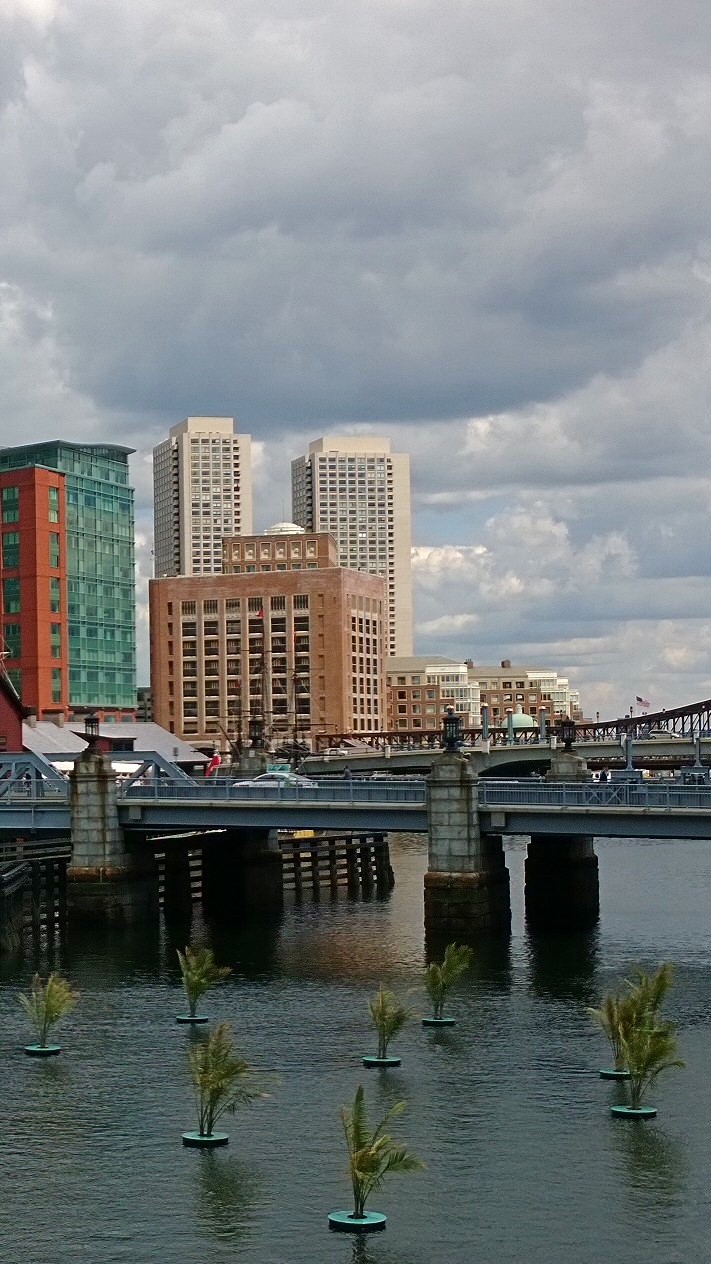
Peter Agoos’s “Tropical Fort Point” ( April 28 – June 15, 2014) is part of the the spring public art series presented by the Fort Point Arts Community Inc. Agoos says about his floating palm trees, “The struggle for quality public open space in the neighborhood and the likelihood of climate change-induced rising sea levels are the conceptual parents of Tropical Fort Point.”

There are several other new presentations around the area. “I Wandered,” by Kate Gilbert and Karen Shanley, “celebrates the joyous arrival of spring and invites you to explore the Fort Point through poetry. Large graphic daffodils and select phrases from ‘I Wandered Lonely As a Cloud,’ William Wordsworth’s 1807 poem about discovering a ‘host of dancing daffodils,’ can be found in five different spots around the neighborhood—encouraging us to … reconnect with the lost art of meditative walking.”

“Silver Lining,” by Elisa Hamilton, “is an inclusive exploration of our relationship with hope that invites the public to engage in the brilliance of possibility.” See photos and artist statements at Fort Point Arts, here.

Agoos-Tropical-Fort-Point

palm-trees-visit-Boston


Read Full Post »
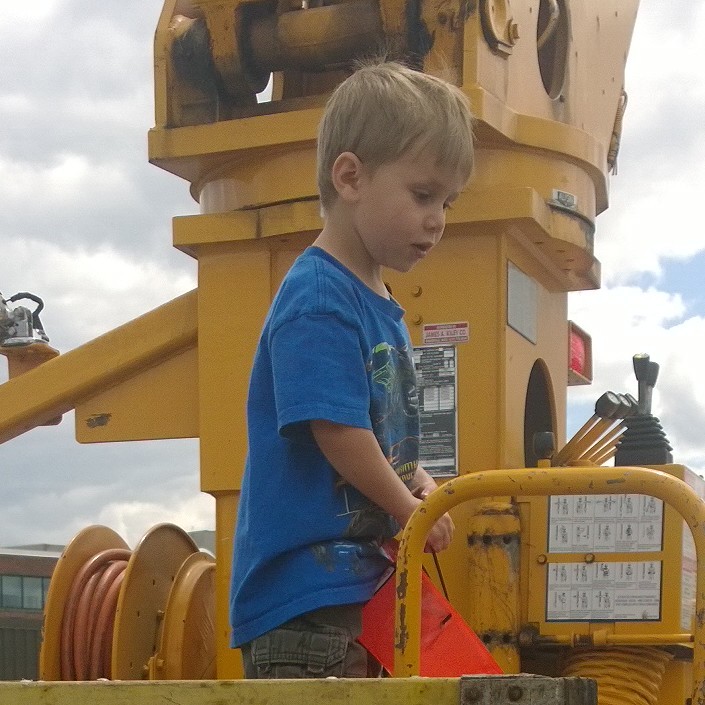
Kids ages 3 to 5 seem to have a strong compulsion to check out trucks up close. So when organizations like Concord Recreation decide to do a little fundraising by providing the opportunity, parents of preschoolers know they just have to go.

I was walking back from the store when John’s wife and son pulled up and said they were on their way to Touch a Truck. I couldn’t resist. I said we’d meet them there.

I don’t know the names of all the trucks, but I can tell you the array included an ice cream truck, a fire engine, a police van, a front loader, and a truck for drilling telephone pole holes. There was one with a bucket for raising a person up high. My husband pointed out the rubber gloves you have to wear if you’re working around high-voltage lines. He explained how many times the gloves get dipped in rubber and carefully checked during the manufacturing process.

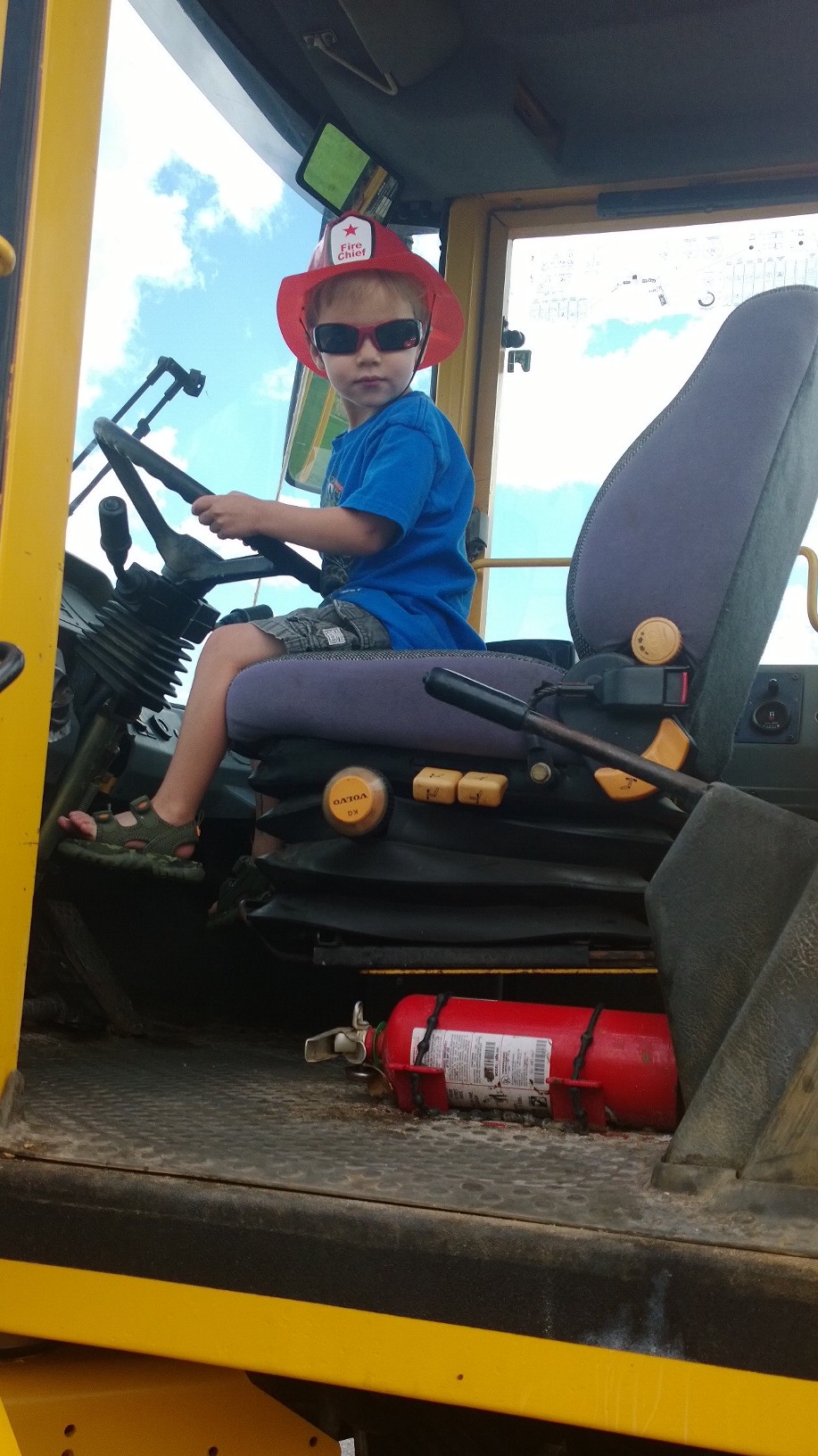
My grandson tried all the trucks. You can see that it’s fairly serious business.

051814-touch-a-truck

serious-truck-driver


checking-out-the-truck

Read Full Post »
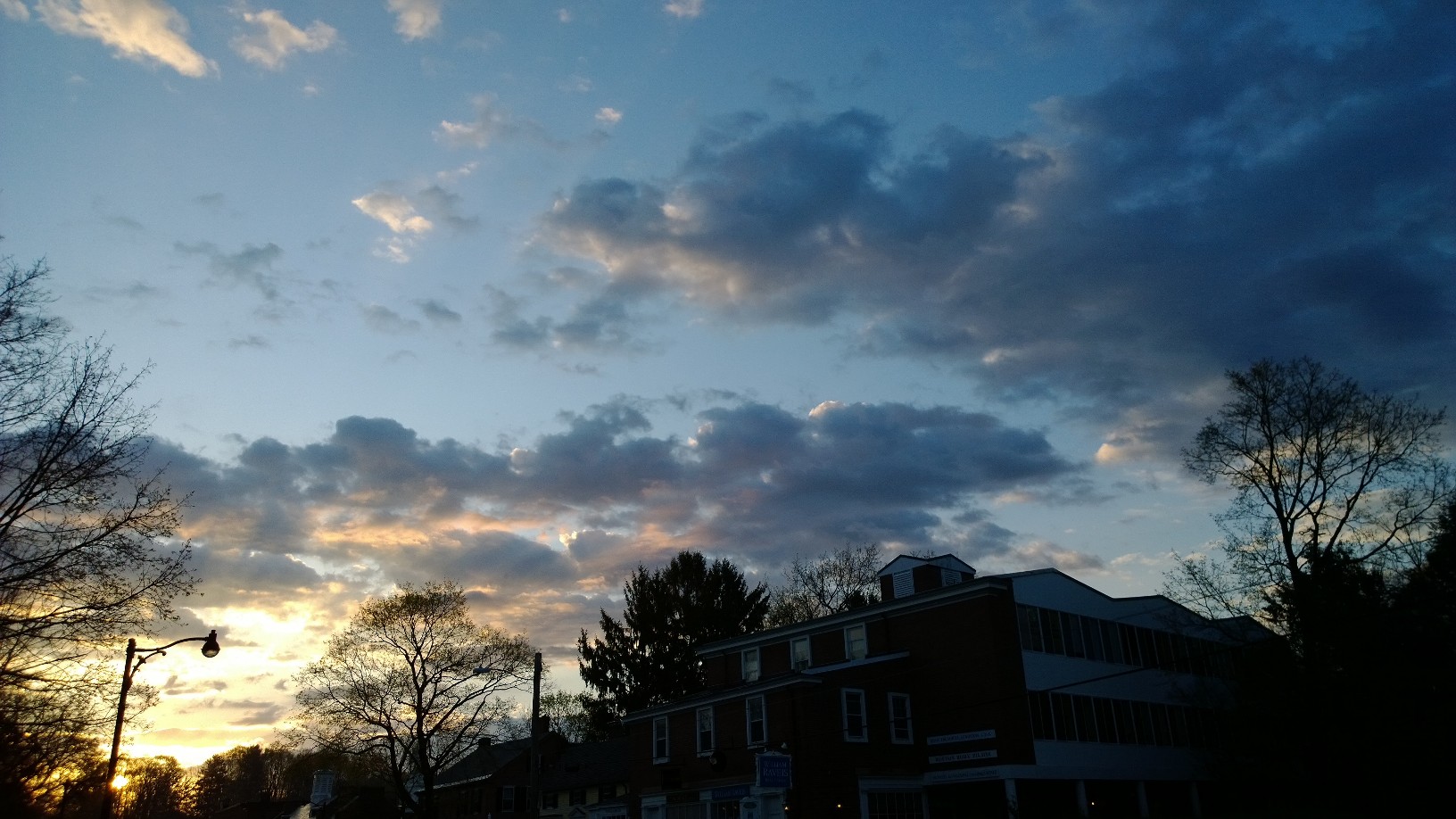
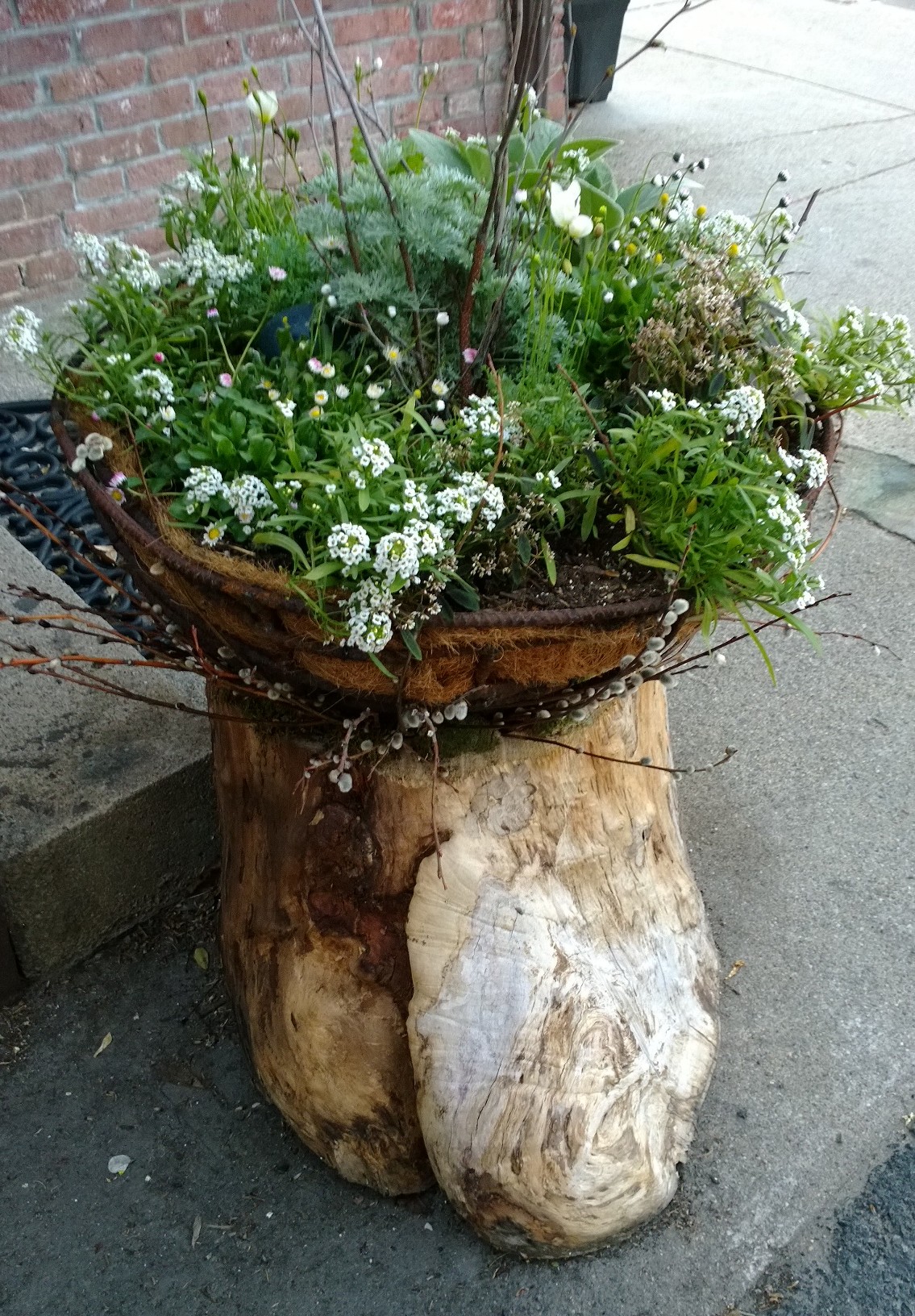
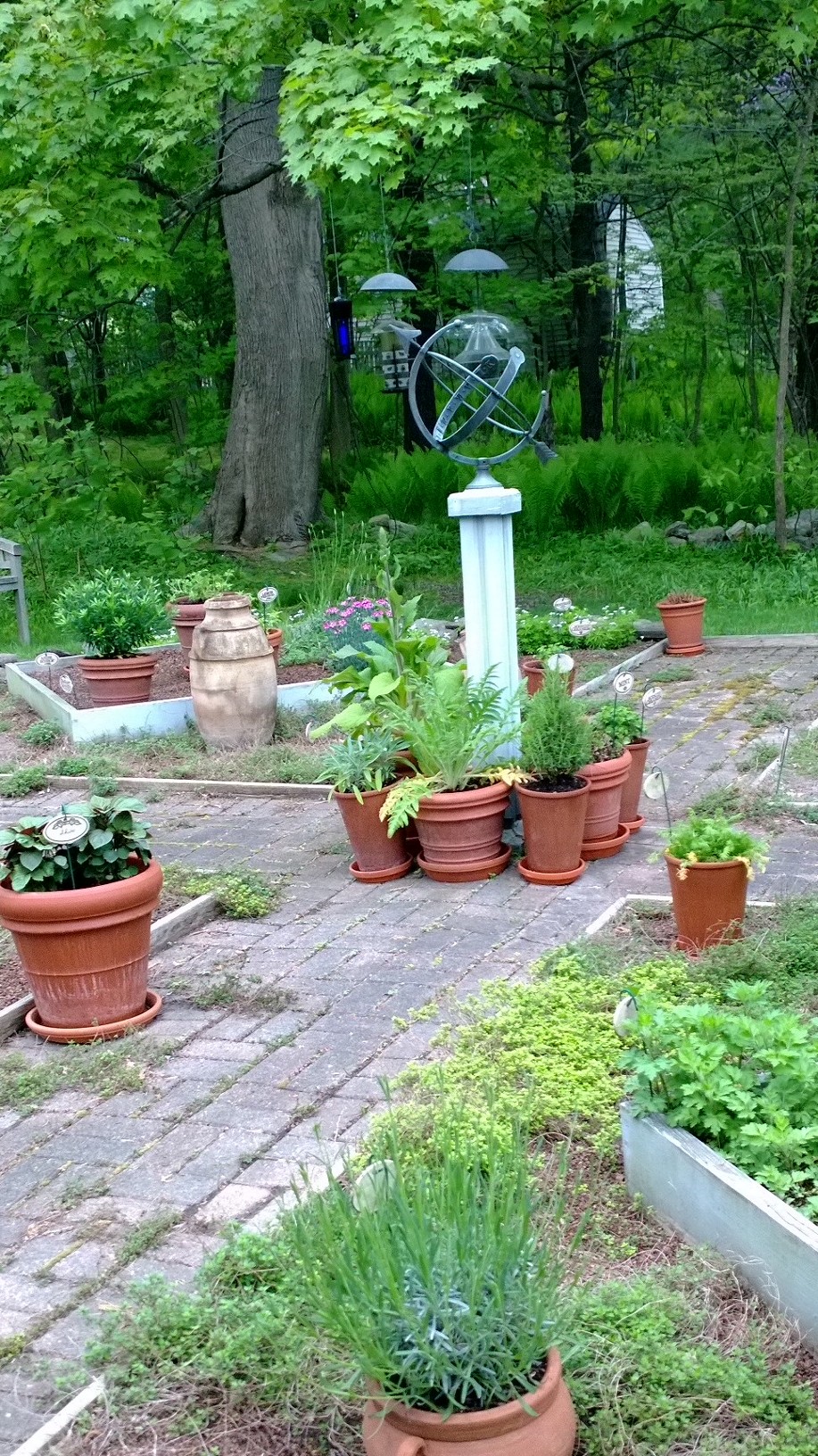
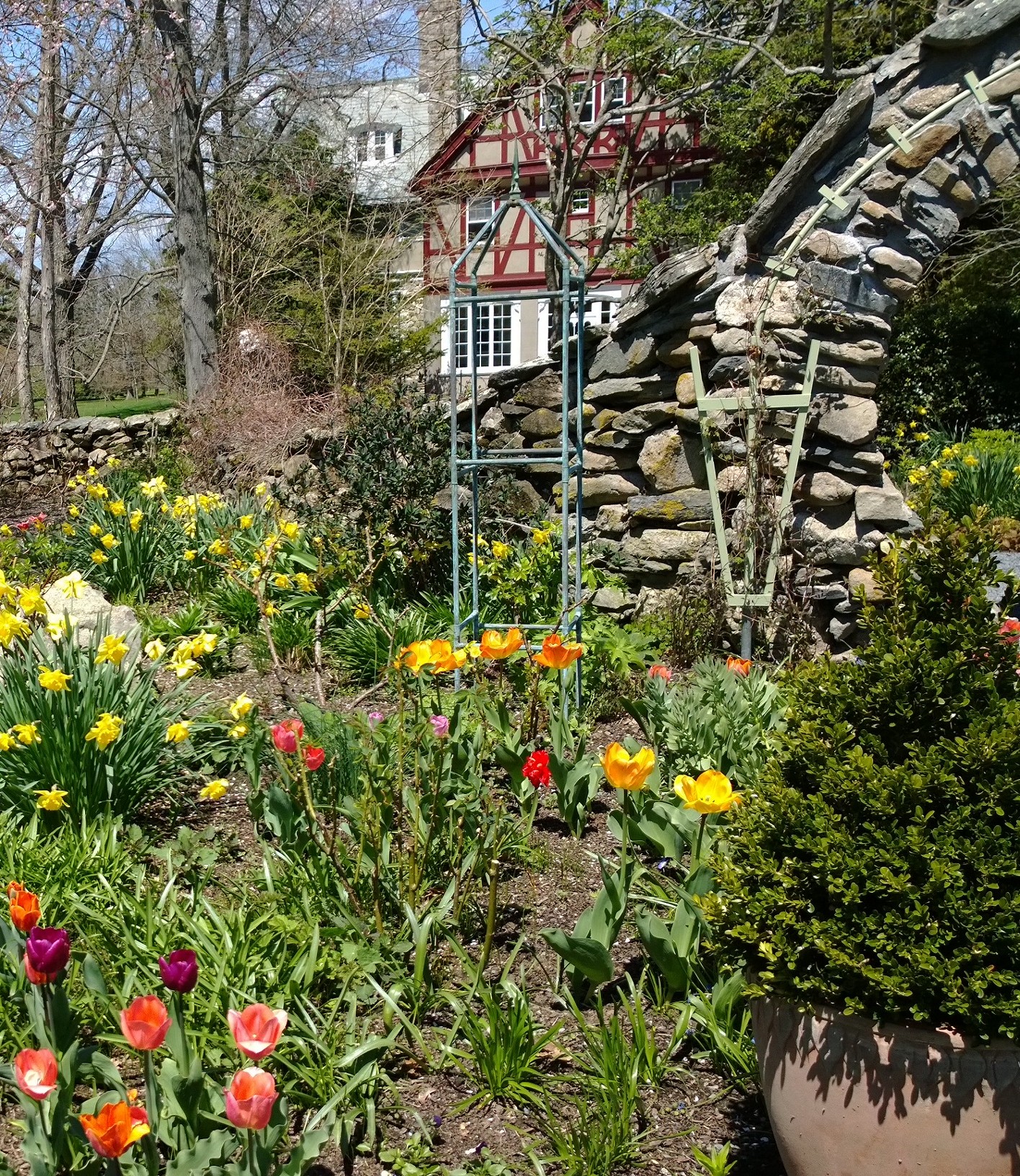
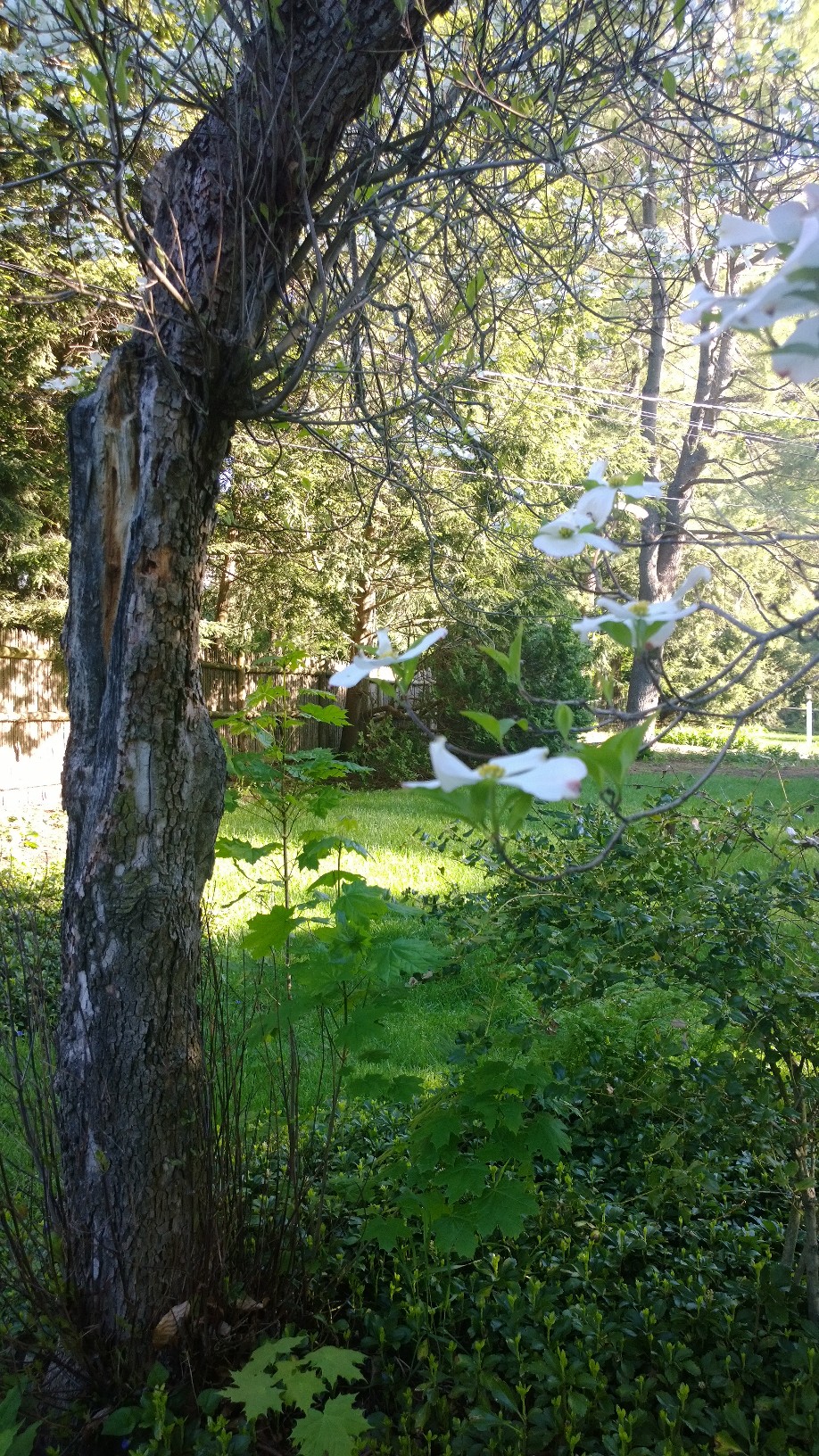
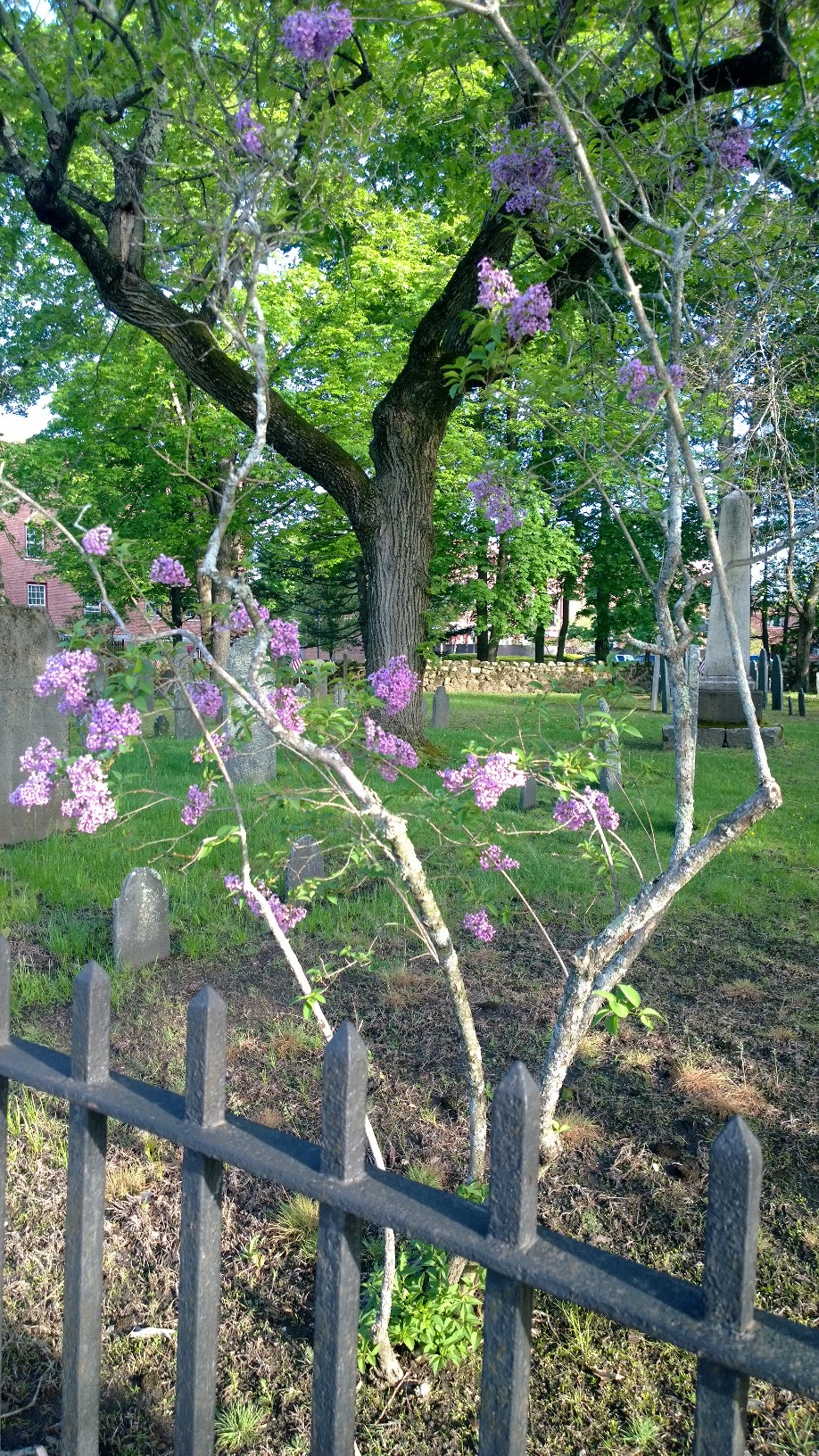
These photos are mostly from walks in Concord, although one is from Blithewold in Bristol, R.I. I’d like to develop my eye for good shots in winter, but there are so many more reasons to take pictures in spring! I especially love old, blasted trees with delicate, young flowers. I include one, a dogwood. The lilac in the graveyard is another tree that doesn’t know it’s not as hale and hearty as ever.

On Nashawtuc, a hundred different bird calls replaced the sounds of traffic.

Morning-sky-050214

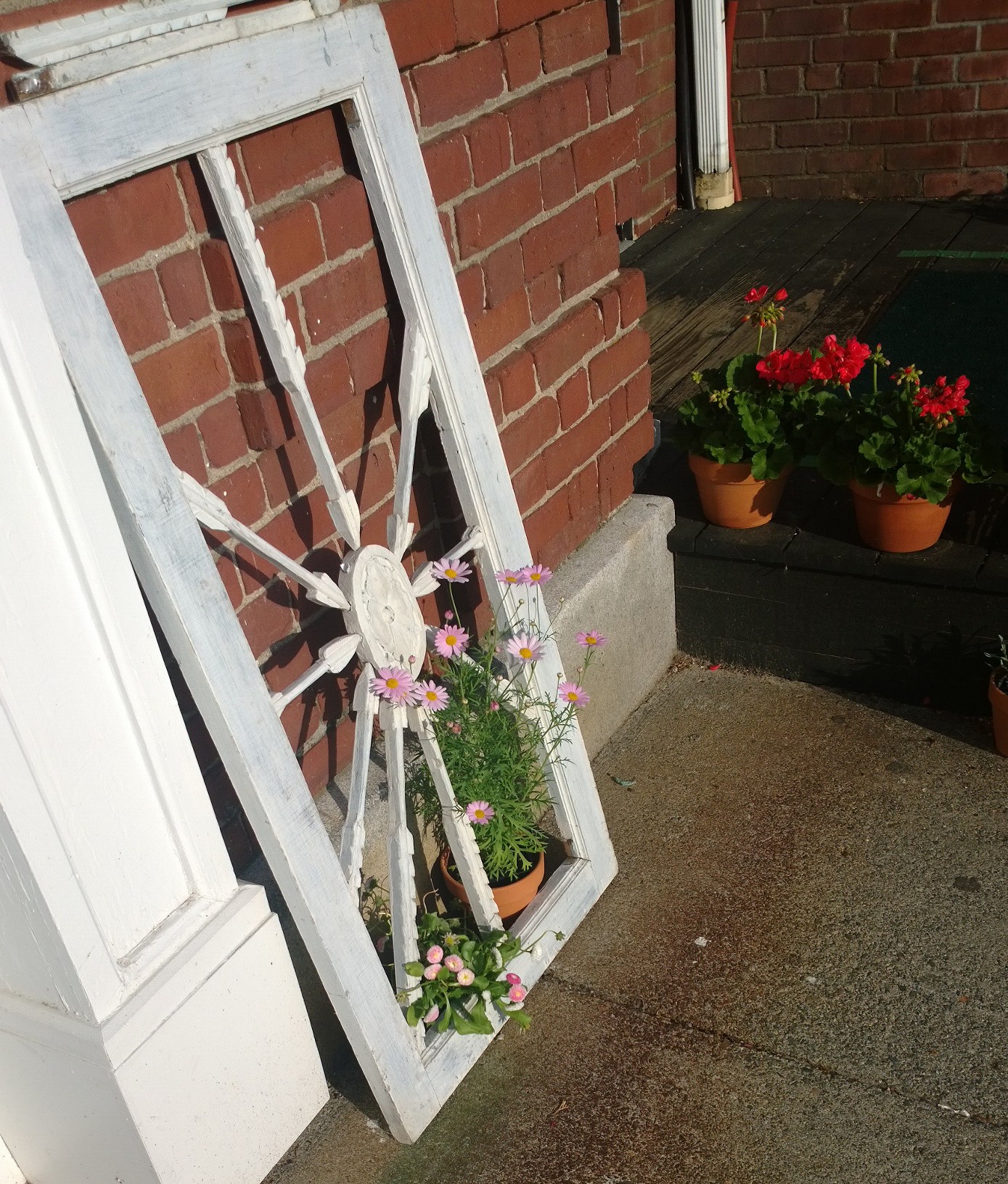
rustic-flower-basket


church-herb-gaarden

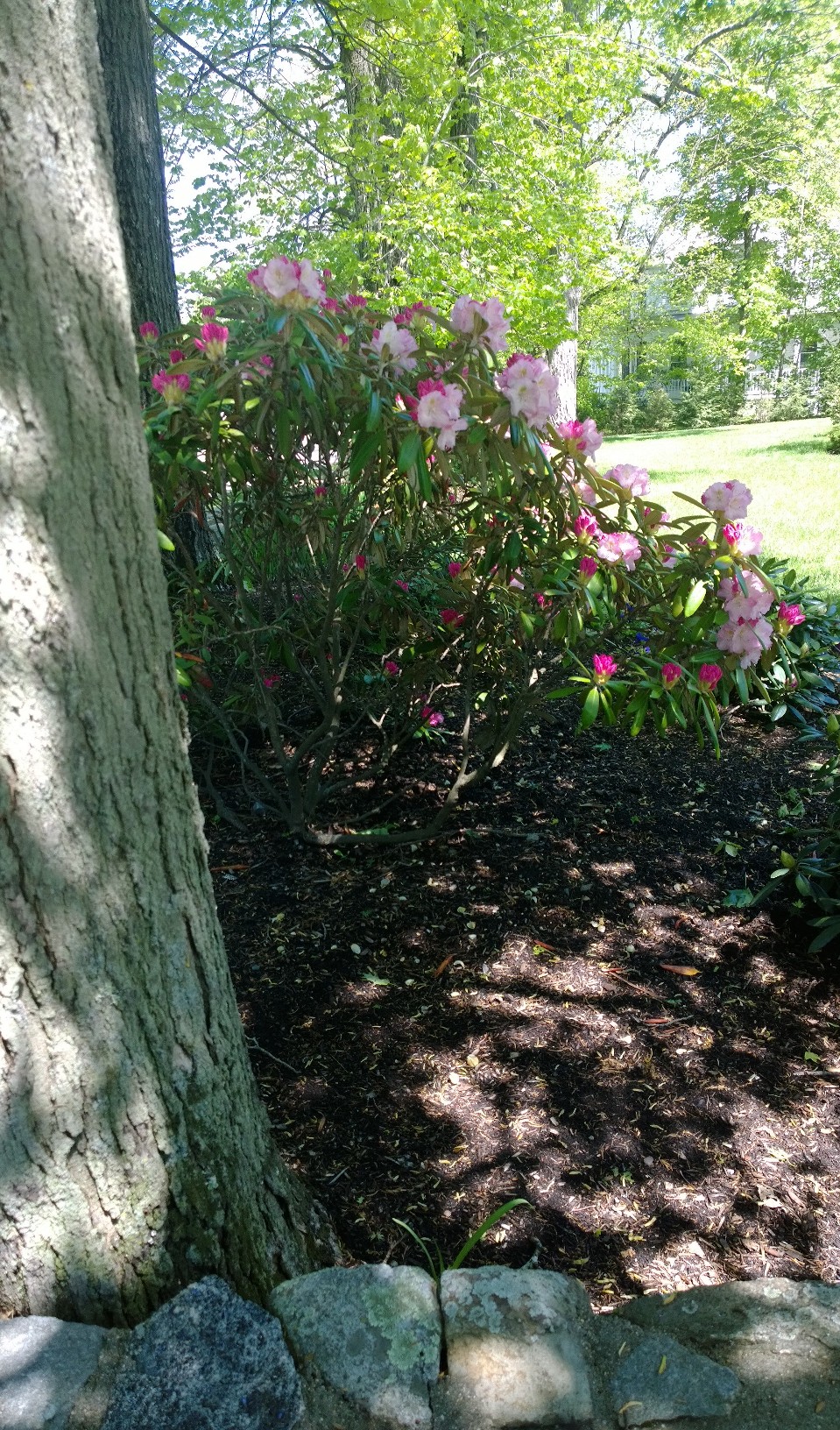
dappled-rhodies


red-impatiens


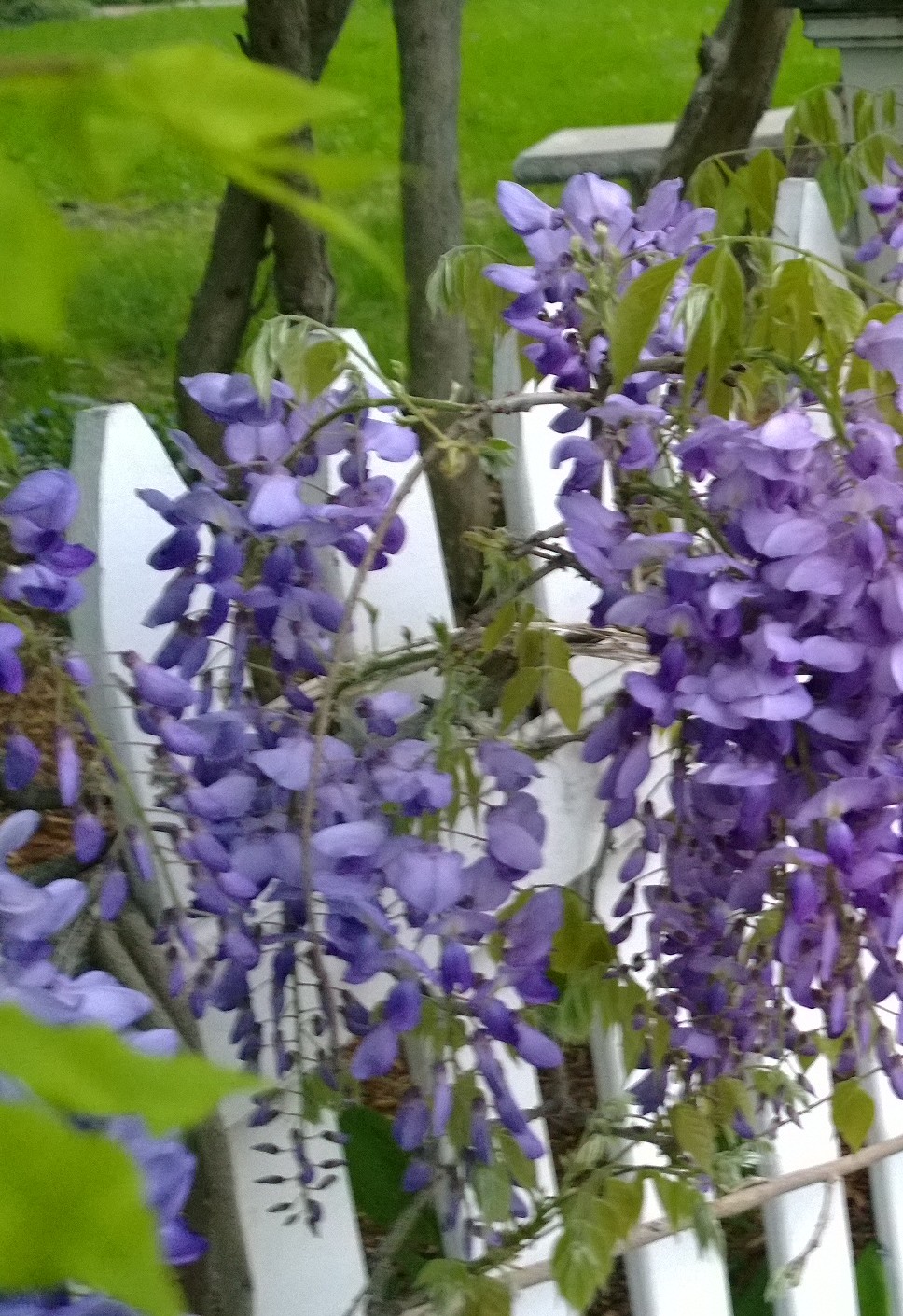
wisteria-at-dawn


flowers-at-Blithewold

bondir-landscaping


crippled-but-flowering-dogwood

lilac-in-graveyard


Read Full Post »
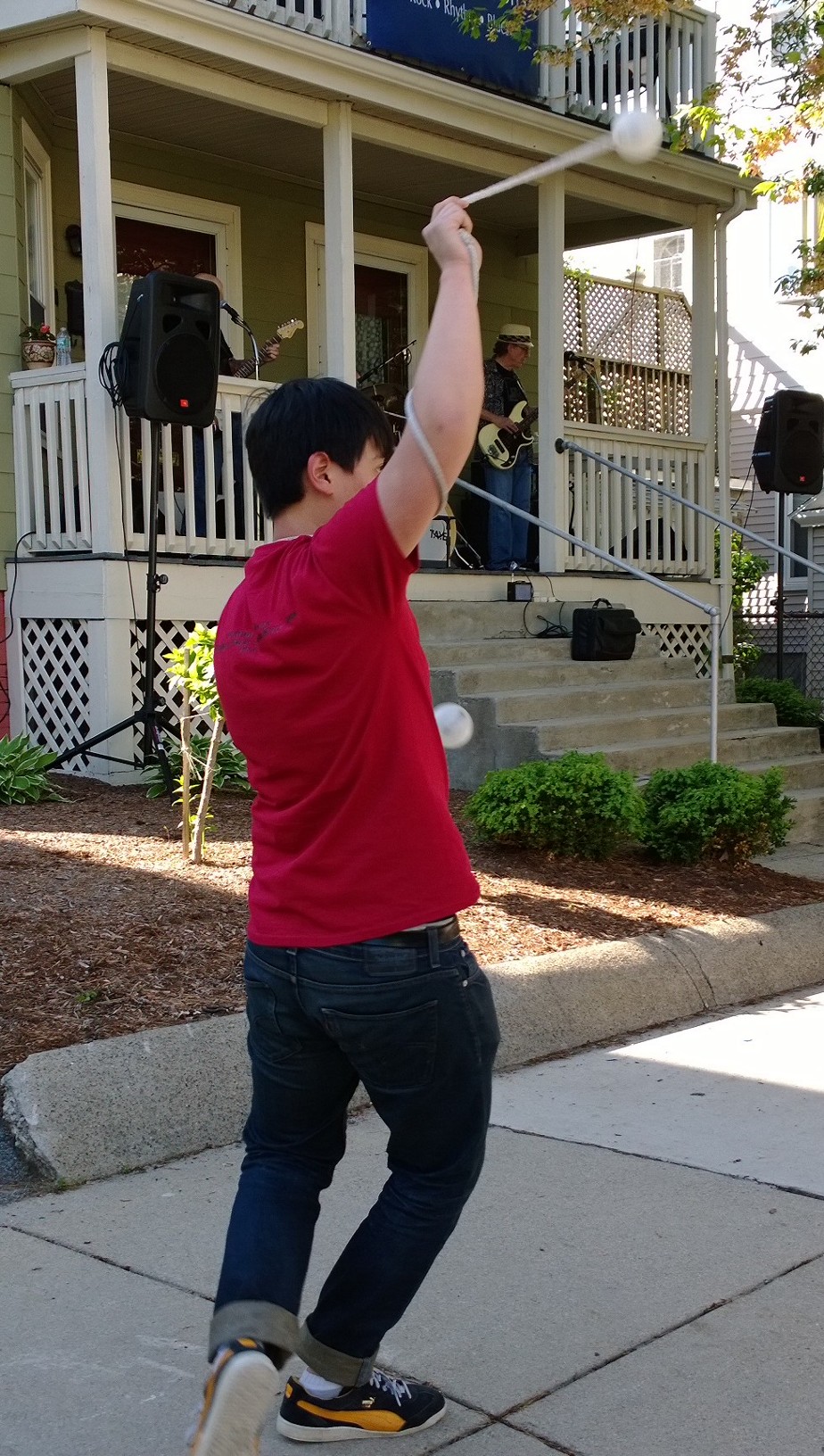
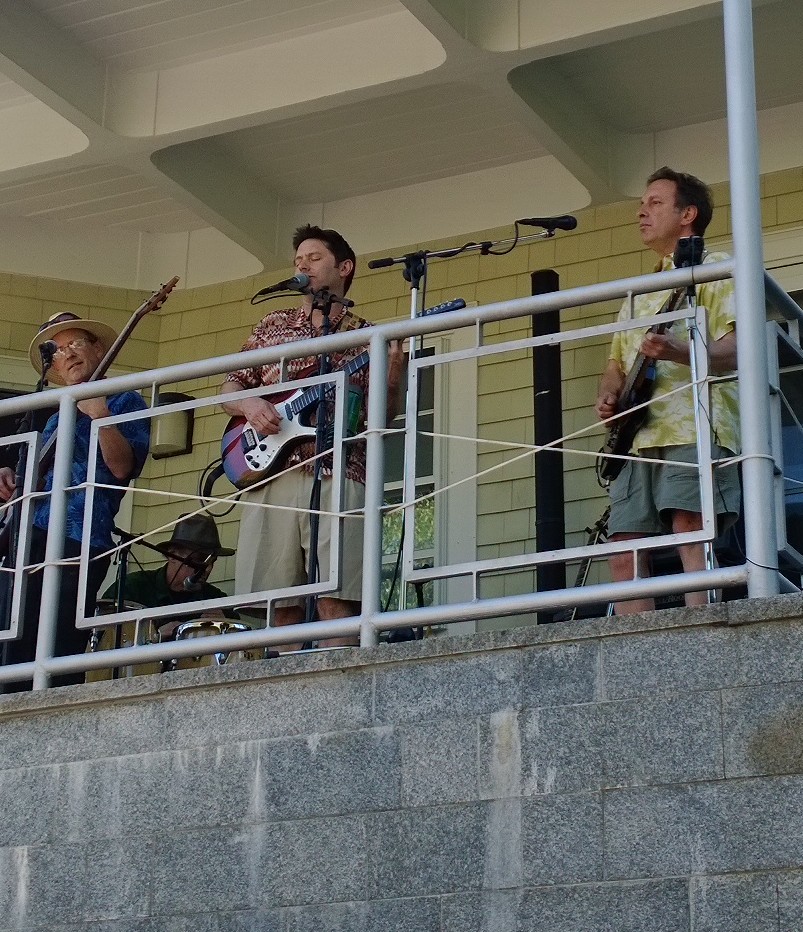
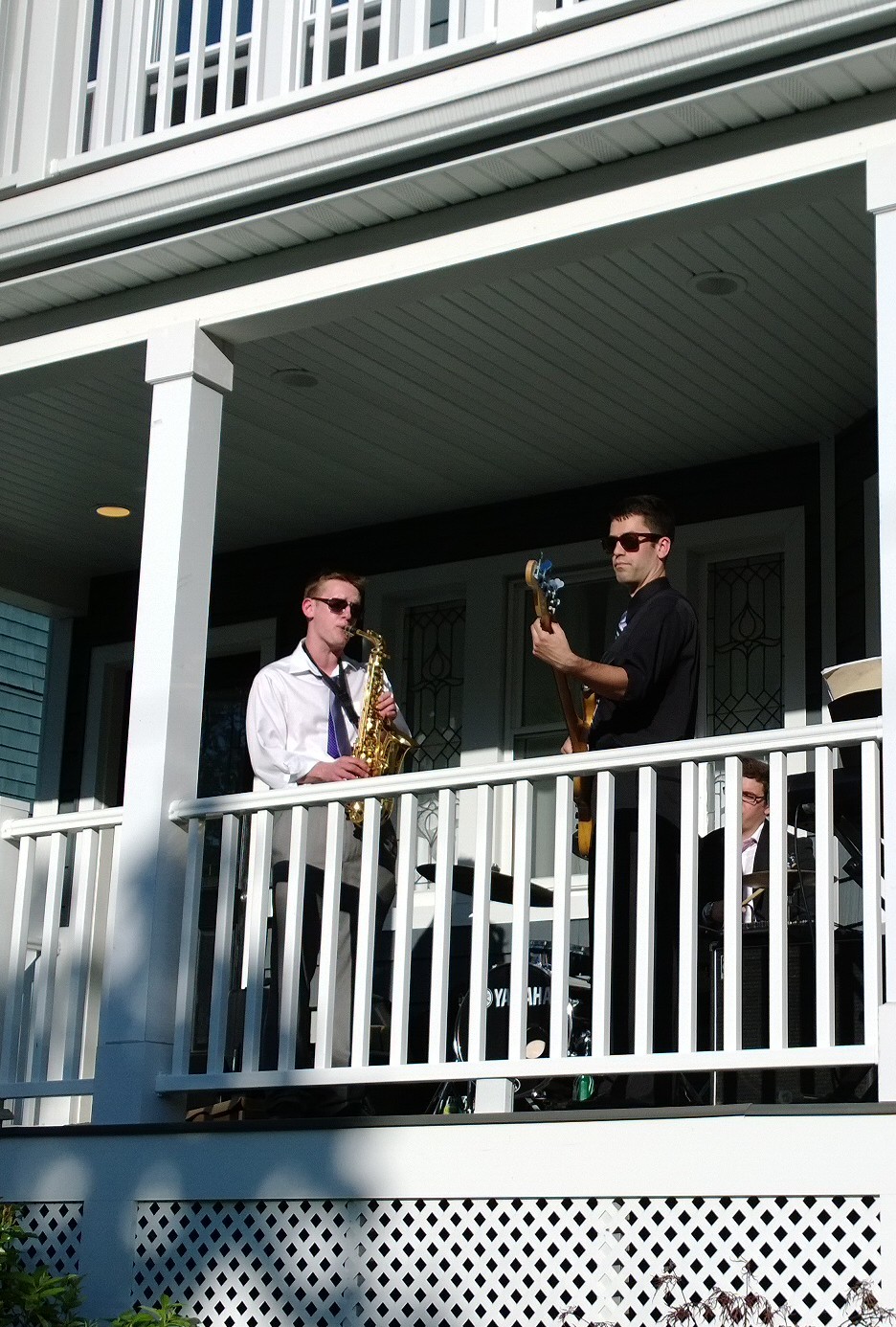
The rainy Saturday turned out to be gorgeous, so we went to the Somerville PorchFest and ran into some people we know.

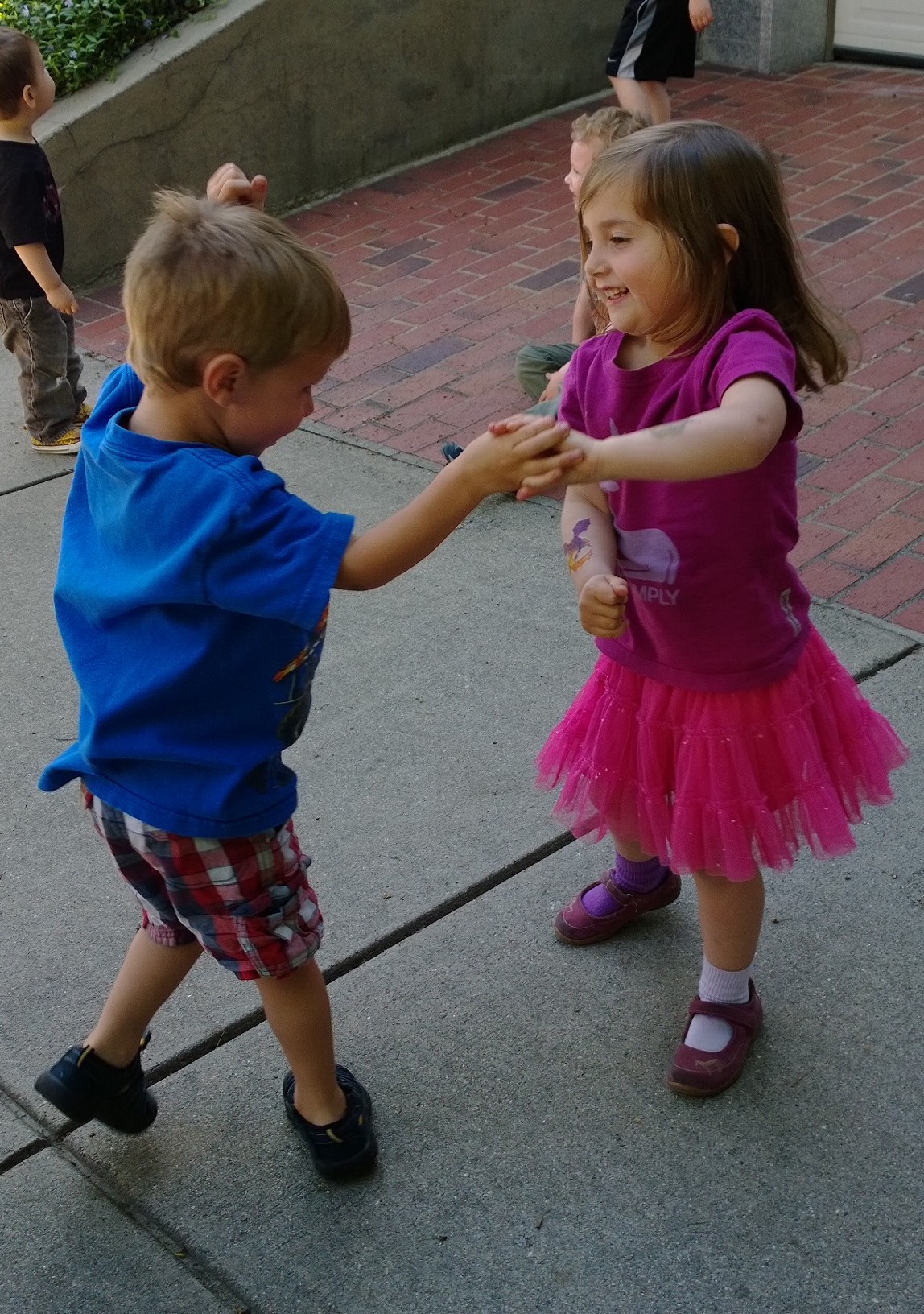
A variety of bands play on porches around the town.  Neighbors sit on their steps to listen, families and college students wander in, entertainers entertain, and almost everyone is moved to dance.

My grandson and his best friend are pictured cutting a rug.

Read about this annual event here.

one-porch-fest-band

somerville-porchfest-051714


twirling-balls-on-string

dancers-at-porch-fest


Read Full Post »
What’s not to love about Rhode Island? OK, a few shady politicians, high unemployment, low graduation rates — I get it. But Rhode Islanders definitely overdo the “ain’t it awful” schtick.

Architectural Digest has just named Providence the best small city in America for a host of good reasons (thanks for that tip, Suzanne), and if you like “quirky,” Rhode Island has lots of that, too. No one would ever call a big state quirky. For some characteristics, small is better.

Speaking of quirky, this story was passed along by Kate C. It’s about a creative-writing instructor at Brown University who is worried enough about global warming to set up a booth in a public park to commiserate with others about the issue.

Philip Eil writes in the Providence Phoenix,  “It is a crisp Tuesday afternoon in May at Burnside Park in downtown Providence. …

“A few minutes after 2:30 pm, Kate Schapira arrives at the south entrance of the park, pulling a bright red metal hand truck. Over the next few minutes, she unpacks and arranges items from the truck: a small wooden desk; a wooden stool; a rainbow-colored beach umbrella with a white plastic stand; a box containing a stack of homemade cardboard “RI IS MY HOME” cards, each with its own labeled sketch of local flora and fauna (“Eastern Chipmunk/Tamias Striatus,” “House Sparrow/Passer Domesticus”); a glass jar labeled “DONATIONS OF 5¢ FOR ENVIRONMENTAL JUSTICE LEAGUE OF RI”; a pad of poster-sized paper with a hand drawn map of the state of Rhode Island under the words “PUT YOUR WORRIES ON THE MAP”; and two cardboard signs to be affixed to front of the table that read “CLIMATE ANXIETY COUNSELING 5¢” and “THE DOCTOR IS IN.” …

“Today is the first day of Schapira’s Climate Anxiety Counseling. Over the next four weeks, the 35-year-old poet and Brown University creative writing instructor will report to this spot, five days a week, for three hours per shift (two on Saturdays), to talk with passersby about the Earth’s changing climate.” More here.

If you have ever cherished time spent in accommodations overlooking one of Rhode Island’s magnificent beaches, you might like to stop in for a visit with the “doctor” and discuss what might be done to keep the lovely Ocean State from acquiring too much ocean.

Photo: Providence Phoenix

Read Full Post »

Kai sent a link to a story about a guy who has his mother living in a tiny house in his backyard.

I had to laugh. The house is about the size of my garage, and as much fun as it would be to live in a child’s playhouse, I can’t imagine what a born pack rat would do with all her clutter. (Not to mention, how many grown children want a parent living in the backyard?)

Sandy Keenan reports in the NY Times, “In most cities, adding a second house to a single-family lot would be illegal or would set off an epic battle with the neighbors that could drag on for years. But not in Portland, Ore.

“There, this kind of housing — referred to officially as ‘accessory dwelling units,’ but better known as granny flats, garage apartments or alley houses — is being welcomed and even encouraged, thanks to friendly zoning laws. And additional living spaces are springing up everywhere, providing affordable housing without changing the feeling or texture of established neighborhoods the way high-rise developments can. …

“Eric Engstrom, a principal city planner, has seen these small structures become increasingly popular during his 16 years working for the city. And as he put it, ‘Given the low vacancy rate, when they’re done, you can rent them out in about an hour.’ Which means that adding an accessory dwelling unit, or A.D.U., increases the value of a piece of property. …

“It was in 2010 when the biggest changes took place. That was when the city relaxed the limitations on size and began offering the equivalent of a cash incentive by waiving the hefty fees usually levied on new development. Other cities in the Northwest have been moving in this direction, but Portland is the first to offer a significant financial benefit and one of the few that does not require owners to live on the site, provide additional off-street parking or secure the approval of their neighbors.” More.

I know of at least one resort community that allows accessory apartments for family members. It’s a good idea, but there’s always the worry that in the season, some folks will just rent them out to tourists and still need a place to stay.

Photo: Laure Joliet for The New York Times
A 480-square-foot garage, now a home: one of many small dwellings encouraged by the city of Portland, Ore.

Read Full Post »

The radio show Living on Earth is a source of information that I find delightful — not only because the topics are about nature but because they are sometimes so offbeat.

Recently the focus was on a new species in the ocean under the ice.

“Under the Antarctic ice lurk newly discovered sea anemones. Frank Rack, Executive Director of the U.S. Antarctic Geological Drilling team, tells host by Steve Curwood about how the team discovered this new species that hangs upside down from the Ross Ice Shelf. …

CURWOOD: “A team from ANDRILL, that’s the Antarctic Geological Drilling, has discovered a new type of sea anemone, while testing a remotely operated vehicle under the Ross Ice Shelf off Antarctica. The researchers are geologists and sedimentologists. The director of the team is Frank Rack from University of Nebraska.

RACK: “We were melting holes through the 270 meters of ice. We were deploying oceanographic sensors to measure current speed and direction. …

CURWOOD: “How long did it take you to find sea anemones down there?

RACK: “It was a total surprise. We melted a hole through the ice, and we had been running a camera down to the sea floor and back up. And in those observations, the ice shelf looked plain and featureless, but when we put down the robot and had more sensitive camera systems and could get very close to the bottom of the ice, that’s where the anemones appeared. They were quite numerous and widespread, and they were living in burrows in the bottom of the ice shelf, hanging upside down into the water column. …

CURWOOD: “So if they’re on the bottom of the ice, way down under the sea, they’re upside down, they’re hanging down like bats, huh?

RACK: “They are. They’re at about 230 meters below the sea level, and then there’s another 650 to 680 meters of water below. So the currents are circulating water across the continental shelf and up underneath the floating ice shelf, and the anemones are feeding and surviving in that environment.”

Read the whole transcript here.

Photo: Frank R. Rack, ANDRILL Science Management Office, University of Nebraska-Lincoln
An underwater picture of the sea anemones.


Read Full Post »

Over at Bill Littlefield’s Only a Game on WBUR radio, Karen Given recently provided the background on athletic banners made in New England. The radio show is entertaining for all sorts of listeners as it covers anything remotely related to sports.

“The sewing room at New England Flag and Banner is humming with activity,” says Given. “It’s been that way for a while now — the company’s been around since 1892. The current owner, Ned Flynn, has only been in charge since 2006. …

“Among the photos on Flynn’s wall is one of Fenway Park, adorned with red, white, and blue bunting to celebrate the return of baseball after World War II.”

After a mini tour, Given describes the banner-making process: “Staples temporarily hold together full sheets of brightly colored fabric — usually nylon. The paper is used as a stencil to mark the pattern, but the design isn’t cut out. At least not yet.

“Skilled sewers, some of whom have been working here for 30 years, deftly zigzag around the stenciled marks. And finally, the extra fabric is cut off by hand, layer by layer, revealing the design.

“ ‘It’s counterintuitive,’ Flynn said. ‘People think we sew letters on and sew logos on. It’s actually the opposite. What we do is sew the image on and then we cut everything around it off.’ ” More here.

I like to read about longtime businesses like this chugging along in New England. I also like reading about start-up businesses. With three entrepreneurs in the family — including Suzanne (Luna&Stella), Erik (Nordic Technology Group), and John (Optics for Hire) — I am pretty sure the local economy is going to be OK.

Photo: Karen Given/Only a Game

Read Full Post »

« Newer Posts - Older Posts »