Feeds:
Posts
Comments

Archive for the ‘Uncategorized’ Category

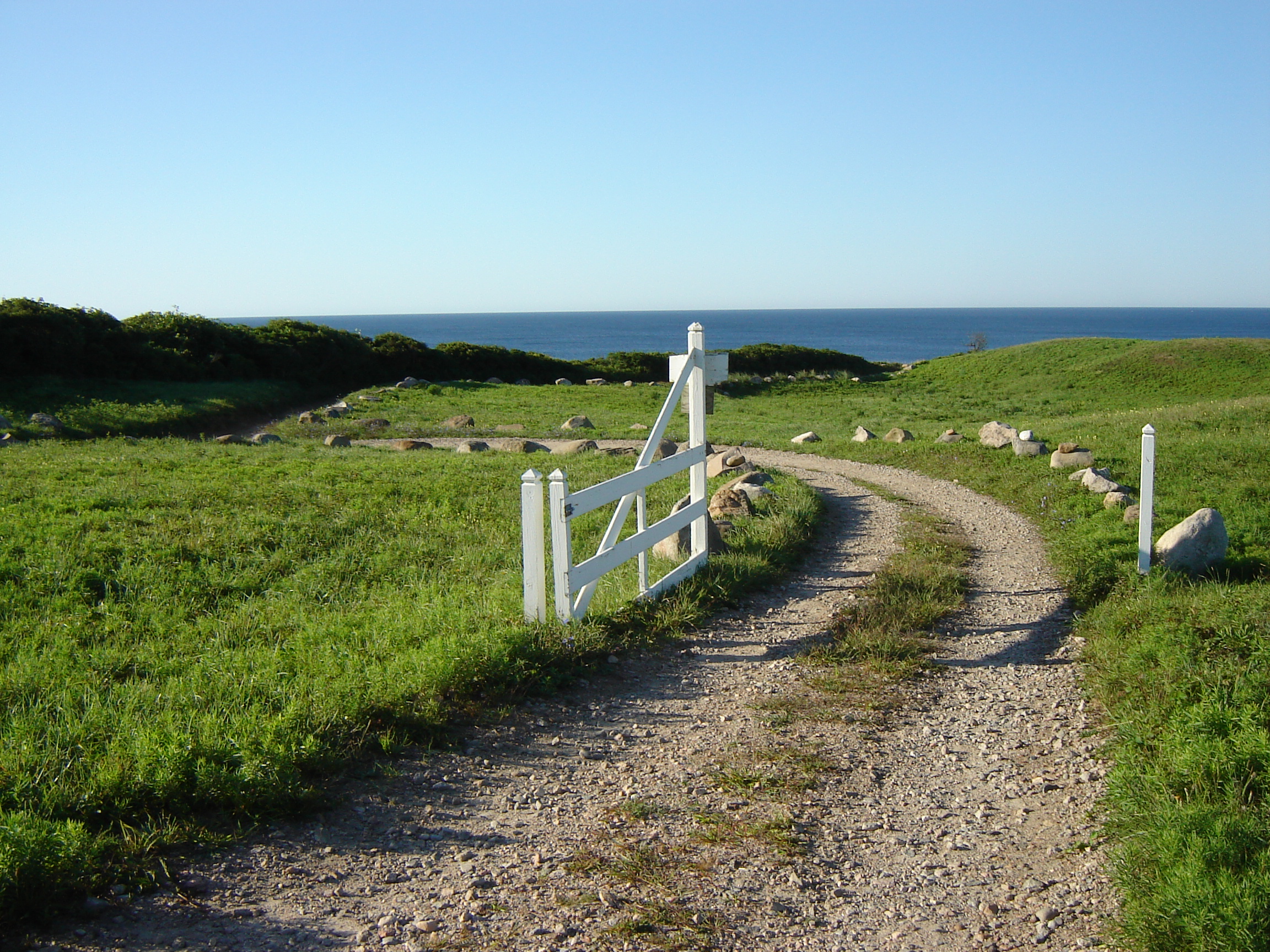
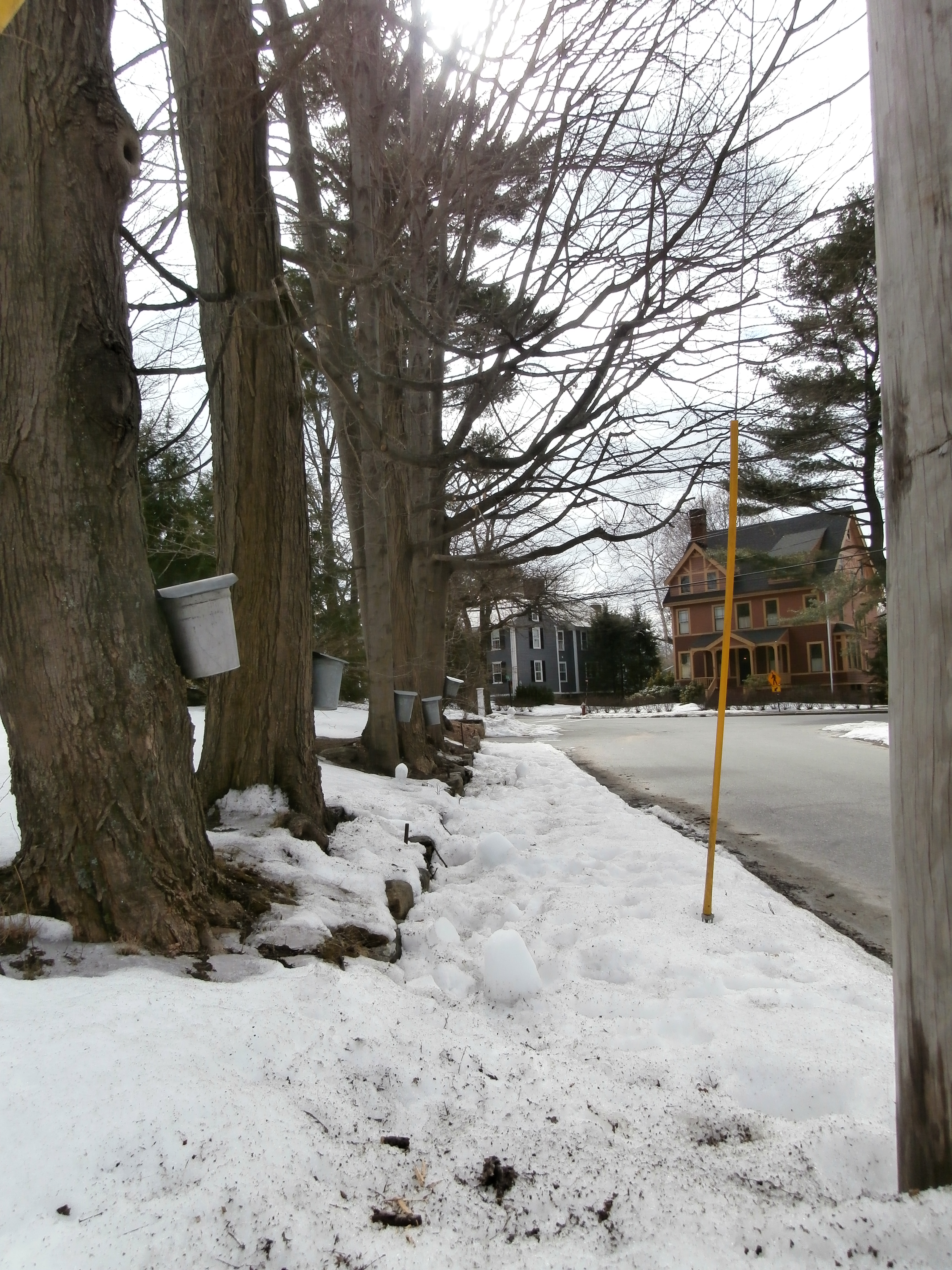
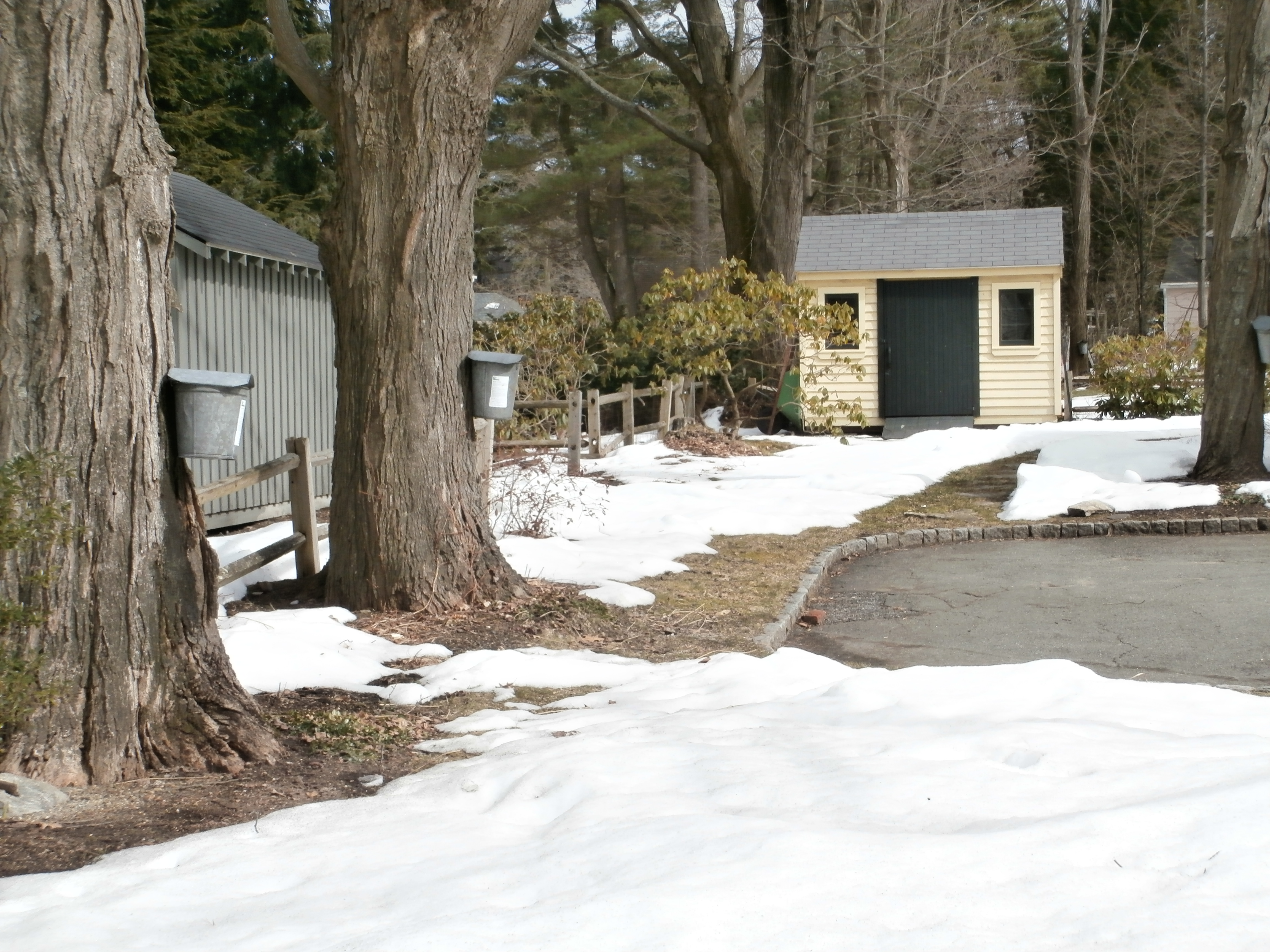
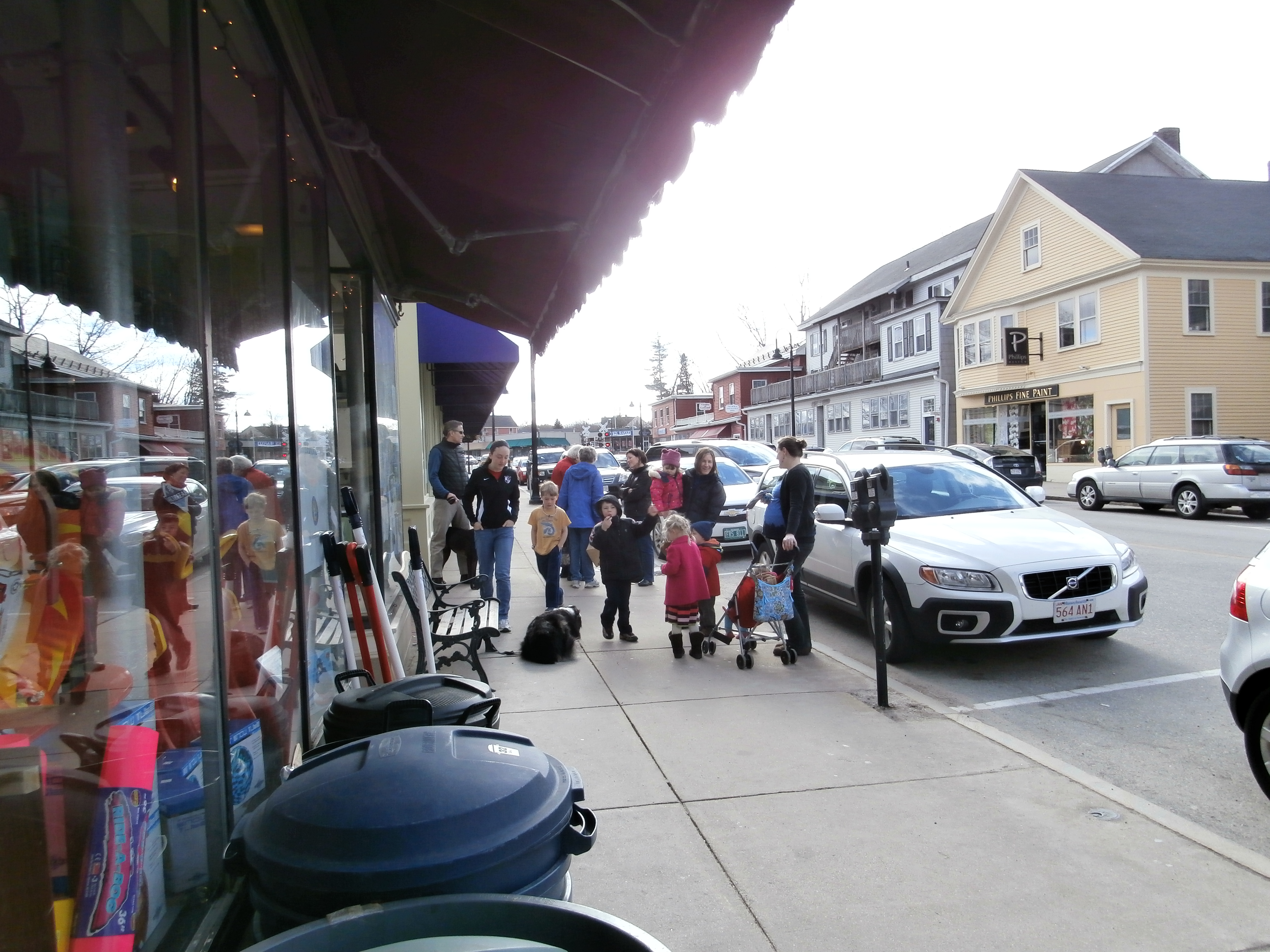
Here are new pictures. They invite questions.

Who lives in the small house? Is the hole in the wall an entrance or an escape route? Why are the tree trunks yellow? Who put a new house number on an overgrown foundation? And where has that car been?

Hypotheses welcome.

Read Full Post »

I noted the little blue talisman but didn’t stop, walking on toward the path. Then I turned back. “Asakiyume would take a picture,” I thought. On the way back up the path I saw the little white talisman.


Read Full Post »

I’m a sucker for a good title. I even bought a novel once just because I liked the title — Time Will Darken It. (I didn’t like the book, but what a great title!)

So here I am recommending a song by Greg Brown called “Playing the Poet Game.” The other words are good, too. See how you like them.

As wistful as the lyrics are, you could do worse than play the poet game. I know someone who is building a fine reputation as a poet today. It is clearly a better arena than the one he was in before. He was active in politics and got carried away with his enthusiasm for one guy and his fear of what would happen if the other guy won. He broke the law. And paid for it.

Today, his poetry is enriched by his hard life lessons.

Poetry is good for everyone because, at its best, it is first cousin to truth.

Read Full Post »

In a recent article in the NY Times, Kathryn Shattuck described a festival that took place on “600 acres of pasture and test plots at the Land Institute on the outskirts of Salina, Kansas. …

“Each autumn for 34 years, during its annual Prairie Festival, this nonprofit research organization has become a Mecca of sorts for those whose passions run to sustainability, farming and feeding the world.

“For two days, Friday evening through Sunday afternoon, lectures and walking tours, interspersed with art installations and musical performances, focused on climate change, agricultural practices and what the institute’s president, Wes Jackson, called ‘getting over the hump’ in the use of carbon-based energy sources. …

“Jackson, a plant geneticist who co-founded the institute in 1976, calls the festival ‘an intellectual hootenanny,’ where ideas collide with music, art, food like bison chili, and bread and beer made from Kernza, the institute’s trademarked perennial wheatgrass.

“But the democratic casualness of the environment — listeners sprawled on hay bales, children frolicking on the hillside — belied the seriousness of purpose as college hipsters and wizened hippies shared space with revered scientists and conservationists like David Orr, an environmental studies professor at Oberlin; Fred Kirschenmann, a distinguished fellow at the Leopold Center for Sustainable Agriculture at Iowa State University who is also the president of the Stone Barns Center for Food and Agriculture in Pocantico Hills, N.Y.; and Douglas Tompkins, who has preserved more than two million acres of wilderness in Chile and Argentina.”

Read all about it here.

Photograph: Steve Hebert for the New York Times
Sleeping under the stars at the Prairie Festival 

600 acres of pasture and test plots at the Land Institute on the outskirts of Salina, Kansas

Read Full Post »

K. Emily Bond has a nice article at EcoSalon on the greening of architecture. (Thanks for the lead, ArtsJournal!)

“The trend of vertical gardening is up,” writes Bond, “as is the rise of the jolly green skyscraper. Easy on the eyes and easier on the planet, the trend of upward greenery is transforming our concrete jungles into ivied oases. …

“As watchers of modern eco architecture, of course, there does come a point when we ask what it is, exactly, we’re looking at. … Is it architecture, or vegitecture?

“That’s what the Barcelona City Council and one Spanish firm are calling this, the Green Side-Wall, ‘represent[ing] the birth of a novel type of construction in the field of vegitecture.’ ” See the photograph.

“An interior staircase lends access to the metal platforms throughout; a pulley system facilitates the transport of planters, nests, and other materials within the prefabricated steel frame.” More.

It’s all a bit complicated. But what fun!

Photograph: Ecosalon.com

Read Full Post »

When I was working at the newspaper in the early ’90s, beginners were often given the task of writing obituaries. Whether the family or the funeral home offered the information, the assignment was mostly a question of putting the obit in AP style and perhaps making a call to get a key detail. You didn’t often get a sense of the writer’s style in an obit.

Margalit Fox of the NY Times may be an exception.

“Dr. Peter Praeger, a heart surgeon who saved a man’s life and as a result wound up owning a gefilte fish company — and who as a result of that wound up starting a successful natural-foods company — died on Sept. 22 in Hackensack, N.J. He was 65. …

“Though the story of Dr. Praeger’s company — born of two rabbinical prognostications, any number of hairpin turns of fate and the transformative realization that man cannot live by gefilte fish alone — reads like something out of Sholem Aleichem, it began, no less, on a Christmas Eve.”

Dr. Praeger helped to save the life of a man on Christmas Eve and over time developed a friendship with the man’s brother-in-law, Rubin Unger, the owner of a struggling gefilte fish company. The family rabbi made a prediction: “Any surgeon smart enough to save his congregant’s life would be smart enough to save his congregant’s brother-in-law’s gefilte fish company.

“Dr. Praeger demurred: he was, after all, a surgeon, not a fish maven. Mr. Ungar persisted. …

“Who, in the end, can fly in the face of rabbinical foreordination?” asks the obit writer.

“ ‘It was like The Godfather,’ Dr. Praeger told the magazine New Jersey Monthly in 2007. ‘They pulled me into it.’ ”

At his death, Dr. Praeger was as well-known for the food company that emerged from the gefilte fish as for his surgical prowess.

More.

Photograph: Gefilte fish, which Dr. Praeger learned to like in time, http://chewonthatblog.com

Read Full Post »

In case you missed it, last week Prince Charles’s campaign to sell British wool in the United States brought 30 lovely sheep to Bryant Park in New York (where surprising things seem to happen on a regular basis).

Erin Durkin described the happening in the NY Daily News:

“The Bryant Park lawn looked more like the Sheep Meadow Thursday as a flock of wooly livestock took over the famous green space for the day.

“The thirty sheep were brought in to launch the Campaign for Wool, an effort by Prince Charles to promote the wool industry in the United States. …

“The Bryant Park Corporation signed off on the event — the first time they’ve ever hosted ‘live animals of this quantity,’ according to spokesman Joe Carella — after the local community board voted unanimously in favor of hosting it.”

Well, you know, we have a lot of nice sheep right here in the U.S. of A. Do you have a neighborhood park? If Prince Charles is too busy, maybe a local farmer would show off some sheep. I could see this attracting a lot of attention around Easter.

Bally Duff Farm in Chepachet, Rhode Island, for example, raises Black Lincoln sheep. Other Ocean State farms are listed here.

The Prince of Wales can afford giveaways, and that could be a challenge for local farmers. Enter to win a wool mattress from his campaign, here. Extra photos here.

Photograph: Diane L Cohen
Bryant Park was transformed into a wool installation to celebrate the launch of HRH Prince of Wales Campaign for Wool in the USA.

Read Full Post »

At first, Suzanne and Erik thought the chair backs attached to tree stumps on Blackstone Boulevard must have been the work of a conservancy-type organization. The boulevard’s broad, shaded medial strip for walkers, runners, and baby carriages is always well maintained and welcoming.

But it turns out that a “guerrilla good deed campaign” is behind the tree-stump art. Erin Swanson, of Providence’s East Side Monthly, tracked down a vigilante known as Johnny Chair Seed.

“Last summer,” Swanson writes, “a few friends were having themselves a little stroll down Power Street when they stumbled upon a broken chair, discarded on the sidewalk. A few footsteps further, they happened upon a tree stump. ‘It started as just a random idea. We figured someone got drunk and broke the chair,’ says the anonymous mastermind behind the array of stump chairs now scattered throughout the East Side. ‘I hear people have started calling me Johnny Chair Seed,’ he says with a devilish smile. ‘I kind of like it.’

“With the help of two friends (two of the ‘select few’ who know his true identity), Johnny has constructed a total of ten stump chairs including those on Hope, Rochambeau, Blackstone, Elmgrove and Larch, among others.” The full article is here.

Makes me want to do a stealth project again. It’s been too long. I have something in mind involving poetry. Stay tuned.

Photograph: East Side Monthly

Read Full Post »

Today we joined forces with our son, daughter-in-law, and two-year-old grandson for a lovely, low-key apple-picking adventure in Harvard, Massachusetts.

Carlson Orchards has many varieties of apples. Small painted signs tell you which ones grow in which part of the farm. The trees have been pruned so as not to grow too tall, and they are loaded with fruit. The purplish ones are Empire. I had never seen Empire apples that looked purple. We picked Empire, Cortland, Mac, and Pink Gala.

A friend from the office told me about the farm. She likes to go pick peaches in summer.

The little general store had hot cider and donuts, pumpkins and a nice variety of apple products and jams.


Read Full Post »

Kirk Johnson writes in today’s NY Times about efforts to make time in prison more constructive, both in terms of sustainable practices that control prison costs and in terms of inmate improvement.​ The endangered frog program in Oregon, which requires perfect behavior from participating prisoners, is especially intriguing.

Johnson writes, “Mat Henson, 25, serving a four-and-a-half-year sentence for robbery and assault, and his research partner, Taylor Davis, 29, who landed in the Cedar Creek Corrections Center here in central Washington for stealing cars, raised about 250 Oregon spotted frogs in the prison yard this summer.

“Working with biologists, Mr. Henson is now helping write a scientific curriculum for other frog-raisers, in prison or out. A previous inmate in the program, released some years ago, is finishing his Ph.D. in molecular biology. …

“The program’s broader goal of bringing nature and sustainable practices to prisons is echoed across the nation as states seek ways to run prisons more cost-effectively.

“Utilitarian practicality led Wisconsin in 2008 to begin having inmates grow much of their own food. And federal energy rules are pushing the goal of zero-net energy use in federal prisons by 2030.

“Indiana and Massachusetts have become aggressive in reducing energy and water consumption and waste in their prisons, and tough renewable energy mandates in California are pushing alternative generation and conservation at prisons there, said Paul Sheldon, a senior adviser at Natural Capitalism Solutions, a Colorado-based nonprofit that works with government agencies and companies on sustainability issues. …

“There may be some intangible benefits for inmates who are being exposed to the scientific process, many of them for the first time, said Carri LeRoy, a professor of ecology at Evergreen State College in Olympia, and co-director of the Sustainability in Prisons project.

“Science, she said, is about procedural order, point A to point B, with every step measured and marked for others to check and follow. And when the focus of that work is a creature that undergoes a profound metamorphosis from egg to tadpole to adult, the lesson is also one about the possibilities of change. In a prison, Professor LeRoy said, that is a big deal.

“ ‘This image of transformation, I think, allows them maybe to understand their own transformation,’ Professor LeRoy said.”

Read more.

Photograph: Matthew Ryan Williams for The New York Times

Read Full Post »

Saw these signs on my morning walk and did a little googling around to learn more.


Naturally, there’s a website with an explanation:

“Rock the Vote’s mission is to engage and build political power for young people in our country.

“Founded twenty-one years ago at the intersection of popular culture and politics, Rock the Vote has registered more than five million young people to vote and has become a trusted source of information for young people about registering to vote and casting a ballot. We use music, popular culture, new technologies and grassroots organizing to motivate and mobilize young people in our country to participate in every election, with the goal of seizing the power of the youth vote to create political and social change.

“The Millennial Generation is diverse and huge in number, making up nearly 1/4 of the entire electorate in 2012. This is both the challenge and the opportunity. Rock the Vote is dedicated to building the political power of young people by engaging them in the electoral process, urging politicians to pay attention to issues that matter to young voters, and protecting their fundamental right to vote. Our goal is to reinvigorate our country’s democracy and redefine citizenship for a generation in 2012 and beyond.”

Check out Rock the Vote here. There are some videos from celebrities using humor to encourage young people to register.

Read Full Post »

I’m happy to see some long-neglected murals being restored in Harlem. Robin Pogrebin has the story in the NY Times:

“When the Works Progress Administration [WPA] commissioned murals for Harlem Hospital Center in 1936, it easily approved the sketches submitted by seven artists, which depicted black people at work and at play throughout history. The hospital, however, objected, saying four of the sketches focused too much on ‘Negro’ subject matter … .

“Protesters rallied around the art, though, lodging complaints as high as President Franklin D. Roosevelt, and the murals ultimately prevailed.

“Over the years, those wall paintings deteriorated or were obscured by plaster. Now they have been restored and brought front and center as part of a new, $325 million patient pavilion for the hospital, on Lenox Avenue at 135th Street that will be unveiled on Sept. 27. …

“The artists — the last of whom, Georgette Seabrooke, died last year — were not well known and their murals portrayed ordinary people going about their daily lives. Vertis Hayes’s ‘Pursuit of Happiness’ panel traces the African diaspora from 18th-century African village life to slavery in America to 20th-century freedom; from agrarian struggles in the South to professional success in the industrialized North.” More.

The WPA cost money, but it put a lot of people to work. And look at all the great things that were created! I especially love the idea that unemployed people were paid to paint murals, write and produce plays, interview ordinary Americans for the National Archives, and record folk music. I know it was a stressful time, but thinking about the art makes me almost nostalgic.


Photograph: Karsten Moran for The New York Times
Elizabeth Kolligs works on restoring Vertis Hayes’s “Pursuit of Happiness” at Harlem Hospital.


Read Full Post »

I never thought about this before, but it seems that there is a whole community of migrant workers who take care of the horses at racetracks and then move on at the end of the season.

Melissa Shook, a photographer who has taught at UMass Boston and MIT and whose work is at the Museum of Modern Art, has photographed these so-called “backside workers.” Her pictures appear in a book called My Suffolk Downs. The book is a fundraiser to help these invisible migrants, who have no access to health providers or other social services. A 22-year-old nonprofit called the Eighth Pole is their lifeline.

Read what the Boston Globe‘s Linda Matchan has to say about photographer Melissa Shook and why she loves the racetrack world, here.

Photograph of Melissa Shook by Wendy Maeda, Boston Globe

Read Full Post »

Although I have always bought chrysanthemums in the fall and put them out on the front stoop like everyone else, this year I decided I was tired of them.

I consulted a woman who gardens, someone I see on the commuter train. She said, “How about asters? How about kale?”

So that’s what I’m doing this year. I need a few more, though, because my neighbors’ chrysanthemums do look more substantial.

In coming down rather hard on chrysanthemums, I am reminded of the A.A. Milne poem about the dormouse. Do you remember?

The dormouse’s favorite thing was to lie in bed of delphiniums (blue) and geraniums (red). But a doctor and a team of experts decided the dormouse was sick, sleeping too much. The doctor prescribed chrysanthemums (yellow and white).

The self-effacing dormouse says wistfully, “I suppose all these people know better than I.” He lets them have their way and they tear up his beloved delphiniums (blue) and geraniums (red) and plant chrysanthemums (yellow and white). The dormouse comes up with his own solution.

“The Dormouse lay there with his paws to his eyes,
“And imagined himself such a pleasant surprise:
” ‘I’ll pretend the chrysanthemums turn to a bed
Of delphiniums (blue) and geraniums (red)!’ ”

Read Full Post »

My friend’s great niece doesn’t come from professional farmers, but the gardening gene goes back at least to her Italian great grandfather. Now, having graduated from a liberal arts college and worked for various park services, she is — like a surprising number of young people today — going into farming.

At a farm blog, she describes raising organic chickens in Connecticut.

“Hi! Nichki and Laz from The Wooly Pig here, taking over the Barberry Hill Farm blog for an entry!

“We are young aspiring CT farmers who were lucky enough to meet Kelly and Kingsley last March and over the past several months they have become our good friends and farming mentors. This fall, the Goddards have been so kind as to lend us their pasture and their expertise so that we can raise our very first batch of chickens for our community.

“Our birds are pasture raised, which means they are brought up outdoors with plenty of access to fresh vegetation, open air, and sunlight.

“They are fed a strictly organic diet — an added cost for us that we feel is a worthwhile investment in our customers’ health. …

“We can’t thank our customers enough for supporting local, sustainable agriculture. Your good decisions help build strong, healthy communities right here in Connecticut. …

“For more information on our chickens, please contact us by email at TheWoolyPig@gmail.com.”

Read the engaging Barberry Hill Farm blog here. And if you live near Madison, Connecticut, get your chickens from The Wooly Pig

Photograph from http://www.barberryhillfarm.com.

Read Full Post »

« Newer Posts - Older Posts »