Feeds:
Posts
Comments

Posts Tagged ‘poor’

Do we praise the work of librarians enough? I started following the Ferguson Library on twitter and Facebook after reading how it was the calm eye of the storm in Ferguson, Missouri, amid the 2014 riots. As a result, I now get good leads about other libraries. Here is a report on Ohio librarians who go the distance — and beyond.

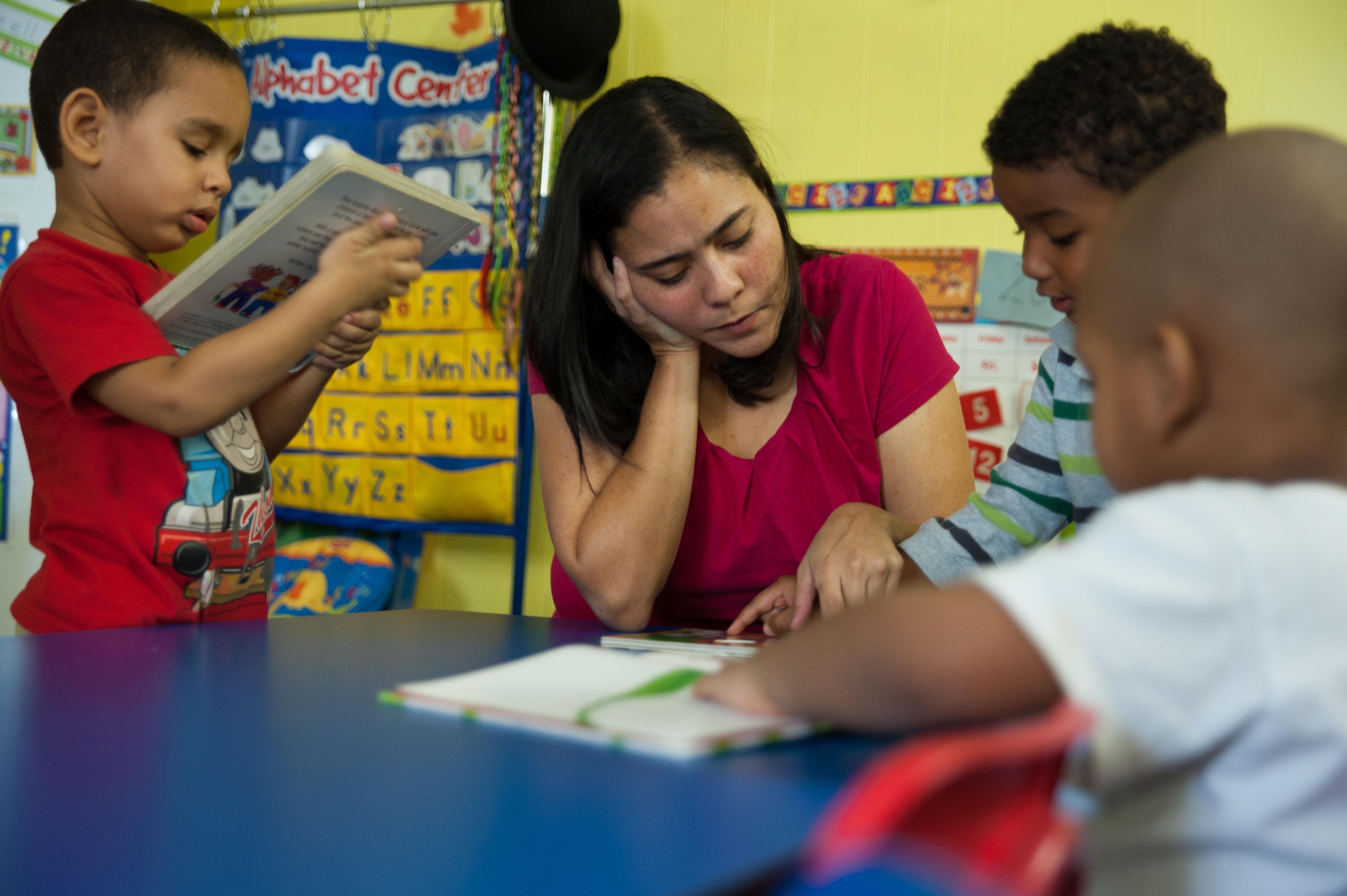
Katie Johnson at School Library Journal describes her experience with “Play, Learn and Grow, a pop-up storytime and early learning program created through a collaboration between Twinsburg (OH) Public Library and Akron Metropolitan Housing Authority (AMHA). …

“I noticed that none of the children living in the housing development were coming to storytime at our library. I reached out to AMHA representatives, hoping they would be open to the idea of the library hosting a weekly program at the development. They were, partnering me with one of their employees, Kellie Morehouse, who was already working with families within the complex.

“We set up Play, Grow, and Learn in an unused room behind the apartment leasing office. Our initial goal was to get to know children age five and younger and their families through storytime, crafts, and free play. As the weeks went on, we saw everything that these families lacked: employment, education, transportation, healthy food, proper healthcare, access to preschool, even reliable phone service.”

They got involved in all those areas — helping children get vaccinations and nutritious food, for example, and arranging for isolated young mothers to address depression.

“Early experiences with storytime revealed a desire of the young mothers to interact with one another.  This led the AMHA representative to suggest teaming storytime with one of the organization’s programs for moms.  AMHA and a local behavioral health agency had been working together to provide maternal depression support groups to low-income women in other parts of the county. …

“Twice a month, the moms in our storytime are able to meet in a group setting with a professional to discuss their frustrations and worries. Mom-ME Time has become key, as so many of our moms are dealing with heavy pressures every day, and most do not have a strong support network. Being able to vent and get helpful parenting advice can be crucial to the choices they are making for their young children.”

It is worthy of applause when a librarian sees the whole child, not just a child in storytime, and tries to tackle the barriers to a better life. More here.

Photo: Katie Johnson/School Library Journal
Moms are included in programming for children.

Read Full Post »

Here’s an idea that could give a welcome boost to underprivileged children: a free connection to the Internet at their home.

It seems that Google, in the spirit of its discontinued motto “Don’t be evil,” is piloting a new public service.

Matt Hamblen at Computerworld reports, “Google Fiber [recently] announced free gigabit Internet service to residents of selected public housing projects connected to its fiber optic service in U.S. cities.

“The program was launched at West Bluff, an affordable housing community in Kansas City, Mo., where 100 homes have been connected to Google Fiber. Across the Kansas City area, Google is now working with affordable housing providers to connect as many as nine properties that could reach more than 1,300 local families.

“Google described the program as an extension of its work with ConnectHome, an initiative of the U.S. Department of Housing and Urban Development (HUD) and the Obama administration. …

“In addition to free Internet, eligible residents will work with ConnectHome partners like Connecting for Good and Surplus Exchange to be able to purchase discounted computers and learn new computer skills, Google said.” More here.

Depending on what the housing developments are like to live in and whether they provide supports like the Family Self-Sufficiency program to move people to independence, this could be a useful piece of the difficult poverty-reduction puzzle. So, good on Google!

Photo: ConnectHome 
A resident of West Bluff in Kansas City and her son are among the first of 1,300 families in area affordable housing units to receive Google Fiber gigabit Internet service at no cost.

Read Full Post »

Heifer Project is a charity founded by Dan West, “a farmer from the American Midwest and member of the Church of the Brethren who went to the front lines of the Spanish Civil War as an aid worker. His mission was to provide relief, but he soon discovered the meager single cup of milk rationed to the weary refugees once a day was not enough. And then he had a thought: What if they had not a cup, but a cow?”

Recipients of Heifer Project’s cows, chickens, pigs, and other assistance commit to giving the offspring of the donated animals to others in need. That way the giving grows and spreads.

Recently, Heifer Project has been helping poor farmers in Guatemala make enough from their cardamon crops to live on.

Editor Jason Woods, has the story in the nonprofit’s magazine, World Ark.

“Miguel Xo Pop farms his own plot of land. Everyone in the Sierra de las Minas depends on two crops, cardamom and coffee, to survive. Xo and his family are no different. Traditionally, the cloud forest’s climate helps the two plants thrive, but in the past few years a pair of plagues cut cardamom prices in half and reduced coffee income to nothing.

“Recently, Xo joined a Heifer International Guatemala project that will help him keep the pests away from his cardamom while adding more crops to his farm, but the project is still in its initial stages, gaining momentum. So for now, Xo spends a quarter of a year away from his wife and five kids to earn money.”

More on the lives of the farm families, here.

The reporter also describes how an altruistic businessman moved to a “double bottom line,” one that includes charity.

“A couple of years ago, McKinley Thomason was searching for a way to use his Nashville-based spice business to make a positive impact. After hearing about Heifer International’s burgeoning work with cardamom, he knew he had found his organization.

“Shortly after contacting Heifer, Thomason’s company, The Doug Jeffords Co., started donating 10 cents to Heifer Guatemala for every seasoning blend sold from their J.M. Thomason line. But Thomason’s passion for Heifer’s work in Guatemala moved him to do even more.

“Thomason has been acting as a project adviser to Guatemalan farmers, sharing his market knowledge and technical expertise in the world of cardamom. He is also making connections and introducing Heifer Guatemala to other like-minded spice companies that could support this or other projects.”

More at Heifer Project, here.

Photo: Dave Anderson

Read Full Post »

The Providence-based Capital Good Fund, which helps low-income folks get on their feet financially, has been testing an interesting fund-raising idea. Participating artists donate to the Capital Good Fund half the proceeds of a work that they sell through the fund’s platform. The art offerings change every few weeks. I include one example below, and there are more at https://squareup.com/market/cgfund. The selections feature a range of styles. Some works are representational, others impressionistic or abstract.

The organization’s website explains its mission: “Capital Good Fund is a nonprofit, certified Community Development Financial Institution that takes a holistic approach to fighting poverty. We offer small loans and one-on-one Financial & Health Coaching to hard-working families in America. Our mission is to provide equitable financial services that create pathways out of poverty.” More here and here.

The Rhode Island Foundation posts at its own blog about its latest partnership with the Capital Good Fund, an initiative designed to overcome the incentives that drive people to costly payday lenders. Read about that here.

Art: Carol C. Young
Barn on Robin Hill, 11″ x 11″ Giclée, limited edition signed print

Read Full Post »

Everything old is new again. Here’s a story about a type of teaching that is coming back in vogue.

Peter Balonon-Rosen writes for WBUR radio, “Closing the gap between the achievements of low-income students and their peers is such a formidable challenge that some experts say it cannot be done without eliminating poverty itself. By the time children enter kindergarten, there is already a significant skills gap across socioeconomic lines that manifests in an income achievement gap that has widened dramatically over the past 25 years.

“In Revere [MA], a high-poverty school district, school officials have turned internally to raise outcomes for kids in poverty. Their notion is that school success can begin with a successful teaching model.

“ ‘What is this?’ kindergartner Thea Scata asks. She taps the picture of a rabbit with a wooden pointer and looks to the three other girls seated at her table.

“The group of four kindergartners at Revere’s A.C. Whelan Elementary School is learning about the letter ‘R’ — writing its shape and reviewing words that begin with the letter.

“ ‘Bunny!’ replies Bryanna Mccarthy.

“ ‘No, what’s the first sound? “R”— rabbit,’ Scata says to the group. …

“Whelan is one of 43 public elementary schools in the state that Bay State Reading Institute (BSRI), a Holliston-based education nonprofit organization, partners with to implement this teaching model into Massachusetts schools.”

Said “Kimberlee Clark, a first grade teacher at Whelan, ‘I’m really able to target those that need to be challenged and go above and beyond and I’m able to work with those students that need the extra support to get onto grade level.’ …

“Core to BSRI’s approach is independent student learning. As teachers work closely with small groups of students, the other students are expected to work by themselves on separate tasks.

“ ‘Students then own a piece of the learning,’ said Ed Moscovitch, chairman and co-founder of BSRI. ‘They learn how to learn from an independent perspective.’

“ ‘When they’re working together it’s not so much that students are teaching students, but they’re discovering and coming to the knowledge together,’ said Lenore Diliegro, a fifth grade teacher at Whelan.” More here.

Photo: Peter Balonon-Rosen/WBUR
Thea Scata, left, leads a group of kindergarten peers at A.C. Whelan Elementary School in Revere.

Read Full Post »

A Framingham, Mass., couple who run a restaurant have decided to do their bit to combat hunger in their town.

Bella English has the story at the Boston Globe. “The Foodie Cafe is a 24-seater in a factory-and-warehouse section of Framingham. Workers stop in for coffee and eggs or for a lunch of homemade soups and breads, artisan sandwiches, and cupcakes with killer icing.

“But David and Alicia Blais, who own and run it, feed more than just their paying customers. They also aim to feed all of the city’s hungry. A chalkboard in the cafe proclaims: ‘Thanks to you (our wonderful customers), we have fed over 890 people in need this November. Thank you! Thank you! Thank you!’

“About three years ago, the couple opened the Foodie Cafe — they loved its huge kitchen — after selling a Walpole restaurant they had run for several years. …

” ‘There was no sense of food insecurity in Walpole on the scale found in Framingham,’’ says Alicia, 55. “All you have to do is drive around, and you can see the need. …’

“Devout Christians, the couple went to hear a pastor speak about his street ministry and when he mentioned that he always runs out of sandwiches for the hungry, they decided to help. …

“ ‘They’ve been tremendous to us,’ says Jim Bauchman, founder of Framingham Street Ministries. “I can’t thank them enough. I see it as a partnership.” …

“For them, feeding the hungry is a matter of philosophy and faith. ‘I feel that people should have the necessities of life,’ says Alicia. ‘People should be sheltered. People should have food. We have a restaurant. We make food. It’s not rocket science.’ ”

More here.

Photo: Suzanne Kreiter/Globe staff
Inside Alicia Blais assembles sandwiches.

Read Full Post »

xmas-treeThis is the tree in my warm and cozy house. The tree in the picture below, a picture you may think is entirely black, is actually sitting all by itself on a river bank that floods in spring.

It makes me think of the carol about King Wenceslas, who “on the Feast of Stephen” (December 26) spied a poor man out in a blizzard and went with his page to take care of him. “Bring me flesh, and bring me wine; bring me pine logs hither: Thou and I will see him dine, when we bear them thither.”

The story goes that “heat was in the very sod that the saint had printed.”

Not being able to heat the sod underneath our feet (or command a page, for that matter), many of us consider sending a check to a food bank at this time of year. Still too many hungry people.

tree-on-river-bank

Read Full Post »

With increasing numbers of Americans experiencing food insecurity, it seems like an appropriate time of year to be grateful that at least there are many goodhearted people managing food banks and community meals and doing what they can.

If you know of anyone in New England who could use the help just now, or if you want to volunteer or donate, this partial list may be a good starting place.

Rhode Island

http://www.rifoodbank.org
“The Rhode Island Community Food Bank works to end hunger in our state by providing food to people in need. We envision a day when all Rhode Islanders have access to nutritious food and a healthy lifestyle.

Massachusetts

East
http://Gbfb.org
“The Greater Boston Food Bank’s mission is to End Hunger Here. Our objective is to distribute enough food to provide at least one meal a day to those in need.”

West
https://www.foodbankwma.org/
“We are fortunate to live in such a special part of the country, allowing for the growth and harvest of a multitude of fresh fruits and vegetables. As this harvest season comes to an end, we have received more than 266,800 pounds of fresh produce — including potatoes, lettuce, carrots, apples and squash — donated by local farms this year.”

Vermont

http://www.vtfoodbank.org/FindFoodShelf.aspx
“If you are looking for a place to have a Thanksgiving meal or to volunteer to help cook, serve or clean-up, download our list of Thanksgiving meals.”

New Hampshire

http://www.nhfoodbank.org/
“Need Food? We Can Help. If you are in need of assistance, use our search to locate the nearest food pantry or soup kitchen to you. Search by your town or county, or view all of our partner agencies.”

Maine

http://www.foodpantries.org/st/maine
“There are several food pantries and food banks in the Maine. With help from users like you we have compiled a list of some. If you know of a listing that is not included here please submit new food pantries to our database.”

Connecticut

http://www.ctfoodbank.org/
“The mission of Connecticut Food Bank is to provide nutritious food to people in need. We distribute food and other resources to nearly 700 local emergency food assistance programs in six of Connecticut’s eight counties: Fairfield, Litchfield, Middlesex, New Haven, New London and Windham.”

harvest


Read Full Post »

Even if, like me, you never got into the TV show “The Wire,” you may know that it was about a troubled section of Baltimore. You also may be interested in a new school there, intended to serve as a real community gathering place.

New York Times design critic Michael Kimmelman has the story.

“In many ways, public schools are gated communities, dead zones,” writes Kimmelman. “They’re shuttered after dark and during the summer, open to parents and students while in session but not to the larger community.

“A new public school in one of the poorest neighborhoods in East Baltimore wants to challenge the blueprint. Designed by Rob Rogers, of Rogers Partners in New York, Henderson-Hopkins, as it’s called, aspires to be a campus for the whole area — with a community center, library, auditorium and gym — as well as a hub for economic renewal.

“This is the neighborhood where parts of ‘The Wire’ were filmed. In 2000, when the city’s mayor convened local business leaders, the vacancy rate was 70 percent. Poverty was twice the city average. Crime, infant mortality and unemployment were all through the roof.

“The idea that emerged — of making the school the centerpiece of a major redevelopment project — is a grand urban experiment. Operated by Johns Hopkins University in collaboration with Morgan State University, the school, which opened in January, belongs to a $1.8 billion plan that also includes new science and technology buildings, a park, retail development and mixed-income housing. While gentrification might threaten to displace the poor, the school is to be the glue that helps bind the district together.” Read more here.

Photo: Matt Roth for The New York Times
Henderson-Hopkins, which shares its library, gym, auditorium, and other features with the surrounding area, is designed to catalyze change in a blighted section of Baltimore.
 

Read Full Post »

The Christian Science Monitor recently ran a story by Bryan Kay about an ongoing  community service project.

“Not even the recent furlough of federal workers was enough to snuff out the latest community outreach effort of Masjid al Islam mosque in Dallas.

“On a weekend in early October, the mosque was participating in a national initiative known as the Day of Dignity, an annual event during which mosques feed, clothe, and equip people living in poverty. But federal workers who had been scheduled to attend to speak about the details of the Affordable Care Act …  had been forced to cancel because of a partial federal government shutdown.

“It was a blow to the mosque’s boosters, says Muhammad Abdul-Jami, treasurer of Masjid al Islam and coordinator of the Day of Dignity event. But it didn’t deter them from pursuing the same purpose they have had for the last several years, he says: aiding homeless people … .

“Masjid al Islam is in an area where the homeless are a ubiquitous sight. … Because of the great need every weekend, the mosque seeks to do what the Day of Dignity event, organized in conjunction with the national charity Islamic Relief USA, does on an annual basis. Through its Beacon of Light community center, Masjid al Islam feeds approximately 300 individuals in need on Saturdays and Sundays each week, Mr. Abdul-Jami estimates. That’s more than 15,000 meals per year, paid for with donations from individuals and other mosques and served by volunteers, he says. …

” ‘There are millions of Muslims in this country who are very regular people, people who [other] Americans might consider much like them,’ Abdul-Jami says. …  ‘These events help us showcase that we are concerned about the rest of humanity, not just wanting to help Muslims.’ ”

Read more here.

Photo: Walid Ajaj

Read Full Post »

Do you remember the British comedy group “Beyond the Fringe”? We love the LP record in our house.

I was thinking about a Peter Cook “Beyond the Fringe” sketch today because I have been reading tweets in Latin and my husband and I always joke about the English miner in Cook’s “Sitting on the Bench” routine who was wistful about not becoming a judge.

“I could have been a judge, but I never had the Latin, never had the Latin for the judgin’.”

The Latin tweets I’ve been following are from Pope Francis, who is said to have gathered a large following who just like Latin. I am not a Catholic, but a lot of what the new Pope has said impresses me, especially his cautions against materialism and his concern for those who suffer. I also like exercising the rusty hinges in my brain where fuzzy memories of Latin are stored. And if I don’t quite get the whole tweet, Google Translate is available — and turns out to be much better at Latin than, say, Swedish or Arabic.

I retweeted this missive:

Papa Franciscus ‏@Pontifex_ln 22 Jun
Si sensum vitae in Iesu invenimus, eos negligere non possumus qui patiuntur quique sunt tristes.

Google Translate: If we find the meaning of life in Jesus, we can not ignore those who suffer and those who are sad.

Photo: AFP/Getty Images

Read Full Post »

You have heard of Let Us Now Praise Famous Men, the Depression era book on poverty in the South by James Agee and photographer Walker Evans. The forerunner was an article assigned by Fortune magazine to a young Agee but never published. This past Tuesday it was published as a book.

There are a couple aspacts to Christine Haughney’s NY Times story on the new book that intrigue me. One is the image of a young Agee moved by the plight of the sharecroppers and indignant at the magazine’s apparent exploitation of them.

The other is  how the original subjects, and later, their children, were embarrassed and didn’t want names used, but the grandchildren are able to see the beauty in their forebears.

Writes Haughney, “In 1936 Fortune magazine’s editors assigned a relatively unknown and disgruntled staff writer named James Agee to travel to Alabama for the summer and chronicle the lives of sharecroppers. When Agee returned, he was inspired by the subjects he had met and lived with, but frustrated by the limitations of the magazine format. His subjects, he argued, warranted far more than an article.

“What readers have known for decades is that Agee used his reporting material to create his 1941 book, Let Us Now Praise Famous Men, a literary description of abject poverty in the South, accompanied by starkly haunting Walker Evans photographs.

“The original magazine article was never published, as Agee squabbled with his editors over what he felt was the exploitation and trivialization of destitute American families. In the early pages of Famous Men, he wrote that it was obscene for a commercial enterprise to ‘pry intimately into the lives of an undefended and appallingly damaged group of human beings.’ What readers are about to discover now is what all the fighting was about.

“Melville House [is publishing] Agee’s original, unprinted 30,000-word article in book form, under the title Cotton Tenants: Three Families. The publication gives Agee fans a glimpse of an early draft of what became a seminal work of American literature.

” ‘With the book, we have a much better map of him writing Let Us Now Praise Famous Men,’ said John Summers, who edited Cotton Tenants and printed an excerpt from the article in a literary journal he edits, The Baffler. …

“Irvin Fields, whose grandfather Bud Fields was featured in the book, said he didn’t mind that the names were now being published.

“ ‘It makes me appreciate my relatives for bearing up under those circumstances and making me appreciate what I’ve got today.’ ” More.

A photo by Walker Evans, from “Cotton Tenants: Three Families,” via Library of Congress

Read Full Post »

Take two tomatoes and call me in the morning.

***

The University of South Carolina has developed a manual for health centers that want to collaborate with farmers markets on health, even writing food prescriptions for patients who need to improve their eating habits.

The manual’s authors, Darcy Freedman and Kassandra Alia, write in the intro of their manual:

“Farmers’ markets have grown in popularity in recent years as a place for improving health, increasing economic growth for local agriculture, and building communities. …

“Though the rebirth of farmers’ markets represents an exciting movement in the United States, data reveal that the benefits of farmers’ markets are not evenly distributed. Communities with the greatest need for farmers’ markets, for instance, are least likely to have them.

“In the present manual, we describe an approach for developing a health center‐based farmers’ market. Health centers, in particular federally qualified health centers or FQHCs, were identified as a strategic place to locate farmers’ markets because they may be located in food desert contexts (i.e., low‐income communities with low‐access to healthy food retailers). Additionally, locating at a health center makes an explicit connection between farmers’ market and preventive medicine.” More.

Photo: Aram Boghosian for The Boston Globe

Read Full Post »

Back in first-grade, we learned to read from books featuring invariably blond, blue-eyed children. Today, primers have more variety, but multicultural pleasure reading, where it exists, is not always available to poor children.

Leslie Kaufman wrote recently at the NY Times that a  “nonprofit called First Book, which promotes literacy among children in low-income communities, announced the Stories for All project, a program intended to prod publishers to print more multicultural books. …

“In a 2012 study, the Cooperative Children’s Book Center at the University of Wisconsin-Madison evaluated some 3,600 books, looking for multicultural content. Of the books examined, 3.3 percent were found to be about African-Americans, 2.1 percent were about Asian-Pacific Americans, 1.5 percent were about Latinos and 0.6 percent were about American Indians.” More.

First Book picked two winning publishers in its first Stories for All competition — HarperCollins and Lee & Low Books — and purchased $500,000-worth of books from them. The books “will be available beginning in May through the First Book Marketplace, a website offering deeply discounted books and educational materials exclusively to schools and programs serving kids in need.”

Among the books are:  “Shooter”, Walter Dean Myers (HarperCollins); “Tofu Quilt”, Ching Yueng (Lee & Low Books); “In the Year of the Boar and Jackie Robinson”, Bette Bao Lord (HarperCollins); “The Storyteller’s Candle: La Velita de Los Cuentos”, Lucia Gonzalez (Lee & Low Books); “El Bronx Remembered: A Novella and Stories”, Nicholasa Mohr (HarperCollins); and “Passage to Freedom: The Sugihara Story”, Ken Mochizuki (Lee & Low Books).

More information at FirstBook.org.

Photograph: Strategies for Children

kids--teacher

Read Full Post »

This weekend, having spent special time with both grandsons and a brand-new granddaughter, I have been pretty aware of how much promise children hold.

Not just my grandchildren. All children.

But sometimes children who live in poverty need a boost from the rest of us. Kind of like at christenings when everyone in the congregation says they will help the baby learn and grow even though they don’t know the baby’s family and may not see them again. It’s a symbol that people take all children seriously.

At the Chronicle of Philanthropy, Suzanne Perry writes about the Washington, DC, version of the federal Promise Neighborhoods initiative that takes the nation’s responsibility toward children very seriously.

“The D.C. Promise Neighborhood Initiative, one of the country’s premier efforts to lift children out of poverty by offering a comprehensive array of educational and social services, has won a five-year, $25-million federal grant to step up its work.

“The grant, one of just seven of its kind that the Education Department awarded last month, was an especially sweet victory for the Washington project, which is working to turn around the city’s Parkside-Kenilworth neighborhood. Last year, it failed to win a similar award because it missed the application deadline due to technical problems it faced when e-mailing its proposal.

“This time, the group’s leaders left no stone unturned to ensure the application met all of the federal agency’s specifications, says Ayris Scales, the executive director—who now calls the project ‘the comeback kid’ and says she feels like ‘Cinderella at the ball.’

“The Washington effort is among dozens across the country that are following an approach pioneered by Geoffrey Canada, founder of Harlem Children’s Zone, which involves marshaling schools, nonprofits, and other community organizations to help children in troubled neighborhoods from ‘cradle to college.’ ” More.

By the way, I blogged about Geoffrey Canada and the movie on Harlem Children’s Zone, Waiting for Superman, a couple years ago, here.

Photograph: Cliff Owen/AP/File
A three-year-old pre-kindergarten student practices drawing spirals during a class at Powell Elementary School in Washington, DC. The DC Promise Neighborhood Initiative offers ‘cradle to college’ help to children in the nation’s capital.

Read Full Post »

« Newer Posts - Older Posts »