Feeds:
Posts
Comments

Posts Tagged ‘urban’

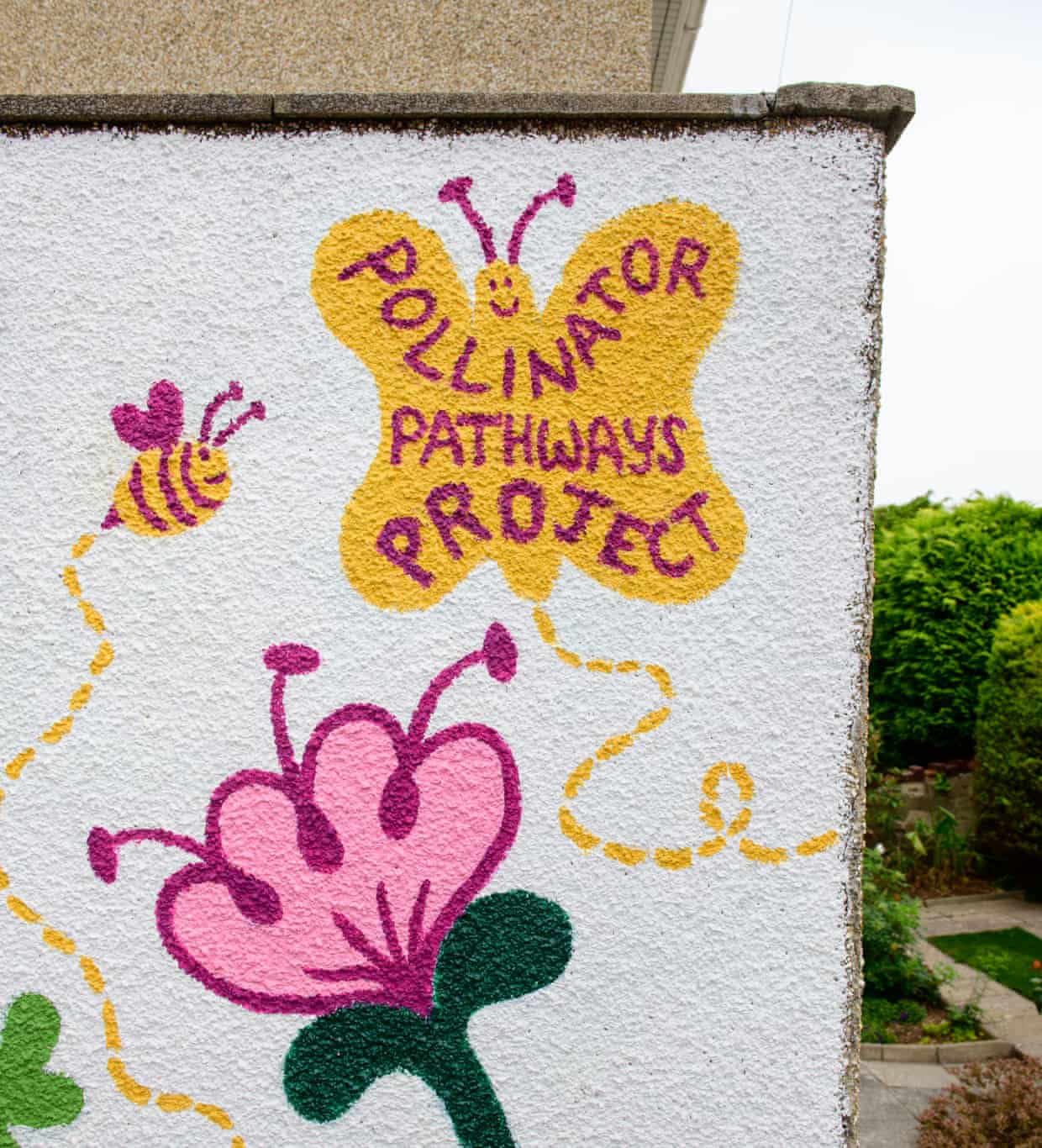
Photo: Adrian Sherratt/The Guardian.
The UK pollinator pathways project in Knowle, Bristol.

I do like stories about how humans sometimes learn what they’ve been doing wrong and then go all out to rectify the damage. I’m speaking of what humanity has done in ignorance to bees and other pollinators that uphold life on Earth.

Emma Snaith has a turnaround example at the Guardian. “Take a closer look at the colorful plants dotted along an initially unassuming Bristol alleyway and you’ll see them teeming with insects. Bumblebees, hoverflies and ladybirds throng around a mixture of catmint, yarrow, geraniums and anemones. ‘It’s buzzing with pollinators now,’ Flora Beverley says.

“Just over a year ago, the alley we are walking down was a dreary, litter-strewn dumping ground. Now, thanks to the pollinator pathways project, it is filled with nectar-rich plants and bee hotels. Colorful murals line the walls. A neighbor and her son passing by stop to tell Beverley they watered the plants yesterday. The local people who helped to transform the pathways continue to maintain them too.

“A trail runner and fitness influencer, Beverley started the project after a chronic illness left her unable to spend as much time running in the countryside. She wanted to bring more nature into her local community and, at the same time, help to connect important nearby habitats in Bristol including parks and the Northern Slopes nature reserve with insect-friendly corridors.

“The project took off unexpectedly well and in the space of a year local groups have revamped seven alleyways around the south of the city. Most transformations take place over a weekend. Volunteers and mural artists pile in, and it is funded by small grants that Beverley – who does not get paid – applies for in her own time, street collections and donations from local businesses.

“ ‘The things that are good for nature tend to be very good for people too,’ she says. ‘We’re lucky to have so many green spaces in Bristol, but there is a lack of connection between them.’ Habitat fragmentation is a big issue.’ …

Scientists are reporting catastrophic declines in insect numbers around the world. International reviews estimate annual losses globally of between 1% and 2.5% of total insect biomass every year. The drivers of the plummeting numbers vary, but include habitat loss, exposure to pesticides and the climate crisis.

In the UK, ​a citizen science survey run by the conservation charity Buglife monitors bug splats on cars. It found a 63% decline in flying insects between 2021 and 2024.

“There are many ways to help protect insects, some simple, others harder to achieve. Prof Dave Goulson from the University of Sussex says that creating more pollinator-friendly habitat in our cities is ‘a fairly easy win.’

“ ‘We already know that urban areas can be surprisingly good for pollinators compared to modern, intensive farmland,’ he says. …

“A huge network of community pollinator pathways has [sprung] up across 300 towns in 24 states in the US and in Ontario, Canada. It began in 2017 when the conservationist Donna Merrill offered people near her home town of Wilton free native trees to form a passage of pollinator habitat that spanned the Connecticut-New York state line. Merrill was particularly inspired by Oslo’s ‘bee highway‘ created a few years before – a network of green rooftops, beehives and patches of insect-friendly plants that stretches across the city.

“In the UK, Buglife is tackling the loss of pollinator habitat on a national scale through its B-Lines network, which is mapping a series of 3km-wide [~2 miles] insect superhighways that crisscross the country, connecting the best remaining wildflower-rich areas. The charity has been working with farmers, landowners, wildlife organizations, businesses, local authorities and the public for more than 10 years to help fill at least 10% of each line with insect-friendly plants. …

“The charity’s B-Lines officer, Rachel Richards, says the lines running north-south are particularly important for migrating species and those moving northwards as a result of the climate crisis.

“ ‘Reconnecting fragmented landscapes builds resilience,’ she says. ‘As we see more fires and floods, it’s quite easy for an amazing site to be destroyed or partly destroyed. But if we have the stepping stones of wildflower-rich habitat, it can be colonized by insects from neighboring sites.’ ” More at the Guardian, here.

In the Greater Boston area, my friend Jean and Biodiversity Builders have been leading the way for years. I wrote about them several times — for example, here. Do you have pollinator pathways near you?
Read Full Post »

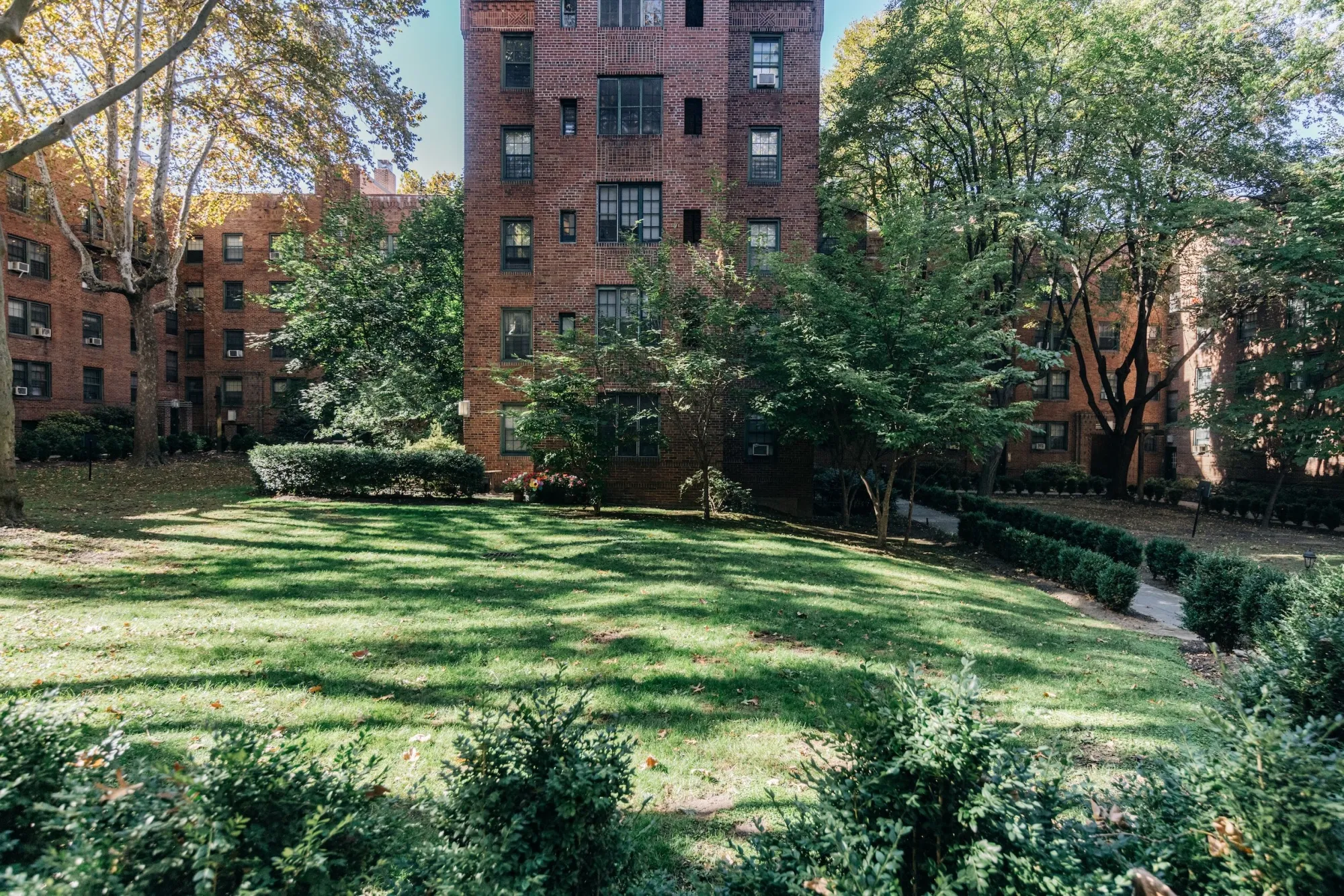
Photo: Jeenah Moon/Bloomberg.
An interior courtyard at the Sunnyside Garden Apartments in Queens, New York. Completed in 1928, it remains a beacon of quality of life.

Growing up on the Copeland Estate in a suburb of New York, I would have been quite isolated from humanity if not for a scattering of nearby homes that had children. Having playmates meant so much to me. But for years, US community designers forgot about the importance of human interaction for both children and adults. One way to build it in, especially in cities, is the classic courtyard.

Alexandra Lange notes at Bloomberg CityLab that the shrinking population of children under five across the US “is bad news for the diversity and stability of cities, which are improved by the amenities that families seek — parks, public libraries, safe streets. It’s also discouraging for families who prefer to live in the city or don’t have the option or desire to move to the car-dominated suburbs. Any effort to retain families has to start with housing, their primary expense.

“That one weird trick for making cities more family-friendly? We’ve known it for decades: It’s the courtyard. …

“While Europe can claim centuries-old courts, America dabbled in them for decades, before the suburbs became the dominant housing type of both government subsidy and political propaganda.

“Courtyards don’t have to belong to the past. While textbook examples in brick and stone are lovely — and still home to thriving communities — contemporary architects are making courts in all sorts of materials, and for all types of housing, from apartments to townhomes.

“One of the first influential figures to advance the idea of the courtyard as the ideal urban type for families was Henry Darbishire, the mid-19th century English architect. His first patron, Angela Burdett-Coutts, was inspired by Charles Dickens and his novels of the urban poor to apply her wealth to reformist housing. ‘Nurturing the family and protecting children from the street was a huge part of the logic — turning the city inward,’ says Matthew G. Lasner, housing historian and the author of High Life: Condo Living in the Suburban Century.

“Architects and philanthropists quickly embraced an easily replicable courtyard model, with a single entrance on the street and interior vertical access off a planted court. The concept came to America in the 1870s via developers like Alfred Treadway White, responsible for the Cobble Hill Towers in Brooklyn. In the 1920s, more reformist developers — including everyone from the Rockefellers to communist unions — constructed many more of these courtyard projects.

“As architecture critic John Taylor Boyd wrote in 1920 of the Linden Court complex in Jackson Heights, the courtyard’s ‘benefits are apparent when it is remembered that the streets are the only playground of New York children, including the children of the rich.’ …

“When you’re talking courtyards in America, it’s hard to avoid Sunnyside Gardens. Not only does the Queens community remain one of New York City’s best neighborhoods, but it was home to one of America’s best critics, who made his affection clear.

“Lewis Mumford was one of the first residents of Sunnyside Gardens, completed in 1928, and constantly returned to its balance of private and public space, building and garden, in his analysis of other lesser New York City housing options. In “The Plight of the Prosperous,” published in the New Yorker in 1950, Mumford takes aim at the new white-brick residential buildings ‘that have sprung up since the war in the wealthy and fashionable parts of the city.’ While new low- and middle-income housing projects like his own ‘provide light and air and walks and sometimes even patches of grass and forsythia,’ these other private buildings, clustered in uptown rich neighborhoods, lack multiple exposures, outdoor space, cross-ventilation and quiet. …

Clarence Stein and Henry Wright were the primary architects and planners behind Sunnyside Gardens, with Marjorie Sewell Cautley the landscape architect; all three would subsequently collaborate on Radburn, New Jersey, the ‘town for the motor age’ that in fact applied these communal principles for a result that we would now call transit-oriented development.

“The planners’ primary insight, in both the city and the suburbs, was to prioritize protected, communal open space over private yards or interior amenities. The courts, or courtyards, could be much larger if not subdivided by owner, and even in areas with public parks, having play space (and play companions) directly outside your door was a huge amenity. …

“On the West Coast, the courtyard evolved a little differently: surrounded by lower density, semi-detached houses with, eventually, a swimming pool in the center instead of a lawn. Irving Gill, considered the father of California modernism, designed prototype bungalow court in Santa Monica in the teens, with parking out of sight in the back and doorstep gardens. On tighter sites, U-shaped buildings with Spanish- and Italian-influenced architecture featured tiled fountains at center court. …

“ ‘When people have families with children, the home is important, but equally important are the people who are there with you,’ says Livable Cities president Meredith Wenskoski. “Your neighborhood is crucial. …

Bay State Cohousing, a 30-unit development outside Boston, has common amenities as part of its charter, including a shared kitchen and activity rooms. But the pastel, clapboard complex, intended to blend in with single-family neighbors, also forms a U around a southwest-facing courtyard, with outdoor circulation providing plenty of opportunities for casual run-ins with the neighbors.

“ ‘The courtyard is a nested boundary that allows interaction with other children, and more importantly, with other adults who become a kind of network,’ says Jenny French, whose firm French 2D designed Bay State. ‘In an urban setting, the barrier that the contemporary parent has to letting their child out the door, thinking about the car-dominated city where they are unable to play in the street – the courtyard is a natural alternative.’

“French, who has also been coordinating the housing studio at the Harvard Graduate School of Design for seven years, can’t help but extend these design observations into the cultural and political spheres. Everyone talks about loneliness in America for people of all ages. For teens and seniors alike, French sees a solution. It’s one we’ve had all along: ‘Could a courtyard house actually be the friendship apparatus we need?’ ”

Lots more at Bloomberg, here.

Read Full Post »

Photo: Artists for Humanity.
At Artists for Humanity, teenagers are able to express their artistic creativity and talents while also earning money, bridging passion and profit.

Today’s story is about a wonderful nonprofit I visited several times in the years I was working at the Boston Fed. Its mission to involve urban kids in making art — and earning some money from it — is still sending joy into the world.

Kana Ruhalter and Arun Rath have an update at GBH radio.

Artists for Humanity (AFH), they report, has been giving “talented teens — most of whom are people of color from low-income communities — the opportunity to earn and create. 

“Through murals, sculptures and more, Artists for Humanity … brings joy, beauty and a sense of belonging to their community. And, by paying its artists, they’re addressing economic inequities as well.

“Anna Yu, the executive director, and Jason Talbot, co-founder and managing director of program, joined GBH’s All Things Considered host Arun Rath to discuss the decades-long history of the nonprofit. …

Jason Talbot: Back in 1991, they had just defunded art in schools. I was a Boston Public School student at the Martin Luther King Jr. Middle School, and [AFH’s] former executive director, Susan Rodgerson, came to the King School to reintroduce art. … I found her willingness to hear out my ideas and implement them in projects was super refreshing. We continued to work together with the other fellow co-founder, Rob Gibbs, in a studio over in SoWa [South of Washington Street].

“There were just us six boys in that studio, and we painted and we created a gallery exhibition. It just showed us the capabilities of art, it helped us understand this artist community and we just loved doing work there.

“Our organization has evolved over the years. We’ve built in this entrepreneurial aspect where we’re producing and selling art to clients. It’s just been an extremely enriching experience. …

Arun Rath: Anna, tell us about that enrichment. How has the organization evolved since that? …

Anna Yu: While the core of the model is essentially the same — meaning this radical idea of paying teens to create client project work that is of the quality of a professional — that piece is always running through our work. But today, we are the largest employer of youth in the city of Boston, which is over 400 teens that we employ.

“[Today] we not only provide after-school employment, we also partner with schools during the school day in a program we call Co-Lab. …

Rath: What are some of the success stories? …

Talbot: Teenagers — one thing that’s pretty universal is they really are looking for adult experiences, you know? So to be in the workplace, to be respected, to be able to attend meetings, to be able to propose ideas, it really gets our young people super excited about having a career and really re-invested in their education.

“And teens are graduating at a higher rate; AFH graduates 100% of our high school students, and we’re able to offer secondary education to 100% of our teen artists. …

Rath: Tell us about the business side of this. How do you get these young artists paid? …

Yu: Something that is so radical about the organization — it’s hard to believe that Artists for Humanity has been doing this for 33 years — is that clients actually hire us to create work for them. So it’s often beautifying office spaces, it’s creating a unique or custom piece of art for them, it can even be branding and promotional materials. It could be a website.

“The beautiful thing is they are paying teens to do this work, and they are valuing their voices, their creativity. And they’re getting a very unique product at the end of the day. …

Rath: Talk about the collaborative process between these young artists and the professionals.

Talbot: Well, AFH is a tremendously collaborative organization. … Our clients really get visionary work. Our teens are up on the latest trends. They’re digital natives — they know what’s going on — and they’re really able to help our clients have some really great new innovative ideas. …

“Rath: You’ve seen so many go on to become adults and blossom in amazing ways. Are there any moments of joy you’d like to share? …

Yu: The beautiful thing about Artists for Humanity is that a lot of our alumni are actually not just artists. Many of them do become artists. Many of them actually pursue a career in STEM, or some of them go on to become lawyers. We have [one] who’s actually on our board of advisors right now, and she’s a lawyer at the Fed. … We have someone who is an alumni from AFH and is at Harvard Medical School. So it’s really this idea that by opening up these pathways, by inspiring them to think creatively, by building that confidence, they can really achieve anything.”

More at GBH, here.

Read Full Post »

Photo: Mata, et al, CC BY 4.0.
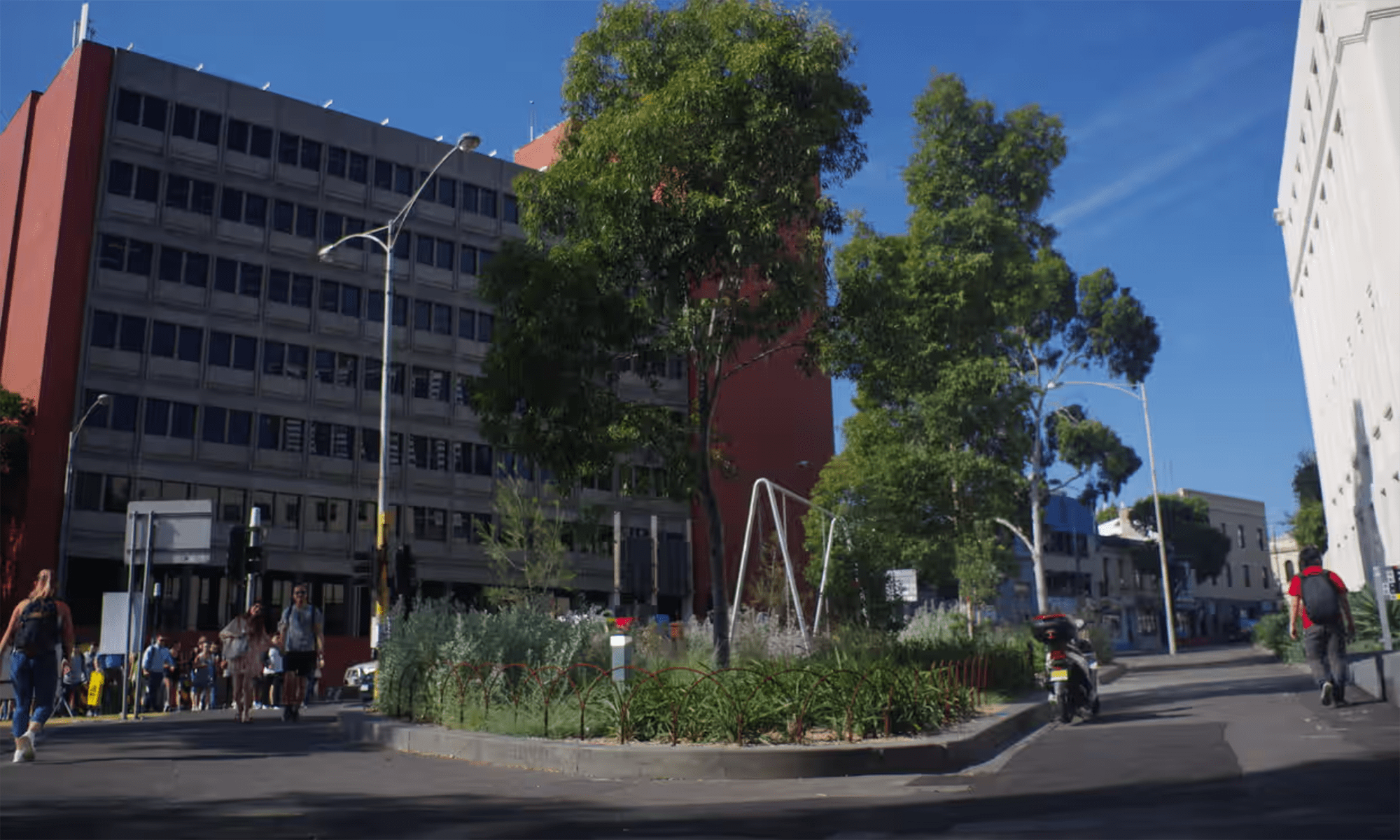
Entomology Today says, “City insects need native plants just like country insects do. A new study, conducted in a small greenspace in Melbourne, Australia, found that an increase in the diversity and complexity of plant communities leads to a large increase in insect biodiversity, a greater probability of attracting insects, and a higher number of ecological interactions between plants and insects.”

My friend Jean Devine, founder of Biodiversity Builders and Devine Native Plantings, works with young people to plant native species that nurture beneficial insects. Between her and University of Texas Prof. Alex Wild, @alexwild, I have been learning a lot about bugs and how essential to life they can be. I even work hard to understand some of Alex’s posts, of which the following is not unusual: “A genomic study of a small group of tiger beetles shows that convergent color evolution had misled past morphological taxonomists.” Ha!

Meanwhile, under the title “Every Little Bit Helps,” Entomology Today advises those responsible for plantings in cities thus: “By increasing the diversity of native plants in urban areas, researchers from the University of Melbourne have seen a seven-fold increase in the number of insect species in just three years, confirming the ecological benefits of urban greening projects. The findings were published [in August] in the British Ecological Society journal, Ecological Solutions and Evidence.

“The study, conducted in a small greenspace in Melbourne, Australia, found that an increase in the diversity and complexity of plant communities leads to a large increase in insect biodiversity, a greater probability of attracting insects, and a higher number of ecological interactions between plants and insects.

“Bringing nature into cities has been shown to deliver a host of benefits, from well-being to increased biodiversity and climate change mitigation. Being able to quantify the benefits of greening projects like rooftop gardens or urban wildflower meadows has become a sharp focus for people creating and funding them.

However, prior to this study, little evidence had been documented on how specific greening actions can mitigate the detrimental effects of urbanization through boosting the numbers of indigenous insect species that have become rare or ceased to exist in a particular area.

“ ‘Our findings provide crucial evidence that supports best practice in greenspace design and contributes to re-invigorate policies aimed at mitigating the negative impacts of urbanization on people and other species,’ says Luis Mata, Ph.D., researcher at the University of Melbourne’s School of Agriculture, Food and Ecosystem Sciences, lead research scientist at Cesar Australia, and lead author of the study.

“Prior to the beginning of the study in April 2016, the research team’s chosen greenspace was limited in vegetation: simply a grass lawn and two trees. Across April, the site was substantially transformed through weeding, the addition of new topsoil, soil decompaction and fertilization, organic mulching, and the addition of 12 indigenous plant species.

“Across the four-year length of the study, the researchers conducted 14 insect surveys using entomological nets to sample each plant species for ants, bees, wasps, beetles and more. Overall, 94 insect species were identified, 91 of which were indigenous to Victoria, Australia.

“ ‘Most importantly, the indigenous insect species we documented spanned a diverse array of functional groups: detritivores that recycle nutrients, herbivores that provide food for reptiles and birds, predators and parasitoids that keep pest species in check,’ Mata says.

“The 12 plant species planted at the beginning of the study were found to support an estimated 4.9 times more insect species after only one year than the original two plant species that previously existed in the greenspace where the research took place. …

“ ‘An increase in the diversity and complexity of the plant community led to, after only three years, a large increase in insect species richness, a greater probability of occurrence of insects within the greenspace, and a higher number and diversity of interactions between insects and plant species,’ Mata says. …

“ ‘I’d love to see many more urban greenspaces transformed into habitats for indigenous species,’ Mata says. ‘We hope that our study will serve as a catalyst for a new way to demonstrate how urban greening may effect positive ecological changes.’ ”

More at Entomology Today, here. No firewall.

Read Full Post »

Photo: Emily Piper-Vallillo/WBUR.
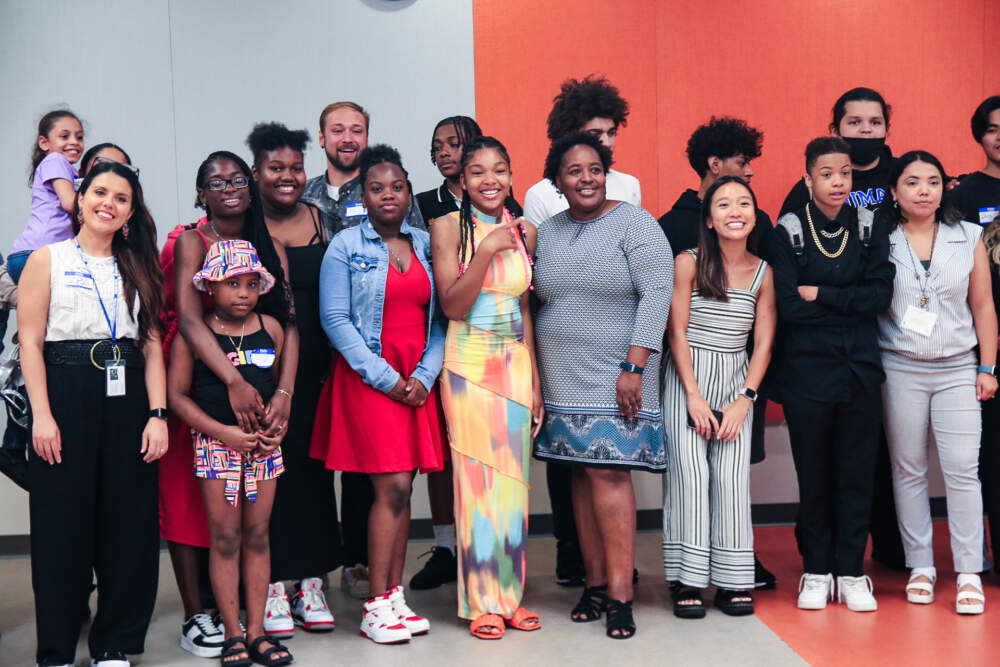
Program mentor Meshell Whyte with students who participated in the 2023 UMass Boston Summer Program in Urban Planning.

Today’s story is not only about addressing troubling effects of climate change in cities but also about encouraging young people in the communities most affected to be part of finding solutions.

Emily Piper-Vallillo reports at WBUR, “Boston students recently wrapped up a month-long study of extreme heat in Roxbury, exploring ways to mitigate the crisis and its impact on residents through the field of urban planning.

“Nearly 30 high school students participated in the University of Massachusetts Boston Summer Program in Urban Planning, which concluded [in July] with a presentation at Roxbury Community College. …

“The program introduces students of color from environmental justice communities like Roxbury and Dorchester to careers in urban planning and design. It’s part of a larger effort to diversify the field of urban planning, which remains overwhelmingly white.

“ ‘Only 5.2% of Boston’s planners are non-white, in a city where just in the city alone, 28% of our population is African American,’ said Ken Reardon, co-founder of the program and chair of UMass Boston’s Department of Urban Planning and Community Development. …

“Built as a working class community at a time when extreme heat was not as common as it is today, Roxbury has densely packed buildings with few trees, according to the students’ presentation. Many spaces are exposed to direct sun. Slides and swings in neighborhood playgrounds were constructed with heat-absorbing materials, making them unusable when temperatures rise.

“In fact, the students found that air temperatures in Roxbury are, on average, 10 degrees warmer than at Boston’s Logan Airport.

“They made this discovery by collecting 135 temperature readings across 38 Roxbury locations to identify the hottest spaces. Readings ranged from 83 to 102 degrees Fahrenheit, with the highest temperatures collected on sidewalks and at bus stops.

“Collecting data was grueling, said Blue Hills Regional Technical student Aidan Luciano. He and his peers hit the streets with remote sensors recording the humidity and heat index during the month of July — when temperatures sometimes rose above 100 degrees.

“ ‘[But] it’s going to pay off in the end because we are going to be helping other people,’ Luciano said. ,,,

“One group designed a new cooling children’s playground on RCC’s campus. Scheduled to open in 2025, the playground will replace a parking lot near the historic Dudley House site. After further community input, the final design will incorporate many ideas from the students themselves, said Ruben Flores, special projects manager at Roxbury Community College.

“Flores was particularly impressed by the inclusion of splash pads and water misters to reduce the temperature of the playground.

“Participating students received college credit from UMass Boston and were paid around $15 an hour.

“Paying students was an important part of making this opportunity accessible to low-income students of color who are less likely to be able to afford unpaid internships, Reardon said.

“Beyond collecting temperature data, students sought to understand how Roxbury residents experience extreme heat, said TechBoston student Neicka Mathias.

“Over the course of July, students interviewed nearly 100 Roxbury residents about coping with rising temperatures. The most common suggestion for improvement they heard was to increase the number of water sources throughout the neighborhood.

“Students also worked with residents to identify public spaces in Roxbury where heat mitigation solutions are most needed. These include areas where  people frequently wait for public transit or line up outside favorite local restaurants. …

“ ‘Give a chance to these communities of color that are outside the spaces where decisions have been made and they will show you great work,’ Flores said.”

More at WBUR, here. No firewall.

Read Full Post »

Photo: Suzanne and John’s Mom.
A tree canopy benefits any community.

After one of my posts on the importance of urban trees, Hannah sent me a 2021 report on what Philadelphia had started doing.

Katherine Rapin wrote at the Philadelphia Citizen, “Imagine, for a moment, it’s 2025 and you have a bird’s eye view of Philadelphia. As you scan the stadiums up to William Penn’s hat and beyond, you see a whole lot of verdant green amid the concrete as much as 40 of the city’s 142 square miles.

“These trees are purifying our air; storing tons of carbon dioxide; and reducing residential energy costs. Their masses of living roots absorb and hold water, reducing flooding, and their leaf canopy lessens the impact of rain drops on the ground, decreasing erosion. Their shade and transpiration magic is reducing temperatures by as much as 20 degrees. And they’re raising property values: Houses on streets with a lot of trees see a 10 percent boost in their sales price.

“The City’s goal is to increase our tree canopy to 30 percent by 2025 as part of the Greenworks program. …

“ ‘The big problem is that, for the last several decades at least, we as a city have not been planting enough trees to make up for the trees that naturally die or are lost to development,’ says Tim Ifill, Director of Trees at the Pennsylvania Horticultural Society [PHS].

“Granted, the decline would be worse if not for the efforts of programs like Tree Philly, launched by the City in 2011 along with Greenworks to give free sidewalk and yard trees to building owners who would care for them, which has given away more than 20,000 trees. … And PHS, which has been fighting to catch up with canopy loss through their Tree Tenders program — training more than 5,000 volunteers who have collectively planted over 25,000 trees in their neighborhoods.

“ ‘Every neighborhood is different,’ says Ifill. ‘Both from a canopy perspective but also for the types of people who get involved and how they decide to set up their tree tenders group.’ In East Passyunk tenders worked with PHS to establish an urban arboretum, mapping about 40 different tree species … in the neighborhood. In Hunting Park, Esperanza partnered with PHS to host the first bilingual tree tender training — their group has been among the most dedicated tenders since, says Ifill.

“If you’re tree tender curious, join the fall tree planting bonanza this week; from November 17th-21st, PHS Tree Tender groups and community orgs and volunteers will plant more than 1,350 trees (60 different species!) across the city. No prior tree-planting experience is required; volunteers will be led by at least one official Tree Tender who knows the ins and outs of this process well. …

“[Here are] some of Philly’s least green neighborhoods, according to conservation nonprofit American Forests’ recently released Tree Equity Score map. The Equity Score measures the gap between targeted tree canopy in a given block group — considering population density and climate as well as income level, employment rate, race, age distribution, health outcomes and heat island impact — and existing coverage. …

“To get all block groups to a score of 75 or higher, we’d need to plant 198,923 trees here in Philly. Compare that to Washington DC, which only needs 28,121 more trees to achieve the same goal. And the city isn’t far from their targeted 40 percent canopy coverage by 2032.

“Planting nearly 200,000 trees here in Philly would save an estimated 106,165 cubic meters of runoff; remove 14.6 tons of particulate matter pollution; and sequester 2,707.4 tons of carbon every year. And they [studies show they] reduce violence and increase mental health. …

“ ‘Even in a built environment like Philadelphia, we’re all part of nature and we have that connection with trees, with plants,’ says Ifill.” More at the Citizen, here.

I was unable to find out how the trees being planted in the 2021 article are doing now, but there were many sites covering the ongoing planting and protection of trees in Philadelphia.

The USDA Forest Service, here, described the work of Michelle Kondo, a Northern Research Station scientist, who “studies the many benefits trees provide and the ways cities are investing in programs to expand tree cover.”

The City of Philadelphia wrote that the Department of Commerce and Philadelphia Parks and Recreation were “collaborating on a new proactive model for community-based maintenance of street trees. The TCB Cleaning Ambassadors scope of work would be expanded to encompass tree care while receiving training and being paid for the additional hours of work involved. For the past two years, the William Penn Foundation also provides funding support to the Overbrook Environmental Education Center (OEEC) expanding their Philly Green Ambassador (PGA) pilot program. The program enhances the careers of PHL TCB Cleaning Ambassadors by teaching tangible skills related to environmental stewardship.” 

And PHS has a lot more as it leads in spreading the word that “the Greater Philadelphia region still needs more trees. While a ‘good’ tree canopy coverage (the area of land shaded by trees) is considered to be 30% of land area, the city of Philadelphia only has 20% coverage and as little as 2.5% in some neighborhoods.” Apparently cities like Washington are much farther along in reaching their canopy goals.

Find your city, here. on a 2023 list of urban areas with the best tree canopy. Minneapolis is at the top.

Read Full Post »

Photo: World Farmers.

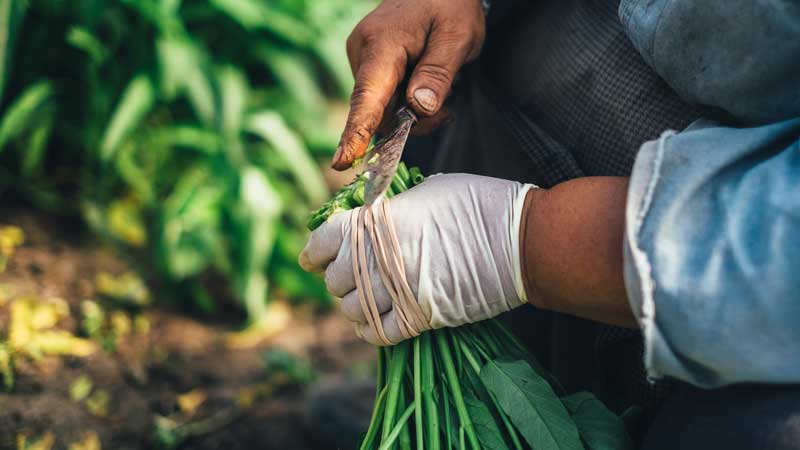
Immigrants to the US, if they were farmers in their home countries or just want to grow food they can’t find here, may end up working in agriculture. And as this University of Rhode Island professor’s research shows, many are joining the new wave of urban growers.

Frank Carini reports at ecoRI News on John Taylor, associate professor of agroecology at URI, who recently received a $973,479 award from the National Institute of Food and Agriculture for his research.

I had to look up that new-to-me field of study. The Soil Association says that “agroecology is sustainable farming that works with nature. Ecology is the study of relationships between plants, animals, people, and their environment – and the balance between these relationships. Agroecology is the application of ecological concepts and principals in farming. [It] promotes farming practices that mitigate climate change … work with wildlife … put farmers and communities in the driving seat.” Read all about it here.

Carini writes, “The $973,479 award from the National Institute of Food and Agriculture was one of 12 to receive funding through the institute’s Urban, Indoor, and Other Emerging Agricultural Production Research, Education and Extension Initiative. The agency’s $9.4 million in grants are part of a broad U.S. Department of Agriculture investment in urban agriculture, funding research that addresses key problems in urban, indoor, and emerging agricultural systems.

“The project will bring together Taylor’s research with immigrant gardeners and farmers in Rhode Island, Julie Keller’s agriculture-focused work with diverse communities, Melva Treviño Peña’s work with immigrant fishers, and Patrick Baur’s work on food safety and urban agriculture. …

“Although always a part of city life, urban agriculture has recently attracted increased attention in the United States, as a strategy for stimulating economic development, increasing food security and access, and combating obesity and diabetes.

“Food justice is about addressing access to healthy and affordable food for low-wealth and marginalized communities. It seeks to ensure the benefits and risks of where, what, and how food is grown, accessed, distributed, and transported are shared equally.

“Many neighborhoods in metropolitan areas, including in Rhode Island’s urban core, have little to no access to fresh food or full-service grocery stores — a situation often referred to as living in a ‘food desert.’ Other marginalized communities are surrounded by ‘food swamps,’ areas in which a large amount of processed foods, such as fast food and convenience-store fare, is available with limited healthy options.

“One solution to this environmental justice problem is to encourage the growing of local food. Developing effective policies and programs demands as a first step the accurate mapping of existing urban agriculture sites, according to Taylor. He hopes to provide that template.

“Taylor and colleagues at URI, the University of Maryland, and the University of the District of Columbia will soon begin mapping the alternative food provisioning networks of immigrant communities and communities of color in three East Coast cities — Providence, Baltimore, and Washington, D.C. — to better understand these networks.

“He hopes this transdisciplinary research will reap new information about alternative food provisioning networks in the Northeast, evaluating their impact on food system outcomes, and identifying opportunities for policy support. …

“At URI, Taylor’s ‘home garden’ is a quarter-acre plot at the Gardiner Crops Research Center [at] the bottom of the Kingston Campus. His plot, visible from Plains Road, represents in microcosm the immigrant foodways he will be studying for his research during the next few years.

“At URI’s Agrobiodiversity Learning Garden and Food Forest, he grows crops that are integral to the food traditions of Rhode Island’s diverse communities: South American sweet potatoes, Mexican tomatillos, Haitian tomatoes, Mediterranean herbs, Asian bok choy, and produce from an African diaspora garden. Taylor tends the garden with students in URI’s Plant Sciences and Sustainable Agriculture and Food Systems programs and URI master gardeners, demonstrating how sustainable farming reinforces community-building.

“With the learning garden, he follows a lead set by generations of immigrants who moved to Providence and cities like it, bringing their growing practices, and sometimes seeds, with them. …

“A descendant of five generations of Pennsylvania farmers, he grew up on a 100-acre integrated crop-livestock farm near Pittsburgh. Taylor began gardening at the age of 6 and started a market garden while in high school. He left the farm to attend the University of Chicago … then managed federal education studies for 10 years before returning to school to study horticulture and practice landscape architecture.”

More at ecoRI News, here.

Read Full Post »

Photo: Dave Burke/SOM.
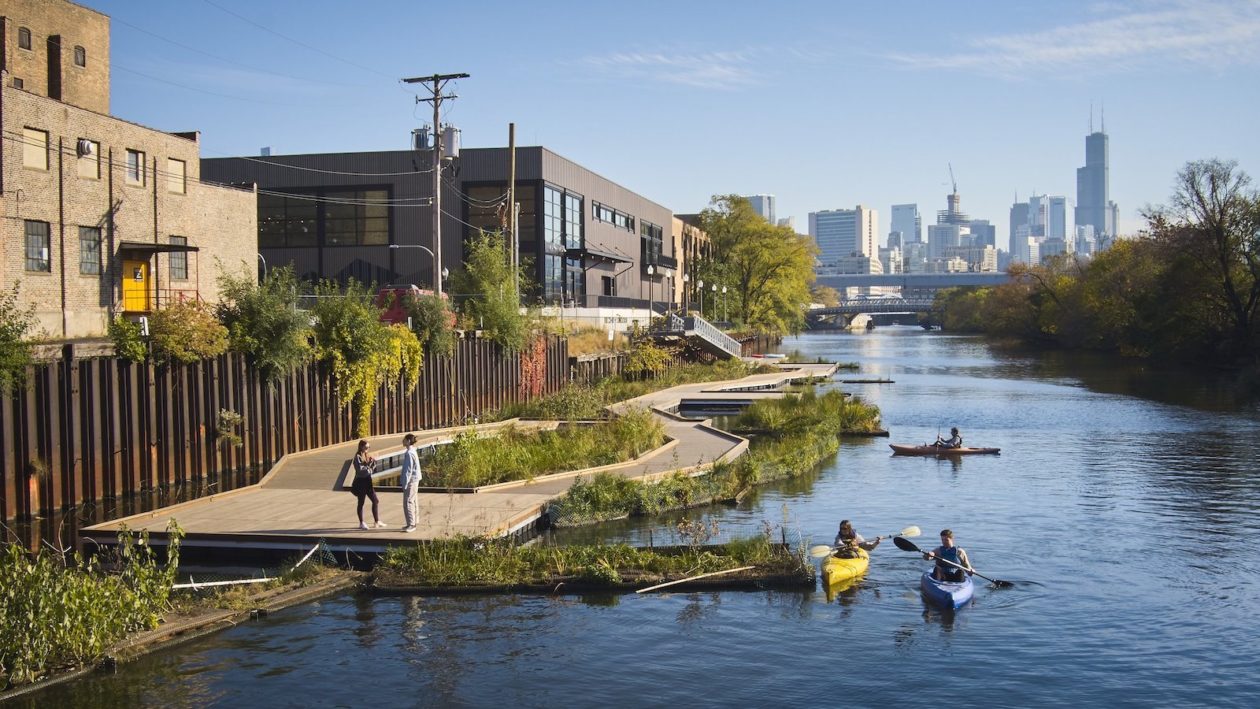
Floating wetlands along the Chicago River’s Wild Mile.

Here’s an idea whose time has come. Now that we know the role of wetlands in cleaning up pollutants, why not create wetlands where they’re needed most? Having read today’s article, I’m not sure how I feel about the use of phragmites, so often considered an invasive weed. But I’m glad it’s so good at absorbing pollution.

Susan Cosier reports at YaleEnvironment360, “As cities around the world look to rid their waterways of remaining pollution, researchers are installing artificial islands brimming with grasses and sedges. The islands’ surfaces attract wildlife, while the underwater plant roots absorb contaminants and support aquatic life.

“Five small islands roughly the size of backyard swimming pools float next to the concrete riverbank of Bubbly Creek, a stretch of the Chicago River named for the gas that once rose to the surface after stockyards dumped animal waste and byproducts into the waterway. Clumps of short, native grasses and plants, including sedges, swamp milkweed, and queen of the prairie, rise from a gravel-like material spread across each artificial island’s surface.

A few rectangles cut from their middles hold bottomless baskets, structures that will, project designers hope, provide an attachment surface for freshwater mussels that once flourished in the river.

“Three thousand square feet in total, these artificial wetlands are part of an effort to clean up a portion of a river that has long served the interests of industry. This floating wetland project is one of many proliferating around the world as cities increasingly look to green infrastructure to address toxic legacies. …

“Like natural wetlands, floating versions provide a range of ecosystem services. They filter sediment and contaminants from stormwater, and laboratory experiments show that some plants have the ability to lock up some chemicals and metals found in acid mine drainage. These systems take up excess agricultural nutrients that can lead to algal blooms and dead zones, and recent research suggests they could be used to reduce manmade contaminants that persist in the environment. Though it’s difficult to quantify the exact benefits these systems offer, and they have limitations as a tool in remediating polluted waterways, they could provide another option, researchers say.

“Nick Wesley, executive director of Urban Rivers, a nonprofit working with the Shedd Aquarium on the Chicago project, believes floating systems are a natural fit for the urban environment. …. ‘We’re trying to [restore] what the naturalized river would be.’ In many cities, he continues, floating wetlands could provide a low-cost alternative to conventional infrastructure projects because they’re modular and easy to install and to monitor.

“Wesley’s group began, in 2018, with a floating wetlands project on the Chicago River’s North Branch. Called the Wild Mile, the installation aims to improve water quality and has already begun attracting invertebrates, including mollusks and crustaceans. Last month, the group expanded to the shores of Bubbly Creek. Urban Rivers, Shedd employees, and a team of volunteers bolted together polyethylene and metal frames, draped them with matting, dropped them in the water, added plants, and anchored the islands to the river bottom so they stay in place as the roots grow into the water. …

“Floating wetlands ‘are having a bit of a moment,’ says Richard Grosshans, a research scientist with the International Institute for Sustainable Development who works on the floating structures. ‘They function very similarly to a natural wetland: they have the same processes, plants and microorganisms, bacteria and algae.’ …

“Floating wetlands were first tested in retention ponds, the kind often located near developments to hold stormwater, to see if they filtered pollution. ‘The front end of it was, “Will they work? How well do they work? And what plants should we recommend?” ‘ says Sarah White, an environmental toxicologist and horticulturalist at Clemson University who has worked on floating wetlands since 2006. Partnering with researchers at Virginia Tech, White found that the wetland plants she tested not only did well in ponds with lots of nutrient pollution, but the adaptable, resilient plants actually thrived. She did not always choose native plants, opting instead for those that would make the islands more attractive, so that more urban planners would use them.

“In the early 2010s, Chris Walker, a researcher at the University of South Australia, began testing floating wetlands in wastewater, quantifying the pollutants that four species of plants took up in their tissues and improvements to water quality. Two species, twig rush Baumea articulata and the common reed Phragmites australis, showed the highest uptake of nitrogen and phosphorus of any floating wetland research to date. …

“His team also started testing the ability of floating wetlands to filter out emerging contaminants like per- and polyfluoroalkyl substances (PFAS), which are not always filtered by treatment plants and are linked to elevated cholesterol levels, problems with reproductive health, and kidney and testicular cancers. The reed Phragmites australis placed in a floating wetland began absorbing the pollutant into its tissues in less than a month. …

“In Boston, Max Rome, a PhD student at Northeastern University, is attempting to quantify the benefits of wetlands that have been floating since 2020 in the Charles River, another historically degraded waterway. He found that one acre of wetland can absorb the nutrient pollution — usually dumped into the river via stormwater — from seven to 15 acres of dense urban development.

“Rome is also looking into whether floating wetlands can create small pockets of improved water quality or habitat that allow certain native species, like freshwater sponges, to regain a toehold in the river. To do that, he monitored water quality near the wetlands and compared it to other places in the river.

“ ‘The last generation did a really good job of dealing with point source pollution — and it was a huge task,’ he says, referring to the success of the Clean Water Act in reducing effluent from discharge pipes. His generation has a new job, he adds: grappling with ‘ecological restoration of these degraded water bodies at the same time that we do pollution reduction,’ something the wetlands could help address.”

More at YaleEnvironment360, here. Lovely pictures. No firewall.

Read Full Post »

Photo: Noah Robertson/The Christian Science Monitor.
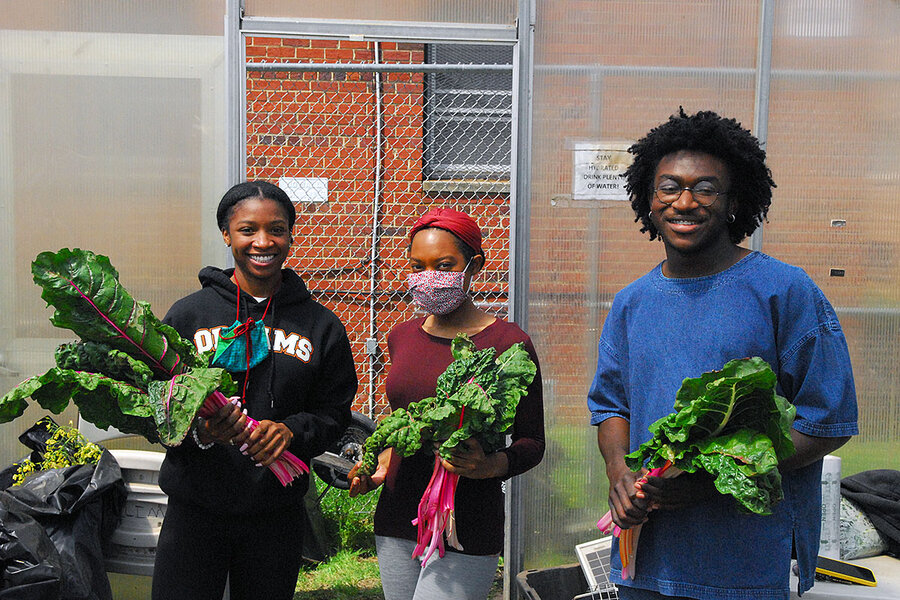
Kwesi Billups (right) and volunteers at Project Eden hold homegrown Swiss chard at the greenhouse in Southeast Washington, DC, April 17, 2021. Project Eden distributes its produce, along with donations from the Capital Area Food Bank, at a nearby church.

As many people learned during the pandemic, small, hopeful things can make a big difference in how a person feels. The same is true of neighborhoods. Even in areas characterized by blight and despair, a bunch Swiss chard that people grow together can make them believe that better days are ahead.

Noah Robertson writes at the Christian Science Monitor, “Three years ago, when Jevael German received his assignment through Washington’s Summer Youth Employment Program, he wanted nothing to do with it. He would be working with Project Eden, a community garden in the city’s troubled Southeast – known for police sirens much more than produce.

“A Washington native himself, Mr. German dreaded the months of labor in the district’s humidity. He didn’t even like vegetables. While meeting his supervisors on his first day, Mr. German laid his head facedown on the desk. 

“ ‘Sir, if you don’t want to be here, you’re welcome to leave,’ he heard back. ‘But you can’t put your head on the desk.’

“Mr. German stayed, and the summer surprised him. He enjoyed the outdoor work, which reminded him of childhood gardening with his grandmother. As an older member of the summer group, he began mentoring some of his younger co-workers. He even started eating greens. 

“At the program’s end, Mr. German asked to continue with Project Eden for another summer.

After returning, he learned that a former summer employee at the garden had died in a shooting. Mr. German, who was still living with one foot in the streets at that time, saw in that tragic death a version of himself if he didn’t change.

“ ‘Right then and there, I was like, I’ve got to leave the streets alone,’ he says. …

“Almost 10 years ago, Cheryl Gaines, a local pastor, started the garden as a response to the South Capitol Street massacre, one of Washington’s worst mass shootings in decades. Her idea then, as now, was that no community chooses violence when it has another option. Since then Ms. Gaines, her son Kwesi Billups, and hundreds of local employees and volunteers have sought to offer such an option.

“While simultaneously addressing challenges of health, food insecurity, and unemployment, Project Eden is at its roots an alternative. The work is rarely convenient, and resources are often low. But the garden’s legacy is that seeds can grow on what may seem like rocky soil – if only there’s a sower.

“ ‘This garden gives back to you what you give to it,’ says Mr. Billups. 

“In 2012, Ms. Gaines was Project Eden’s sower, though an unlikely one at that. She grew up with an abusive, alcoholic father in public housing outside New Orleans, only to trade that past for a career in law, and later the ministry. While at seminary in Rochester, New York, she had a persistent vision that God was calling her to live in Southeast Washington, begin a church, and plant a community garden. In 2010, after having lived in the Washington area for years, she felt the time had come.

“Leaving four dead and six more injured, the South Capitol Street massacre rattled Southeast, and brought the community together to mourn. At a vigil, Ms. Gaines met the owner of an apartment building just blocks away from the the shooting. In that conversation, she eventually shared her vision. Before long, the owner told her she could use her building’s backyard.

“On that land two years later, Project Eden (‘EDEN’ stands for Everyone Deserves to Eat Naturally) began as a 10-by-20-foot patch of dirt, with only rows of tilled soil. The next year Ms. Gaines and her team turned that plot into a 28-by-48-foot greenhouse, complete with aquaponics, and have since expanded to another location at nearby Faith Presbyterian Church.

“A community garden may seem like a boutique project in some areas, but not in Southeast, says Caroline Brewer, director of marketing and communications at the Audubon Naturalist Society, which recently named Mr. Billups its yearly Taking Nature Black youth environmental champion. …

“ ‘When people have opportunities to give back … that allows them to grow and develop and mature and make [an] even greater contribution to their families and their communities,’ says Ms. Brewer.

“Project Eden isn’t just resisting material challenges of nutrition and income, says Ms. Brewer. It’s helping the community resist despair. ‘It’s a constant battle,’ she says, ‘and they’re winning that battle.’ “

More at the Monitor, here.

Read Full Post »

e8a7579-2-ec93a293d6b1a2c4f3ba3637a49cf1c7c1c7397c-s600-c85

Photo: Pearl Mak/NPR
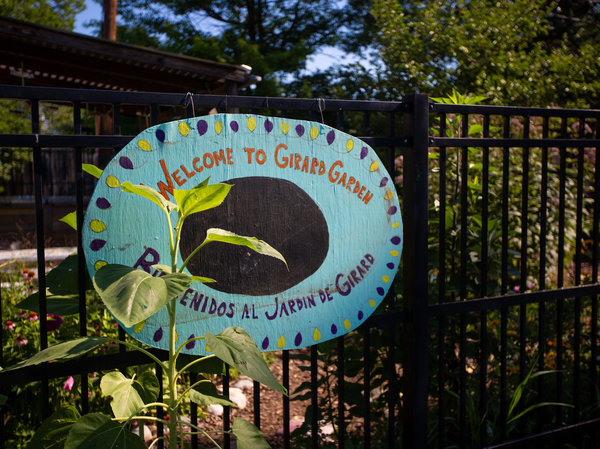
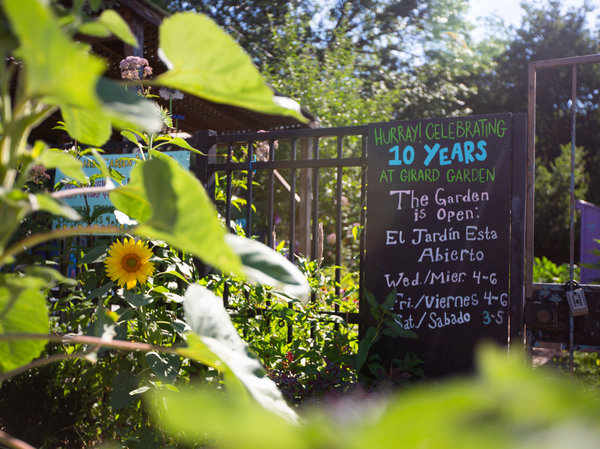
Girard Children’s Community Garden in Washington, D.C. was created on a vacant lot and is now a thriving community space for neighborhood kids.

Most of us know that spending time in nature makes us feel good, but many city children have few opportunities to find that out for themselves. A chain of community gardens in Washington, DC, provides anecdotal evidence that green space reduces stress, and now a controlled Philadelphia study gives more scientific proof that that is exactly what’s going on.

Rhitu Chatterjee reports at National Public Radio, “Growing up in Washington, D.C.’s Columbia Heights neighborhood, Rebecca Lemos-Otero says her first experience with nature came in her late teens when her mother started a community garden.

” ‘I was really surprised and quickly fell in love,’ she recalls. The garden was peaceful, and a ‘respite’ from the neighborhood, which had high crime rates, abandoned lots and buildings, she says.

“Inspired by that experience, years later, Lemos-Otero, 39, started City Blossoms, a local nonprofit that has about 15 children-focused community green spaces across Washington, D.C. She wanted to give kids from minority and low-income communities easy access to some greenery. …

” ‘Having access to a bit of nature, having a tree to read under, or, having a safe space like one of our gardens, definitely makes a huge difference on their stress levels,’ says Lemos-Otero. ‘The feedback that we’ve gotten from a lot of young people is that it makes them feel a little lighter.’

“Now a group of researchers from Philadelphia has published research that supports her experience. The study, published Friday in JAMA Network Open, found that having access to even small green spaces can reduce symptoms of depression for people who live near them, especially in low-income neighborhoods.

“Previous research has shown that green spaces are associated with better mental health, but this study is ‘innovative,’ says Rachel Morello-Frosch, a professor at the department of environmental science, policy and management at the University of California, Berkeley, who wasn’t involved in the research.

” ‘To my knowledge, this is the first intervention to test — like you would in a drug trial — by randomly allocating a treatment to see what you see,’ adds Morello-Frosch. Most previous studies to look into this have been mostly observational.

“Philadelphia was a good laboratory for exploring the impact of green space on mental health because it has many abandoned buildings and vacant lots, often cluttered with trash, says Eugenia South, an assistant professor at the Perelman School of Medicine at the University of Pennsylvania and an author of the study. …

“South and her colleagues wanted to see if the simple task of cleaning and greening these empty lots could have an impact on residents’ mental health and well-being. So, they randomly selected 541 vacant lots and divided them into three groups. They collaborated with the Pennsylvania Horticultural Society for the cleanup work.

“The lots in one group were left untouched — this was the control group. The Pennsylvania Horticultural Society cleaned up the lots in a second group, removing the trash. And for a third group, they cleaned up the trash and existing vegetation, and planted new grass and trees. The researchers called this third set the ‘vacant lot greening’ intervention.”

You can read what happened at National Public Radio, here.

Photo: Pearl Mak/NPR
Girard Children’s Community Garden will be celebrating 10 years this year. The garden signs are in both English and Spanish.

e8a7566-5-9189d87bba6596fdfded4f9555d19eb7a718f53b-s600-c85

Read Full Post »

Photo: Mary Carole McCauley, The Baltimore Sun
Tuba player Dan Trahey has helped make OrchKids a national model for lifting up kids. “We’re all interconnected,” he says. “We’re bad at this in America, where we’re all bred to be soloists. We create our own little worlds, and that’s really dangerous.”

When I was in second grade, my mother convinced the school principal to show a movie for children that I think came from the United Nations. It involved hand puppets who were enemies. And what I remember most was that in the end, each puppet felt its way up the arm of the puppeteer and discovered that they were connected.

That message, the message about human interconnectedness, is always having to be retaught, but people who understand it often get involved in initiatives that help disadvantaged children. Consider this story.

Michael Cooper writes at the New York Times, “From the outside, Lockerman-Bundy Elementary School looks forbidding, a tan monolith built in the 1970s. Some of the rowhouses across the street are boarded up — reminders of the cycles of poverty and abandonment this city has struggled with for years.

“Inside on an afternoon [in April], though, it was a different story. Music echoed through brightly colored halls lined with murals. Classes were over, but school was not out: Young string players rehearsed Beethoven in one classroom, while flutists practiced in another and brass players worked on fanfares in a third. Also on offer were homework tutors, an after-school snack and dinner. …

“It was just another afternoon at OrchKids, the free after-school program that the Baltimore Symphony Orchestra and its music director, Marin Alsop, started a decade ago with just 30 children in a single school. The program now reaches 1,300 students in six schools; its participants have gone on to win scholarships to prestigious summer music programs; play with famous musicians, including the cellist Yo-Yo Ma and the trumpeter Wynton Marsalis; perform at halftime at a Baltimore Ravens game; and win accolades at the White House.

“The program was the idea of Ms. Alsop, who began thinking about how to forge closer ties to the city soon after she became Baltimore’s music director — and the first woman to lead a major American symphony orchestra — in 2007. …

“The first student to enroll in the program was Keith Fleming, then a first grader. ‘At first I didn’t really like music,’ he recalled recently. ‘I just thought, I’m going to do this because I didn’t really have something else to do. The first day came, and I started to learn music — and I started to like it.’

“He is 15 now, and his tuba skills have taken him to Austria and London and helped him win an audition to the Baltimore School of the Arts, where he is a sophomore. …

“From the very beginning,” [Nick Skinner, the OrchKids director of operations], said, ‘it was very important that we were immersed in the school, and in the community.’ ”

More at the New York Times, here. And there’s a nice article at the Baltimore Sun about tuba player and OrchKids volunteer Dan Trahey, here.

Read Full Post »

Photo: blvckimvges
Santiago, Chili, turned a congested area into a walkable, artistic delight for $550,000 raised from sponsors. But will the pilot program last?

Where there’s a will, there’s a way. In the congested capital of Chile, people who value walkable cities took matters into their own hands to pilot a livability initiative. The only question now: will it last?

As Martín Echenique reported at CityLab, “It was all done in record time. In just 30 days, more than 120 people — led by 32-year-old Chilean visual artist Dasic Fernández — transformed one of the most congested and iconic streets in the center of the Chilean capital.

“Today, Bandera Street, next to the government palace and the city’s main square, is a colorful promenade, thanks to an urban intervention that’s unprecedented in Latin America. …

“Fernández, who lives in New York City, joined forces with architect Juan Carlos López, and in three days they developed a proposal to sway the mayor: The idea was to transform Bandera into an example of tactical urbanism that fused art and architecture, and that would set a precedent for how both disciplines can successfully intervene in urban spaces. …

“ ‘The idea was to pedestrianize the street, to put a little green area, some color and furniture. There was nothing like an elaborate request from the municipality,’ said Fernández. …

“The Municipality of Santiago did not have to take any money out of its pocket. The entire project was financed, basically, through payments made by various brands to make their logos visible on the Paseo, where tens of thousands walk through each day. … According to the artist, the total cost of the project did not exceed $550,000. …

“ ‘We made a team of 20 local and Latin American muralists, who painted each block in eight or 10 hours. There was a whole coordination. It was a true visual choreography,’ said Fernández. …

“At the end of this year, the Chilean capital will have to make a decision: either reopen the Paseo to cars and public transport, or keep it pedestrianized, permanently. …

“The decision is not in the hands of the municipality, but with the Chilean Ministry of Transport, which has already indicated that the street must be reopened to public transport. However, the mayor of Santiago, Felipe Alessandri, is advocating for Bandera to remain an exclusively pedestrian route and cultural space. …

“Although Fernández says that he is accustomed to his work being temporary or reversible, he hopes that the Paseo Bandera can remain as a pedestrian street, not only because it sets a precedent in the region, but because he believes such spaces create a sense of citizenship.”

Read about the ancient and modern themes of the mural and also about previous Santiago design innovations at CityLab, here.

Read Full Post »

The Power of Urban Trees

Photo: Wikimedia
A shady street in suburbia.

John has been working with the Arlington Tree Committee to inventory the town’s trees and promote the benefits of an urban canopy.

Recently, his team has connected with the lab of Lucy Hutyra, associate professor of earth and environment at Boston University, who plans to bring post-doc colleagues to Arlington to help determine the best planting strategies for combatting problems like heat islands.

A 2016 CityLab article about Hutyra’s research with BU biologist Andrew Reinmann notes that trees in urban and suburban environments actually do a better job of removing excess carbon dioxide from the atmosphere than trees in forests.

As Courtney Humphries reported at CityLab, “Forests are important asset in fighting climate change, absorbing an estimated 30 percent of the carbon dioxide we emit from burning fossil fuels. But those estimates come from big forests, says Reinmann, and we know relatively little about how patchy forests function, and whether they provide the same services that large forests do.

“A study published [in December 2016] in Proceedings of the National Academy of Sciences by Reinmann and BU environmental scientist Lucy Hutyra shows that forest fragments in New England behave differently than intact forests in surprising ways: they may pull significantly more carbon dioxide out of the atmosphere than predicted. …

“ ‘You can see how the structure of the trees all along the edge is different,’ [Reinmann] says, pointing to a stand of oaks with long horizontal branches reaching over the backyards, soaking up the additional sunlight. Slicing and dicing forests with housing developments, roads, and agricultural fields creates a multitude of forest edges and, as Reinmann and his colleagues are finding, conditions at the edge of a forest are different than deep inside it. These effects add up; currently, 20 percent of the world’s forested land is within 330 feet of an edge.

“Edge conditions can actually be a boon to the trees that remain. An earlier study from Hutyra’s lab found that urbanization makes trees in Massachusetts grow faster. …

“ ‘On, average the forest is growing 90 percent faster near the edge,’ says Reinmann. In some cases, individual trees are growing faster, and in other cases, they’re growing more densely. …

Given the growth boost at edges, Reinmann and Hutyra estimate, forests in southern New England take up about 13 percent more carbon dioxide than they’re given credit for, and store about 10 percent more carbon. …

“But, Reinmann says, ‘the really important thing to stress is that it does not mean forest fragmentation is a good thing. The carbon sink here is still substantially lower than it would be if we didn’t lose any forest.’ In other words, slicing up a forest to store carbon is a very bad idea.”

Click here for more, and here for the street tree map John’s team is building thanks to their Massachusetts Department of Conservation and Recreation grant.

Read Full Post »

Photo: Chuck Wolfe
Seattle’s Madrona neighborhood. Photographic urban diaries can help residents absorb what there are seeing and can ultimately influence city planning.

Cities are organic, changing, blossoming, decaying amalgams of individuals, buildings, dumps, businesses, trees, animals — so many elements that it is impossible to put your finger on what makes a great city great. It is even hard to get agreement on whether or not a particular city is great.

Seattle is a city that is very conscious of its idealistic character. And it’s one that keeps reaching higher.

Knute Berger at Crosscut writes, “No one wants a ‘better city’ more than Seattleites. … If anything is in our civic DNA, it is the drive of commerce and the determination to build not just a better city, but the ideal one: prosperous, just, beautiful.

“Tall order, and one around which there is much dispute. Charles Wolfe, a local land-use lawyer, author and urban observer has a suggestion to help us sort through some of our conflicts. He touts the personal documentation of the city we live in, urging us to create urban ‘diaries.’

“This isn’t self-indulgent ‘journaling’ but a thoughtful process of observing and recording a city — what works, where human activities thrive and what evokes our emotional responses.

“Wolfe’s latest book is Seeing the Better City (Island Press, $30), which is described as a tool kit for ‘how to explore, observe, and improve urban space.’ Wolfe — who has written for Crosscut and who is a friend — says the answer to a better city doesn’t start with a white board, an attitude or a bushel of land-use ordinances; it begins at the level of human experience and how we train ourselves to see it and understand it.

“Wolfe’s main medium is photography, aided by technology — geo-mapping, social media — to record his impressions and observations, which might range from how bikes, trains and pedestrians share space in Nice, France, to a homeless person’s tent with a grand view of Elliott Bay. …

“Why is keeping an urban diary worthwhile? Wolfe argues that it trains us to be better citizens, to care more and understand more about where we live. Therefore, we might be more motivated to attend meetings or offer insights and solutions into the planning process. …

“Wolfe’s book tells us urban diarists can also be useful to planners and policymakers. An urban diary ‘walk and talk’ workshop in Redmond created diaries of the town’s historic core — and that then informed the planning process. … When we all act like flâneurs, ‘trickle up’ urban planning can result. …

We don’t need to travel the world to be an urban diarist. Our own stomping grounds offer an infinite opportunity to feel and observe.”

More here.

Read Full Post »

When I was at the magazine, I often sought out authors from different regions who could write about the benefits of community gardens to low-income neighborhoods. Kai remembered that and tagged me on Facebook when he posted an article yesterday about a comprehensive farming initiative in inner-city Detroit.

Robin Runyan writes at the website Curbed Detroit, “This week, the Michigan Urban Farming Initiative (MUFI) revealed its plans for the first Sustainable Urban Agrihood in the North End.

“Wait, an agrihood? It’s an alternative neighborhood growth model, positioning agriculture as the centerpiece of a mixed-use development. There are some agrihoods around the country, but in rural areas. This is the first within a city.

“MUFI’s agrihood spans three acres on Brush Street, a few blocks up from East Grand Boulevard. MUFI runs a successful two-acre garden, a 200-tree fruit orchard, and a children’s sensory garden. They provide free produce to the neighborhood, churches, food pantries, and more.

“The big part of the announcement was the plan to renovate a three-story, 3,200-square-foot vacant building that MUFI had bought at auction years back. …

“The Community Resource Center will include office space for MUFI, event and meeting space, and two commercial kitchens on the first floor. A healthy cafe will be located on vacant land next to the CRC.

“Tyson Gersh, MUFI President and co-founder, said at the announcement that they want to be the first LEED certified platinum building in Detroit.”

The article credits Sustainable Brands, BASF, GM, and Herman Miller and Integrity Building Group for providing much-needed help on the project.

More here.

Photo: Michelle & Chris Gerard
The Michigan Urban Farming Initiative.

Read Full Post »

Older Posts »