Feeds:
Posts
Comments

Archive for the ‘Uncategorized’ Category

Photo: Oxfam.
Folktales help preserve the threatened Rohingya culture.

To understand anything about a foreign culture, you need to turn to its arts: the music, the crafts, the folktales, for example.

Stephen Snyder at PRI’s the World reports about a threatened culture holding on by a thread far from home: “Mohammed Rezuwan is on a rescue mission: The 24-year-old who lives in Cox’s Bazar — the world’s largest refugee camp — is working to save Rohingya traditional stories before a generation of storytellers dies off.

“Rohingya people have lived in the region for over a thousand years, but Myanmar’s government considers them foreigners from neighboring Bangladesh. Over the last four years, hundreds of thousands of Rohingya have been driven out of Myanmar [Burma] by government troops and local militias. Many now live in dozens of refugee camps.

“ ‘We, Rohingya people, have our own culture, tradition. We are on the brink of losing all of them, unfortunately,’ Rezuwan said in a WhatsApp voice message from Kutupalong, one of more than two dozen encampments in Cox’s Bazar, on the coast of Bangladesh.

“The crowded area accommodates families who live in tents and shelters along narrow alleyways. United Nations figures put the exile population in the camp at nearly a million — four times the number of Rohingya still living in Myanmar.

“Rezuwan lives in a bamboo shelter with his wife, his mother, a brother and a sister. The family fled their home in Maung Daw, in the Rakhine district of Myanmar, on Aug. 25, 2017, as their village was set ablaze in a campaign that has forced most Rohingya out of Rakhine.

“ ‘I remember the gunshots ringing out like thunderclaps, the bullets strafing the sky like clouds of hungry locusts,’ Rezuwan wrote in the author’s note of his book, Rohingya Folktales: Stories from Arakan, as told by Rohingya refugees. …

“In 2020, after several years at Cox’s Bazar, he took on the role of folklorist — recording stories passed along in the oral tradition by Rohingya elders. …

“Rezuwan speaks his native Rohingya and learned to speak and write Burmese in school, but his English is largely self-taught. He spent a year collecting material for his English-language book, and the online version now includes 19 stories from storytellers in several of Cox’s Bazar’s camps.

“Research was no easy task. Rezuwan doesn’t have a car or bike, so he walked, sometimes up to five miles, to meet with each storyteller and record his or her story on the phone. …

“ ‘The hardest part is finding and meeting the people from different sorts of camps,’ Rezuwan said. ‘After all, not everyone has the same talents to remember the stories — just because they are uneducated — and so, finding the right person to tell the story was finding a gem from the ocean.’

“The Rohingya language is primarily spoken, without a standardized written script. Rezuwan translated the stories by playing back his recordings and, word by word, constructing English versions of the tales. He then pasted them into WhatsApp and sent them to his editor and friend, Alex Ebsary, in Buffalo, New York, who corrected grammar and word usage. Ebsary said he intentionally edited the stories with a light touch.

“ ‘Folktales are not a universal language,’ he said in a phone interview.

‘If you read these folktales, some of them are quirky. They’re kind of not even the morals that I would think of when thinking of a folktale.’ …

“Rezuwan said his mother used to tell him the story known as ‘A Hunter and a Flock of Heron.’ The version he collected from Rashid Ahmod, a 60-year-old resident of Kutapalong, was essentially the same story he heard as a boy, he said.

“The story is about a hunter who catches a group of beautiful herons in his net. The herons all try to escape by flying around in all directions, Ebsary explained. Rezuwan said the moral of the story is that birds — and people — can’t manage to go anywhere until they cooperate.

“Rezuwan and Ebsary both singled out a story from the collection called ‘A Queen’s Dream,’ which could serve as an allegory for Rohingya as an ethnic minority.

“The story is about a powerful queen who has a vivid dream about torrential rains after a period of drought. Everyone who drinks from the rain loses their minds. So the queen sends advisers to warn everyone.

“ ‘But of course, they don’t listen and everyone drinks the rain and goes mad. And in the end, the queen decides to join them by drinking the rain herself,’ Rezuwan said.

“The moral of the story is that if a country’s majority are wrongdoers, they have the power to ‘force [the] entire country into a very bad situation,’ Rezuwan said. ‘It’s what we are facing right now.’

“Rohingya have long faced discrimination and marginalization in their home country. The United Nations has called it ‘a textbook example of ethnic cleansing.’ If life in Myanmar was untenable, Rezuwan said, ‘in [the] camps, it seems like we are facing the second genocide.’

​​”Since coming to Kutupalong, Rezuwan has organized an educational network where Rohingya children — unable to attend schools — can follow the same curriculum taught in Myanmar. …

“ ‘I wanted the international community to know about our culture, about tradition and about the existence of Rohingya people in Arakan,’ he said.

“Arakan, the name Rohingya people give to their homeland in Myanmar, no longer appears on any maps of the region.”

More at PRI’s the World, here. There is no firewall. You can also listen to the recording of the show there.


Read Full Post »

Photo: Lea Suzuki / The Chronicle.
Mark Morrisette, facilities director, and Susie Medak, managing director of Berkeley Rep, at a building that will host performers in the pricey Bay area.

Every day, it seems, I read a story on how the current cost of housing affects a different group of people. Yesterday it was about elderly people in Rhode Island becoming homeless and advocates asking the governor to lift local restrictions to house them.

Today it’s about arts leaders using their characteristic creativity to figure out a solution for visiting performers in one of the most expensive regions in America.

Lily Janiak  reports at the San Francisco Chronicle, “Across the breezeway from Berkeley Repertory Theatre’s new Medak Center, fuchsia light from the set of the new musical Goddess streamed through an open loading bay door, like a portal to Narnia.

“Such a sight might frequently greet the company’s out-of-town actors, directors, designers and playwrights — as well as its fellows, Berkeley Rep’s interns — when they wake up each morning and walk next door to work from their new home.

“But the 42,885-square-foot, $26.2 million center, which plans to host a dedication ceremony on Sept. 3, isn’t just about short commutes. It marks a historic and visionary investment in artist housing in a region with ballooning real estate costs.

“Berkeley Rep’s outgoing managing director, Susie Medak, the center’s namesake and the driving force behind its construction, remembers when housing out-of-town artists cost the company $300,000 to $400,000 per year. These days it’s more like $2 million. Before the pandemic postponed the most recent season opening, Berkeley Rep had committed to paying for 7,000 nights at a nearby Marriott hotel for this past year. …

She remembers when housing out-of-town artists cost the company $300,000 to $400,000 per year. These days it’s more like $2 million.

“Assuring comfort and quiet was another objective for the Medak Center. In a university town, a living situation that looked promising during daylight hours might be beset by 3 a.m. parties.

“ ‘I can’t tell you the number of times we’ve had to move actors in the middle of a run,’ Medak said.

“The new center, located next door to Berkeley Rep’s Roda and Peet’s theater, has 45 units with capacity for 128 occupants. Fellows will share three-bedroom units. When Berkeley Rep’s not using those rooms, it plans to rent them to other nonprofits. …

“The building also features a classroom and a studio workshop space, which could host anything from movement classes to small experimental performances. … Other amenities include new storage space, a third-floor terrace with gardening beds for organic produce for residents, and a covered loading dock for the theaters so crews no longer have to load and unload sets while exposed to the rain.

“The building has key-card access, laundry on every floor and full kitchens in every unit. It’s also Gold LEED-certified for environmental efficiency.

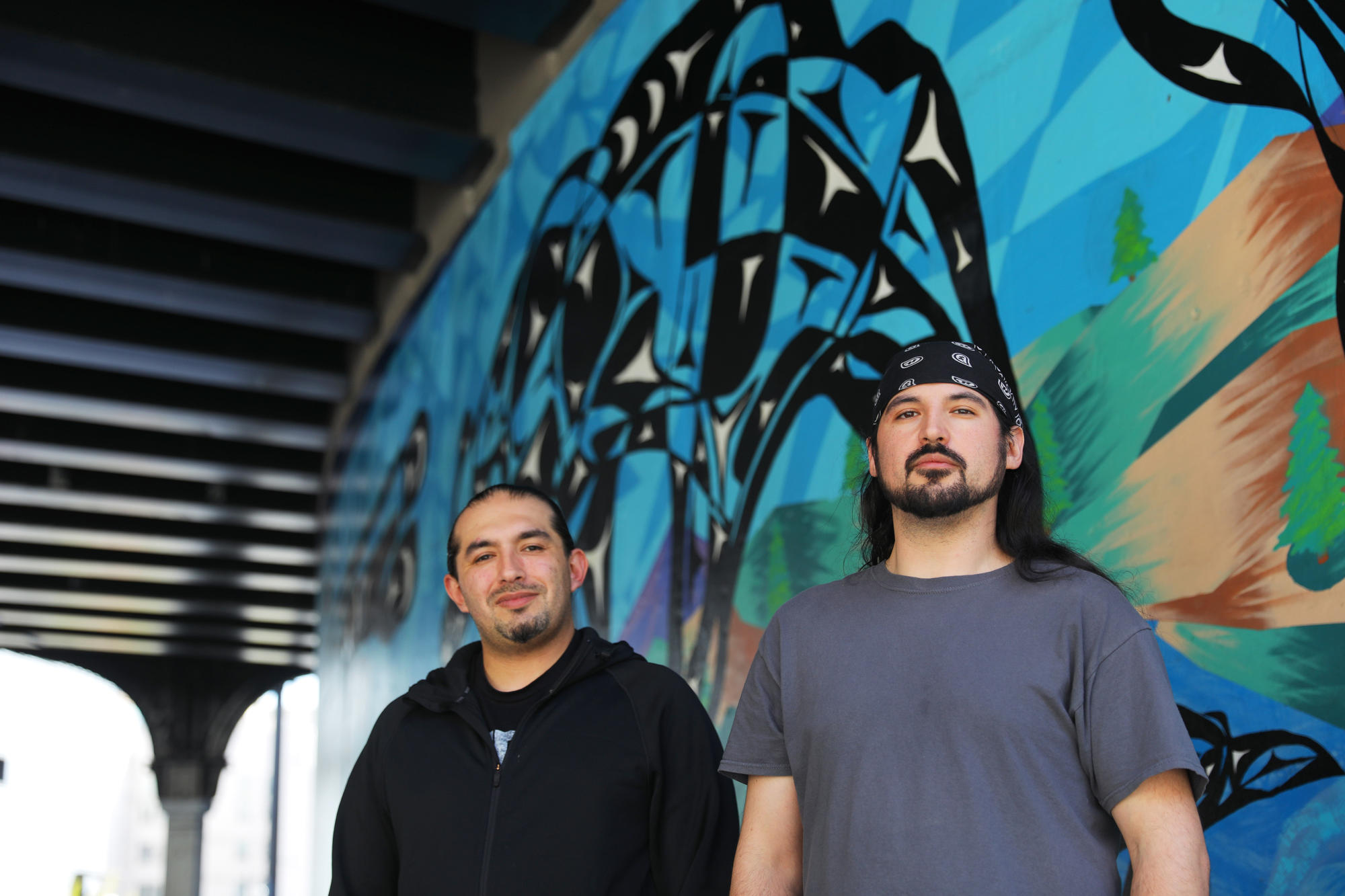
“A trendy gray palette marks the interior. For one wall of the exterior, Berkeley Rep has commissioned a four-story mural by Oakland artist Cece Carpio to honor Ohlone peoples, on whose ancestral and unceded lands Berkeley Rep now sits.

“The theater has owned the property where the Medak Center was built since 1991, but for years it contained an empty lot and a warehouse. The project was a decades-long dream until Signature Bank helped finance it. The theater company finally broke ground in 2019.

“One comparable local facility is the San Francisco Conservatory of Music’s Ute and William K. Bowes Jr. Center for Performing Arts, which opened in 2020 and can house 400 conservatory students and 10 visiting artists, as well as 52 students from the San Francisco Ballet School. Those students pay for rooms, however, while Berkeley Rep’s fellows get free housing as part of their contract as workers.

“ ‘The Bowes Center brought together a range of our ambitions: positioning the institution right in the middle of Civic Center, providing much needed additional performance and teaching space, giving our students beautiful, safe accommodations in a place where they can work and live,’ said President David H. Stull.

“That meansfor example, a guest artist such as superstar Chinese pianist Yuja Wang might live and create and record music in the same building as students. …

“The San Francisco Ballet School has been able to increase student beds from 40 to 52 since the Bowes Center opened, said Jennie Scholick, director of education and training.  And now that students live right next to where they take classes, as opposed to a bus ride away in Pacific Heights, the school can accept younger students.

“At Berkeley Rep … the company’s first fellows [were] set to move into the new building Sept. 26, followed by visiting artists in Berkeley Rep’s Ground Floor program, and then the cast and creative team for Wuthering Heights later in the fall.

“The board’s commitment to the Medak Center through pandemic delays and uncertainty, Medak said, was ‘the greatest statement of our intent to exist on the other side of this pandemic. Building this building is a statement of optimism.’ ”

It’s not something every city will have the priorities or resources to tackle, but it’s an inspiring idea, don’t you think? More at the San Francisco Chronicle, here.

Read Full Post »

Photo: Suzanne and John’s Mom.
My teabag tag: “The difference between a flower and a weed is a judgment.” In fall, it hits us that wild asters are flowers. Bees go bananas for them. The bees knew all along.

Happy October. Time to gather recent photos to share. I use only my phone for photography, I’m sorry to say, so if you want to see what a real camera can do with nature scenes in my region, check out bloggers like jmankowsky and her site From My Window, here.

The first two pictures below are by Sandra M. Kelly and were taken at the Painted Rock in New Shoreham, Rhode Island.

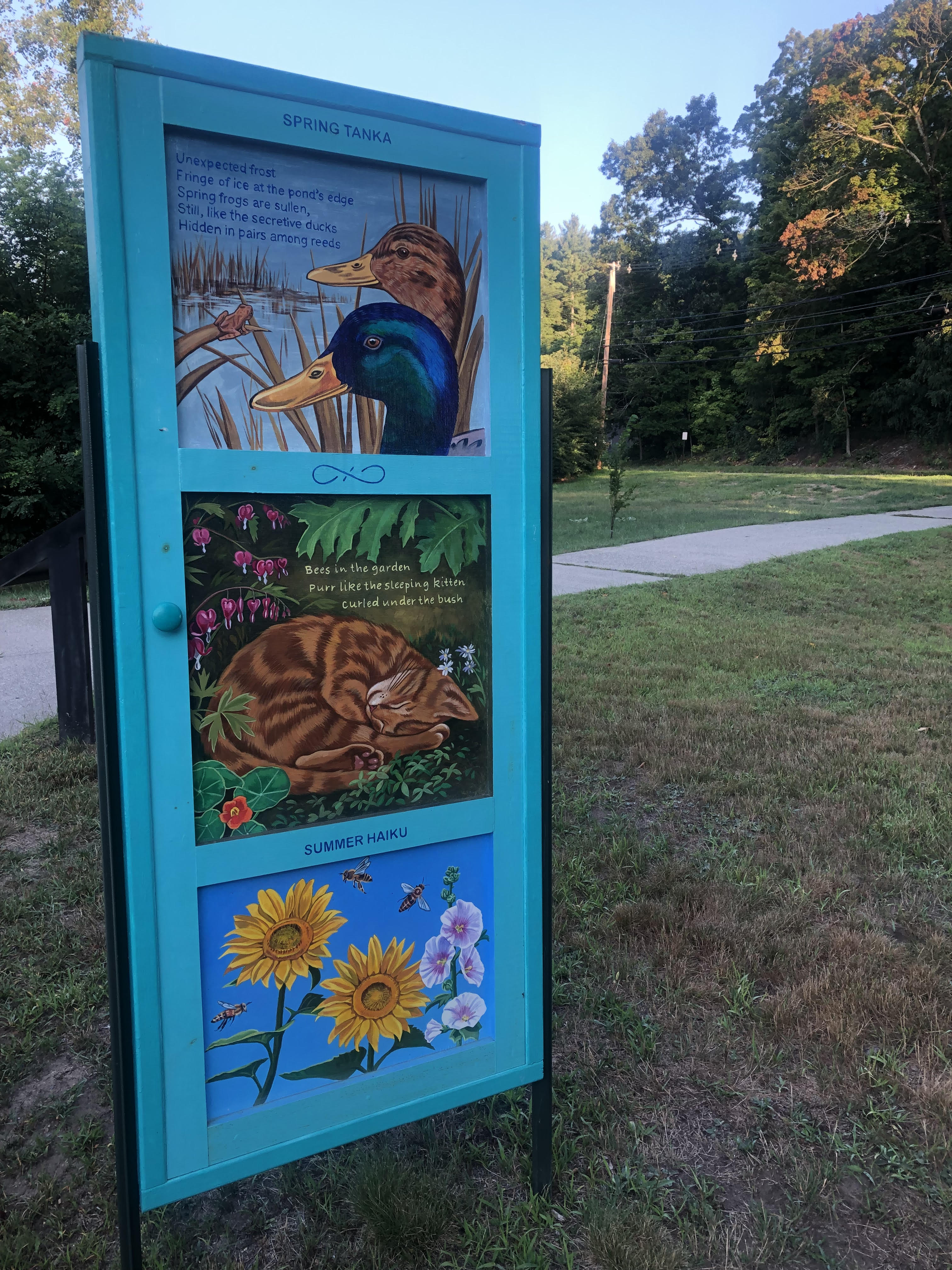
In the Massachusetts town where I live, there are lots of painted doors, an Umbrella Arts initiative. The one pictured, over by the parking lot for two childhood homes of Louisa May Alcott (the Wayside and the Orchard House), features four kinds of poems for the four seasons.

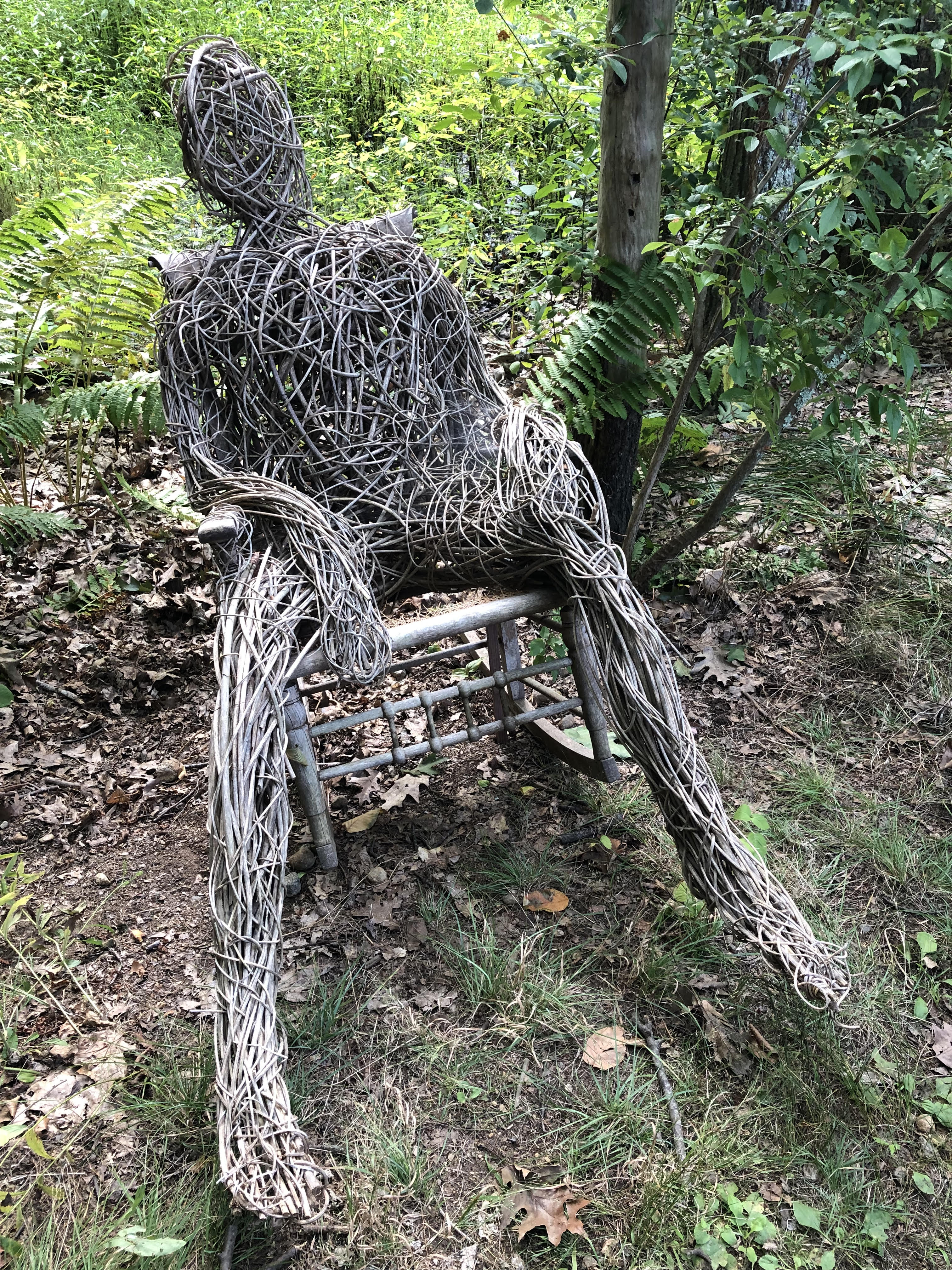
The next two photos were taken at the Umbrella’s annual woodland art show. The theme this year had to do with getting out of balance with nature. The problem is, most of the artists thought they had to use a lot of plastic to express themselves on the topic. John and the kids and I really didn’t like all the plastic. The real-life frogs in the wetlands were fun though.

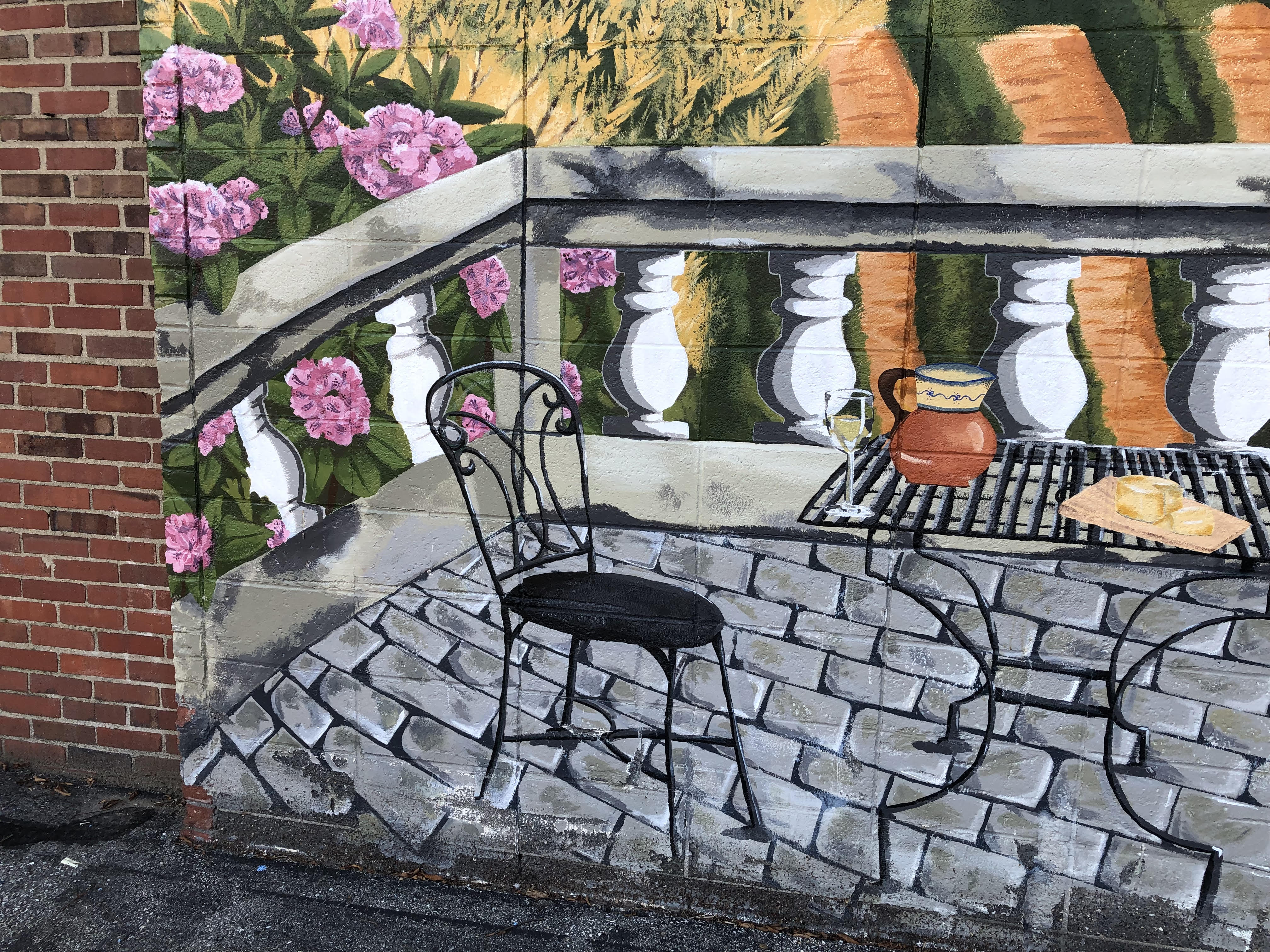
The mural off Thoreau Street has been wearing well. I wrote about its development in 2012, here.

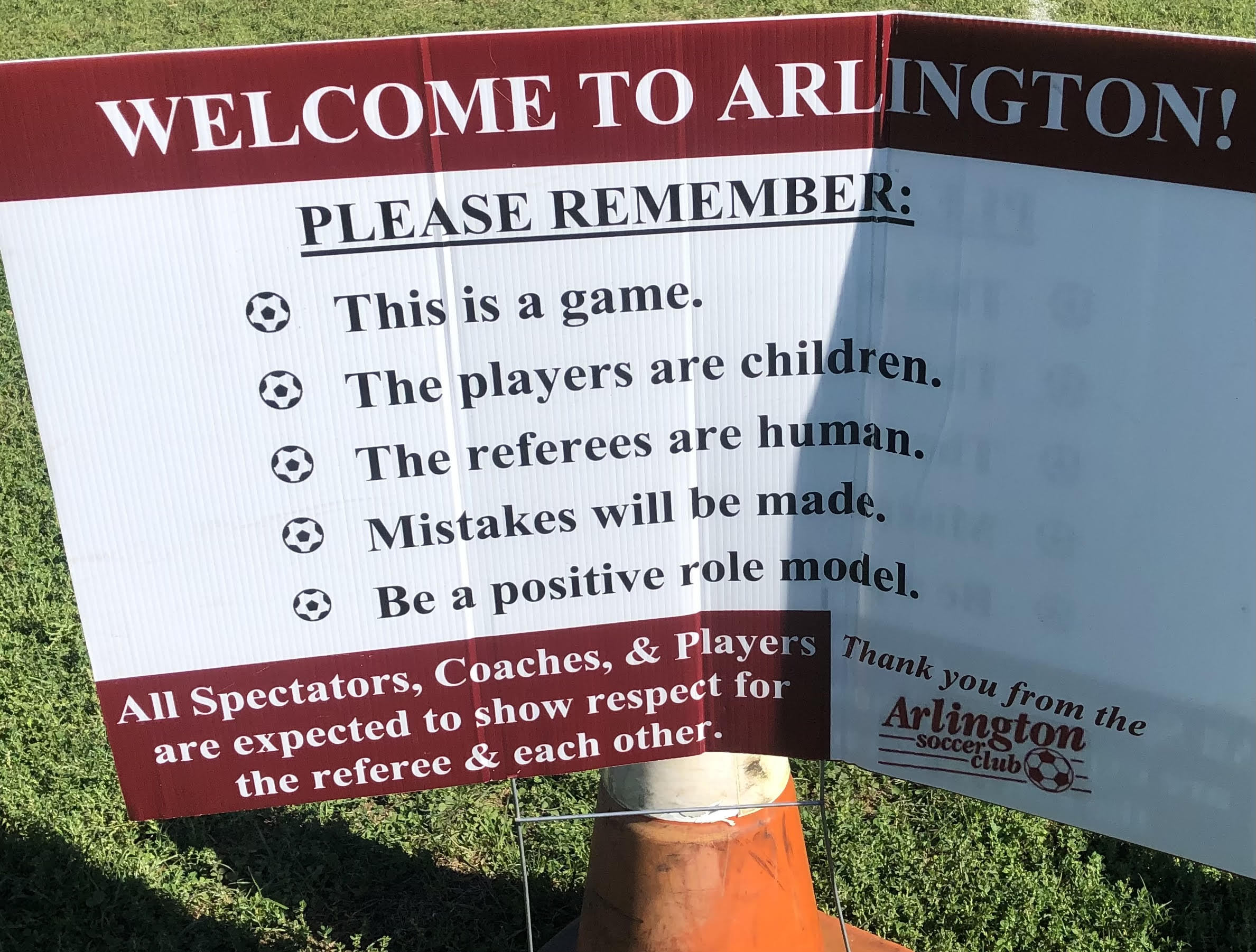
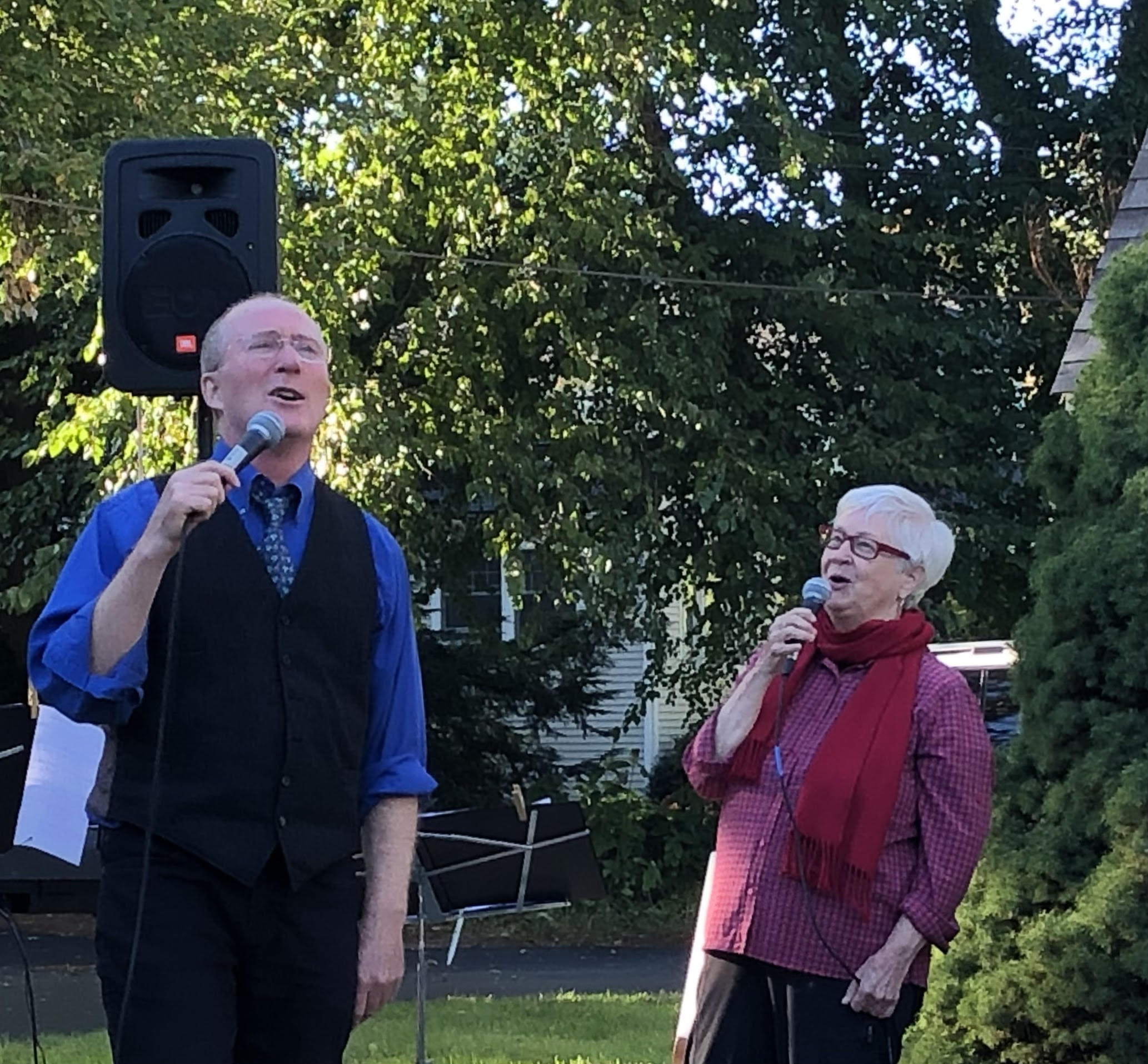
I loved the sign at my older granddaughter’s soccer game. Also loved hearing blogger Will McMillan, Carole Bundy, and Molly Ruggles (not shown) singing at Porchfest.

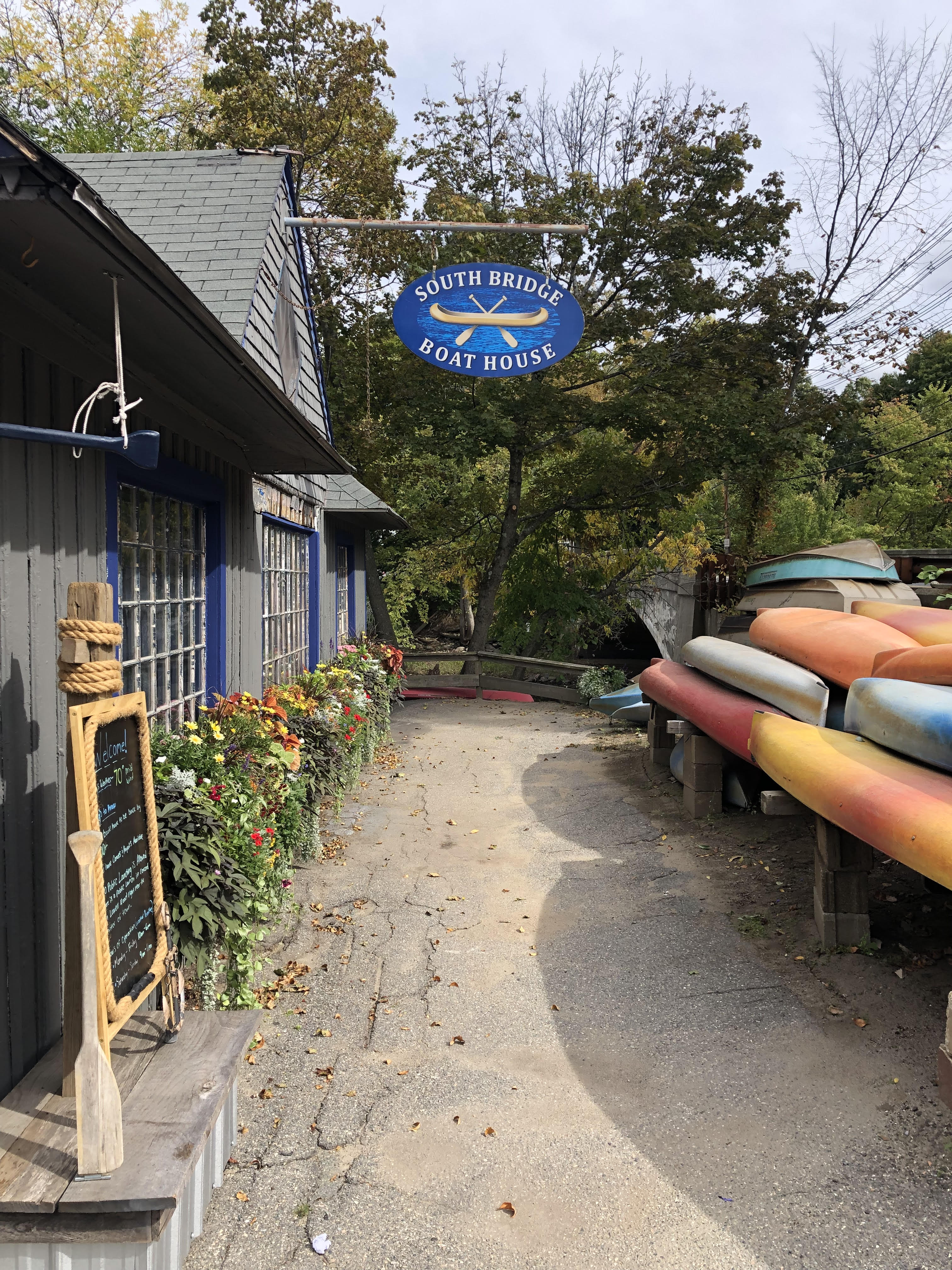
In the second-to-last picture, Boston’s Post Office Square is a lovely urban oasis. And I close with shots of the boat house and the nearly dry Sudbury River in September.

Read Full Post »

Photo: Jon Swihart.
Belly dancer performance and artist lecture at a potluck in Santa Monica. (The potluck founders are moving to a state where they will have to remember to call a potluck “hot dish.”)

A sense of community is important to us all. Today’s story is about artists in California using the act of breaking bread together as a way to build bonds and reduce isolation.

“When artists Jon Swihart and Kimberly Merrill move from Santa Monica to Minneapolis … they will be leaving behind both a cherished home and a remarkable artistic and social legacy. Inspired by their friends Mark Ryden and Marion Peck’s recent move out of state, the couple decided it was time for a change. …

“Paying the home’s mortgage for decades solely by working as an artist is something Jon considers one of his greatest accomplishments. Another is the role he played — along with Kim — in hosting 162 potlucks in their verdant backyard, each one featuring artists or other creative producers who spoke about their life and work.

“ ‘Painting can be so isolating,’ Jon notes. ‘So sometime in the late 1980s I started inviting artists over to the house to talk about their work. Word spread quickly and people started asking if they could join us. The potlucks officially launched in 2003 after we became a couple. At Kim’s suggestion we started using the backyard — and supplying plates and plastic cutlery — and things really took off.’ By the time COVID-19 forced Jon and Kim to discontinue them in 2020, the artist potlucks had taken on a life of their own, drawing as many as 200 people at a time from an email list of over 2,500 names. …

“The backyard potlucks followed a consistent formula that worked because so many people stepped up to contribute and help out. Around 6pm on a Saturday night, a long table filled up with potluck delicacies — both store bought and homemade — while a drink table was stocked with wine and beer. Jon and his tech crew would set up for the artist slideshow as Kim greeted visitors in her studio at the back of the house.

“The house itself, although only 1,300 square feet, was one of the attractions. Built in 1927, its tile floors, beamed ceilings, and arched doorways offered a sense of warmth and comfort. On top of that, Jon’s trove of antiques and art objects — which include a painting attributed to Jean-Léon Gérôme that was later authenticated on the show popular British TV show Fake or Fortune — provided sophisticated eye candy.

“Over time an extraordinary variety of artists stood under the lanterns in Jon and Kim’s backyard, discussing not just their work, but also the events and challenges of their lives.

‘I would tell the speakers to avoid art theory,’ Jon recalls, ‘and instead talk about how a passion for art sustained you through disasters and triumphs.’ …

“Every now and then a potluck broke the mold. At one unforgettable event, a group of fire-spitters recruited from the Venice Beach boardwalk performed on the sidewalk in front of the house, stopping traffic and astonishing the neighbors. Another off-the-charts event was art historian Gerald Ackerman’s talk, which was also a celebration of his 80th birthday. 

“As artist F. Scott Hess recalls: ‘Jerry, the world’s foremost authority on Jon’s favorite artist, Jean-Léon Gérôme, was a longtime friend of all of us. That night in Jon’s backyard there were theatrical recreations of Gérôme paintings, with costumes as close to the originals as was possible. And there was a belly dancer as well. Jerry was thrilled with the acting out of Gérôme’s ‘The Duel After the Masquerade,’ with Brian Apthorp as the wounded harlequin taking a good 10 minutes to die.

“To cap off the evening, Jerry was given a Gerald Ackerman Action Figure, in its original box, a creation of Peter Zokosky, with all the extras a topnotch art historian would need.

“The popularity of the potlucks brought innovations. Trekell Art Supplies began sending merchandise for one-dollar-ticket raffles that raised money to support the events. Artists also began to donate prints or small works of art to be included in the raffles. Artist Eric Davis soon began creating buttons that included a logo and event date along with the featured artist’s name and work. … Davis made between 40 and 100 buttons, which were given away for free: a total of over 7,500 in a span of 14 years.

“ ‘They were open events and anyone could come,’ Swihart comments. Art dealers, critics, students, and collectors began to attend, especially after Greg Escalante — a dealer and the founder of Juxtapoz Magazine — talked them up. Thousands of complete strangers streamed through the house. Amazingly, nothing was ever stolen, which gave Jon and Kim a new faith in humanity. …

“During many of the artist talks — held under strands of paper lamps and a glowing moon — there was absolute silence among the audience. The energy was positive, even magical, and artists who might have seemed unapproachable before laid themselves bare. Again and again the talks humanized artists by revealing them as people who had struggled and who, at some point, had been afraid to experiment with their art. 

“One notable speaker — Robert Williams, the legendary underground comic and ‘lowbrow’ artist — told the crowd how the dominance of Abstract Expressionism had inhibited the development of representational art when he was a student. Because Jon and Kim’s potlucks were not sponsored by an organization or institution, contrarian points of view, like those offered by Williams, were respected and even welcomed. … From Swihart’s point of view, having Robert Williams speak at a potluck was ‘like having Eric Clapton stop by to play in my garage band.’ …

“ It was a cauldron for friendships, conversation, networking, alchemy, and artistry,’ recalls Eric Davis. … Artist Peter Zokosky comments: ‘Even at the time, you knew something rare and miraculous was happening. Jon gave a forum to 100-plus artists over the years, and never once did he give a slideshow of his own work.’

“ ‘The potluck was one of the most satisfying experiences of my life,’ Jon states. ‘We had so many artists on our wishlist when COVID shut them down, but it was time to bring it to an end.’ ” 

More at Hyperallergic, here. No firewall.

Read Full Post »

Photo: Russ Dillingham/Sun Journal.
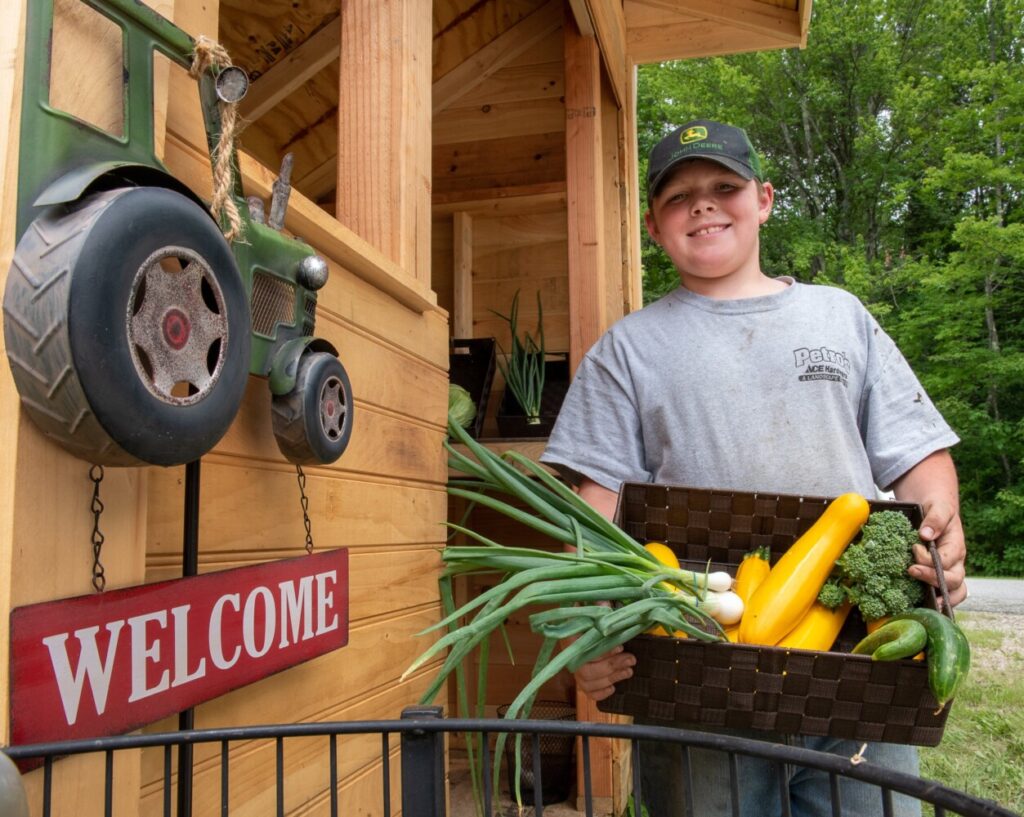
Brayden Nadeau, seen here at age 10, shows off vegetables he grew on his grandfather’s land in Auburn, Maine.

How great to see a kid who’s into agriculture! Cathy Free at the Washington Post reports on a 12-year-old farmer in Maine who got hooked on farming at age 2. There’s a lot to ponder here about what a close relationship with a grandparent can lead to.

“Brayden Nadeau was 2 when he helped his grandpa steer a John Deere tractor, and he was 3 when he helped feed the hogs and chickens on the family farm in Minot, Maine.

“At age 5, when he was asked by his kindergarten teacher what he hoped to do for a living one day, nobody was surprised when Brayden said he was going to be a farmer, said his mother, Kari Nadeau. …

“Brayden, now 12 and in seventh grade, is already on his way to achieving his career goal. On his own initiative, he does much of the work on his grandfather Dan Herrick’s 25-acre farm, and on the 275 acres that neighbors let Herrick use to grow hay, Kari Nadeau said. Brayden plants, tends and harvests produce, and sells his bounty.

“For the past two years, he has run Brayden’s Vegetable Stand, selling fresh food such as corn, cabbage and tomatoes. He used his savings to buy a new store structure in May 2021 for about $7,000 and install it at the edge of his grandfather’s farm. He posts live updates on Facebook about what’s fresh each day.

“He works on the farm and at his store 10 hours a day in the summer, and four hours a day (mostly after school) when school is in session. He’ll restock his store before school at 7:30 a.m. and leave an honor box for customers to drop in their money.

“Brayden said he puts most of his earnings into savings, but uses some of the money to add improvements to his veggie stand, such as a new floor.

“ ‘I’ve become his employee,’ joked Herrick, 64, adding that he still harvests hay on the farm but has allowed Brayden to take over most other responsibilities. ‘I taught him the basics, and he took it from there. … Brayden pretty much runs the show now. [He] knows how to use the equipment better than I do.’

“Brayden said it’s his favorite way to spend his days. ‘I really enjoy it — even getting up at 5 in the morning,’ he said. ‘I’m not into video games and goofing around on my phone like some of my friends. I’d rather be busy on the farm.’ …

“Maine was among the top five states with declining farmland between 2012 and 2017, according to a survey done by the U.S. Department of Agriculture. In rural towns like Minot in southern Maine, many families eventually sell their farms or stop working the land because their children find other ways to make a living, said Herrick, who has farmed for most of his life.

“ ‘It’s a hard job, and you really have to enjoy doing it,’ he said. …

“Brayden’s sense of duty to the farm has also helped to foster a close relationship with his grandparents, said his grandmother, Marie Herrick, 60.

“ ‘Nobody has ever asked Brayden to do this — there’s just nowhere else he’d rather be,’ she said. ‘It’s been a joy all these years to watch him learn everything he can from Dan.’

“At 6:30 every morning, one of Brayden’s parents drives him two miles to the Herricks’ farm, and he goes to work.

“Brayden said he feeds the livestock (100 chickens, 60 pigs, 30 laying hens, 20 turkeys and six cows), cleans stalls, picks ripe produce and gathers eggs. Then he stocks the shelves in his vegetable stand, which he operates until Thanksgiving.

“Every spring, he said, he starts his vegetables from seed, then puts them into the ground. To make the task of caring for the plants easier, he recently bought a drip irrigation system with money he’d saved from his produce sales. …

“His customers said they look forward to seeing what he has to offer each day, from broccoli and tomatoes to eggplant and summer squash. Brayden also sells bacon and sausage made from his grandpa’s hogs and loaves of his grandma Marie’s fresh zucchini bread, as well as jars of her zucchini relish.

“ ‘Zucchini is probably the favorite thing I plant,’ he said. ‘It’s always been amazing to watch something grow from an itty-bitty seed.’

“Some of his customers feel the same way about watching Brayden grow.

“ ‘He’s the hardest-working kid I’ve ever known,’ said customer Wendy Simard, 48, who was also Brayden’s reading teacher at Minot Consolidated School. …

“Simard said that when she taught Brayden in first grade, he was drawn to books about farming, and liked drawing pictures of tractors, pigs and cows.

“ ‘Now he comes in to tell our pre-K students all about vegetables, and he’ll bring in a baby pig at the end of every year to show the kids,’ she said.”

More at the Post, here.

Read Full Post »

William Shakespeare.
Even the Bard made mistakes.

Blogger Asakiyume and I met in the 1990s when we were both copyediting at a management magazine where a witchy person taught us the nitty gritty of the trade. There was another person who would argue with our capitalization, wording, or punctuation decisions by saying she had a PhD in English. As if that had anything at all to do with the work-a-day craft! Those of you who value good copyediting may get a kick out of today’s article from a site called the Millions.

Ed Simon writes that the work of print setter is the old days was “laborious, and for smaller fonts, such as those used in a Bible, the pieces could be just a millimeter across. Long hours and fatigue, repetitive motion and sprained wrists, dim light and strained eyes — mistakes were inevitable.

“The King James Version of the Bible has exactly 783,137 words, but unfortunately for the London print shop of Robert Barker and Martin Lucas, official purveyors to King Charles I, their 1631 edition left out three crucial letters, one crucial word — ‘not.’ As such, their version of Exodus 20:14 read, ‘Thou shalt commit adultery.’ …

“Literature’s history is a history of mistakes, errors, misapprehensions, simple typos. It’s the shadow narrative of expression — how we fail because of sloppiness, or ignorance, or simple tiredness. Blessed are the copyeditors. …

“A 1562 printing of the sternly doctrinaire translation the Geneva Bible prints Matthew 5:9 as ‘Blessed are the placemakers’ rather than ‘peacemakers’; an 1823 version of the King James replaced ‘damsels’ in Genesis 24:61 with ‘camels,’ and as late as 1944 a printing of that same translation rendered the ‘holy women, who trusted God … being in subjection to their own husbands’ in 1 Peter 3:5 as referring to those pious ladies listening to their ‘owl husbands.’

“But not all errors seemed as innocent. … A 1653 printing stated that it was the unrighteous who would inherit the earth, a 1716 edition records Jeremiah 31:34 as telling us to ‘sin on more,’ and a 1763 volume replaces the penultimate word ‘no’ with ‘a,’ so that Psalm 14:1 reads ‘the fool hath said in his heart there is a God.’ … In a 1612 errata … Psalm 119:161 had the first word of the line ‘Princes’ replaced, so that it now read, ‘Printers have persecuted me without cause.’ …

“Depending on whether ambiguity is a mistake or a strength, the law often codifies uncertainty. The U.S. Constitution isn’t particularly long — only a few pages — and yet it’s filled with grammatical and spelling errors, as well as confusing syntax that bedevils contemporary citizens. … Significant are the idiosyncrasies in punctuation: commas are placed between nouns and verbs, errant commas in the Second Amendment makes it unclear as to whether the right to bear arms is reserved for individuals or only ‘well regulated militias,’ and a semicolon in Article VI seems to invalidate the Constitution itself. ‘The Constitution, and the Laws of the United States which shall be made in Pursuance thereof; and all Treaties made, or which shall be made, under the Authority of the United States, shall be the supreme Law of the Land.’ Strictly speaking, the end stop of that semicolon implies that ‘all Treaties made,’ and not the Constitution, shall be the supreme law of the land, and yet we’ve always just assumed it’s an obvious typo. …

“Theodor Dreiser‘s An American Tragedy describes a pair of lovers as being ‘like two small chips being tossed about on a rough but friendly sea,’ while Daniel Defoe tells us that Robinson Crusoe stripped naked, swam out to his sinking ship and retrieved supplies, which he then stored in his pockets on the returning laps. …

“For all his genius, the Bard was often uninformed or lazy, author of a veritable comedy of errors. The Winter’s Tale references landlocked Bohemia as having a coast. In Julius Caesar, Cassius uses a clock some 14 centuries before they were invented, and in The Two Gentlemen of Verona they sail from that titular city to Milan, a geographic impossibility. …

“In his 1816 poem, John Keats famously compares the experience of his first reading George Chapman‘s Homeric translations to being ‘like stout Cortez when with eagle eyes/He stared at the Pacific,’ except the first European to see the western coast of that ocean was actually Vasco Núñez de Balboa. Did Keats just not know this, or was this intentional? Does the purposefulness or not of the inaccuracy matter to how we read the lyric? …   

” ‘A slip of the tongue can be amusing,’ notes Sigmund Freud in The Psychopathology of Everyday Life. … While campaigning for Mitt Romney in 2012, Senator John McCain said, ‘I am confident with the leadership … President Obama will turn this country around,’ inadvertently endorsing the governor’s opponent.”

Some of this is too funny! Read it all here, at the Millions. It’s a long article. No firewall.

Read Full Post »

053017-rockc-wall-Artipelag-bathroom
Photo: Suzanne and John’s Mom.
The ladies room at the Artipelag museum in Sweden.

My friend Penny always knew where to find the nicest public bathrooms in Philadelphia. It turned out to be an important bit of knowledge. Where I live now, the reliable church bathroom has been closed since Covid, but the national park bathroom is available most of the year. And Debra’s Natural Gourmet just added two gorgeous public bathrooms in the new branch, Debra’s Next Door. I always buy something when I go into a shop to take advantage of its facilities.

Meanwhile, have you noticed how glam the museum bathrooms have gotten in recent years? Hyperallergic shared a great list for your amusement (and hour of need).

Sarah Rose Sharp wrote, “A recent poll by the American Alliance of Museums (AAM) asked museum professionals to submit their nominations for best museum bathrooms, and the results prove that Marcel Duchamp was only the first, but not the last, to find art in the commode. Joseph O’Neill, a content manager and editor for the AAM, dutifully compiled the results.

“ ‘Every month, we put out questions for museum people to connect around, and we were surprised as anyone to find out how much enthusiasm there is for this fun topic,’ O’Neil told Hyperallergic. …

“The most-mentioned nominee was Smith College, home to two famous artist-designed bathrooms: The men’s bathroom was designed by Sandy Skoglund while the women’s bathroom designed by Ellen Driscoll. [Patti: Do you know about these?] …

“Next up is the John Michael Kohler Arts Center (JMKAC) in Sheboygan, Wisconsin. Obviously, bathrooms are going to be a point of pride for an institution founded by the manufacturer of bathroom implements, including sinks, toilets, and more. But JMKAC has gone above and beyond, with the ‘Sheboygan Men’s Room,’ furnished with hand-painted porcelain tile and bathroom fixtures by once-artist-in-residence Ann Agee; Cynthia Consentino’s ‘The Women’s Room’; and Matt Nolen’s ‘The Social History of Architecture (men’s washroom).’ …

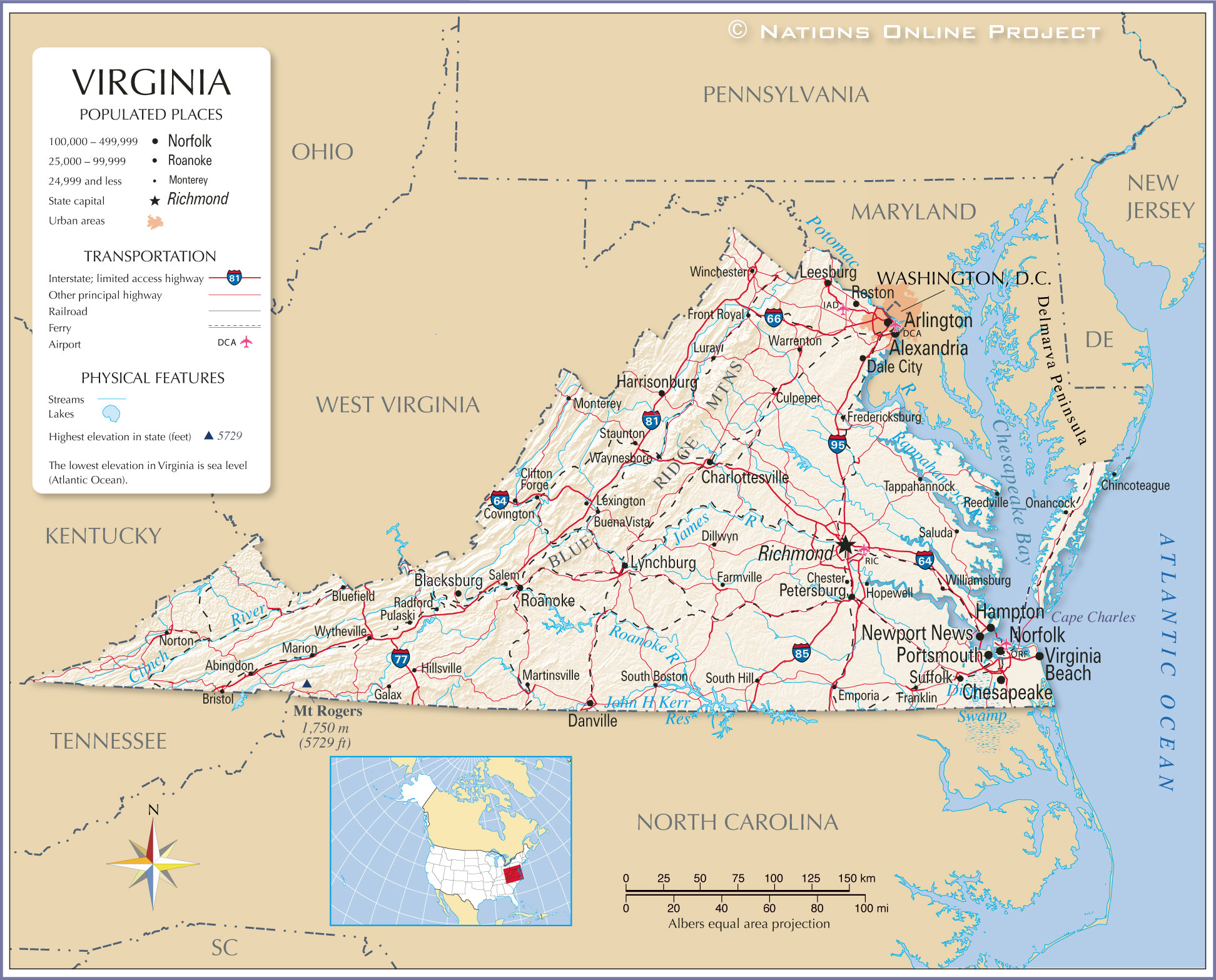
“Coming in third, the Mariners’ Museum and Park in Newport News, Virginia, garnered praise for its bathroom series, A Head of Its Time: A Brief History of Going at Sea. …

“Of course, modern artists know that everything can be art, so it’s no surprise that SFMOMA is placed fourth on the list for its series of monochrome bathrooms in different colors on every floor, designed by the architecture firm Snøhetta. ‘This one makes me feel like I’m peeing in a Kubrick movie,’ commented Instagrammer Gabriel Toya-Meléndez.

“Fifth on the list is the Glore Psychiatric Museum, located on the site of a former psychiatric hospital in St. Joseph, Missouri. … The themed bathrooms are full of mind games, including hauntings, phobias, and worst of all, Sigmund Freud. …

“In sixth place, there was a collective mention of various 21c Museum Hotel locations. Never content to limit visitor experience to the galleries, all 21c locations feature art that extends into elevators, on the hotel art TV channel, through lobbies, and yes — even into the bathrooms.

“The Charleston Museum snagged seventh place with its cheeky chamber pot installation in the restroom. … The Baltimore Museum of Art celebrated hometown hero John Waters, granting his request that the museum’s bathrooms be renamed in his honor in exchange for his donation of his private art collection to the museum. The result is four new all-gender washrooms. …

“The Denver Art Museum closed came in ninth with its set of Singing Sinks, designed by Denver artist Jim Green. … The sinks are installed in the second-floor bathroom at the Martin Building Welcome Center, and sing ‘Row, Row, Row Your Boat’ while they run.

‘You can get the sinks to sing in canon if you time it right,’ nominator Melody Lowe told the AAM.

“Finally, the Carle Museum rounds out the top 10. [Asakiyume and I have been to that one!] The picture book museum was founded by Eric Carle, author of the iconic children’s book The Very Hungry Caterpillar. … All the urinals feature a tiny fly.”

More at Hyperallergic, here. No firewall.

I also want to draw your attention to the bathroom at Artipelag, a beautiful museum in Sweden. My photo, above, doesn’t do justice to what Trip Advisor calls “The World’s Most Beautiful Bathroom“!

Read Full Post »

Image: Nations Online Project.
At an unnamed trailer park in Northern Virginia, residents help one another.

One recent morning as I returned from my walk, I was stopped by a woman even older than me walking slowly with a cane. She wanted directions to the hospital, apparently to visit a patient. “But,” I said, “you can’t walk there! It’s over a mile!” “I have to get to the hospital,” she said.

After trying unsuccessfully to come up with other transportation options for her (my own car was in the shop), I gave her directions and off she went. I hope she made it. Sometimes women are beyond amazing.

In August, Theresa Vargas at the Washington Post, wrote about how a group of immigrant women turned a manufactured-housing park into a real community.

“The heat was unforgiving and the mosquitoes were biting, but the women who filled the foldout chairs in Imelda Castro’s backyard didn’t seem bothered. During the pandemic, that small strip of greenery tucked behind a Northern Virginia trailer park has been a haven for them. It has served as a classroom, an office and a community play space.

“That backyard is where the women learned from a health-care worker what medical services their children are entitled to receive. That backyard is where a DJ played music on Día del Niño, Day of the Child, and the community invited a police officer to take a swing at a piñata. ‘She had never hit one before!’ said a woman who captured that moment on video. That backyard is where, every Friday, the women form an assembly line and empty with impressive efficiency a truck filled with fresh produce and other goods, and then make sure everyone in the trailer park who needs food gets it.

“ ‘If we didn’t have this community we’ve built, we’d be very vulnerable,’ Rosalia Mendoza said in Spanish as she sat in one of those foldout chairs. ‘We’re united, and it makes us stronger. What affects one trailer affects the whole community.’ …

“That’s why the women want people to know what they’ve created in that trailer park on Route 1. From a shared struggle, they have built something special — a network of moms who regularly check on one another, inform one another and push one another.

To spend time with those moms is to recognize this: Alone, some could find themselves drowning. But together, they’ve been able to do more than tread water.

“ ‘This is unique,’ Patricia Moreno said of the community. ‘This is not everywhere.’

“Moreno has spent the last two decades as an outreach worker for Anthem HealthKeepers Plus, a job that takes her into low-income communities throughout Northern Virginia to teach residents about their Medicaid benefits. Her fluency in Spanish and willingness to go into even the most neglected of neighborhoods has made her a welcome presence among Latino immigrants who don’t trust easily authority figures.

“Moreno first learned about the women when one of them, Ana Delia Romero, called to ask whether she could come speak to them about health care. …

“The population of the trailer park is one that nonprofit workers often worry about. The majority of the residents are immigrants from Central and South America, and their families are tied to the local economy by threads that are usually among the first to be severed during economic downturns. Most of the men work in construction and restaurant jobs, two industries that were hit hard during the pandemic, and many of the women don’t work because of a lack of access to transportation and child care. In the last few years, several families have gone weeks without income, and some have faced eviction.

“Moreno said many people in the communities she visits are hesitant to ask for help, or accept it, but these mothers have worked hard to turn their trailer park into a village. They watch one another’s children. They give one another rides. They invite people to come teach them about subjects that will benefit their families and their neighbors. …

“ ‘I’ve been doing this for 20 years, and I’ve never seen a system like this,’ Moreno said.

“On the day I visited, she sat with eight of the women in the foldout chairs. Also there was Ivana Escobar, director of collective impact for United Community, a nonprofit that provides food to the trailer park and support to the women.

“ ‘We go to every community in this area,’ Escobar said, ‘and these women have made something stronger than anywhere else.’

“As the women tell it, Ana Delia Romero, who is partially blind, is the one who started bringing them together. She was the first person in the community to test positive for the coronavirus, and she ended up in the hospital for six days. After she recovered, she started volunteering with the Health Department. She knew many Latinos were hesitant to learn about the virus and the safety precautions they could take, and she wanted to help get that information to more people.

“She also wanted to make sure none of her neighbors was going hungry during the pandemic. She got involved with free food-distribution efforts and started knocking on her neighbors’ doors to ask whether they had enough to eat. …

“Escobar said that Romero asked United Community whether a truck could deliver food to the trailer park, and now, a truck comes every Friday. When it arrives, the women unload the contents and distribute them. On the day I met the women, all but one were wearing a United Community T-shirt. Escobar said they don’t get paid by the organization. They handle the food distribution as volunteers.

“ ‘The women here, they mobilized themselves,’ Escobar said. ‘You wouldn’t even know they’re struggling because of how they show up.’ …

“ ‘When Ana asked, “Who wants to volunteer?” the answer was “Me, me, me,” ‘ Elizabeth Villatoro said. ‘This community doesn’t have excuses. Ana doesn’t say, “I lost my vision, I can’t do anything.” Alberta doesn’t say, “I have children with special needs, I can’t do anything.” We do what we need to do.’ “

More at the Post, here.

Read Full Post »

When Suzanne and John were small, we really got into the holiday books by British author-illustrator Raymond Briggs: the grumpy Father Christmas who gets sick on his vacation in the south of France, the silent, genial Snowman.

My husband pointed out this obit on Briggs.

Richard Lea reported at the Guardian, “Raymond Briggs, the writer and illustrator who delighted children and inspired adults with bestselling cartoons and picture books, died on Tuesday morning aged 88, his publisher Penguin Random House has said.

“Ranging from the enchanting magic of The Snowman to a devastating apocalypse in When the Wind Blows, Briggs created a host of much-loved characters including his angst-ridden Fungus the Bogeyman and his curmudgeonly version of Father Christmas. A career spanning six decades brought him numerous awards, with television adaptations making him a fixture of British Christmas viewing. …

“Born in 1934, Briggs went to the local grammar school in Wimbledon. His decision to leave school at 15 to go to Wimbledon Art College may may have puzzled his milkman father, but he was not dreaming of becoming Michelangelo.

” ‘I never thought about being a gold-framed gallery artist and was only pushed into painting when I went to art school,’ he told the Guardian in 2004. ‘I went there wanting to do cartoons.’

“Briggs’s interest in commercial art was met with horror at college – one teacher spluttering, ‘Good God, is that all you want?’ – and after national service Briggs met with more snobbery while studying at the Slade School of Fine Art in London. But when he left at 23, his talent for drawing realistic images from memory meant it was not hard to find work as an illustrator for magazines, advertisers and books.

“As the 1960s dawned, Briggs had begun to despair at the quality of the books he was illustrating. ‘They were so bad that I knew I could do better myself,’ he told the Guardian, ‘so I wrote a story and gave it to an editor hoping he would give me some advice. But instead he said he would publish it, which shows what the standard was like if a complete novice who had never written anything more than a school essay could get his first effort published.’

The Strange House was published in 1961 and five years later, his 800 illustrations for an edition of The Mother Goose Treasury won him the prestigious Kate Greenaway medal. Jim and the Beanstalk, a warmhearted sequel to the traditional tale, came in 1970.

“In 1973, he won a second Kate Greenaway medal and a wider audience with Father Christmas. This 24-page strip cartoon imagines Santa Claus as a grumpy old man, grumbling his way through his busiest day of the year: Christmas Eve. We follow him as he wakes up – ‘Blooming Christmas here again!’ – and sets off on his round, the sparse dialogue a litany of complaints about ‘Blooming aerials,’ ‘Blooming cats,’ ‘Blooming soot,’ ‘Blooming chimneys’ and all the ‘Stairs, stairs, stairs.’ …

“The same spirit infused Briggs’s 1977 Fungus the Bogeyman, which imagined Fungus living in dank, smelly tunnels evoked in a palette of mud brown and acid green. Heading out at night to frighten people on the surface, Fungus ponders the futility of existence: ‘There must be more to life than this.’ The Guardian declared it suitable ‘for children over the age of 10 – or adults – with murky minds and horrid senses of humor,’ while the Times called it ‘the ideal picture book for an age of punk rock and general glorification of ugliness.’ It sold 50,000 copies within a year.

“Briggs turned next to pastels in 1978’s The Snowman, a wordless story about a boy whose snowman comes to life. But this magical story was still grounded in harsh reality; the next morning, the boy wakes to find only the snowman’s hat and scarf listing on a pile of melting snow. ‘I don’t have happy endings,’ Briggs told the Radio Times in 2012. ”I create what seems natural and inevitable. The snowman melts, my parents died, animals die, flowers die. Everything does. There’s nothing particularly gloomy about it. It’s a fact of life.’

“Channel 4 didn’t duck the issue with its 1982 animated version, but sugared the pill by adding a visit to Father Christmas and a soundtrack with a piping choirboy. Despite acknowledging the need for a film to be commercially viable, Briggs told the Guardian in 2015 that he hated it at the time and still found it corny. But the animation became a fixture on festive TV schedules, lending Briggs a Christmassy reputation that only grew after television versions of Father Christmas in 1991 and Fungus the Bogeyman in 2004 and 2015.

“Meanwhile, Briggs turned away from fantasy, with picture books tackling nuclear war (When the Wind Blows), the British invasion of the Falklands (The Tin-Pot Foreign General and the Old Iron Woman) and an account of his parents’ marriage (Ethel and Ernest). But he rejected the idea that his work was divided into books for adults and books for children.

“ ‘There are a few books which are obviously for small children,’ he told the Guardian in 1999, ‘but I don’t usually think about whether a book is for children or adults. After a child has learned to read fluently, at about eight or nine, then the whole idea of categorizing them seems a bit daft.’

“Briggs’s final book Time for Lights Out, a ‘hotchpotch’ of drawings, verse, memories quotations published in November 2019, looks death square in the face. In it, he imagines ‘future ghosts’ looking around his house in Sussex: ‘There must have been / Some barmy old bloke here,’ he writes, ‘Long-haired, artsy-fartsy type, / Did pictures for kiddy books / Or some such tripe. / You should have seen the stuff / He stuck up in that attic! / Snowman this and snowman that, / Tons and tons of tat.’ “

More at the Guardian, here. No firewall.

Read Full Post »

Photo: Genna Martin/Crosscut.
Writes Crosscut, “In their roles as King County support services specialists, Kirk Rodriguez, right, and Joe Barnhart walk the area around the King County Courthouse and City Hall Park, as they build relationships with those who live or hang out in that area, … using their own lived experiences with homelessness to form connections.”

After a recent post on better approaches to homelessness, Hannah sent me a link to a New York Times opinion piece by Maia Szalavitz.

“The needs of homeowners and businesses and those of people who are unsheltered often conflict, ” she writes. “Community leaders, faced with increasing crime and disorder, frequently see police sweeps as the only answer, while advocates for homeless people argue that this response is merely a stopgap that does more damage than good.

“But what if there was a way to stop shifting ‌‌people from encampments to jails to shelters to hospitals and back again? In Seattle a unique collaboration among businesses, neighborhood groups, the police, advocates and nonprofits is fighting cynics and misperceptions driven by politics to cut homelessness.

“The coronavirus pandemic presented Seattle with a crisis and an opportunity. In early 2020, authorities closed congregate shelters, emptied jails and stopped new arrests for minor crimes. Lisa Daugaard, a lawyer, saw a rare chance to develop a new approach to addressing homelessness that didn’t involve law enforcement.

“She’d already had success in getting officials to cooperate across siloed systems: In 2019, she won a MacArthur ‘genius’ award for helping to create a program originally called Law Enforcement Assisted Diversion, which has now been replicated in over 80 jurisdictions across the United States.

“Instead of re-incarcerating homeless people who typically already have long histories of minor arrests, police departments that participate in LEAD refer them to case management services. The program has an overall philosophy of harm reduction, which, in addition to securing shelter, focuses on improving health, rather than mandating abstinence from drugs and other risky behaviors. LEAD originated as a collaboration of public defenders, the police and prosecutors, who put aside differences to work on solutions.

“Peer-reviewed research published in 2017 by the University of Washington found a 39‌‌ percent reduction in felony charges for participants (a group of over 300 people suspected of low-level drug and sex work activity in downtown Seattle) in LEAD compared with controls and an 89‌‌ percent increase in the likelihood of being permanently housed for participants after they started case management. ‌‌

“At the height of the pandemic, when the police were ordered not to make minor arrests or referrals to LEAD, Ms. Daugaard decided to try something new. With federal pandemic funds becoming available and desperate hotel owners newly open to being paid to house nontraditional guests, she said she saw ‘our chance to show that there is another way.’

“Ms. Daugaard and her colleagues created a program now known as JustCare. JustCare staff members, rather than police officers, would respond to urgent calls about encampments. After building trust with ‌‌local homeless people, the workers would move them into housing without strict abstinence requirements and then help clean up the site. The police would be contacted only as a last resort.

“An early success involved an encampment on a major thoroughfare, Third Avenue‌‌, where around two dozen tents were ‌‌erected directly outside the popular local restaurant Wild Ginger, which had closed under pandemic restrictions. A co-owner, Rick Yoder, wanted to reopen the restaurant in the summer of 2021, but he told me, ‘I couldn’t get the windows repaired because the guy said, “I’m not going near those tents.” ‘ …

“Outreach workers from JustCare managed to house ‌‌those living in the encampment and clean up the site without police reinforcement. …

‌”The work begins with no-strings offerings of items like food, water and clean needles‌‌. These regular visits help‌‌ demonstrate trustworthiness and defuse fear about coercion. Creativity is also a must: Conflicts arise over everything from open drug use to burning items for heat. Workers neutralize tense situations with humor and compassion and by recognizing that often bizarre behavior is driven by fundamental needs like hunger, thirst and exhaustion.

“Alison McLean owns a condo in the Pioneer Square neighborhood and contacted JustCare for help dealing with tents that started being pitched against her building during the pandemic. …

“JustCare began its outreach. ‘Maybe two weeks later, they were like, “We found housing for everybody,” ‘ Ms. McLean said. …

“Between the fall of 2020 and this past spring, JustCare closed 14 encampments and placed over 400 people in hotels and other lodging.”

More at the Times, here. Thanks, Hannah. Good tip.

Read Full Post »

Photo: Kerem Yücel/MPR News.
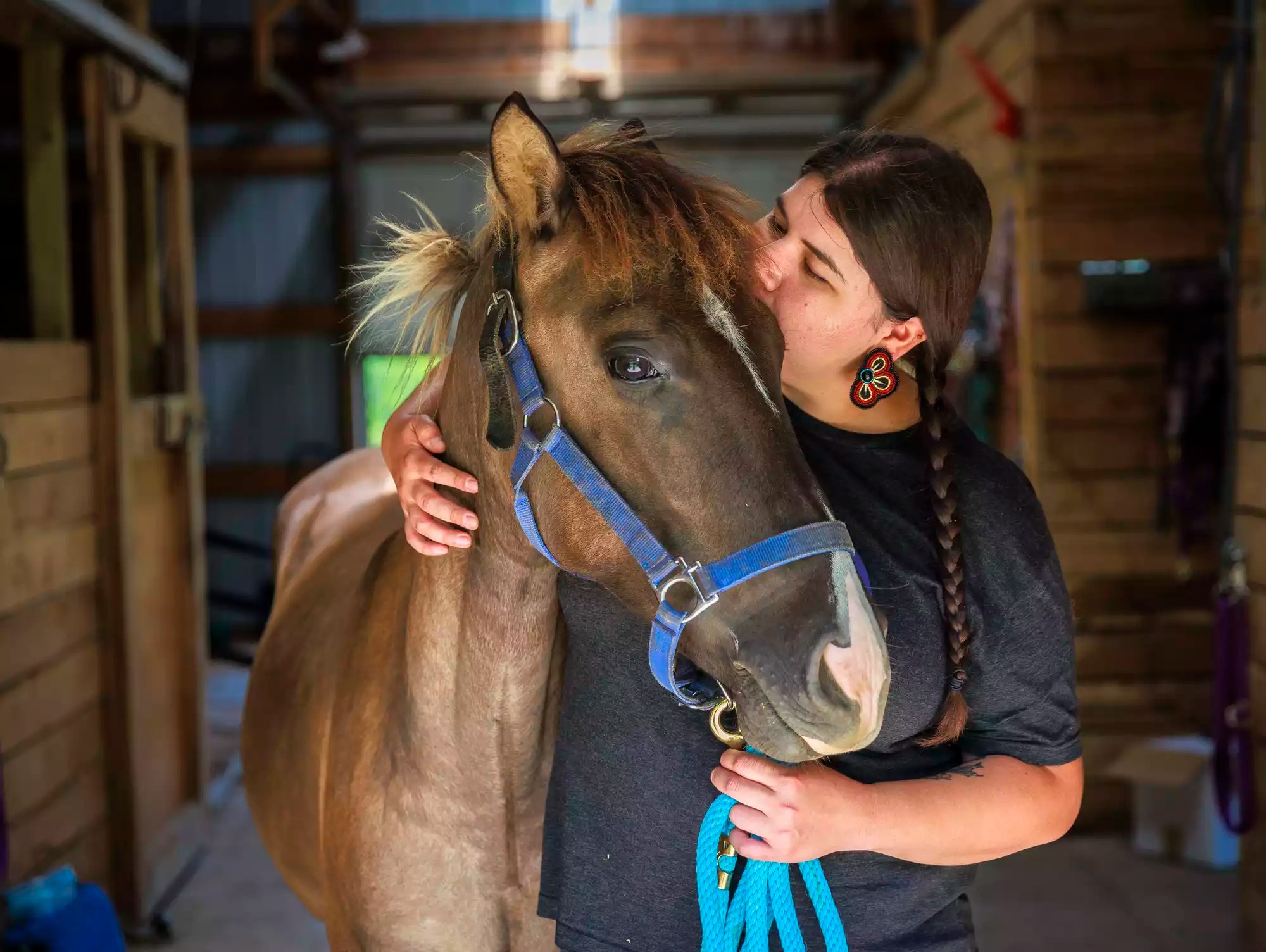
Em Loerzel is a graduate student and White Earth Nation descendant who started The Humble Horse, a nonprofit in River Falls, Wisconsin. The nonprofit is dedicated to reviving the Ojibwe horse, a rare breed adapted to the forests along the Minnesota-Canada border. 

Here’s s story that weaves threads such as indigenous life, endangered species, love of horses — and brings along associations with Icelandic ponies and Misty of Chincoteague.

Dan Kraker writes for MPR News from River Falls, Wisconsin, “Em Loerzel grew up hearing stories about the Ojibwe horse from her uncle, about small ponies that would roam free near Ojibwe communities tucked among the forests and lakes along the Minnesota-Canada border, and help with tasks such as hauling wood and trap lines. 

” ‘I think when people think about Native people and their horses, they think of Lakota people or southwest people, but he would tell me, don’t forget that we are horse people too,’ said Loerzel, a descendant of the White Earth Nation.

“Loerzel has taken that teaching to heart. Earlier this year, the 28-year-old graduate student in social welfare at the University of Washington raised money to rescue six of the horses from a Canada rancher who could no longer afford to keep them. 

“She brought them to a farm owned by a friend outside River Falls, where Loerzel moved last year with her husband. And she started a nonprofit called The Humble Horse, to raise awareness about the breed – which is also known as the Lac La Croix pony, and to help revive it. Only about 180 Ojibwe horses remain, mostly in Canada. 

“The horses are small, sturdy and friendly. Last month, Loerzel nuzzled a 2-year-old stud colt named Mino. ‘Short for Mino Bimaadiziwin. That’s our word for “a good life.” All of our Ojibwe horses have their Ojibwe names,’ Loerzel explained. … We Anishinaabe people bred them to be really smart, sweet, docile.’ 

“They also adapted over the generations to survive in the border lakes country. Their small stature made it easier to navigate the forest. …

“Loerzel says her main goal is to keep the horses safe and healthy. But she also wants to help Ojibwe people to reconnect with the horses. …

“Thousands of Ojibwe horses once lived near Ojibwe communities on both sides of the border. They would roam free part of the year, but at other times were gathered to help with labor.  But their population dwindled in the first part of the 20th century. Many were killed and used to make dog food, even glue. 

“By 1977 there were only four left, on the Lac La Croix First Nation in Ontario, just north of the U.S.-Canada border.  Word spread that the Canadian government planned to exterminate them. So four men from the Bois Forte Reservation in Minnesota planned a rescue mission. 

“They piled in a pickup truck, hooked up a horse trailer, drove across like beaver dams and portages and frozen ice in the middle of February, said Heather O’Connor, a Canadian author and journalist who spent five years researching Ojibwe horses. 

“It was dubbed the ‘Heist across the Ice.’ 

” ‘I was thinking, well, I’m wondering if this is the last time I’m going to ever see those horses,’ recalled Norman Jordan, a Lac La Croix council member who as a young boy remembers watching the men lead the horses away.  

“ ‘Everybody was so attached to them, in a deep way, a spiritual way. And it was sad just seeing them being taken away.’

“But those four rescued mares allowed the breed to survive. In Minnesota, they were bred with a Spanish mustang, and slowly, their numbers increased, largely among small herds in Canada. …

“A dedicated network of people has developed to help preserve the breed, [Kim Campbell of Grey Raven Ranch on the Seine River First Nation] said. But often, a breeder will retire, or run out of money. She said more are needed for the breed to survive. …

“Dr. Gus Cothran, an emeritus professor at the veterinary college at Texas A&M University who has studied the genetics of the Ojibwe horse, said rare and endangered breeds like it often encounter the same challenge — they need more people willing to take care of them and breed them. 

“ ‘And so one of the things that people involved with rare breeds need to do is create a market for them, and create a demand. And for a horse, that can be very difficult. They’re very expensive and demanding.’

“In 2017, almost 40 years to the day after those four remaining horses were taken away from the Lac la Croix First Nation, the horses returned. 

“Norman Jordan, the boy who watched them leave, became Chief. And he helped bring a herd back to the community. 

” ‘It’s almost like when they left there was a piece of my history that was leaving, a piece of me, like a void that I’ve had for all these years. And then that night they came back, it’s like that piece that was missing was back now.’ ” 

More at MPR, here. No firewall.

Read Full Post »

My friend Di, who is a trustee of our library, caught me going into the building Monday and said she had put a new bench in the Large Print section and asked me to let her know what I thought of it. Little did she know what a kindness I think benches are!

Sydney Page at the Washington Post reports on a kind man who was moved to make a bench for a weary bus rider he’d seen — and was then moved to make another bench and another.

“James Warren rides the public bus a lot in his hometown of Denver. Ever since he went car-free in 2017, he uses buses to get around if he can’t get to his destination on foot or bike. Many of the bus stops, he began to notice, lack seating for riders as they wait.

Then in January, Warren spotted a woman waiting for a bus along a busy road. There was no seating at the stop — and no sidewalk — so she sat in the dirt.

“ ‘For people to have to sit in the dirt while they’re waiting for a bus is just undignified,’ said Warren, 28, who works as a consultant for the Colorado Workforce Development Council. He wanted to do something about it. He decided to build a bench.

“ ‘I just took some scrap wood and went to town,’ Warren said, adding that he hoped this woman — and others seeking a seat — would not need to rest in the dirt again.

“He then realized that one bench was far from enough. There are more than 9,000 Regional Transportation District (RTD) bus stops in the Denver metro area, many of them without seating or shelter.

“Warren decided to contribute what he could. Perhaps, he thought, his homemade bench initiative might get the attention of transit or city officials who would see the need for better bus stops. …

“Since building his first bench in January, he has crafted seven more and placed them at bus stops around Denver — each made from scrap wood he finds in construction dumpsters. As far as design goes, ‘I mostly just wing it,’ Warren said.

“The benches take about three hours to build, and Warren inscribes ‘Be Kind’ on each one — either using a stencil or a wood-burning tool. …

“For Warren, what is most rewarding about his project is knowing his benches are being put to use.

” ‘I get a little giddy when I see someone using a bench,’ he said. ‘They are so thankful. … I met some ladies the other day who were talking about how they used the benches every single day,’ Warren added. ‘It fills me up. It’s air in my tires.’

“Although some of the benches have been vandalized or stolen, Warren said it doesn’t dampen his desire to make them. … ‘It’s not going to stop me,’ he said. ‘I’ll keep doing it. For every bench they steal, I’ll put out two more.’

“Warren said many people have hopped on his bench-making bandwagon, which has motivated him to build more. …

“Aleks Haugom, 32, heard what Warren was doing and was eager to join the effort. They spent an afternoon together building a bench.

“ ‘He showed me how he does it. It’s a pretty simple design, but it seems to work well,’ Haugom said. … ‘This guy has motivation [and not] just a normal amount, huge amounts of motivation. I have never seen anyone quite as motivated as James is to do these things. Hopefully it rubs off on me.’

“Others saw Warren’s work in the local news and decided to take out their tools, too. People also started donating supplies.

“ ‘That puts me over the moon,’ Warren said. ‘That’s the idea. Let’s just all help our neighbors.’ ”

More at the Post, here.

Photo: Suzanne and John’s Mom.
A public bench is a kindness.

Read Full Post »

Welding for Girls

Photo: Nicole Mlakar/Texas Monthly.
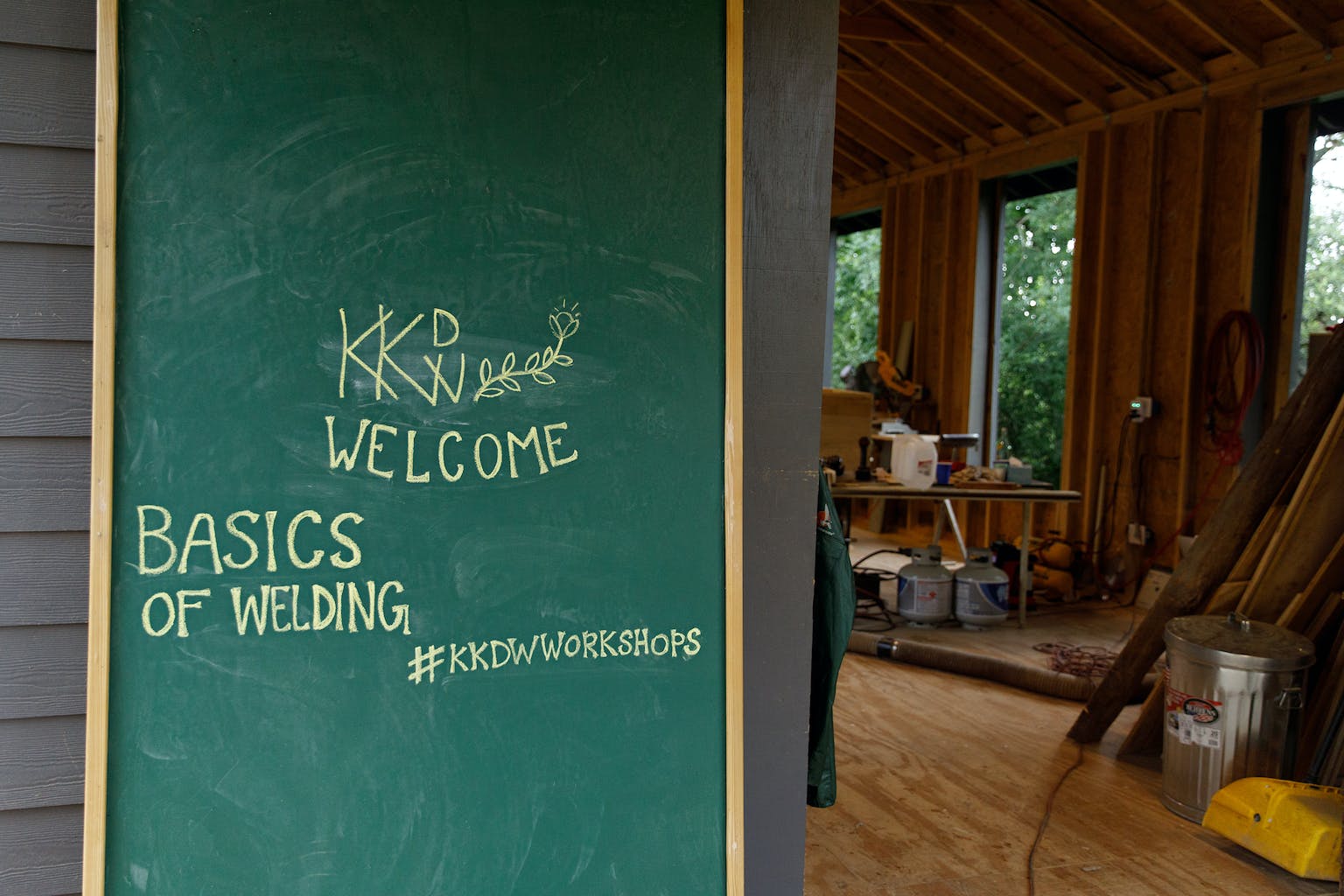
Kelly DeWitt Norman and Travis Norman’s workshop is one example of the opportunities in Texas for nonwelders to learn welding.

There are no gender specific skills anymore, unless maybe giving birth.

Cathy Free at the Washington Post wrote recently about a camp organized by the Austin chapter of the National Association of Women in Construction in Texas where girls can learn welding and other traditionally male construction skills.

“Ainsley Muller, 11, went to art camp and theater camp in summers past. This summer, she was presented an opportunity she couldn’t refuse: learning how to use a power drill, weld metal and unclog a sink.

“ ‘When my mom told me about construction camp, I knew I had to go,’ she said. ‘Some people don’t think girls can do things like that, and they’re wrong. I had a blast.’

“Ainsley was among 35 middle-school-age girls who attended a free week-long building and plumbing camp last month, organized by the Austin chapter of the National Association of Women in Construction.

“ ‘I thought she’d be a good fit for it because she’s creative and hands on, and she loves science,’ said Ainsley’s mom, Amy Muller, 50.

“ ‘I also wanted to show her that as women, we don’t have to depend on the men in our lives to handle the physically hard tasks that present themselves,’ Muller added. ‘I wanted her to know that she was capable of doing these things herself.’

“That’s the same message Taryn Ritchie had in mind in 2019 when she helped put on Austin’s first girls construction camp sponsored by the National Association of Women in Construction.

“Ritchie is a chief estimator for Balfour Beatty, a general contractor in the Austin area. She said she’d noticed over the years that few women were working at the job sites she visited. …

“ ‘I wanted to shift the narrative and show girls that jobs as carpenters, plumbers and electricians are viable options,’ she said.

“Ritchie learned that other chapters of National Association of Women in Construction also held construction camps for girls. Girls from San Diego to Chicago have put on helmets and safety goggles and learned how to mix concrete, solder pipes together and rewire lamps. Camps have also been held in Baltimore and Silver Spring, Md., where earlier this month 16 girls learned about heavy equipment, heating and air conditioning systems and power installation.

“ ‘This industry, like many, is facing incredible workforce shortages,’ said Jennifer Sproul, a co-founder of the Baltimore camp, who now runs the nonprofit Maryland Center for Construction Education and Innovation.

” ‘The only way we can overcome [shortages] is by welcoming women with open arms,’ she said. …

“Ritchie said she felt a similar obligation. ‘I thought, “We need to do a camp like this in Austin,” ‘ she said. ‘I wanted to let girls know that office jobs in construction were not their only options. Why not teach them about all of the possibilities, from building houses to plumbing them?’

“That first year, she said, 15 girls signed up for a camp held with support from the Austin Independent School District. …

“One of this year’s instructors, Jennifer Barborka, enthusiastically got onboard to teach campers a little of what she’s learned as a fourth-year plumbing and welding apprentice. …

“ ‘I was proud that every single girl completed the project, but I was even more thrilled to see how many of them were interested in my trade,’ she said. ‘Not everyone can afford college, and not everyone is geared toward that kind of learning.’ …

“ ‘I told the girls that if they were to join a union, they could get paid while they get on-the-job training, and not end up with a ton of debt,’ she said, adding that last year as a third-year apprentice she made more than $60,000.

“That sounded appealing to Taryn Smith, 14. … She became intrigued at the idea of making a decent living without taking on student loan debt.

“ ‘Going to Camp NAWIC opened my eyes,’ Taryn said. ‘A lot of the things I do in my daily life — like being on the drum line in band — are very male-dominated. Sometimes, you feel like you’re not heard or seen. Seeing firsthand that women are plumbers and electricians made me think that I could do the same,’ she said.”

More at the Post, here.

Read Full Post »

Photo: Mark Lennihan.
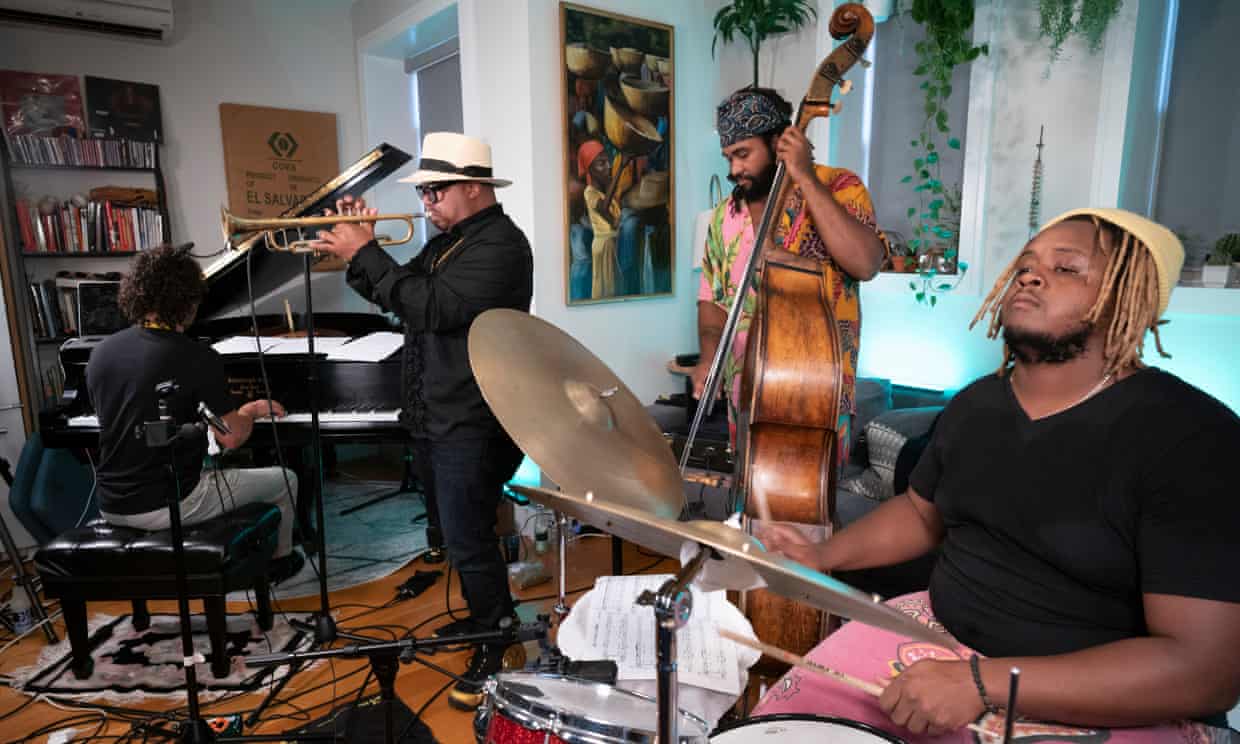
Emmet Cohen (left), Nicholas Payton, Russell Hall, and Kyle Pool livestreaming one of the weekly jazz concerts Cohen launched from his small apartment when the pandemic struck.

I was listening to Christian McBride hosting “Jazz Night in America” (streaming weekly at WICN, here), and he made me want to learn more about the young musician Emmet Cohen.

Allen Morrison wrote at about Cohen’s pandemic venture at the Guardian: “It’s the most exclusive jazz concert in New York. Only about eight guests can attend the weekly shows, by invitation only, squeezing into the 32-year-old jazz pianist Emmet Cohen’s fifth-floor walk-up in Harlem. Meanwhile, thousands more around the world tune into livestreams of the event on Facebook and YouTube.

“Live From Emmet’s Place started as a near-desperate response to the disappearance of gigs for musicians when the Covid-19 pandemic began. Ninety-four shows later, the weekly concert featuring Cohen, his trio with bassist Russell Hall and drummer Kyle Poole, and a roster of guest musicians who represent some of the jazz world’s leading lights, has evolved into the most highly watched regular online jazz show in the world.

“Talking on a recent Monday afternoon four hours before showtime, Cohen, a one-time child prodigy who has become one of his generation’s most highly regarded jazz pianists, was chilling in a T-shirt and shorts. At this hour, his one-bedroom apartment seems relatively spacious by New York standards. But that’s only until the technicians – a piano tuner, a sound engineer, a videographer – start arriving and setting up equipment. …

After two and a half years, [it’s] been transformed from a ragtag live shoot using only an iPhone into a hi-tech, multi-camera production with pristine sound.

“The superior production values would count for little if they were not in the service of a charismatic, often dazzling, trio of performers. Partly it’s Cohen’s energy, exceptional musicianship, and likable personality. Partly it’s the appeal of his inclusive brand of jazz, incorporating the entire tradition of the genre from the 1920s to the present day. And partly it’s the joy and esprit de corps with which the trio perform, evident in Cohen’s frequent ear-to-ear grin and the trio’s telepathy.

“At first, the current music scene in Harlem was the central focus of the show. ‘There’s such a high concentration of great musicians living here, right down the block,’ he said, citing regular guests like saxophonists Patrick Bartley and Tivon Pennicott and trumpeter Bruce Harris, all rising jazz stars on the New York scene.

“ ‘There’s a rich history of great jazz musicians living in this area: Billie Holiday lived on the corner, Mary Lou Williams up the street, Thelonious Monk would hang out here … all the stride piano greats would play Harlem rent parties. Duke Ellington and his whole band lived here, Sonny Rollins … So, it just felt very natural to host a Harlem rent party, but an updated, digital, virtual version, where we could invite people in to try to make the rent and get the musicians paid at a time when people were really struggling.’

“These days, Live From Emmet’s Place has an audience that averages about 1,000 fans each Monday night on Facebook and YouTube, but videos of most of the shows, as well as dozens of individual songs, have logged tens of thousands more views on YouTube. One video, featuring the sparkling French-born jazz singer Cyrille Aimee, has racked up 4.6m views.

“ ‘I wanted to figure out how to create an online community where we could play and make money. When you play at [the New York City jazz club] Smalls there are 80 people, if you sell out; at Birdland, 250. When we did the first concert from the apartment on March 22, 2020, after one week the livestream had 40,000 views. For a jazz group to reach that many people requires months, if not years, of touring.’ …

“In its pre-pandemic infancy, the webcast’s unlikely success could scarcely have been imagined. In February 2020, Cohen and the trio were flying high. … ‘Suddenly we had no gigs and no idea when we would play again.

“[The show] quickly became an international ‘communal gathering,’ Cohen said. ‘And community, in a time of hardship, turned out to be the most important thing.’ …

“ ‘When I’m on the road,’ Poole said, ‘people say to me, “I’m part of the Emmet’s Place community.” ‘ …

“ ‘The pandemic caused incredible destruction and dismay, but there was a silver lining,’ Cohen reflected. … ‘The fact that we’re a family, Kyle, Russell and me, showed the brotherhood and what it means to be a band in a time of crisis.’ ”

Live From Emmet’s Place can be viewed most Monday nights at approximately 7:30 PM ET on Facebook and YouTube. More at the Guardian, here. And at NPR, here, you can click on links to several of the musical numbers.

French speakers, Rejoice.

Read Full Post »

Altruistic Granola

Photo: Maliss Coletta.
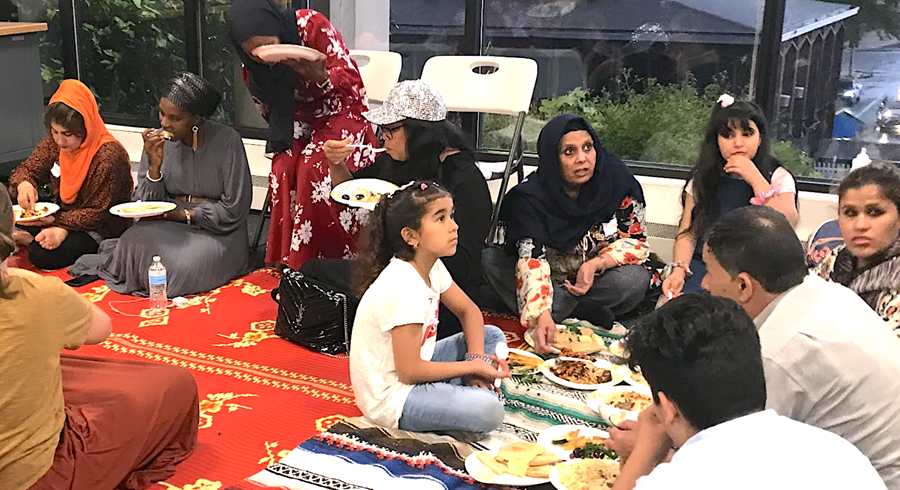
Afghan refugees enjoy a meal with the team at the granola nonprofit Beautiful Day RI in Providence.

In around 2015, I was writing blog posts for Anne Dombrokski at what was first called the Providence Granola Project and later Beautiful Day, a granola company with a mission to help acclimate refugees to American workplace norms and launch them into jobs. Anne died in a freak biking accident (despite a helmet) in 2016, but Beautiful Day remembers and honors her with the Granola for Good award.

Since Anne’s time, Beautiful Day has expanded its mission a little every year, and you can follow it by signing up for newsletters.

Here’s a recent example: “Since last fall when Afghans started arriving in Rhode Island, Beautiful Day has been reaching out in many ways. We contributed granola bars, hummus and messages of welcome to food baskets delivered weekly by the local food bank. We collected wool rugs to give to Afghan families to help them feel more at home. And we began welcoming Afghans into both our youth and adult job training programs. It’s critical to our mission to support the Afghan community, and we were always looking for chances to connect.

“A new opportunity arose two weeks ago when we partnered with the Refugee Dream Center (RDC) to host a group of Afghan women and their families at our kitchen. The Afghan women’s group had been meeting at RDC for several months and done a number of things together. But without access to a kitchen, they weren’t able to cook. And that’s where we could help. With our beautiful, newly renovated kitchen, we could offer the group the perfect place to cook up a storm! So we invited them to come and prepare a typical Afghan meal and share it with us in our space.

“People began arriving mid-afternoon and soon we had a crowd of over forty people, which included Afghan women, men and children as well as volunteers and staff from both Beautiful Day and RDC. The menu consisted of goat meat with vegetables over rice along with homemade Afghan bread. There was also a salad of fresh greens, picked straight from the overflowing garden boxes on our patio.

“Our time together might best be described as organized chaos. While we entertained the kids with games and puzzles on rugs spread out on our classroom floor, the adults took over the kitchen. The goat meat had to be marinated and tenderized, the dough kneaded and baked, and the rice boiled and seasoned. People broke into spontaneous groups and set to work.

“It took about three hours to prepare the meal and our space bustled with happy talk and laughter.

It’s amazing how well you can communicate even if you don’t share a common language! 

“And when the food was ready, everyone settled down on the rugs to enjoy the meal together. Afghans typically eat with their fingers sitting on rugs on the floor and we had prepared the space ahead of time. All the cooking and preparation led to hearty appetites and it was a happy, hungry crowd that enjoyed a delicious meal together. …

“As people were leaving, one Afghan woman said, ‘This felt just like home.’ It doesn’t get any better than that.”

Also in the latest Beautiful Day newsletter, we learn some good news on college scholarships.

“In July, we received a grant through the Beneficent Congregational Church Scholarship Endowments (specifically, the Lucinda Maxfield and Andrew Ferko Endowments) to provide college scholarships to our refugee youth. Three of our young people have been able to take advantage of this generous gift.

“Marvens, originally from Haiti, has a full-year scholarship to study at URI. This summer, he lived on campus as part of the Talent Development Program, an enrichment program designed to prepare first-generation college students for success. He’s now enrolled there as a freshman and will be studying computer science.

“Rama, originally from Syria, has a scholarship to Johnson & Wales University. For the fall semester, she will be enrolled in an English immersion program and next semester, she’ll attend regular classes. She hopes to complete the prerequisites needed to study neuroscience at URI.

“Our third scholarship recipient is Dahaba, originally from Eritrea and a member of a previous Refugee Youth Program cohort. She attended Holy Cross University last year and thanks to this endowment award, has started her sophomore year there debt-free. She’s majoring in mathematics.”

Other Beautiful Day news, here.

Read Full Post »

« Newer Posts - Older Posts »