Feeds:
Posts
Comments

Photo: UNHCR/Benjamin Loyseau
“When you see their desire to learn, it gives you a boost of energy,” says Brigitte Dubosclard, who volunteers with refugees.

I can never get enough of stories about people helping people. A good example is seen in this article on a French village welcoming refugees.

Céline Schmitt wrote for the refugee agency UNHCR, “In November 2015, Pessat-Villeneuve, which has a population of 550, opened the doors of the château as a reception and guidance centre for refugees from Calais and Paris. [As of April 2017], it has hosted 136 refugees. …

“[Mayor] Gerard Dubois strongly believes in solidarity, in mutual support, and while it was an easy decision for him to open a reception centre for refugees in Pessat-Villeneuve, he had to persuade residents that it was the right thing to do. It was not as easy task. At a public meeting, organized in November 2015 when the centre was opened, he says he felt like a ‘bull in the ring.’ In the weeks afterwards, he even received death threats, but solidarity was stronger.

“Hatred is noisy,’ he says. ‘Solidarity is quiet, but inspiring and effective.’ …

“Dubois believes that initial fears stemmed from the fact that locals did not know the new arrivals. Any apprehension, he says, disappeared once they had met them. ‘Meeting and getting to know each other changes everything. It’s as simple as that. I don’t call them refugees, but guests.’ …

“Brigitte Dubosclard is a volunteer at the reception centre in Pessat-Villeneuve. A retired teacher, she gives French lessons to the refugees and also runs a clothing store. She was the first to volunteer to help during the public meeting organized by the mayor when the centre opened.

“ ‘When I realized that there was a general feeling of fear, I immediately said that we are here to help, that France is a country that has always welcomed refugees for many years,’ she says. ‘I asked just one question: What do they need?’

“Brigitte opened the clothing store with help from non-profit organizations Secours Populaire Français and Secours Catholique, as well as donations from the public and local shops. …

“Sandrine Menuge has been the head of Pessat-Villeneuve primary school since 2000 and saw the arrival of refugees as an opportunity to talk about diversity with the children in her class. She tasked them to find faces of 100 children throughout the world in 100 days.

“ ‘We searched for photos to see where they come from, what they look like, how they live,’ says Sandrine. …

“One afternoon, she invited two refugees, Mary from Eritrea and Ali from Sudan, to come to the school. The local children asked them about their journey. ‘We looked on the map to see all the countries they had to go through to come to France. They found them very brave.’

“The children also understood why the refugees had to leave their homes. ‘They realized that in some countries, children are afraid that bombs will fall on their heads. It was a wonderful shared moment.’ …

“[Amir, a 27-year-old from Afghanistan,] travelled on foot, by truck and boat, by any means possible, to reach safety.

“ ‘I feel better now,’ he says, from the reception centre in Pessat-Villeneuve. ‘I have accommodation. I have friends. There are good people here. It is important that people understand why we are here. We are refugees. I don’t want to take benefits from the government. I want to start my life for myself.’ ”

More at UNHCR, here. And thanks to my twitter friend Jane for passing this story along.

Art: Rene Meshake
Ojibwe artist Rene Meshake was part of a group of indigenous storytellers from Canada who attended the Untold Stories conference in Ireland in May.

As many people know, there was a dark period in US history when authorities thought is would be a good idea for indigenous children to be separated from their language, families, and culture. The same thing happened in Canada. Today, those children and their children are reclaiming their voices and telling their own stories.

Here is Catherine Conroy at the Irish Times: “On a Friday morning in a house in Dublin, I sit down to speak with three indigenous storytellers from Canada. They are here for a conference called The Untold Stories of the Past 150 Years/Canada 150 at [University College Dublin]. …

“Maria Campbell, Rene Meshake, and Sylvia Maracle, from Canada’s ‘Indian Country,’ accompanied by indigenous historian Kim Anderson, tell me a story of pain, resilience and the rebuilding of a shattered community through stories.

“Sylvia Maracle is an activist and storyteller from the Tyendinaga Mohawks. She believes their stories will resonate with Irish people, ‘with colonisers having come and disrupted what was probably the natural order.’ …

“She tells me of a conversation she had with an Irish taxi driver when she arrived. ‘He asked, “Are people recovering their memories?” I said, “They were always there, we just didn’t have the conversation.” He said, “That’s what happened here.” ‘ …

“Maracle believes in the power of storytelling as a force for rebuilding their communities. She feels privileged to have been ‘old woman raised’ by her traditional grandmother. …

“Maracle tells me that people now visit Maria Campbell ‘because they want this good medicine, this traditional stuff.’

“Campbell agrees that storytelling is medicine. ‘I grew up with a great grandmother and she never spoke English, she was a total “savage” according to the priest because she never converted.’

“But while Campbell grew up with stories, she always felt split between her traditional home life and her life outside. It was only after she stopped using drugs and attended her first ceremony in her late 20s that she realised the healing power of the stories, which came from ‘the old ladies, always women laughing.’ It was a revelation to realise ‘that you’d got this medicine, everything you need to help put yourself back together.’

“Campbell tells a story about the effects of colonisation that she learned from her teacher, the Old Man. …

“He had been trying to explain to her the effect of colonisation on their community’s wahkotowin, which in English means kinship, ‘but if you look at the word bundle, it’s all of our laws, it’s the way that we talk to each other, the way that we laugh.’

“He threw [a] jigsaw in the air. ‘He said, ‘”That’s what happened to us, everything was shattered and wahkotowin flew. Maybe you have three pieces, maybe she’s got half of one, if we come back together and we start to rebuild that, you bring your three pieces, you bring yours, and soon we’ll make the picture.” ‘…

“She recalls one story she wanted from her father that he would not give. ‘Then he got diagnosed with a terminal illness and I had to do the translating for him [in hospital]. I kind of went to pieces when we were driving home. He pulled to the side of the road, rolled me a cigarette, and he said, “That story you want, I’ll give it to you now.” He retold it and she understood now that it was a story about death, not the funny story she’d always thought it was.

“She translated and published the story. ‘In my family’s way, they were telling me that they trusted that I would treat it with integrity.’ ”

More at the Irish Times, here.

wiggs_bookstore_02

Photo: Jonathan Wiggs/Globe Staff
“You’re free to be yourself here and grow in so many ways,’’ said Phedorah, a worker at More Than Words. Boston landlord Stuart Rose is supporting the nonprofit with low rent in Boston’s pricey South End.

I’ve often thought how a charitable landlord could give new life to a town where empty storefronts are proliferating. Of course, a landlord needs to make a living like anyone else, but supporting artists or worthy causes when he has many buildings can increase the value of all his properties.

Stuart Rose is a landlord offering low rent to a charity, and it isn’t even in a decaying neighborhood. He is really just doing good.

Rose is supporting More than Words, “a nonprofit social enterprise that empowers youth who are in the foster care system, court involved, homeless, or out of school to take charge of their lives by taking charge of a business.”

Megan Woolhouse writes at the Boston Globe, “Raise a toast, the former Medieval Manor, boarded up for more than a year, will come to life again as a sprawling used bookstore with an unusual social mission.

“It will be run by More Than Words, a nonprofit whose employees are youth from troubled backgrounds who often live in foster homes and homeless shelters.

“Moreover, the owner of the building on East Berkeley Street elected to give More Than Words discounted rent instead of giving in to the tide of gentrification washing over this corner of the South End. The five-story brick building is surrounded by some of the most expensive new real estate in the city, with its neighbor, the Troy, charging as much as $4,600 for a unit.

“ ‘This is 100 percent the convergence of everything right in the world,’ said Jodi Rosenbaum, who founded More Than Words 13 years ago. ‘You don’t see that very often.’ …

“The building has been owned by Stuart Rose for decades, who agreed to lease Medieval Manor’s former space to More Than Words at below-market rate for 13 years. Rose declined to be interviewed, saying through a spokesman that he didn’t want to be ‘knighted’ for his good deeds. …

“More Than Words describes itself as a social enterprise, and provides on-the-job training for youth who have faced problems in court, at home, or in school and struggled to find work. More than 70 percent of its youth have been involved with the foster care system and 40 percent in the courts. The teens also receive intensive case management working with counselors, who help them work through issues and identify goals. …

“The first-floor space will need a significant renovation after decades as a bawdy haven for Renaissance meals. More Than Words has launched a $5 million fund-raising campaign, and Rosenbaum said Liberty Mutual has already donated more than $1 million after its chief executive, David Long, visited the facility.”

Read about all the plans at the Globe, here. There’s more on the youth program here. It’s a great organization, and I can say on the basis of numerous visits to the storefront in Waltham, you’re sure to find a good book there.

072117-Cynthia-Bloom-Block-Island-art

I went to the deCordova Sculpture Park and Museum in Lincoln Friday to see what New England women had been doing with abstract art since 1950.

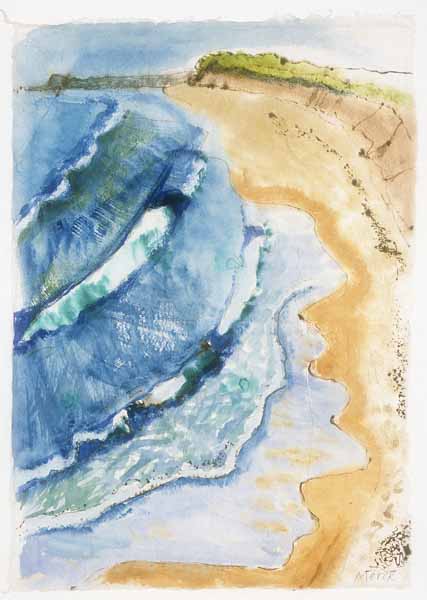
I was drawn to the painting above, and no wonder. It turned out to be Cynthia Bloom’s way of seeing New Shoreham, Rhode Island, my favorite place in the smallest state. The explanatory text says the artist “incorporated the natural materials and textures she found there into her work, including dried petals and butterfly wings.”

The gigantic heart sculpture looks sweet enough from a safe distance, but when you get close to Jim Dine’s “Two Big Black Hearts” (1985) and see all the broken tools, horseshoes, ladies shoes, etc., smashed roughly into the surface, you may feel a chill.

What’s nice is that on a summer’s day, you can walk in the shady woods on the deCordova grounds and see art along the paths. The serene head is “Humming,” by Jaume Plensa (2011), and the more abstract piece is “Maiden’s Dream,” by Isaac Witkin (1996). That one makes me ask, “Is it a good dream?”

After spending time on the grounds and in the galleries, I took the elevator to the roof deck and photographed the romantic turrets of what was once the home of art collector Julian de Cordova (1851-1945). I don’t think I had ever been on the roof before. The view over Flint’s Pond is amazing.

072117-Cynthis-Bloom-Block-Island-art-at-decordova

072117-Jim-Dine sculpture-decordova

072117-Plensa- sculpture-in-decordova-woods

072117-Witkin-sculpture-in-decordova-woods

072117-decordova-art-museum-turrets

2117-Flints-Pond-deCordova-Lincoln-MA

Photo: Paul Chinn, The Chronicle 
Artificial turf is installed in a park under construction in San Francisco, which claims to be the first city with a park near every home.

More and more research is showing that access to nature and urban parks improves not only quality of life but the health of city dwellers. Municipalities save, too, when they have healthier residents.

Recently San Francisco was able to claim the distinction of being first in the nation to offer a park 10 minutes from every home.

Lizzie Johnson reports at the San Francisco Chronicle, “In 10 minutes, you can load a TV episode on Netflix, check your mail waiting for BART or make an avocado toast. Now, you can add to that list: take a walk to the park.

“San Francisco is the first city in the nation to have every resident live within a 10-minute walk of a park or open space. The percentage is calculated by the Trust for Public Land, a nonprofit that facilitates the creation of parks and analyzes park systems for the 100 largest cities nationwide. …

“But don’t expect to see a small army of city workers and volunteers with stopwatches in hand counting their steps. The data were gathered using a complex geographic mapping program. The average person can walk a half-mile in about 10 minutes, according to the U.S. Department of Transportation, which counts even your two legs as a mode of transportation. The distance has to include sidewalks — crossing highways or skirting canals doesn’t count.

“ ‘We developed this as the gold standard,’ said Adrian Benepe, the Trust for Public Land’s director of city park development. ‘A 10-minute walk to a park is an important indicator of the livability of a city.’ …

“Criteria for the nonprofit’s annual ParkScore analysis also includes the number of individual parks, overall spending and facilities upkeep. …

“The city has spent $355 million in bond and general fund money over the past four years to purchase land, renovate dilapidated parks and improve open spaces. In 2012, voters passed the $195 million Clean and Safe Neighborhood Parks Bond to fix up neighborhood parks.

“Those measures made the difference in reaching the No. 1 spot, said Recreation and Park Department Director Phil Ginsburg.

“ ‘It speaks volumes about this city’s commitment to open space,’ he said. “It is the reflection of literally a century and a half of decisions regarding parks and open space.’ ”

More at the San Francisco Chronicle.

Photo: The vitality of John Kirsch and Wanda Finley, an over-70 dancing duo known all over the Midwest, suggests that dance is good for health and happiness.

A medical group in the United Kingdom is prescribing dance and music to touch parts of patients’ lives that pills can’t reach.

Giverny Masso writes at The Stage, “An NHS [United Kingdom’s National Health Service] organisation has released a cultural manifesto that pledges to prescribe dance and music to alleviate loneliness and poverty.

“Halton Clinical Commissioning Group, which plans NHS services in Cheshire, aims to ‘put a choir in every care home’ and calls for a ‘paradigm shift’ in health care. HCCG says it aims to reinvent health services by encouraging people to engage with cultural activities instead of focusing solely on medicine.

“In the manifesto, it says: … ‘There are no pills for loneliness and poverty, but a rich cultural context can help ensure residents are better connected to each other and feel more able to cope.’

“The manifesto draws on the example of people with dementia, stating that while there is no cure, people with dementia can learn to live well with what they have through a range of community-based activity such as dance.

“Halton CCG adds that community choirs can help people manage asthma by boosting control of breathing and increasing lung capacity, reducing the need for emergency medication and rescue inhalers.” More here.

Anything that takes a comprehensive look at well-being sounds good to me. Reminds me of past posts on doctor prescriptions for bike sharing and fresh food from farmers markets.

Dear Readers, I think you will like this bonus post, which I am reblogging from Musalley. I like that it’s in several languages. Love, Suzanne’s Mom

(English, Français, Español, Italiano)

« Unity is strength » is the theme of Friday Heirloom 7, as we’ll be presenting a very unique art institution from Brussels…The Réseau des Arts à Bruxelles / Brussels Kunstenoverleg (RAB/BKO)!

(c)Fabienne Cresens - 1.jpg

Photo credit: Fabienne Cresens

The RAB/BKO was created by Brussels cultural organizations with the aim of encouraging dialogue and stimulating synergies, in a complex context of very fragmented cultural policies (Belgium is a federate state, where almost each political level has cultural authority and budget – Federal State, Communities, Region, Municipalities, etc. – without concerted vision and with different priorities.)

(c)Victor Lévy-3072.JPG

Photo credit: Victor Lévy

A platform for dialogue and reflection, the RAB/BKO is a resource center and an interlocutor for all that concerns the stakes of culture in Brussels and beyond. With the mission of contributing to the development of a global vision for culture in Brussels, the RAB/BKO stimulates the…

View original post 1,064 more words

Photo: Alison Wortman
Ingrid, a Mayan community health promoter in Guatemala, is delivering direct health services to another Mayan woman in the Mayan language.

US city hospitals have known for years that it’s important to provide health care to patients in their own language. That’s why hospital interpreter is a growing career option. But you can imagine how grateful a patient might be if the providers themselves spoke her language.

In remote parts of Guatemala, a socially conscious coffee company is supporting an initiative to do that.

As Alison Wortman wrote at the Dean’s Beans blog in May, “When I looked through all the colorful photos I took while on my most recent Dean’s Beans development trip to Guatemala, this one stuck out the most. …

“What we are witnessing here is no small feat. This is a picture (above) from a home-visit in a remote mountain village to check up on a new mom and her baby (the little guy is strapped to her back). What makes the visit so extraordinary is that Ingrid, a Mayan community health promoter, is delivering direct health services to another Mayan woman in their own Mayan language.

“This direct, language inclusive health service from the Mayan Health Alliance (known as Wuqu’kawoq) is the only health organization in Guatemala providing home-based health care to indigenous populations in their own Mayan languages. This women’s health program is one of many in their comprehensive health-care programming which includes primary and women’s health services, nutrition and early child development, treatment and support for chronic disease, medical case management services and clean water education.

“In addition to culturally inclusive services, [the] community outreach workers at Wuqu’kawoq have also become role models for the future generation of girls in a country where 70% of indigenous girls do not make it past 6th grade. …

“Dean’s Beans sent three social workers to Guatemala (Annette Cycon, Jean Marie Walker and myself) for 10 days to prep, introduce and facilitate trainings in Annette’s Group Peer Support Model (GPS). GPS is a powerful and effective group support model that focuses on social support groups to address isolation, mental health concerns, self-esteem building and women’s empowerment. …

“At the end of class the woman served lunch. They all ate half of their portions and wrapped the rest in a bowl covered in bright cloth to take home. Although at first we thought it was to share with their families, we learned later [that] it was to prove to their husbands and mother-in-laws that they had indeed gone to class. This was another example of the oppressive conditions many women face in a country where gender based violence are at epidemic levels.” More here.

That comment reminds me of certain Syrian refugee women I work with. The men are definitely controlling what they do. I think you have to be careful to teach without messing around with another woman’s culture unless you are sure that is what the woman wants. So hard to witness some things, though.

Photo: Joe Suarez for NPR
Las Cruces High School has one napping pod, which students use for 20 minutes when they are tired, stressed or angry.

In my family, we are big believers in naps. Long naps, short naps, any kind of nap. I don’t take a nap every day, but when I’m feeling exhausted for any reason, I find that 15 or 20 minutes of sleep really refreshes me.

Interestingly, 20 minutes is what teachers prescribe for students at Las Cruces High School in New Mexico.

Patti Neighmond reports at National Public Radio, “Studies have shown teenagers actually need between nine and 10 hours of sleep a night. But the vast majority (69 percent) aren’t getting it.

“Enter ‘napping pods.’ They’re essentially egg-shaped lounge chairs that recline, with a circular lid that can be pulled over the chest to shield against light.

“It just sort of envelops you in a really nice darkness, with soft lighting behind you,” says [18-year-old Hannah] Vanderkooy, a frequent user of the pods. She says she typically gets only four to five hours of sleep a night.” She’s a senior and working hard to get good grades and maybe college scholarships.

“There’s soft music playing in the pod and ‘you just feel extremely relaxed,’ she says. …

“A nap can’t substitute for a good night’s sleep, but it certainly can help, says Dr. Nitun Verma, a sleep specialist and spokesperson for the American Academy of Sleep Medicine.

“A short nap for a teenager ‘can give a boost to memory and attention during the day, and it can increase school performance,’ he says, adding that in a perfect world, schools would roll back their start times. …

“Several public schools in New Mexico are trying to tackle the problem by providing napping pods for their students.

” ‘We know lack of sleep changes mood and makes you more anxious,’ says family nurse practitioner Linda Summers, who is an associate professor at New Mexico State University’s school of nursing in Las Cruces.

“Summers also works with the nearby Las Cruces High School health center, and has seen firsthand the effects of sleep deprivation on students there. So she decided to apply for a federal health grant to buy the pods, which, at the time, cost $14,000 each. They were installed in four high schools.

“And while the Las Cruces school napping pods were bought to remedy sleep deprivation, Summers says, ‘it also turns out to be good for anger and stress.’

“Even if kids don’t fall asleep, but simply ‘zone out,’ she says, they emerge saying they feel ‘refreshed and calm.’ ” More here.

Summers has conducted a study that has been accepted by a peer-reviewed journal, so expect to hear more on this topic anon.


Photo: Ruairi Gray/Twitter
Students tricked a museum into exhibiting an ordinary pineapple as a piece of art.

They used to say of the Walker Art Center in Minneapolis that the janitorial staff had to be careful not to leave a mop and bucket in a gallery even for a moment or they could come back to find a cluster of museum-goers studying it.

Actually, that can happen.

Recently, Roisin O’Connor wrote at the Independent that students left a pineapple in a gallery of a Scottish museum and someone on the staff thought it was the real thing.

“Students claim they managed to pass off a pineapple they bought for £1 at a supermarket as a work of art, after leaving it in the middle of an exhibition at their university,

“Ruairi Gray, a business information technology student at Robert Gordon University in Scotland, and his friend Lloyd Jack, reportedly left the fruit at the Look Again exhibition at RGU’s Sir Ian Wood building, hoping that it might be mistaken for art.

“When they returned four days later he found that the pineapple had been put inside its own glass display case at the event. …

“Natalie Kerr, a cultural assistant for the festival who organised the display, said she wasn’t the one who included the fruit as an artwork because she is allergic to pineapple.

” ‘We were moving the exhibition, and came back after 10 minutes and it was in this glass case,’ she told the Press & Journal. …

“The incident recalls a similar prank last year when a 17-year-old placed a pair of glasses on the floor at the San Francisco Museum of Modern Art.

“Apparently unimpressed with some of the work on display and wanting to test the theory that people will try to interpret any object provided it is in a gallery setting, TJ Khayatan placed the glasses on the floor and walked away.

“Soon after, visitors to the gallery surrounded them and began taking pictures.”

More at the Independent, here, and at the NY Times, here.

Photo: Sara Teresa
The rollout of a dance-based falls prevention programme in the UK by arts and health charity Aesop will see 1,000 older people benefit.

About 15 years ago, after breast cancer treatment, I joined a hospital-based class called “I Hope You’ll Dance.” I used to call it Cancer Dance Class because anyone who was being treated for cancer or had been treated could join. It happened to have only women during the time I was a participant although men were welcome.

The dance routines were very simple, but there was something pleasant about doing them with women you didn’t know but with whom you shared something as big as cancer. I also liked the music selections, which ranged from the playful “Diamonds Are a Girl’s Best Friend” to numbers that were more moving, like “You Raise Me Up” and “I Pray You’ll Be All Right.”

I thought of the mysterious comfort that class provided when I read about a dance program for the elderly in England and Wales. Christy Romer described it at Arts Professional, a UK-based website.

“The rollout of a dance-based falls prevention programme by arts and health charity Aesop will see 1,000 older people benefit from a new £2.3m investment.

“The programme will run for two years from October 2017, during which time 63 interventions will take place across England in Wales. These will be delivered in collaboration with health and social care providers, and arts organisations including Yorkshire Dance and Birmingham Royal Ballet. …

“Previous Aesop research showed how the Dance to Health programmes could address a problem that costs the NHS £2.3bn a year, as the rates of completion for dance-based alternatives to NHS exercise courses are 55% higher.

“An evaluation of the Dance to Health pilot programme in February 2017 also concluded that dance artists could be trained to deliver classes which were an enjoyable artistic challenge, faithful to healthcare objectives, and would deliver measurable reductions in loneliness for participants. …

“The expanded programme will receive support from ‘Dialogue Partner’ organisations, including Age UK and NHS England, and collaborate with eight Arts Council England-funded dance organisations. …

“A formal evaluation of the programme will be conducted in 2019, ahead of an anticipated national rollout in the coming years.” More at Arts Professional, here.

Romer mentioned the effort to address loneliness through the dance classes, but I imagine that the way physical motion improves thought processes is a big piece of the health benefit. And what about improving balance? That’s a concern for me, and a reason I take both tai chi and Essentrics when I’m not on vacation.

But I’m on vacation. So I’ll sign off now and go practice standing on one foot.

Yes this post’s title is toying with the name of the famous John Singer Sargent painting “Carnation, Lily, Lily, Rose,” which KerryCan told me she liked.

The roses in New Shoreham are so abundant this year, I couldn’t stop taking pictures. I admire these roses because they do their own thing. They need no attention from humans. If they feel like climbing up a tree or entwining themselves with acres of poison ivy, they will just do it.

I’m also posting a water-lily pond where I saw a rough-hewn guy in a beat-up car place a rescued turtle. Other photos include a typical New Shoreham dirt road, Suzanne’s daughter’s monkey enjoying a rare respite, a deer, and Stuga40’s breakfast idea (flax seeds and pumpkin kernels on cereal).

071317-Block-Island-roses-1


071317-Block-Island-roses-4


071317-Block-Island-roses-3


071317-Block-Island-roses-2


070917-dirt-road-New-Shoreham-RI


071317-Block-Island-water-lilies


070917-monkey-in-early-morning


071417-lovely-but-oh-the-ticks


070717-flax-seed-pumpkin-kernels


Photo: Balazs Koranyi/Reuters 
A sign warns residents of the arctic Svalbard islands in Norway of the danger from roaming polar bears. Norway is planning to expand its oil operations in the Arctic. 

Norway has a reputation for environmentalism. Unless you are talking about oil. Now some of the country’s leading lights are suing the government because of its plans to start drilling in the Arctic. A Norwegian whose writing I admire is one of them.

David Crouch reports at the Guardian, “Norway’s best-known author has lashed out at ‘the shortsightedness and stupidity’ of plans to expand oil exploration into the Arctic, as campaigners prepare to sue the government for placing future generations at risk from climate change.

“Karl Ove Knausgaard, whose bestselling memoir has been a global literary sensation, is fronting a campaign to mount a legal challenge against moves by Norway to open up the Arctic to oil companies.

“Oil and gas extraction in the Arctic has nothing to do with worthwhile goals such as alleviating poverty, Knausgaard said. ‘Norway is one of the richest countries in the world – it’s all about greed. … I never believed that my government actually would do such a thing. … It just makes me want to cry.’ …

“The campaign aims to make use of a recent change to the constitution which obligates the state to take action to ensure natural resources are managed ‘on the basis of comprehensive long-term considerations,’ including safeguarding the environment for future generations. …

“The campaign by Norwegian environmentalists aims to mirror similar legal challenges in the Netherlands and in the US, where lawsuits have attempted to hold governments to account over climate change. In April, the Dutch Urgenda foundation launched the first case in the world to use human rights and tort law to hold a government responsible for failing to reduce carbon emissions fast enough.

“ ‘Where do we draw the line if not in the Arctic?’ said Åsne Seierstad, the bestselling Norwegian author and another signatory to the petition. ‘No economic policy is more short-term than relying on profits from the very areas that are worst affected from climate change.’ ”

More here.


Photo: Hannah Ellis-Petersen for the Guardian
This mural of a worker removing one star from the European Union logo appeared overnight in Dover, Kent. It’s Banksy’s reaction to the Brexit vote.

When I was at the magazine and collecting articles for the next issue, I was sometimes surprised to discover I had a whole issue — or almost a whole issue — on one topic. Suddenly several articles on prisoner issues came together, or maybe immigrant issues, or agriculture issues. It was not planned that way, it just happened.

Today I notice that another United Kingdom topic has popped up after yesterday’s entry on UK election artists. This post is about the street artist Banksy and his stealth reaction to the vote that authorized the UK to leave the European Union and expel many immigrants. Hannah Ellis-Petersen at the Guardian reported the story in May.

“A Brexit-inspired mural by Banksy showing a metalworker chipping away at a star on the EU flag has appeared in Dover. …

“The mural, which was confirmed by Banksy’s representatives to be a genuine work by the elusive artist, is his first comment on the Brexit vote last year.

“The stars of the flag ‘stand for the ideals of unity, solidarity and harmony among the peoples of Europe,’ according to the EU website. …

“The Dover artwork is across the Channel from Calais, where a Banksy mural appeared at the main refugee camp in 2015, showing the Apple founder, Steve Jobs, whose biological father was a Syrian immigrant,” reminding people that immigrants should be valued. More at the Guardian.

I have posted a few times about this street artist, and once I took a photo of what people said was his work. Check these links to a few of my Banksy posts: herehere, and here.

Banksy appears in Boston. Maybe.

Art: Simon Roberts
Simon Roberts was the “election artist” for the 2010 general election in the United Kingdom. He chose 24 images — one for each day of the campaign — to reflect the geographical breadth of the trail
. Cornelia Parker is the election artist for 2017.

Not long ago, my husband pointed out a story about official “election artists” in England. That was a new idea for me.

An article in the Economist offers background.

“Many were bemused by the announcement on May 1st that Cornelia Parker was to be the official artist of the 2017 general election. Not as a comment on Ms Parker’s credentials — she is widely considered to be one of Britain’s most exciting contemporary artists — but to discover that such a post exists.”

Parker is the first woman chosen since the post was established in 2001 and the first conceptual artist.

“Jonathan Yeo, the inaugural artist, created a triptych oil painting of the main party leaders where the size of their portrait correlated to their portion of the vote. In 2005, David Godbold produced Hogarthian satirical illustrations on scraps of election ephemera such as manifestos, letters and flyers. In 2010 Simon Roberts photographed the quiet lanes and doorstep conversations of day-to-day campaigning …

“Ms Parker is using an Instagram account (@electionartist2017) to offer an eclectic commentary: so far she has posted pictures of road signs, homeless people and newspaper headlines. One image, captioned ‘The election contenders,’ shows a group of waving garden gnomes.

“Two further stipulations come with the role. First is that the artist must remain politically impartial. … The second is that they must produce a final work — one that can be put on display, or contain elements that can be displayed — which will eventually join the parliamentary art collection.”

I searched the web but couldn’t find Parker’s piece for the permanent collection. Maybe a reader will find it for me. It’s hard to envision what an artist known for “detonated sheds, cut-up shotguns and squashed instruments” would come up with, even if she is currently focused on instagram.

The Economist story is here, the Guardian‘s here and the New Yorker‘s here.