March 7, 2012 by suzannesmom
Today I walked over to the Moakley Courthouse on Boston Harbor to see an art exhibit that the Actors’ Shakespeare Project put together with youth in detention. It consisted of large photographs in which a young person, sometimes in costume, acted out a word from Shakespeare. I did not feel that the presentation in the low-ceiling hallway did the works justice — and having to go through metal detectors to look at them is a bit of a downer — but the concept is positive.
Deborah Becker of WBUR reported that the photographs were part of a larger effort to turn young offenders around with the help of art: “Using the arts as a way to heal and transform is the theme of an exhibit at Boston’s federal courthouse. The artists are children who have been involved with the Massachusetts Department of Youth Services (DYS), the agency that handles youngsters charged with crimes.
“At a recent reception of the artists and DYS officials, 17-year-old Ricky Brown was among the young people proudly describing his work. He helped paint a mural that covers the entire wall of a DYS district office in Springfield. He says it sends a message about kids in the juvenile justice system.
“It brightens up the whole building,” Brown said. “It makes sure to say that we’re not only there to get locked up. It’s there to let people know that we do work together, we do do something positive.”
Read more.

Posted in Uncategorized | Tagged art, courthouse, deborah becker, detention, dys, incarceration, juvenile, moakley, mural, offenders, prison, ricky brown, springfield, youth | 2 Comments »
March 6, 2012 by suzannesmom

Dirk-Jan Visser for The New York Times
I’m a sucker for any story about an angel because it gives me a chance to mention that Suzanne’s birthstone-jewelry company, Luna & Stella, has a lovely angel charm.
That is why I zeroed in on this article.
 John Tagliabue writes in today’s NY Times, “The statue of an angel outside St. John the Evangelist Cathedral in ‘s Hertogenbosch, the Netherlands, holds a cellphone, which has two numbers.
“That is because, shortly after the statue was unveiled last April, a local couple, the parents of two children, set up a number so people could call the angel. Business cards soon appeared in pubs, restaurants and hotels with a picture of the angel and the number. So successful was the line that the couple opened a Twitter account, @ut_engelke, managed by the husband, which now has about 2,700 followers.”
Then the church, not amused by @ut_engelke, set up its own number. It charges for calls, and people get to hear recorded messages about the church.
The woman who answers the original phone number doesn’t charge. She answers with “Hello, this is the Little Angel,” and she just sees where it leads.
“ ‘In most cases there is laughter, but there are callers who have no faith in friends or relatives, so they would like to talk to someone they have some kind of faith in,’ she said. A widow in her 80s called from Amsterdam to complain of loneliness …
“ ‘She said she’d lost faith in humanity, in her own family,’ said the woman who lends the angel a voice. Two weeks later the elderly woman called again, to thank the angel. Things had gotten better.” Read more.
I would be interested in your angel stories.
Posted in Uncategorized | Tagged @ut_engelke, angel, angel wing, birthstone, cathedral, cellphone, Dirk-Jan Visser, Hertogenbosch, jewelry, John Tagliabue, Luna & Stella, mobile phone, mother's day, Netherlands | Leave a Comment »
March 5, 2012 by suzannesmom
John is quite a rich source of blog ideas. Here’s a story he knew I’d like. It’s about a symphony for ship horns.
“The Harbour Symphony is original music written for the horns of the ships in the St. John’s harbour [Newfoundland, Canada]. This signature fanfare of the Sound Symposium transforms the ships in the harbour into an orchestra on water. Each Harbour Symphony begins with a radio countdown transmitted to the bridge of the ships by the Coast Guard where players stand at the helms of tugboats, trawlers, and ocean-going freighters.
“At the signal, a giant, floating horn section reverberates off the Southside Hills and through the streets of old St. John’s, echoing the soul of this 500 year old seaport.
“The acoustic characteristics of the bowl-shaped St. John’s Harbour encourage the sound to resonate and carry for up to 12 miles. The best place to listen is up on Signal Hill, on the Southside Hills, or in the Outer Battery. These locations give a sweeping view of the Harbour and the city. You can hear the delay of the horns as the sound travels over a mile across the water, and hear the sounds resonate against the surrounding hills.” Read more.
I wonder if Cousin Claire in Gabarus, Cape Breton, knows about this. Of course, I don’t know my geography very well. Cape Breton, Nova Scotia, is probably nowhere near Newfoundland. If you are better at geography, please give me an idea how far apart these places are.

Posted in Uncategorized | Tagged canada, cape breton, coast guard, cousin claire, gabarus, harbor, harbour symphony, newfoundland, nova scotia, seaport, ship horn, st. john's, st. john's harbour | Leave a Comment »
March 4, 2012 by suzannesmom
Suzanne has found us two “vacation rentals by owner ” in the last six months: one on the West Coast and one on the East. Other than being just right in their own ways, they had little in common. Except for one curious thing.
They both featured trees covered with some kind of moss or lichen. What should we make of this coincidence?
In my West Coast post, I did a little research and found a site suggesting that the mosses and lichens in California had a symbiotic relationship with trees. Another site said, “Tree decline is often not a simple cause and effect relationship but sometimes a complex web of interacting factors.” So I still have no idea if lichens are good, bad, or indifferent.
Today I offer some pictures from Little Compton, Rhode Island, where one of the seven of us celebrated a special birthday this weekend.
BTW, if you are looking for sweet seaside towns that time forgot, try the Rhode Island Farm Coast.



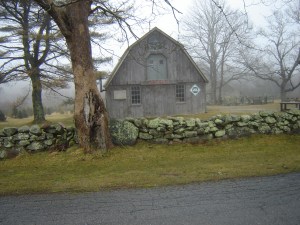

Posted in Uncategorized | Tagged farm coast, lichen, little compton, moss, rhode island, tree, vrbo | 1 Comment »
March 3, 2012 by suzannesmom
You have to have light to have shadows. You have to have shadows to see the possibilities of light.
I took one of these shadow photos in early morning and one in late afternoon. When I went for a walk around noon, I carried my camera in case there might be other shadows that interested me. In the end I concluded that shadows on houses interest me more than shadows on sidewalks. Something to do with knowing that lives are lived inside the houses?
Probably my favorite Dickens novel is Bleak House. I have read it several times. A recurring motif is light and shadow. I am reminded in particular of the young couple walking through light and shadow, shadow and light. They are to experience much that is good, much that is dark. Some people accuse Dickens of writing plots that are too convoluted and bizarre, but what could be more true to life than that?


Posted in Uncategorized | Tagged bleak house, dickens, light and shadow, oyster of the old school whom nobody could open, shadows, tulkinghorn | Leave a Comment »
March 2, 2012 by suzannesmom
You may have read about the monumental projects of the artist Christo. Perhaps you even went to see “The Gates” when his orange banners dotted Central Park.
Well, Christo is at it again, proposing to “drape 5.9 miles of fabric across a 42-mile stretch of the river” in Colorado for two weeks. And he’s once again exposing himself to the hostility of people who feel passionately protective of a particular space. It’s the cost of doing business.
In this February 10 Denver Post article: “Christo sits stone-faced as they call him a liar, a cheater, a con man, a killer, as they politely suggest he is a fool, as they angrily denounce him as an enemy of nature. He is the world’s most famous artist and this is what he must endure for these odd projects he dreams up. Here, in southern Colorado, where he hopes to drape 5.9 miles of silvery fabric over the Arkansas River, it is the same as it was in Manhattan where he battled 25 years to hang orange material from 7,503 gates in Central Park, and in Berlin, where he had to persuade 612 German parliamentarians, one by one, to let him wrap his cloth around the Reichstag.” Read more.
Whatever else you might say about him, the man has patience. An even more recent article in the Denver Post, February 22, indicates that he has moved the target date from August 2014 to August 2015. (The first of many target dates was summer 2001.)
“At the two final public hearings for the Over the River project earlier this month, the Fremont County Board of Commissioners fielded almost 10 hours of heated support and opposition as well as 575 letters. On Tuesday, the three-member board decided it would not make a decision regarding the artist’s request for a temporary-use permit at its next scheduled meeting Feb. 28.
” ‘We simply feel we are not ready for a formal vote,’ said Commissioner Debbie Bell, noting that the board is scripting a list of conditions for the project. The board could make a final decision at its March 13 or March 27 meeting, she said. …
“Christo’s decision to delay reflects his desire to share yet-to-be-developed emergency-management plans that detail traffic, safety and other issues during the installation process. It also restores the 28-month construction period, which was pinched when federal approval stretched nearly three years.” Read more.

Posted in Uncategorized | Tagged arkansas river, art, artist, bureau of land management, christo, colorado, denver post, emergency management, jason blevins, patience, ray mark rinaldi, site specific | Leave a Comment »
March 1, 2012 by suzannesmom
March 1 is World Book Day. Who knew?
Alison Flood and Michael Bonnet write about the event in The Guardian: “Celebrated in over 100 countries around the world, World Book Day is the UK’s largest festival of reading and aims to encourage a lifelong love of literature in children. Thousands of schools and nurseries are joining in, with more than 14m book vouchers given out to children, and hundreds of events – from Where’s Wally ‘flash mobs’ to author talks and literary fancy dress competitions – taking place up and down the country.” Read more.
The World Book Day website says this is the event’s 15th year. “It’s a celebration of authors, illustrators, books and (most importantly) it’s a celebration of reading. In fact, it’s the biggest celebration of its kind, designated by UNESCO as a worldwide celebration of books and reading.”

Posted in Uncategorized | Tagged alison flood, books, michael bonnet, reading, uk, world book day | Leave a Comment »
February 29, 2012 by suzannesmom
Do you ever look at ArtsJournal? It has the best links!
Today there’s a fun link to the Post-Standard in Syracuse about a library in a phone booth.
Writes Maureen Nolan: “The Little Free Library credo is ‘take a book, leave a book.’ That’s pretty much the only rule. Every Little Free Library is supposed to have a volunteer community steward, and Mother Earth, whose given name is Taywana James, is a natural. She lives barely a block from the library. She is a mother, poet and artist involved in a number of projects to better the Near West Side, and she loves books. …
“Rick Brooks, co-founder of the Little Free Library movement, estimates there are 300 to 400 little libraries in 33 states and 17 countries. He doesn’t know if most people bring books back. In the Little Free Library movement, the return rate doesn’t seem to be a critical data point.” More here on Little Free Libraries.
I am reminded of the Uni Project, which I blogged about here. It’s a portable reading room, first deployed in New York City last September.
One of the founders of the effort, Sam Davol (also a cellist in the band the Magnetic Fields), writes about the Uni Project here: “On Sunday, Sep. 11, the Uni was put into service for the first time. Lower Manhattan residents joined us to inaugurate the Uni by gathering to browse and read our small collection on a difficult morning. While most of the surrounding blocks were locked down and public libraries in Manhattan were closed, the Uni began its journey among good people who came out to visit a public market and meet the Uni.”
(That was the same day Suzanne and Erik startled the guardians of the people by renting a small boat and going sailing in New York harbor.)

Posted in Uncategorized | Tagged books, library, magnetic fields, maureen nolan, phone booth, portable reading room, reading, sam davol, sept. 11, syracuse, uni project | Leave a Comment »
February 28, 2012 by suzannesmom
Loved this Wired article about an unusual artist underground in France that preserves antiquities under cover of darkness.
Jon Lackman writes that the Urban eXperiment (UX) “is sort of like an artist’s collective, but far from being avant-garde — confronting audiences by pushing the boundaries of the new — its only audience is itself. More surprising still, its work is often radically conservative, intemperate in its devotion to the old. Through meticulous infiltration, UX members have carried out shocking acts of cultural preservation and repair, with an ethos of ‘restoring those invisible parts of our patrimony that the government has abandoned or doesn’t have the means to maintain.’ …
“What has made much of this work possible is UX’s mastery, established 30 years ago and refined since, of the city’s network of underground passageways — hundreds of miles of interconnected telecom, electricity, and water tunnels, sewers, catacombs, subways, and centuries-old quarries.” Read more.
I’ve been collecting stories of people doing good by stealth. In fact, if you type the word “stealth” in the search box in the upper right-hand corner, you will find five other stealth stories I have blogged about.

Posted in Uncategorized | Tagged artists, catacombs, collective, french, jon lackman, stealth, underground, wired | 5 Comments »
February 27, 2012 by suzannesmom
I have always loved theater, and even when I have been in a play and felt stage fright, I have been able to make it work as a springboard for the lines I have to say. But when I have to do a presentation as myself and not a character, I freeze up.
Which is why I keep taking classes in how to give presentations, to no avail. But the class that I took last week may finally help me. And I think the secret of it was that the instructor, though an experienced corporate coach and adviser, is also a practicing actor and playwright.
He was very good at paring down the words participants wanted to use and helping choose the most effective ones. And his ideas about how to make an entrance, how to stand, natural gestures to use, tone of voice, and eye contact seemed to have roots in the stage. Even the freshness of his own presentation to the class seemed the result of having to say the same lines night after night in a show and make them seem new.
Of course, no class is magic, so we have to wait and see how it goes when I do my work presentation in late March. But I am definitely going to try harder to apply what I heard than when I took presentation classes in the past full of jargon, phony jokes, and gimmicks that are supposed to work but don’t seem to have a lot underpinning them.
The teacher was Brandt Johnson. See the actor here. See the corporate consultant here. Another one of these people who lead several lives simultaneously.

Posted in Uncategorized | Tagged actor, brandt johnson, consultant, corporate, drama, playwright, presentations, speechwriter, stage, syntaxis, theater, tv | 2 Comments »
February 26, 2012 by suzannesmom
My sister is a poet, among other things, and she sent me this story about a famous poet and his association with the not-always-poetic city of Hartford, where he worked for insurance industry. (Which just goes to show that poetry blossoms where it will.)
Jeff Gordinier writes in the NY Times about taking a Wallace Stevens walking tour that was, “like Hartford itself, quite modest. … Along the walk there are pale slabs of Connecticut granite engraved with verses from one of Wallace Stevens’s most indelible poems, ‘Thirteen Ways of Looking at a Blackbird.’ That’s about it.
“Nevertheless, I found the walk to be deeply moving,” writes Gordinier, “After all, how often do we get to explore the cranial machinery of a literary titan by slipping into the groove of his daily commute?
“Stevens never learned to drive. Even though many of his neighbors had no idea what he was up to, he would amble along Asylum Avenue methodically measuring the pace of his steps and murmuring phrases to himself …
“ ‘It seems as though Stevens composed poems in his head, and then wrote them down, often after he arrived at the office,’ Prof. Helen Vendler, Harvard’s grande dame of poetry and the author of Wallace Stevens: Words Chosen Out of Desire, explained to me in an e-mail. ‘As for his commute, he enjoyed it profoundly. It was his only time out of doors, alone, thinking, receptive to the influx of nature into all the senses.’ …
“Evidence suggests that he rather liked his peaceful routine in Hartford — his backyard garden, his wine cellar, even his job at the insurance company.
“ ‘Stevens enjoyed his work very much,’ said James Longenbach, a poet, a professor at the University of Rochester, and the author of Wallace Stevens: The Plain Sense of Things. ‘It was crucial to his achievement. He turned down an offer to be the Norton Professor of Poetry at Harvard because he didn’t want to leave his work. He continued to go to the office even when he was beyond the mandatory age of retirement. He never showed that he felt any conflict or tension between what might appear to be the different aspects of his life.’ …
“What moved me about the walk, in the end, was that he had chosen to walk at all. In a car-mad country that prides itself in being perpetually in motion, the poet made a clear and conscious decision to stop, to slow down, to burrow into his imagination. And walking had opened his eyes and ears to a place that was full of surprises. As Stevens himself put it in a poem:
“ ‘It is like a region full of intonings./It is Hartford seen in a purple light.’ ” Read more.

Posted in Uncategorized | Tagged connecticut, hartford, insurance, jeff gordinier, peter quince, poet, poetry, wallace stevens | Leave a Comment »
February 25, 2012 by suzannesmom
I’ve blogged about Mary Driscoll and OWLL, the nonprofit she set up to help ex-offenders break vicious cycles. Soon she will launch her play Generational Legacy, about what happens to children when mothers are imprisoned. People who had experienced prison helped her write it.
Because I am very interested in this and other ways that people use the arts to help prisoners turn their lives around, an article about using Dante and Shakespeare in a women’s prison caught my eye.
Joel Brown writes in the February 24 Boston Globe,
“Lynda Gardner, Saundra Duncan, and Deborah Ranger will give a reading of a new play at a Harvard University conference next week. A different kind of alma mater qualifies them for this appearance: York Correctional Institution in Niantic, Conn., a high-security state facility for female offenders.
“While behind bars at York, all three joined theater workshops with Wesleyan University professor Ron Jenkins and students from his Activism and Outreach Through Theater course. They got to know Shakespeare and Dante, and it changed their lives.
“ ‘I spent my first six months [in York] trying to figure out ways to kill myself, and the next four and a half years trying to see how much more I can live,’ says Gardner. …
“Saundra Duncan said, ‘When I looked at Dante and saw how he was in exile . . . I saw a lot of that situation in [myself].’ ”
I especially liked this comment on the Inferno: “I’ve been in a lot of the circles of hell … It really isn’t about hell; it is about hope. Climbing out of those circles.’’
Read more.

Posted in Uncategorized | Tagged Activism and Outreach Through Theater, connecticut, dante, drama, ex-inmate, ex-offender, jail, niantic, play, prison, ron jenkins, shakespeare, theater, wesleyan, women's prison, York Correctional Institution in Niantic | 2 Comments »
February 24, 2012 by suzannesmom
Asakiyume writes a blog I enjoy a lot, and this week she had an intriguing post on Jackie Ormes, generally considered the first female African American cartoonist. See examples of work by Ormes at Asakiyume’s blog, here.
According to wikipedia, Ormes (1911 to 1985), “started in journalism as a proofreader for the Pittsburgh Courier, a weekly African American newspaper that came out every Saturday. Her 1937-38 Courier comic strip, Torchy Brown in Dixie to Harlem, starring Torchy Brown, was a humorous depiction of a Mississippi teen who found fame and fortune singing and dancing in the Cotton Club.”
The strip waxed and waned as Ormes pursued her many career interests, bur she always returned to Torchy.
“In 1950, the Courier began an eight-page color comics insert, where Ormes re-invented her Torchy character in a new comic strip, Torchy in Heartbeats. This Torchy was a beautiful, independent woman who finds adventure while seeking true love. … The strip is probably best known for its last episode in 1954, when Torchy and her doctor boyfriend confront racism and environmental pollution. Torchy presented an image of a black woman who, in contrast to the contemporary stereotypical media portrayals, was confident, intelligent, and brave.”
Being a cartoonist seems harder than writing a blog. You not only need to find daily topics that interest you enough to dwell on, but you have to encapsulate them in a piece of art. Asakiyume sometimes illustrates her posts, but art is one thing you won’t find me doing here. (Unless maybe a collage.)

Posted in Uncategorized | Tagged african american, asakiyume, black, cartoon, cartoonist, Chicago, cotton club, courier, harlem, humor, jackie ormes, journalism, negro, newspaper, pittsburgh, race, torchy | Leave a Comment »
February 23, 2012 by suzannesmom
Richard Thaler, a behavioral economist at the Booth School of Business in Chicago, wrote an interesting op-ed in the NY Times recently.
“Governments,” he says, “typically use two tools to encourage citizens to engage in civic behavior like paying their taxes, driving safely or recycling their garbage: exhortation and fines. These efforts are often ineffective. …
“As every successful parent learns, one way to encourage good behavior, from room-cleaning to tooth-brushing, is to make it fun. Not surprisingly, the same principle applies to adults. Adults like to have fun, too.
“In this spirit, the Swedish division of Volkswagen has sponsored an initiative they call The Fun Theory. Their first project is documented in a highly popular (and fun) YouTube video. The idea was to get people to use a set of stairs rather than the escalator that ran alongside it. By transforming the stairs into a piano-style keyboard such that walking on the steps produced notes, they made using the stairs fun, and they found that stair use increased by 66 percent.
“The musical stairs idea is more amusing than practical, so The Fun Theory sponsored a contest to generate other ideas. The winning entry suggested offering both positive and negative reinforcement to encourage safe driving. Specifically, a camera would measure the speed of passing cars. Speeders would be issued fines but some of the fine revenues would be distributed via lottery to drivers who were observed obeying the speed limit.”
Read more.
Similarly, Michigan lets financial institutions offer “prize-linked savings.” The “game” appeals to people in the same way a lottery does except that they put money in a savings account to become eligible to win a jackpot. They don’t lose money as they would when buying a lottery ticket.
In Michigan, the effort is already helping people save money and paying out prizes.
Posted in Uncategorized | Tagged behavioral economist, booth school, cass sunstein, Chicago, fun theory, nudge, prize-linked savings, richard thaler, swedish, volkswagen | 4 Comments »
February 22, 2012 by suzannesmom
In the workplace, people talk a lot about setting goals, achieving goals, surpassing goals.
I guess that’s reasonable enough for organizations. If you sell 5,000 widgets this month and can sell 10,000 next month, that’s good for the company, and you may feel personal satisfaction, too. You may get a trophy for being widget-seller of the month or a free pizza — maybe even a promotion.
Some people do serious goal setting in their nonwork lives, too. I have a colleague who is helping her husband start a church. Another colleague recovered from a life-threatening event, decided to grab the gusto, and now pushes herself to skydive, dance all night, and launch her own company while working full-time elsewhere.
Personally, I don’t think I have goals. At least not Big Hairy Audacious ones (as Jim Collins and Jerry Porras said in an article I worked on back in the day).
I have finally realized that small accomplishments give me more satisfaction: get the document with the metadata to the webmaster by the end of the day; figure out how to connect the new printer to the home computer; remember to mail two packages on Tuesday; make soup.
 What gives you satisfaction?
Posted in Uncategorized | Tagged bhag, goal, goal setting, hbr, jerry porras, jim collins, satisfaction, soup | 4 Comments »
« Newer Posts - Older Posts »


















 Suzanne's Mom's Blog