Feeds:
Posts
Comments

Posts Tagged ‘garden’

e8a7579-2-ec93a293d6b1a2c4f3ba3637a49cf1c7c1c7397c-s600-c85

Photo: Pearl Mak/NPR
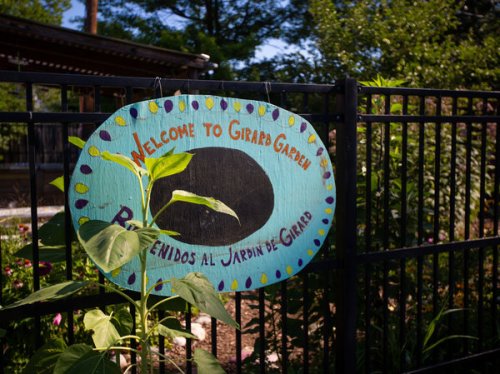
Girard Children’s Community Garden in Washington, D.C. was created on a vacant lot and is now a thriving community space for neighborhood kids.

Most of us know that spending time in nature makes us feel good, but many city children have few opportunities to find that out for themselves. A chain of community gardens in Washington, DC, provides anecdotal evidence that green space reduces stress, and now a controlled Philadelphia study gives more scientific proof that that is exactly what’s going on.

Rhitu Chatterjee reports at National Public Radio, “Growing up in Washington, D.C.’s Columbia Heights neighborhood, Rebecca Lemos-Otero says her first experience with nature came in her late teens when her mother started a community garden.

” ‘I was really surprised and quickly fell in love,’ she recalls. The garden was peaceful, and a ‘respite’ from the neighborhood, which had high crime rates, abandoned lots and buildings, she says.

“Inspired by that experience, years later, Lemos-Otero, 39, started City Blossoms, a local nonprofit that has about 15 children-focused community green spaces across Washington, D.C. She wanted to give kids from minority and low-income communities easy access to some greenery. …

” ‘Having access to a bit of nature, having a tree to read under, or, having a safe space like one of our gardens, definitely makes a huge difference on their stress levels,’ says Lemos-Otero. ‘The feedback that we’ve gotten from a lot of young people is that it makes them feel a little lighter.’

“Now a group of researchers from Philadelphia has published research that supports her experience. The study, published Friday in JAMA Network Open, found that having access to even small green spaces can reduce symptoms of depression for people who live near them, especially in low-income neighborhoods.

“Previous research has shown that green spaces are associated with better mental health, but this study is ‘innovative,’ says Rachel Morello-Frosch, a professor at the department of environmental science, policy and management at the University of California, Berkeley, who wasn’t involved in the research.

” ‘To my knowledge, this is the first intervention to test — like you would in a drug trial — by randomly allocating a treatment to see what you see,’ adds Morello-Frosch. Most previous studies to look into this have been mostly observational.

“Philadelphia was a good laboratory for exploring the impact of green space on mental health because it has many abandoned buildings and vacant lots, often cluttered with trash, says Eugenia South, an assistant professor at the Perelman School of Medicine at the University of Pennsylvania and an author of the study. …

“South and her colleagues wanted to see if the simple task of cleaning and greening these empty lots could have an impact on residents’ mental health and well-being. So, they randomly selected 541 vacant lots and divided them into three groups. They collaborated with the Pennsylvania Horticultural Society for the cleanup work.

“The lots in one group were left untouched — this was the control group. The Pennsylvania Horticultural Society cleaned up the lots in a second group, removing the trash. And for a third group, they cleaned up the trash and existing vegetation, and planted new grass and trees. The researchers called this third set the ‘vacant lot greening’ intervention.”

You can read what happened at National Public Radio, here.

Photo: Pearl Mak/NPR
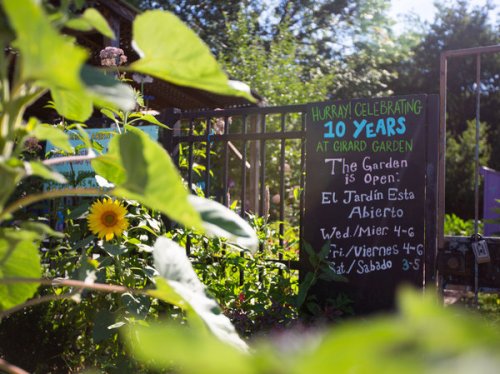
Girard Children’s Community Garden will be celebrating 10 years this year. The garden signs are in both English and Spanish.
e8a7566-5-9189d87bba6596fdfded4f9555d19eb7a718f53b-s600-c85

Read Full Post »

080517-never-enough-sunflowers

I love stories about people who get a good idea and just go do it. In this one by Deborah Allard at Fall River’s Herald News, a man who enjoys gardening is sharing beauty in his own way.

“Del Thurston examined the earth oblivious to the traffic rolling up and down busy Bedford Street.

“The drivers probably didn’t notice the gardener either, but it would be hard to miss the wall of yellow blooms that sprouted up this summer like a centerpiece in the middle of this cement-heavy city neighborhood.

“ ‘I wanted something to brighten up the corner,’ Thurston said.

“And, he found it in the form of sunflowers. The lemon queen variety flowers stretch across the front of the empty property on Bedford Street, and along the corner of Oak Grove Avenue. …

“A gardener who came to the literal field later in life, he approached the property owner in the spring and asked if he could plant sunflowers. With the go-ahead, Thurston nurtured the flowers from seedlings and has watched them stretch toward the sun all season long. …

“He said he used to drive by the vacant lot and noticed the raised flower beds on the property, formerly used by the YMCA.

“ ‘I would see these beds,’ Thurston said. ‘It had good soil. I’ve always wanted to try this with sunflowers. …

“ ‘I’ve met some absolutely phenomenal people in the neighborhood,’ he said

“The fat and happy bees seemed OK with his work, too. They buzzed around the blooms, paying no attention to the humans keeping watch on them, doing what bees do. …

“Gardening has become a favorite hobby for Thurston, who has been involved with the Bristol Community College community garden. … He said he started gardening when he was in his 50s, but Thurston’s knowledge of plants and seedlings seems more mature than a mere decade or so.

“He pointed to the center of the property where herbs and perennials, including sage, sprouted up on a mound of dirt.

“ ‘The rabbits jumped on my pineapple sage,’ he said, extending a leaf that emitted a nice scent of the fruit that bears its name. …

“ ‘This has been very empowering for me,’ Thurston said. ‘I like the positive feedback from the neighborhood.’ ”

More here. Hat tip: @FallRiverRising posted this on twitter.

Read Full Post »

Photo: Kirk Crippens/ Insight Garden Program
Today’s post is about an illicit prison garden, but a 2014 story at NPR, here, suggests that approved gardens are finding favor with corrections officials. The photo is from San Quentin.

This story from the Marshall Project on twitter is about a secret garden behind prison walls — and what it meant to the gardeners.

Matthew Hahn, an ex-offender, wrote the article in collaboration with the online magazine Vice.

“I used to be a vegetable smuggler. It’s not how I got to prison, but it’s what I did once I was there.

“I wasn’t alone. The men with whom I worked in the garden on ‘China Hill’ at California’s Folsom Prison were there with me, every day, waiting in line to get back into the prison building and hoping the guards wouldn’t discover the vegetable contraband they had secreted away in their clothing.

“In my left boot, slightly smashed and carefully wrapped in a sandwich bag, was a single jalapeno pepper. In my right, bundled tightly and also wrapped, were a couple dozen shoots of green onions. …

“Officially, we were landscapers. There were about 20 of us, and we had been assigned to the landscaping crew atop the grassy knoll within the prison’s walls known as China Hill, spending our weekdays in what felt to us prisoners like the wilderness. …

“We had a hill, and a job on it, and a single guard, also our supervisor, who expected us to work only a couple of hours per day, after which he permitted us to while away the rest of our time as we saw fit.

“We weren’t actually allowed to garden, but that didn’t stop us from doing it. The unspoken agreement between the guard and us men was that we would keep China Hill from becoming an overgrown jungle, and in return he would pretend he didn’t see any of our vegetables growing there. It was motivation to keep us working.

“The vegetables we grew were the kinds that never would have made their way into the chow hall: We had squash, peas, chili peppers, bell peppers, watermelon, green onions, tomatoes.

“China Hill was divided into sectors, just like the prison yard. Black guys had the land in one spot, the Southsiders (a Mexican gang) in another, the White Boys near the Southsiders and the “Others” near the Blacks. Despite the determined segregation, it was peaceful. If the Southsiders wanted to eat some peppers with their burritos, they could trade a watermelon to the Others. …

“There was another aspect of working on China Hill that wasn’t usually shared with the men on the yard, but which made it one of the best jobs in Folsom: It offered the potential, at least, for solitude. The lack of noise — that was the feeling of belonging to the Earth again, and having a small part of it belong to me, and to us. …

“We were never able to smuggle in enough vegetables for entire meals — just morsels, just momentary freshness in our stale world. But we smuggled in memories when we smuggled in those tastes: memories of freedom.” More here.

Read Full Post »

When I was at the magazine, I often sought out authors from different regions who could write about the benefits of community gardens to low-income neighborhoods. Kai remembered that and tagged me on Facebook when he posted an article yesterday about a comprehensive farming initiative in inner-city Detroit.

Robin Runyan writes at the website Curbed Detroit, “This week, the Michigan Urban Farming Initiative (MUFI) revealed its plans for the first Sustainable Urban Agrihood in the North End.

“Wait, an agrihood? It’s an alternative neighborhood growth model, positioning agriculture as the centerpiece of a mixed-use development. There are some agrihoods around the country, but in rural areas. This is the first within a city.

“MUFI’s agrihood spans three acres on Brush Street, a few blocks up from East Grand Boulevard. MUFI runs a successful two-acre garden, a 200-tree fruit orchard, and a children’s sensory garden. They provide free produce to the neighborhood, churches, food pantries, and more.

“The big part of the announcement was the plan to renovate a three-story, 3,200-square-foot vacant building that MUFI had bought at auction years back. …

“The Community Resource Center will include office space for MUFI, event and meeting space, and two commercial kitchens on the first floor. A healthy cafe will be located on vacant land next to the CRC.

“Tyson Gersh, MUFI President and co-founder, said at the announcement that they want to be the first LEED certified platinum building in Detroit.”

The article credits Sustainable Brands, BASF, GM, and Herman Miller and Integrity Building Group for providing much-needed help on the project.

More here.

Photo: Michelle & Chris Gerard
The Michigan Urban Farming Initiative.

Read Full Post »

It’s so interesting to see all the different ways people are taking to farming. We’ve already covered a number of angles. Now Adele Peters at FastCoexist writes about how would-be farmers in Brooklyn are testing out “vertical farming.”

“When it opens this fall in Brooklyn, a new urban farm will grow a new crop: farmers. The Square Roots campus, co-founded by entrepreneurs Kimbal Musk and Tobias Peggs, will train new vertical farmers in a year-long accelerator program. …

“The campus will use technology from Freight Farms, a company that repurposes used shipping containers for indoor farming, and ZipGrow, which produces indoor towers for plants. Inside a space smaller than some studio apartments—320 square feet—each module can yield the same amount of food as two acres of outdoor farmland in a year. Like other indoor farming technology, it also saves water and gives city-dwellers immediate access to local food. …

“It’s intended for early-stage entrepreneurs. ‘We’re here to help them become future leaders in food,’ says Musk, who also runs a network of school gardens and a chain of restaurants that aim to source as much local food as possible.

“After building out the Brooklyn campus, they plan to expand to other cities, likely starting with cities where Musk also runs his other projects—Memphis, Chicago, Denver, Los Angeles, Indianapolis, and Pittsburgh.”

More here.

Photo: SquareRoots

Read Full Post »

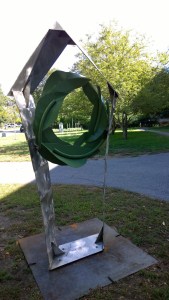
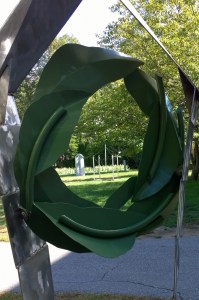
Among the sights I’ve wanted to photograph in the last few weeks is a sculpture outside the Umbrella Community Arts Center. It invites you to look through and focus on an aspect of the view.

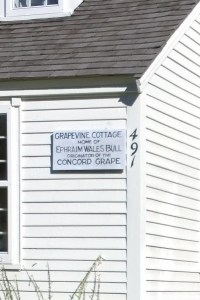
Next up, the old house where Ephraim Bull developed the Concord Grape. Another sign there told me that there was a “Sale Pending.”

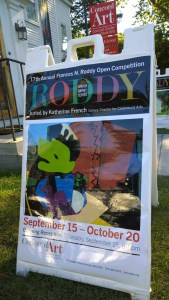
My friend Meredith is a featured artist at Concord Art’s new juried show. She has done several treatments of her fica plant, but the one in the show is a lovely collage of painted paper.

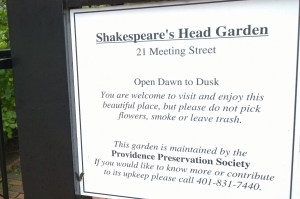
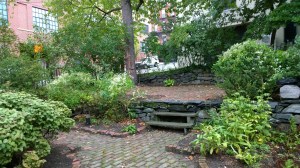
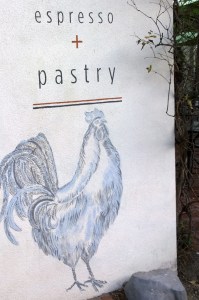
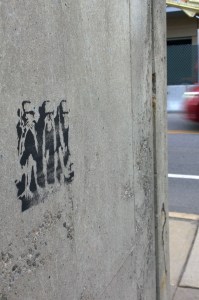
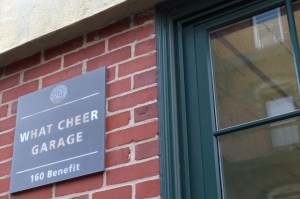
I recently discovered on a morning walk that the Providence Preservation Society has generously opened its multilevel garden to the public during certain hours of the day. What a peaceful place to just sit and think! Not far away is the What Cheer Garage (I like the name). Across Providence, you can discover a fine-looking hen on the wall of Olga’s Cup and Saucer, and a street art stencil recommending Speak no evil, See no evil, Hear no evil.

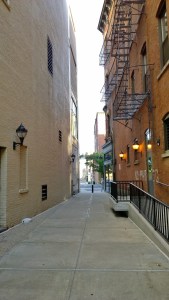
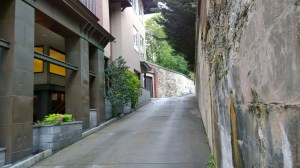
I also like the alley alongside the Providence Performing Arts Center and a hilly street that looks more like Europe than New England.

092416-sculpture-at-umbrella-center

092416-looking-thru-sculpture


092516-concord-grape-origins

092516-meredith-fife-day-at-juried-show


092016-please-enjoy-our-garden

092016-preservationists-share-garden


092116-hen-at-olga

092116-3-no-evils


092016-what-cheer

092116-providence-alley


092016-providence-street

Read Full Post »

When dollar bills of any denomination get too beat up to use, the federal government shreds them. For a long time, the various Federal Reserve banks gave out small bags of shredded money to visitors as a souvenir — always a big hit with kids.

But for the last few years, shredded money has been used as compost in gardens. Here’s a story from Seth Archer at Business Insider about the new approach.

“Have you ever wondered what happened to currency that gets damaged? If you have a paper shredder in your home, you already have a pretty good idea. But that’s just the start….

“The New Orleans branch of the Federal Reserve shreds $6 million in cash each day. They mainly shred bills that are dirty, taped, graffitied or otherwise unfit to be used as cash.

“The bills are shredded to a fine texture to make compost. … The cash is transferred to a compost facility, where it is mixed with other materials to make nutritious plant food.

“After the compost is made, it is sold to local farmers, who use it to grow peppers, tomatoes and cucumbers.

” ‘It is very fulfilling to be growing using a material that would otherwise go to waste.’ — Simond Menasche, founder and director of Grown On.”

More here.

Photo: Great Big Story

Read Full Post »


I had an awfully nice lunch yesterday, and I’d like to tell you about it. It involved two nonprofits — the mostly Caucasian conservation group Trustees of Reservations and the mostly African American community-outreach enterprise called Haley House.

The trustees had a really great idea recently to do meaningful art installations on a couple of their properties and chose one next to the Old Manse in Concord. The Old Manse is most often associated with 19th Century novelist Nathaniel Hawthorne, but the grandfather of Ralph Waldo Emerson was also a resident and saw the historic events unfold at the North Bridge on April 19, 1775.

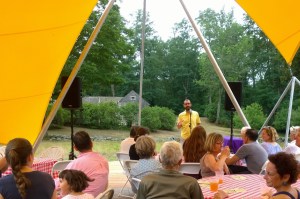
Artist Sam Durant wanted to draw attention to the presence of slaves in the early days of Concord and launch a discussion, so he constructed a kind of big-tent meeting house, with a floor made of the kinds of materials that might have been in slave buildings.

The Trustees conferred with him on a series of “lyceums” that might bring races together at the site. They decided that at the first one, they would encourage races to break bread together and talk about food traditions.

From Haley House in Roxbury, they brought in a chef, a beautiful meal, and singer/educator/retired-nurse Fulani Haynes.

I ate a vegan burger, sweet-potato mash, very spicey collard greens and wonderful corn muffins. Also available were salad and chicken.

Haynes sang a bit and talked about the origins of Haley House, how it helps low-income people and ex-offenders and local children, teaching cooking and nutrition and gardening, among other things. She invited attendees to tell food stories from their early years, and several brave spirits stood up.

That participatory aspect of the activities helped to reduce the impression that African Americans were making entertainments for a mostly white audience (art, food, music entertainments).

I loved the whole thing and learned a lot. (For example, Grandpa Emerson had slaves living upstairs, and “the embattled farmers” who “fired the shot heard ’round the world” were able to go marching off because slaves were working the farms. I really didn’t know.)

African American artifacts are on display next door at the Old Manse. The art installation will be up until the end of October 2016.

More here.

Photos: Artist Sam Durant offers the crowd a new lens on history. The chef from Haley House keeps an eye on the African American cuisine. Fulani Haynes demonstrates how a food can become an instrument.

081316-artist-Sam-Durant-at-installation-picnic

081316-Fulani-Haynes-sings-in-Old-Manse-field


081316-Haley-House-chef-and-corn-muffins

Read Full Post »

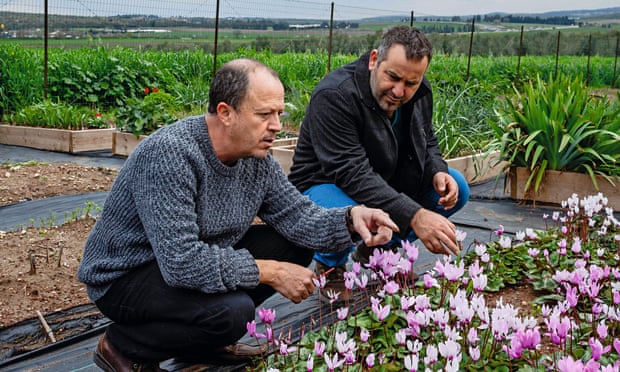
Shared interests can bridge cultures. The Guardian‘s Jim Cable offers up a nice example in his report on “two plantsmen in Israel – one Jewish, the other Muslim – [and their] mission to save their region’s rare native species.”

He writes that Oron Peri, a Jewish garden designer who lives halfway between Haifa and Nazareth, has long partnered with Mansour Yassin, a Muslim, on landscape work. Now they are collaborating to share a large collection of Eastern Mediterranean native species with other plant enthusiasts. He says their affiliation is perfectly natural in the part of Israel where they live.

“Yassin adds, ‘We have the same ideas about relationships between Christians, Jews and Muslim people. We don’t hold to stereotypes about where you come from.’

“Peri realised the time had come to formalise the way he shared plants with other enthusiasts. So Seeds of Peace was born; a scheme where seed sales of garden-worthy bulbous plants support conservation of rare species. Yassin is gradually matching up botanic names with the Hebrew he naturally uses for plants he has known since playing in the mountains as a boy. …

“For Peri, the collection represents 20 years of travel and botanising, specialising in plants from the Mediterranean and Middle East. Indigenous populations have suffered due to tourism (particularly on the Greek islands and Cyprus) and illegal harvesting for the bulb market. Some plants are endangered in the wild, with no conservation scheme to protect them in their native country. They give these refugees, as Peri refers to them, a place to thrive and set seed.” Read about the work here.

Photo: Yadid Levy
Oron Peri, left, is Jewish and his Seeds of Peace partner, Mansour Yassin, is Muslim. Here they examine cyclamen in their beds in Kiryat Tiv’on.

Read Full Post »

Artists love a challenge. Tell them it’s impossible and they’ll find a way to do it.

As Ralph Gardner Jr. writes for the Wall Street Journal, a good example may be found at one to the most polluted waterways in America, Brooklyn’s Gowanus Canal.

“What is it about the Gowanus Canal,” Gardner asks, “that attracts art and artists? I visited a bit more than a year ago and spotted some sort of homemade art project floating in the middle of the canal. It was as if the anonymous artist was saying, ‘Take that, Superfund site!’

“A far more ambitious project alighted [in late September], when Diana Balmori, a celebrated landscape architect and urban designer, oversaw the launch of a floating landscape at the foot of the Whole Foods parking lot that overlooks the canal.

“ ‘The reason we picked the Gowanus Canal is the attempt to show that plant material can clean water,’ Ms. Balmori explained. At the same time, she acknowledged, ‘We picked the hardest.’ …

“The floating island was to be filled with multiple tubes. In a poetic twist, the tubes were to be made of the same culvert pipe used to dump pollution and sewage into the canal.

“Perhaps even more poetically, the goal of the experiment was to test the viability of creating large-scale ‘edible’ islands in polluted urban rivers to serve as a food source. Some plants were to be irrigated with distilled water, others with captured rainwater, and a hearty few even with water directly from the canal. …

“I was told that a duck had laid an egg on some earlier iteration of the project. And indeed, we stood there admiring the island’s three monarch butterflies, a beleaguered species in recent years, flitting about the plants.”

More at the Wall Street Journal, here, but there may be a firewall. The author is highly skeptical about anyone ever eating plants from this island, but you can tell he has a grudging admiration for an optimistic artistic vision that insists on a better future.

Photo: Cassandra Giraldo for The Wall Street Journal

Read Full Post »

Rupa Shenoy had an interesting story on WGBH radio recently. It was about local startups interested in urban farming. I wrote previously about Higher Ground Farm, situated on top of the Design Center in South Boston, but Grove Labs, with its use of LED lighting for indoor gardening, was new to me.

Shenoy says, “Some of these new entrepreneurs are thinking big. Jamie Byron and Gabe Blanchet graduated from MIT and started Grove Labs two years ago with the idea to make every living room a potential growing space. …

“Their product is a cabinet that allows people to grow fruits and vegetables year-round in the home. It’s connected to the internet, controlled by an app on your phone, and designed to make urban farming easy and engaging.

“There are a few models set up in a space at Greentown Labs in Somerville, which they share with other startups. Each wooden cabinet, with several components, is about the size of an entertainment center.

“At the heart of the cabinet system is a fish swimming in a tank. The waste from that fish is sucked into tubes and converted into nitrate fertilizer. The fertilizer is pumped around the cabinet to trays filled with brown clay pebbles. That’s where the fruits and vegetables grow, with the pebbles serving as soil. Byron says once you get the system up and running, you can harvest enough for about two small salads everyday.” More at WGBH.

For more on using fish to fertilize your produce, see my recent post about an experiment in Duluth, here.

Photo: Rupa Shenoy / WGBH News
Somerville startup Grove Labs plans to sell cabinets for growing produce in your home.

Read Full Post »

Who can resist a farmers market at this time of year? They are such joyful places.

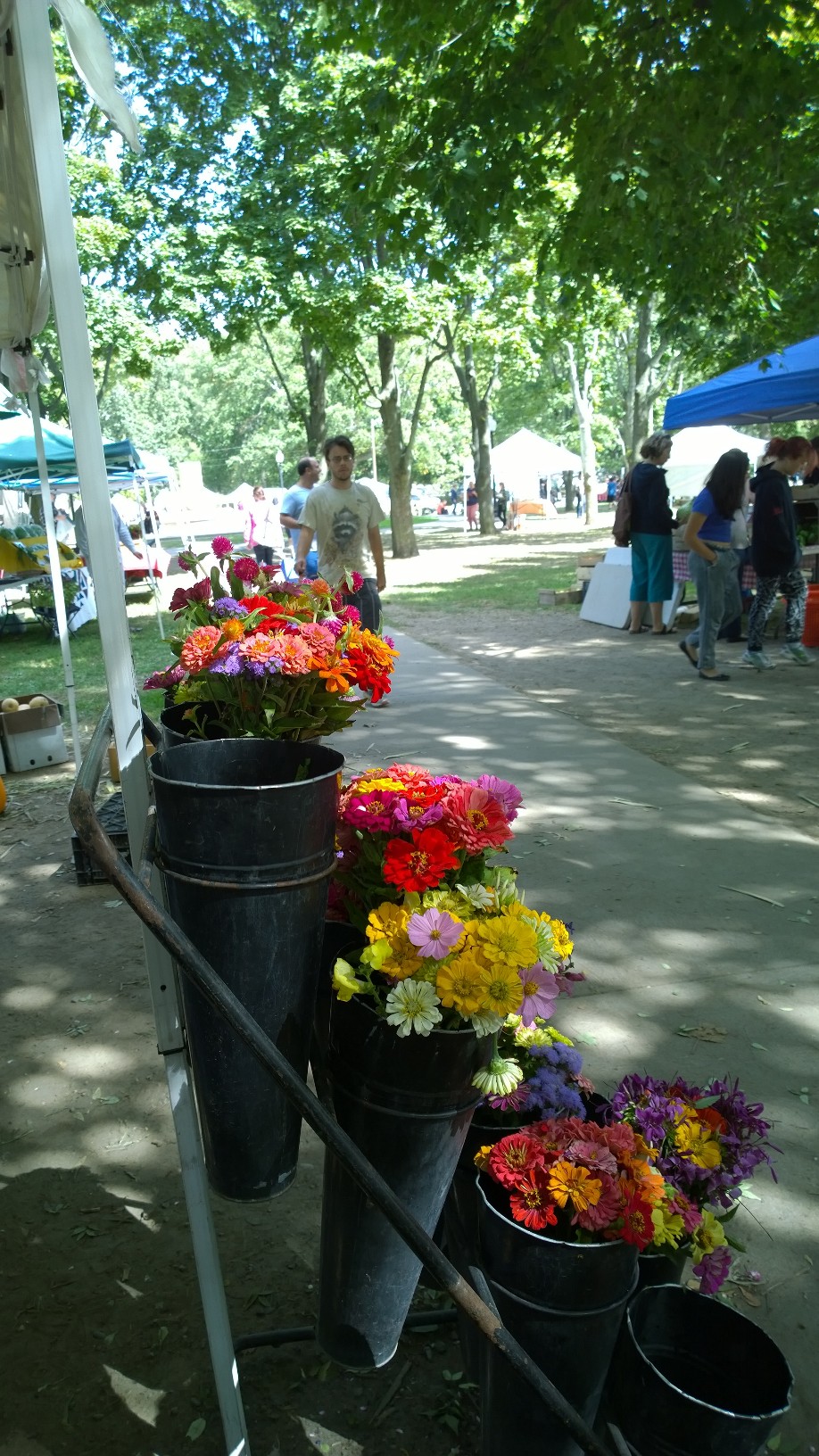
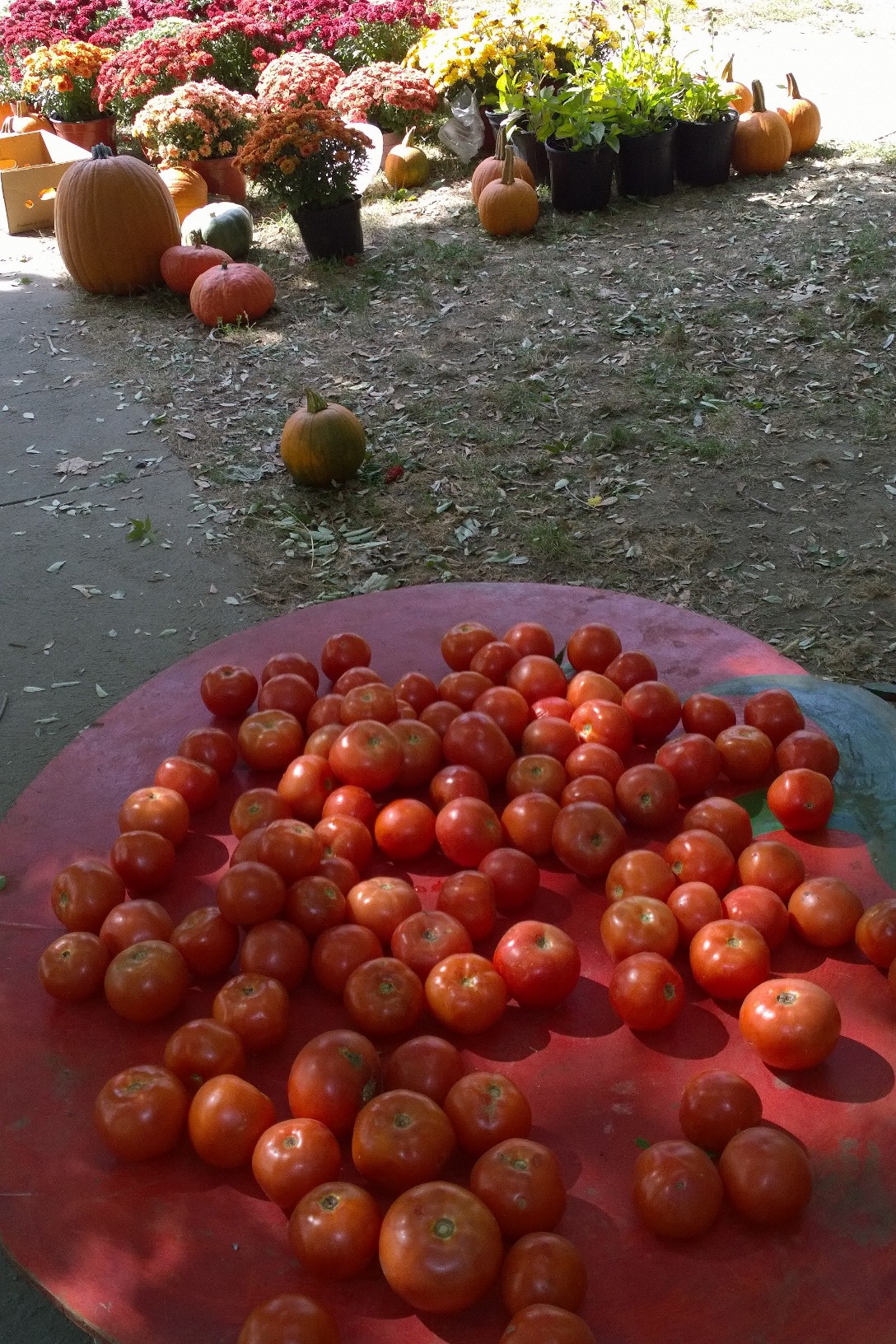
Saturday we went with Erik and the kids to the Hope Street Farmers Market in Providence. It’s in a good-sized park where there is a playground as well as farmstands, crafts, live music, samosas, tacos, flowers, raw juices, fish, sausages, granola made by refugees …

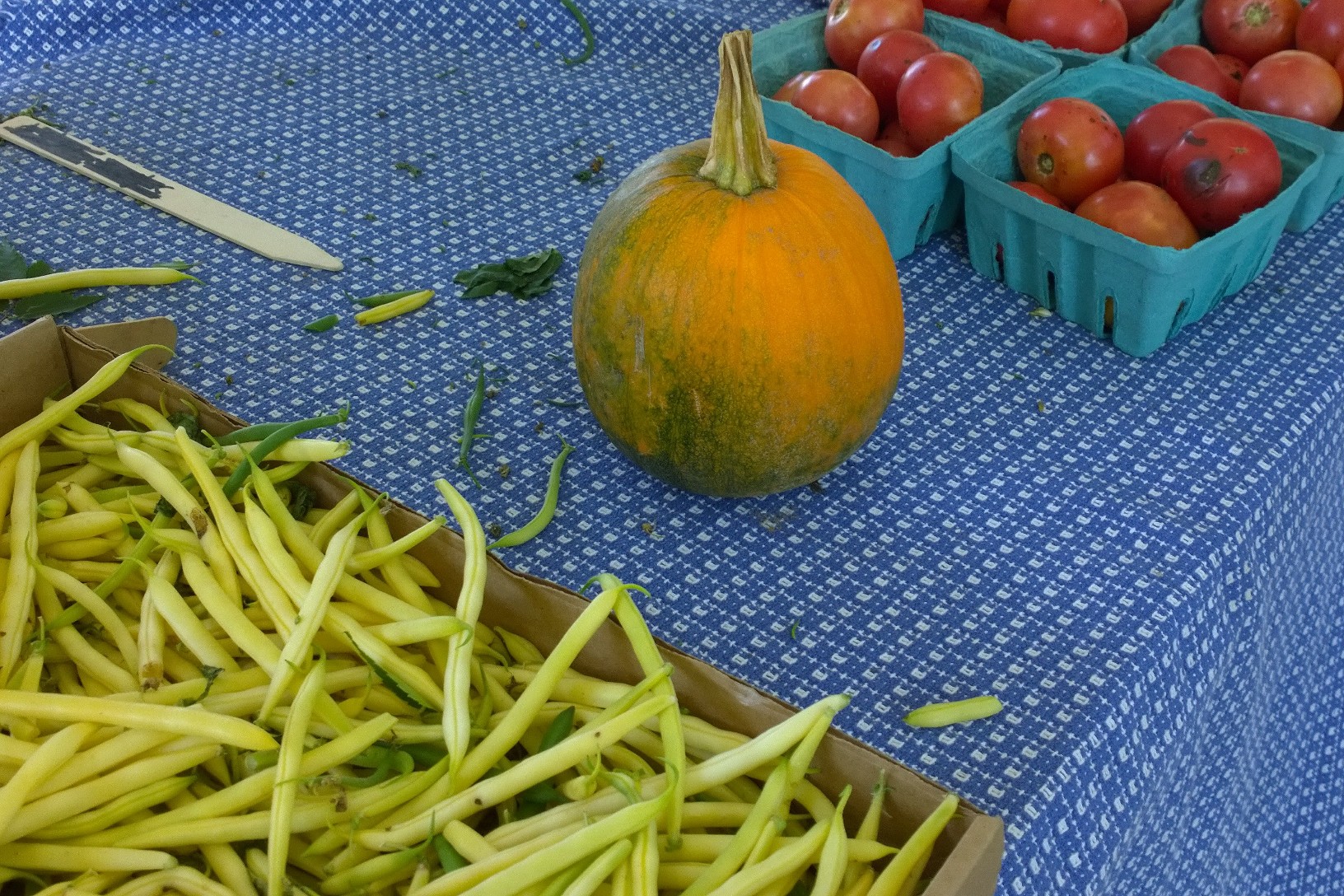
After his grilled cheese and his Del’s lemonade, our 3-year-old grandson chose the little green and orange pumpkin below. It’s now on his dining-room table at home. His sister, when she wasn’t sleeping, worked hard at inspecting everything on the ground and trying to put it in her mouth.

A few words from the website on extra offerings that might interest backers of other farmers markets: “For your convenience, here are some of the unique features of the Hope Street Farmers Market: The Bicycle Valet at the Saturday morning market, run by Recycle-A-Bike, a volunteer-based community organization that connects people with refurbished bikes, provides practical bike knowledge, and advocates bicycle use by safer, more confident cyclists. Anyone can drop off their bike while shopping and know that it will be safely watched and sometimes even tuned up, for a small fee, while they shop. http://www.recycleabike.org gives a full description and mission of the organization.

“Knife Sharpening while you shop is another new feature of our Saturday market. You can drop our your knives (wrap them carefully and mark them with your name please!) to be professionally sharpened for a small fee while you shop.

“Live music at the markets features local musicians or acoustic bands playing every Saturday and some Wednesdays, so feel free to bring a blanket, buy your picnic lunch or supper and enjoy the entertainment.”

092615-RI-farmers-market

092615-Prov-Farmers-Market

092615-market-Providence

Read Full Post »

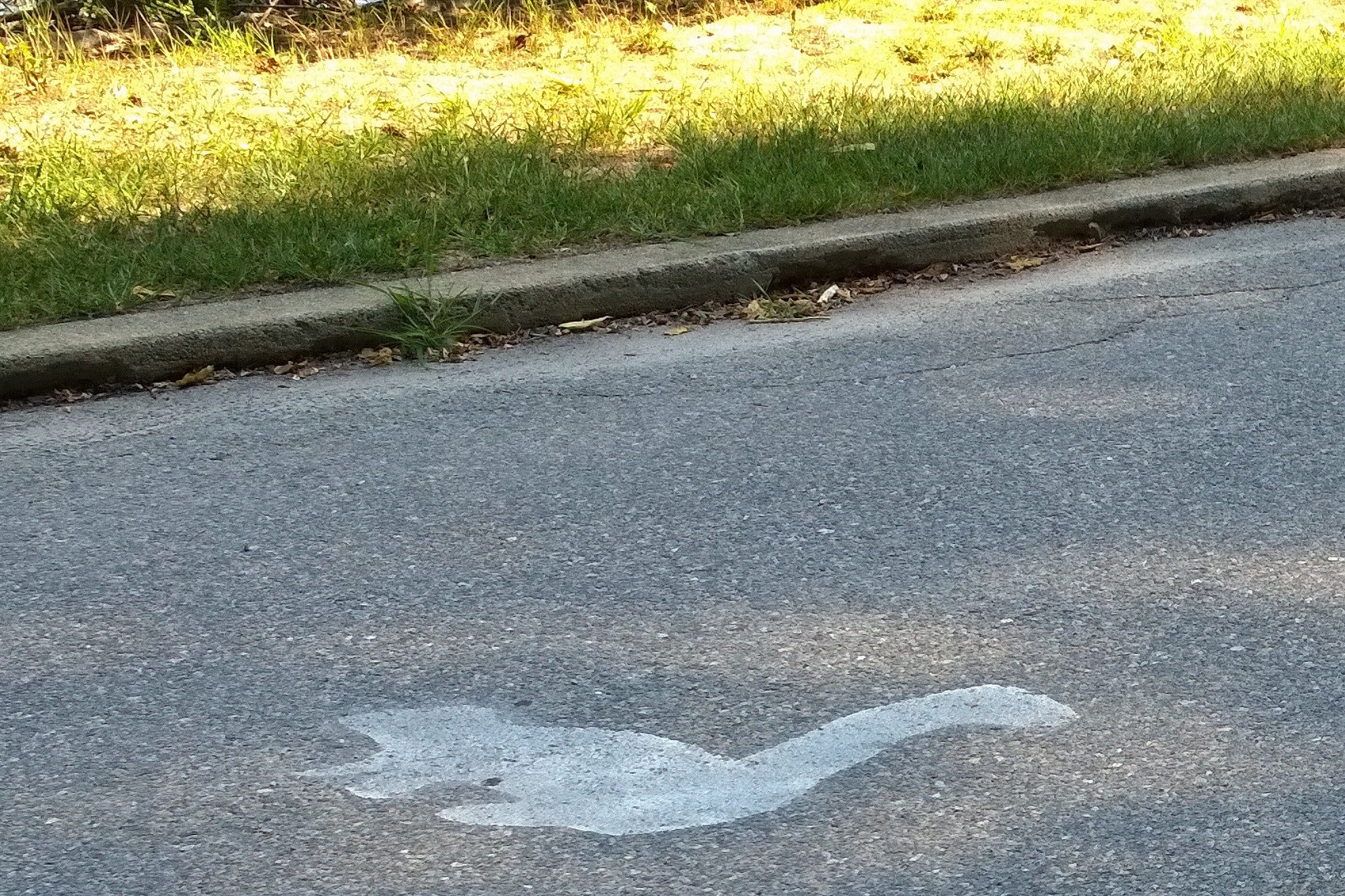
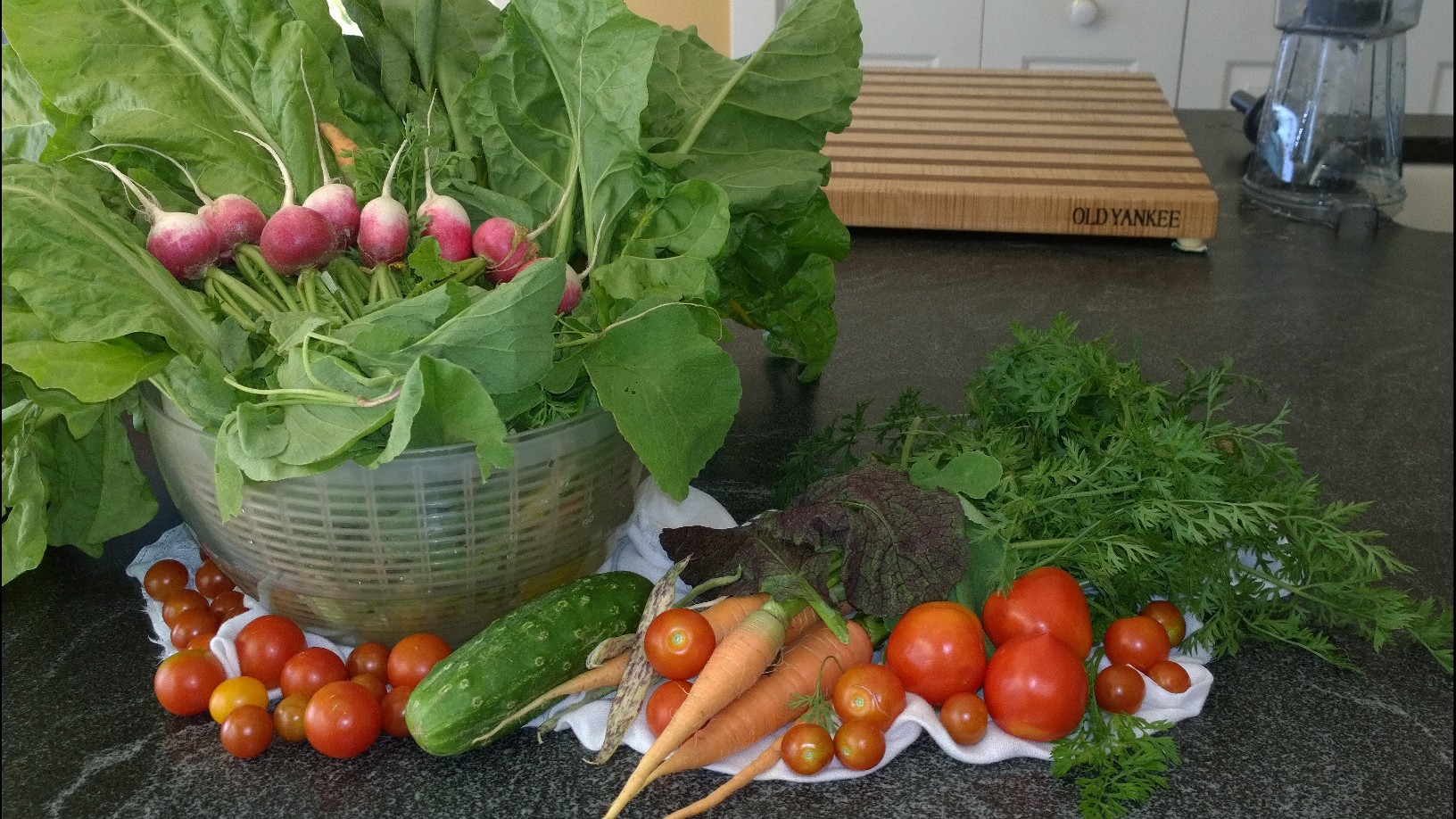
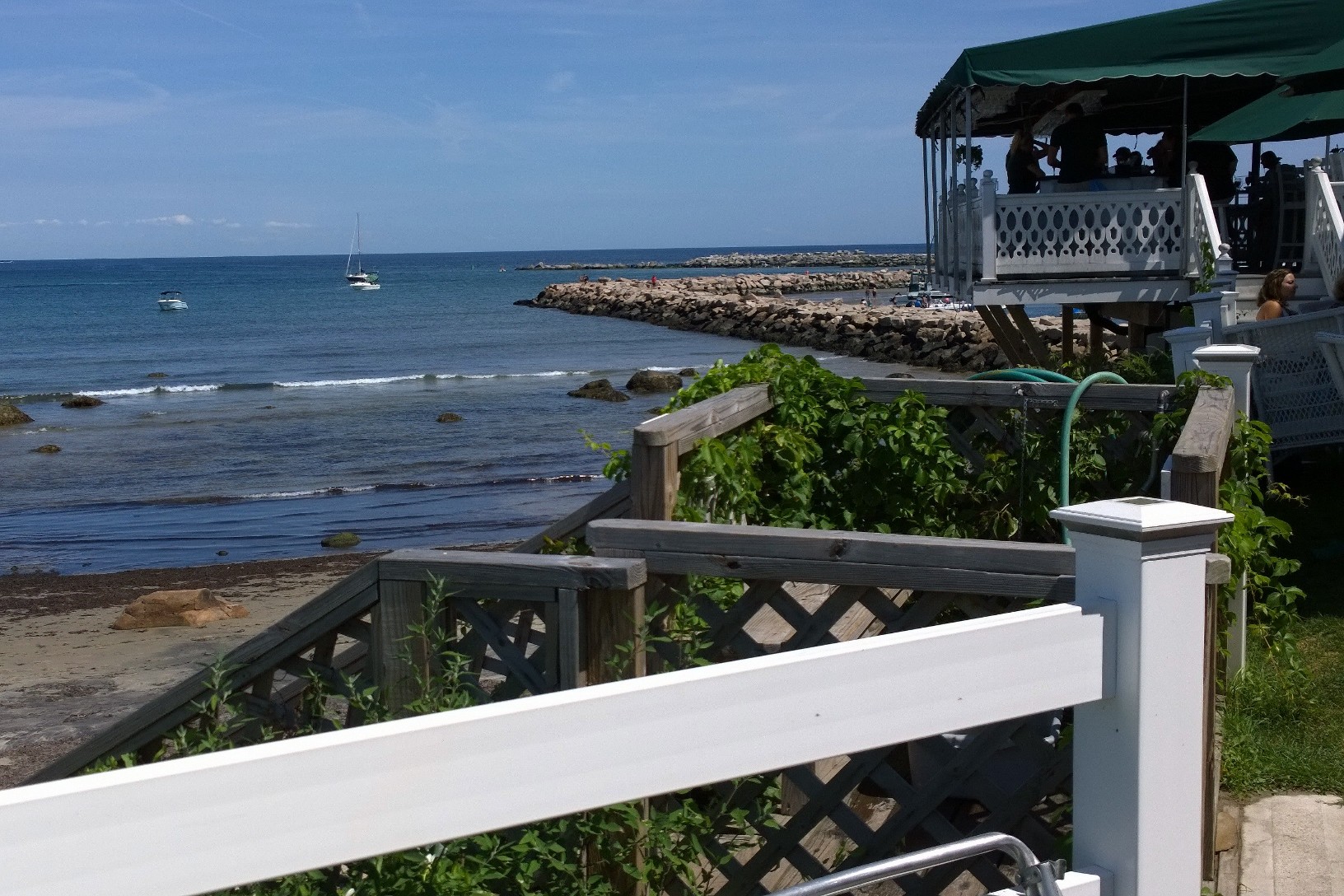
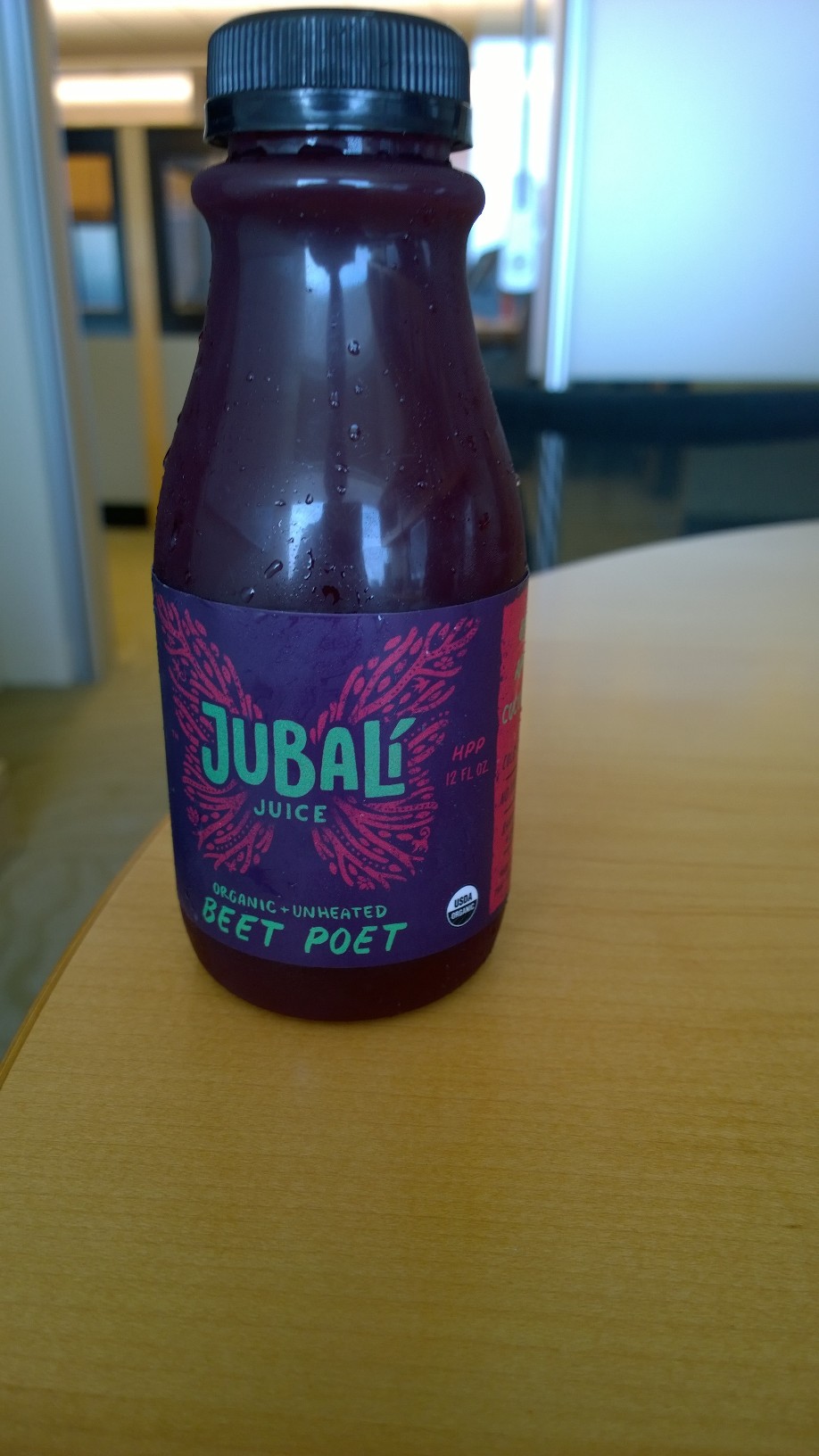
Signs and portents. Summer is winding down. The writing is on the telephone wires. The sidewalk squirrel is gathering nuts. My neighbor’s garden is producing bounty. A dragon has appeared on the beach. We seized our last chance for a ladies’ lunch overlooking the harbor. I bought Jubali beet-cucumber-apple juice at the farmers market because it was called Beet Poet.

082915-written-in-the-birds

082515-stencil-river-rd

090515-Sandy-K-veggies

090415-sea-monster

082915-ladies-lunch-at-Surf

090415-beet-poet

Read Full Post »

This story comes from Heather Dockray at Good magazine (by way of the Huffington Post). It’s about a life-affirming project in Atlanta.

“Good, local, nutritious food shouldn’t be expensive,” she writes, “and shouldn’t only be enjoyed by people who can afford it.  A homeless shelter in Atlanta decided that their residents desperately needed access to healthy food — but instead of sourcing out, encouraged residents to grow their own. Now, the shelter is home to a huge rooftop garden planted by the residents themselves, which is expected to yield hundreds of pounds of great quality greens. …

“While eating discounted snacks might give homeless residents short-term financial benefits, the long-term health consequences are substantial. The Metro Atlanta Task Force for the Homeless, who runs the gardening program, wanted to give homeless people access to food previously considered out-of-reach. Now, residents are responsible for 80 garden beds, producing kale, carrots, chard, and squash, among other vegetables.” More here.

Dockray doesn’t mention how gardening and donating to the shelter makes residents feel, but I am going to guess it builds their self image and confidence.

Photo: Metro Atlanta Task Force for the Homeless

Read Full Post »

David Wilkes has a great story at the Daily Mail about a self-contained garden that hasn’t had to be watered in decades.

“To look at this flourishing mass of plant life you’d think David Latimer was a green-fingered genius. Truth be told, however, his bottle garden – now almost in its 53rd year – hasn’t taken up much of his time. …

“For the last 40 years it has been completely sealed from the outside world. But the indoor variety of spiderworts (or Tradescantia, to give the plant species its scientific Latin name) within has thrived, filling its globular bottle home with healthy foliage.

“Yesterday Mr Latimer, 80, said: ‘It’s 6ft from a window so gets a bit of sunlight. It grows towards the light so it gets turned round every so often so it grows evenly. Otherwise, it’s the definition of low-maintenance. I’ve never pruned it, it just seems to have grown to the limits of the bottle.’

“The bottle garden has created its own miniature ecosystem. Despite being cut off from the outside world, because it is still absorbing light it can photosynthesise.”

More here.

Photo: BNPS.CO.UK
Still going strong: Pensioner David Latimer from Cranleigh, Surrey, with his bottle garden that was first planted 53 years ago and has not been watered since 1972 — yet continues to thrive in its sealed environment.

Read Full Post »

« Newer Posts - Older Posts »