Feeds:
Posts
Comments

Posts Tagged ‘massachusetts’

I find that I prefer taking photos in sunlight — there’s a better chance of getting the shadows I love.

Does the sun shine more in summer? Perhaps I’m just outdoors more. In any case, there seem to be more photo ops in summer. Here are several recent pictures from my travels back and forth between Rhode Island and Massachusetts.

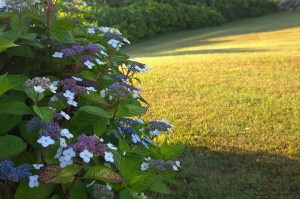
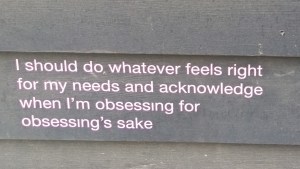
Any favorites? I especially love the long, early-morning shadows behind the blue Lace-Cap Hydrangea. And I can never resist mysterious messages sent out onto the world as if by UFO.

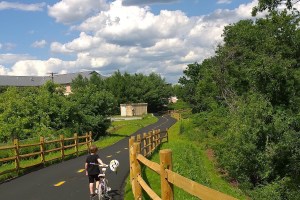
That’s Suzanne’s son surveying the new section of the bike path as he learns to ride using training wheels first.

062117-message-on-bench

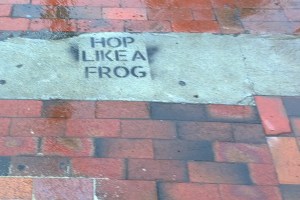
062417-sidewalk-sayings


062917-A-Face-in-the-Gutter

062417-RI-anchor-Hope


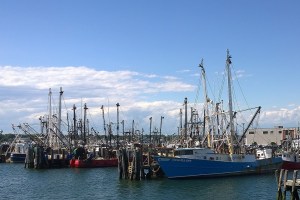
062517-Pt-Judith-fishing-boats

062617-young-biker-Providence


062517-there-will-be-blackberries

062417-public-sculpture-Providence


070317-lace-cap-and-long-shadows

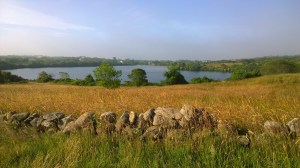
070217-Fresh-Pond-New-Shoreham


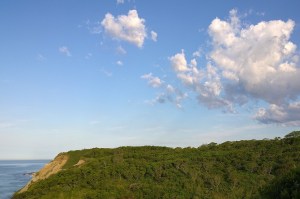
070417-clouds-over-Mohegan-Bluffs


Read Full Post »

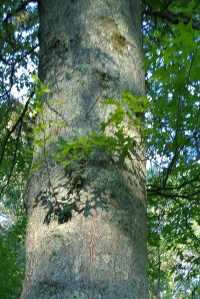
I’m back to taking walks near my home and looking for interesting shadows. The current collection of photos includes leaf shadows on a tree trunk. Only a couple dog walkers were out when I shot this, but I noted an unusual number of cars outside a house flying “2017” balloons. Probably a late-night graduation bash. All was quiet as the grave at 6:30 a.m.

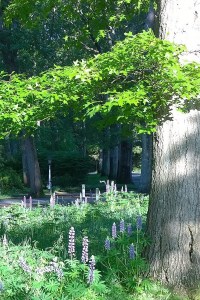
Nearby, blue lupines caught my attention. I admired many lovely ones in Sweden and was happy to see that, while I was gone, a whole batch was blooming along my usual walking route.

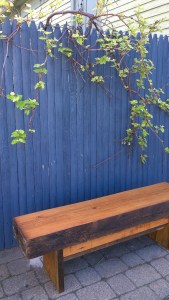
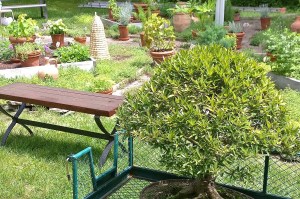
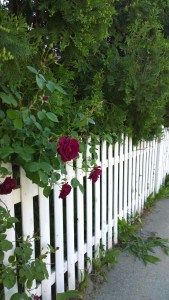
I’m also sharing a grapevine over a bench, a bonsai tree near the church herb garden, and a deep red rose on a white picket fence.

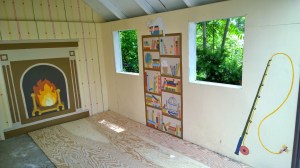
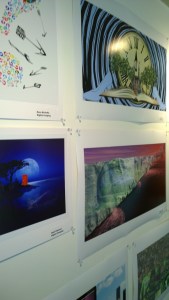
More unusual: the big playhouse at the nursery school and some elaborate digital art by high school students.

061117-leaf-shadows

061117-lupines-ConcordMA


051817-bench-under-grape-arbor

060917-bonsai-and-herb-garden


061117-deep-red-rose-white-picket-fence

060917-playhouse


052117-CCHS-digital-art

Read Full Post »

How did we get halfway through May already? It’s time to mention I’ll be taking my first break in six years between May 26 and June 6. We’ll be in Sweden. I’ll try to blog, but you never know.

It sure will feel strange not to post. I have put something up on this site every day since May 2011!

But before I leave, I have other things to share, including today’s photos. The first two are from the giant mural in Dewey Square, Boston — the latest in the Greenway’s ongoing series. The featured artist this time is Mehdi Ghadyanloo from Iran, where he is known for upbeat murals.

The next photo shows a WPA mural in the Arlington, Mass., post office. John pointed me to it after he saw my recent post “Hunting Down WPA Art.”

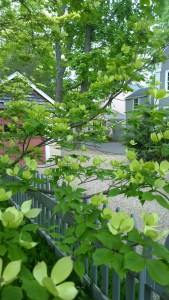
Then comes another of my shadow photos. Can’t resist shadows. That one is followed by tree-stump mushrooms and dogwood. Can’t resist mushrooms either.

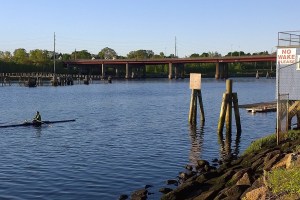
The four Providence photos that follow attest to the fact that the city finally experienced a sunny Tuesday morning (the first since February). Blackstone Park is the location of the Indian shelter and the fallen birch tree with the mysterious yellow plastic strips (art?). Nearby was a wondrous carpet of pink petals and an early rower on the Seekonk River.

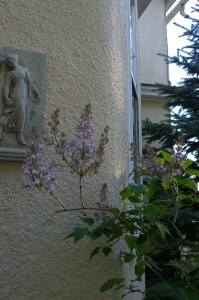
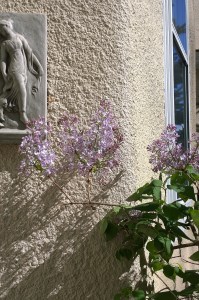
Finally, I wanted to show you my lilac progression. With muse.

042817-Greenway-mural-Boston

042817-Iranian-artist-Mehdi-Ghadyanloo


042917-WPA-mural-in-ArlingtonMA-PO

051117-can't-resist-sun-and-shadow


043017-mushrooms-on-stump

051217-feathery-dogwood-and-garage


051217-feathery-dogwood-and-garage

051617-fallen-birch-art


051617-carpet-of-petals-Providence

051617-sculling-on-the-Seekonk


042617-lilac-and-lady-1

050317-lilac-and-lady-2


050617-lilac-and-lady-


Read Full Post »

In Massachusetts, large facilities are complying with a food-waste ban, creating many green jobs and boosting economic activity.

EcoRi News reports, “The Massachusetts Department of Environmental Protection (DEP) recently issued a report which found that the state’s commercial food waste ban has created more than 900 jobs and stimulated $175 million in economic activity during its first two years.

“Implemented in 2014, the nation’s first food scrap and organics ban requires any commercial organization that disposes of a ton or more of food scrap a week to pull it out of the waste stream and reuse it, send it for composting or animal feed operations, or use it in an anaerobic digestion facility that produces renewable energy.

“The report, conducted by ICF International Inc. of Cambridge, assessed the economic development benefits of food-waste-reduction initiatives. The 25-page report compared jobs and economic activity among food-waste haulers; composting, anaerobic digestion and animal feed operations; and food-rescue organizations before and after the Oct. 1, 2014 implementation of the ban. The ban creates jobs by driving a market for alternatives to disposing of food waste in Dumpsters, according to the report.

“The report also shows that food-waste haulers and processors, as well as food-rescue organizations, employ 500 people directly, while supporting more than 900 jobs when accounting for indirect and induced effects. These sectors generate more than $46 million of labor income and $175 million in economic activity. …

“About 1,700 facilities, including restaurants, hotels and conference centers, universities, supermarkets and food processors, are covered under the ban.” More here.

Meanwhile, the more of us who convert our own food scraps to compost for our yards, our friends’ yards, or community gardens, the better for the envionment. “One and one and 50 make a million,” after all.

Photo: Green Fingers
Converting food scraps to compost instead of putting them in the trash. In Massachusetts, large facilities are complying with a food-waste ban. Individual efforts add up, too.

Read Full Post »

At Public Radio International, Jason Margolis and Ari Daniel reported recently on a Massachusetts business incubator focused on helping green startups by providing them with inexpensive space and shared tools.

“A few years ago, when Sorin Grama had just finished graduate work at MIT and was looking for a place to build his new solar electricity startup, he came across an old abandoned warehouse.

“ ‘My partner and I were looking at it and said, ‘Well, it’s a lot of space here, maybe others can join, it’s kind of lonely,” Grama says. ‘We put out a call to the MIT community.’

“Within weeks, a handful of startups were sharing that cavernous space.

“ ‘And we bonded. All the companies created a nice community, and we started sharing tools, people and ideas, and reading each other’s proposals for funding, things like that,’ Grama says. ‘We had a great Christmas party one year.’ …

“Today, their home is a massive old mid-19th century pipe factory in Somerville, just outside of Boston. It’s called Greentown Labs, and it’s one of the most successful in a new wave of what are called green business incubators, clusters of startups looking to build a business by helping cut carbon emissions and fight climate change. …

“They’re saving money [by getting started] at Greentown. If you need a power saw or an industrial press, no need to buy your own — just sign up for a time slot in the machine shop. The incubator also brings shared intellectual resources, like software, human resources, even PR help. …

“Outgrowing the incubator is part of the point, showing there’s money to be made tackling the world’s climate and energy challenges.

“It’s a growth area that the Commonwealth of Massachusetts is betting on, putting millions in grants and loans toward a network of green tech incubators. Steven Pike, interim CEO of the Massachusetts Clean Energy Center, says it’s an efficient way to spend.

“ ‘We can try and go out and try to support individually 50 different companies,’ Pike says. Or, Massachusetts can invest in an incubator that supports 50 companies under one roof.

“He says Massachusetts has an audacious goal: ‘We want to be the Silicon Valley of clean energy, renewable energy.’ ”

More here.

Photo: Greentown Labs
Shared workspace at Greentown Labs.

Read Full Post »

There are so many interesting cultures in the world! For example, when I was editor of a magazine about lower-income issues in New England, I heard for the first time about the Karen from Burma (Myanmar). Who? Soon after, I managed to acquire an article on Karen refugees in Waterbury, Connecticut, so I was able to learn something along with my readers.

Recently, I heard of another new-to-me minority, members of which are being resettled in Massachusetts. They are called Mandeans, and their pacifist religious beliefs had subjected them to persecution in Iraq and Iran for millennia.

Here is what Brian MacQuarrie writes about them at the Boston Globe.

“The Mandaeans have found safety and acceptance since they began arriving [in Worcester] in 2008, freely practicing a monotheistic religion that predates Christianity and Islam. But they still do not have a temple — a ‘mandi’ for baptisms, marriages, and birth and death rituals — and whether one is built could determine if they continue to call Worcester home.

” ‘Work is not the anchor, living in an apartment is not an anchor, the mandi is the anchor,’ said Wisam Breegi, a leader of the Mandaean community. …

” ‘It really is a culture that is in danger of disappearing,’ said Marianne Sarkis, an anthropology professor at Clark University. ‘If you don’t have a way of preserving the culture and traditions and even the language’ of Aramaic — what a temple helps provide — ‘it is not going to survive very long.’ …

“ ‘We really don’t have the expertise, the know-how, the connections,’ said Breegi, who also has founded a scientific firm that is developing a low-cost, disposable, neonatal incubator for use in developing countries.

“To help forge the religious connections, Breegi and Sarkis are preparing an application for a nonprofit organization to help raise money for the temple. Worcester Mayor Joseph Petty said in an interview he is willing to help the project where he can.

“ ‘They’re all doing what everyone else is trying to do — working hard and getting their kids a good education.’ …

” ‘It’ll just help make Worcester stronger in the long run,’ Petty said of his city’s embrace of Mandaeans and other immigrants. ‘You can’t build walls between people.’ ”

Worcester held a ceremony of welcome in April that “represented the first time — anywhere, at any time — that Mandaeans had been recognized as a valued, important minority group, Sarkis said.” Wow.

More here.

Photo: Craig F. Walker/Globe Staff
The Kalmashy family (left to right) Lilo, and her husband Mahdi and their daughters and Sura and Sahar, shared lunch at their home in Worcester.

Read Full Post »
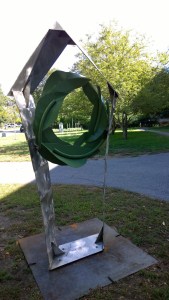
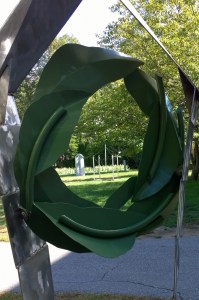
Among the sights I’ve wanted to photograph in the last few weeks is a sculpture outside the Umbrella Community Arts Center. It invites you to look through and focus on an aspect of the view.

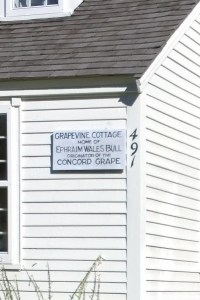
Next up, the old house where Ephraim Bull developed the Concord Grape. Another sign there told me that there was a “Sale Pending.”

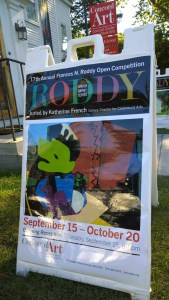
My friend Meredith is a featured artist at Concord Art’s new juried show. She has done several treatments of her fica plant, but the one in the show is a lovely collage of painted paper.

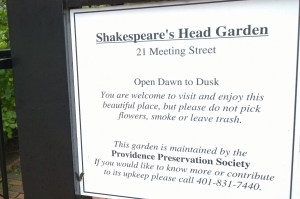
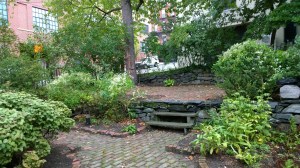
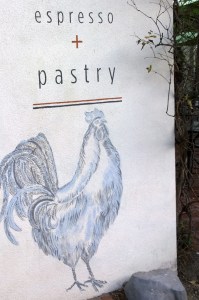
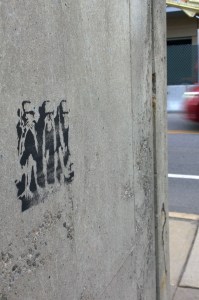
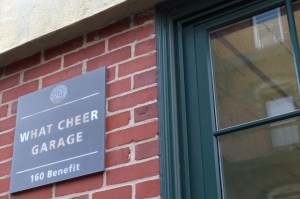
I recently discovered on a morning walk that the Providence Preservation Society has generously opened its multilevel garden to the public during certain hours of the day. What a peaceful place to just sit and think! Not far away is the What Cheer Garage (I like the name). Across Providence, you can discover a fine-looking hen on the wall of Olga’s Cup and Saucer, and a street art stencil recommending Speak no evil, See no evil, Hear no evil.

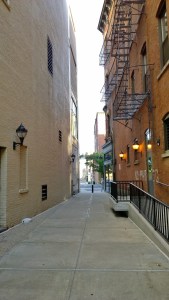
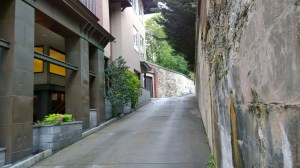
I also like the alley alongside the Providence Performing Arts Center and a hilly street that looks more like Europe than New England.

092416-sculpture-at-umbrella-center

092416-looking-thru-sculpture


092516-concord-grape-origins

092516-meredith-fife-day-at-juried-show


092016-please-enjoy-our-garden

092016-preservationists-share-garden


092116-hen-at-olga

092116-3-no-evils


092016-what-cheer

092116-providence-alley


092016-providence-street

Read Full Post »

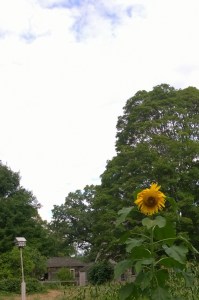
This healthy sunflower is at the Old Manse in Concord. The Trustees of Reservations always plant a big garden there, with pumpkins growing between the corn rows.

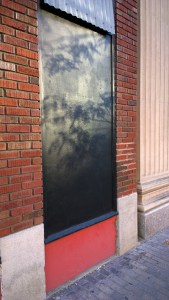
The lantern-like seed pods in the next photo embellish a tree beside the Providence River. The leaf shadows on brick were spotted not far away, along a grubby Providence sidewalk.

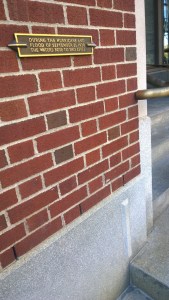
Can you read the plaque on the Providence Journal building? It shows the crazy height that the water reached in the infamous Hurricane of ’38. Golly!

My husband says the barrier at Fox Point will prevent flooding like that from ever happening again. I don’t know. Were the engineers aware of global warming when they started construction in 1960?

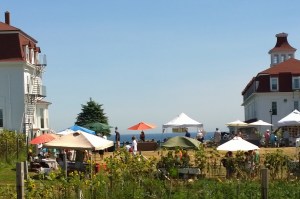
New Shoreham (in the next picture) was also battered in the hurricane of ’38. In fact, the storm wiped out the island economy on land and sea. The fishermen and farmers were not insured against such a catastrophe. No wonder people there remember that hurricane!

One thing that is different since 1938, as I learned in a splendid book called A Wind to Shake the World, communities in the path of a hurricane now get plenty of warning. But in 1938, when houses on Long Island, New York, were washing out to sea, no one up north knew it.

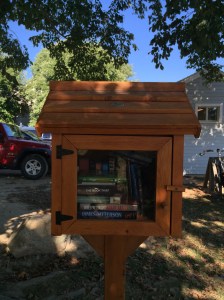
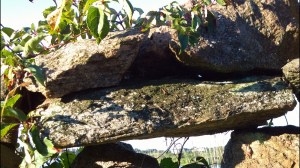
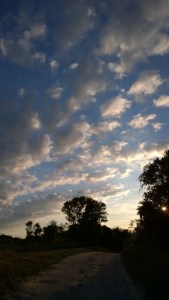
A few other shots of New Shoreham: a Wednesday farmers market, the Little Free Library, a view through a stone wall, a rumpled morning sky, and the North Light.

081916-sunflower-at-Old-Manse

082916-little-lanterns


083016-shadows

083026-sign-re-hurricane-of 1938


082816-Old-Harbpr-bye-for-now

082416-farmers-market-New-Shoreham


082016-Free-LIbrary-BI-3

082216-thru-a-wall-darkly


082816-morning-sky-New-Shoreham-RI

082616-North-Light-New-Shoreham


Read Full Post »

My childhood friend Caroline, now living in Colorado, writes, “As a person who has spent her life designing and building housing, I am pretty convinced that we need to figure out how to house more people closer to downtown areas rather than contributing to endless low density sprawl and destruction of open spaces.

“To this end Tom and I attended the first ever YIMBY (yes in my backyard) conference that was held here in Boulder in June. It is a movement driven primarily by millennials and I am forwarding this invitation to a lecture in Cambridge in case it piques your interest.”

It does pique my interest.

As anyone who has read the incredibly moving Evicted (by MacArthur award winner Matthew Desmond) knows, housing is one of the most critical issues, if not the most critical, for domestic policy today. Housing ties to everything else.

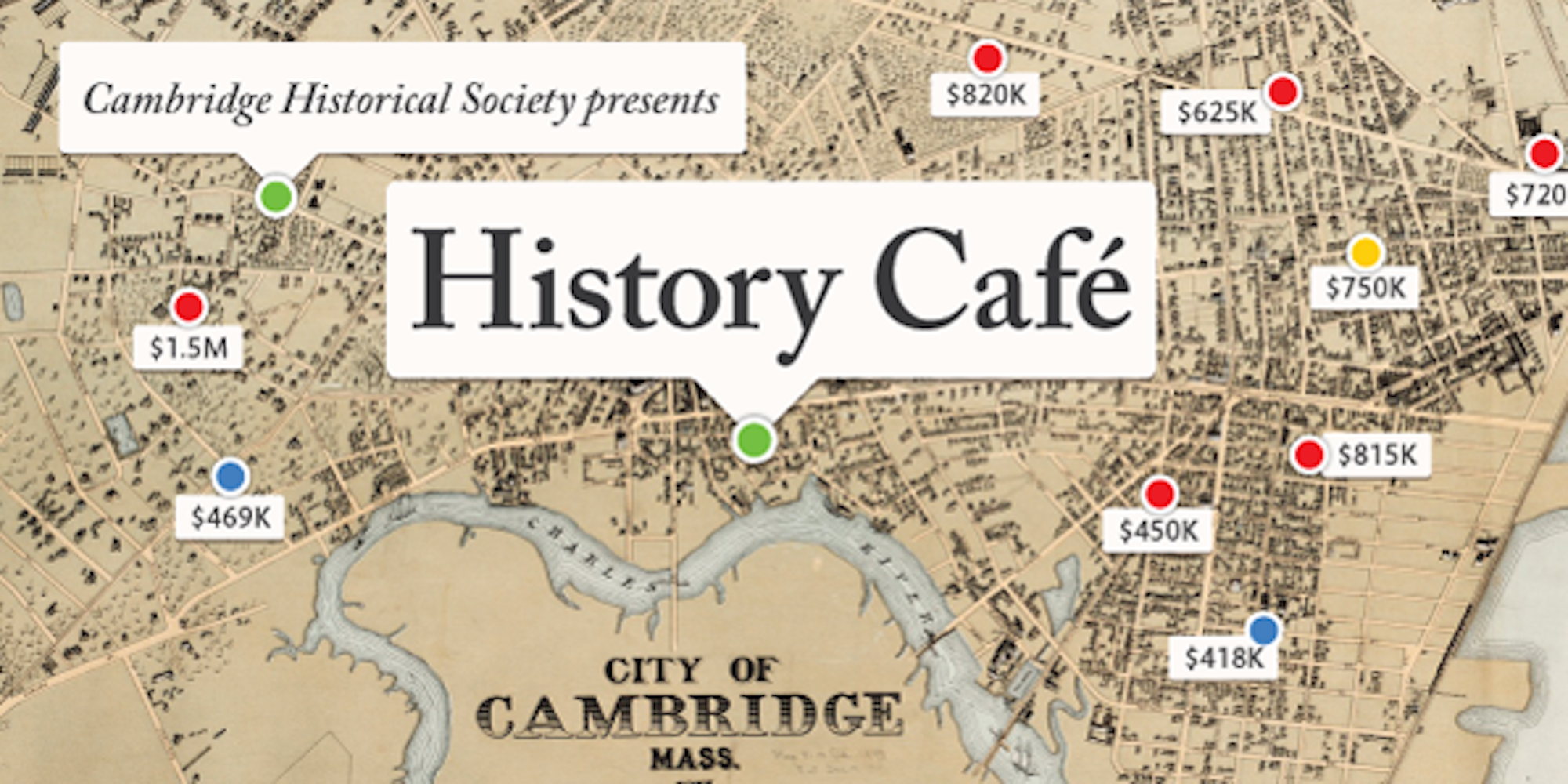
So here’s the opportunity for people in the Greater Boston area: Jesse Kanson-Benanav (chairman of A Better Cambridge) is giving a talk September 14 at 6:30 p.m. for the Cambridge Historical Society on the Yimby movement.

Click this EventBrite link to sign up.

This month we’re asking ‘What is a YIMBY?,’ with the help of Jesse Kanson-Benanav, Chair of A Better Cambridge.

What’s our goal?

The Cambridge Historical Society wants to facilitate dynamic conversations about the housing issues facing Cambridge residents today with a historical perspective.

Where and why?

We are heading out to meet you in the city. The historic Hong Kong in Harvard Square is the perfect setting to bring your friends (or make new ones), grab a drink, and settle in for some engaging conversation about our 2016 theme, “Are We Home?”

Tickets:

$5 members/ $10 non-members

Questions?

Email us at rprevite@cambridgehistory.org

or call 617-547-4252

Read Full Post »


I had an awfully nice lunch yesterday, and I’d like to tell you about it. It involved two nonprofits — the mostly Caucasian conservation group Trustees of Reservations and the mostly African American community-outreach enterprise called Haley House.

The trustees had a really great idea recently to do meaningful art installations on a couple of their properties and chose one next to the Old Manse in Concord. The Old Manse is most often associated with 19th Century novelist Nathaniel Hawthorne, but the grandfather of Ralph Waldo Emerson was also a resident and saw the historic events unfold at the North Bridge on April 19, 1775.

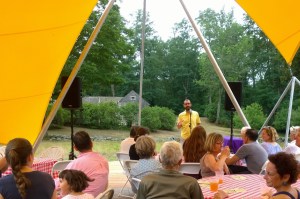
Artist Sam Durant wanted to draw attention to the presence of slaves in the early days of Concord and launch a discussion, so he constructed a kind of big-tent meeting house, with a floor made of the kinds of materials that might have been in slave buildings.

The Trustees conferred with him on a series of “lyceums” that might bring races together at the site. They decided that at the first one, they would encourage races to break bread together and talk about food traditions.

From Haley House in Roxbury, they brought in a chef, a beautiful meal, and singer/educator/retired-nurse Fulani Haynes.

I ate a vegan burger, sweet-potato mash, very spicey collard greens and wonderful corn muffins. Also available were salad and chicken.

Haynes sang a bit and talked about the origins of Haley House, how it helps low-income people and ex-offenders and local children, teaching cooking and nutrition and gardening, among other things. She invited attendees to tell food stories from their early years, and several brave spirits stood up.

That participatory aspect of the activities helped to reduce the impression that African Americans were making entertainments for a mostly white audience (art, food, music entertainments).

I loved the whole thing and learned a lot. (For example, Grandpa Emerson had slaves living upstairs, and “the embattled farmers” who “fired the shot heard ’round the world” were able to go marching off because slaves were working the farms. I really didn’t know.)

African American artifacts are on display next door at the Old Manse. The art installation will be up until the end of October 2016.

More here.

Photos: Artist Sam Durant offers the crowd a new lens on history. The chef from Haley House keeps an eye on the African American cuisine. Fulani Haynes demonstrates how a food can become an instrument.

081316-artist-Sam-Durant-at-installation-picnic

081316-Fulani-Haynes-sings-in-Old-Manse-field


081316-Haley-House-chef-and-corn-muffins

Read Full Post »

Here are some recent Rhode Island and Massachusetts photos. (Connecticut is also considered Southern New England, but I haven’t been there in ages.)

I wonder if other people have preferences for seeing certain kinds of photos on certain kinds of social media. For example, unless it’s a picture of one of my grandchildren, I really don’t like seeing people pictures on Instagram, but on Facebook, people pictures are the only kinds of photos I want to see. I’m still figuring out Ello, which is more likely to have art or gifs. I like almost any kind of photo on twitter or on blogs.

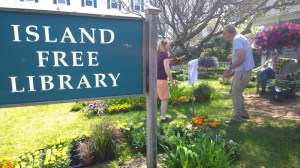
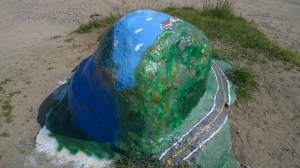
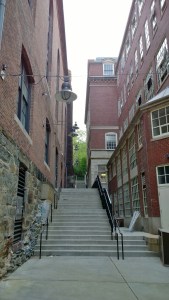
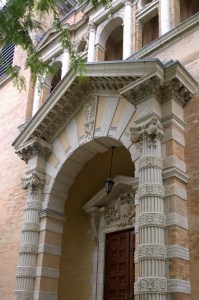
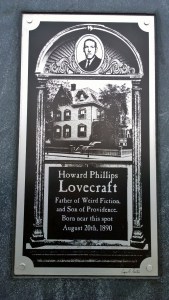
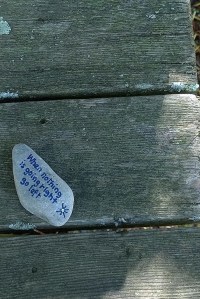
My own pictures are mostly from my walks. I’m starting off here with the plant sale at the New Shoreham library fundraiser and a typically short-lived scene on the island’s famed painted rock. Also in Rhode Island, an intensely serious heavy-equipment operator in a sandbox, the alley beside the Rhode Island School of Design Museum, fancy church architecture, and a plaque commemorating H.P. Lovecraft, a popular Providence-based horror writer with some regrettable character flaws.

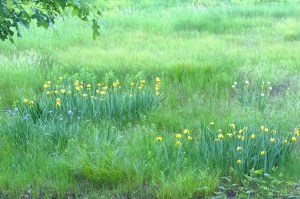
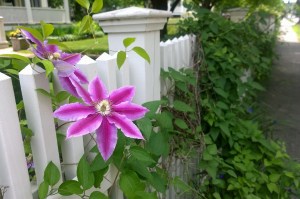
From Massachusetts, yellow iris in a meadow that is more often than not under water — or ice. Also a clematis, a remnant of a once-spectacular garden at a house that got sold. (Too spectacular for the new owners to live up to. Kind of like the garden in Woolf’s To the Lighthouse.)

052816-plant-sale-benefiting-library

052716-painted-rock-BI-scene


060116-operating-the-scooper-at-Humboldt

053116-RISD-art-museum-wall


060216-church-architecture-Providence

060216-Lovecraft-marker-Providence


060416-yellow-iris-in-wetland

060416-clematis-Massachusetts

Read Full Post »

052616-downward-dogwood


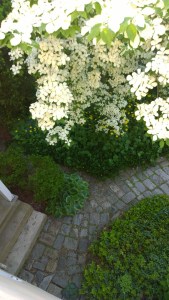
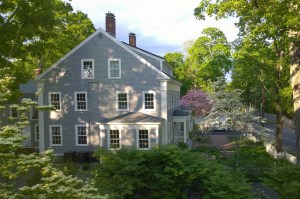
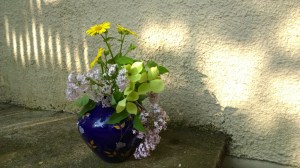
I call this one Downward Facing Dogwood. Taken from above, it shows our dogwood’s drooping magnificence. Next is a view from almost the same angle but including the neighbors’ flowering trees, too. On the back steps is an arrangement of lilacs, dogwood and a ubiquitous yellow flower whose name I don’t know.

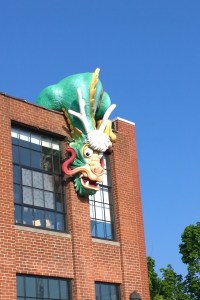
Three pictures taken in Providence feature a decorated utility box near the Rhode Island School of Design, the dragon that hovers over the Children’s Museum, and a cryptic statement in small print on the side of a Benefit Street house. My question: Is this the homeowner’s voice or vandalism?

051916-neighbor-flowering-trees


052016-lilacs-dogwood-shadows

052416-utility-box-near-RISD


052516-dragon-at-childrens-museum

052416-words-on-Benefit-St-house


Read Full Post »

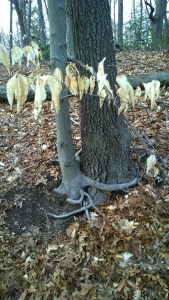
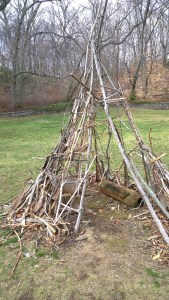
Something reader KerryCan said in a comment one day got me thinking that I’d like to see if I could get a photo of Providence that could make a part of the city pass for rural. At first, I found only bland vacant lots left over from the rerouting of route 195. Then I went to Blackstone Park, where a treehugger tree and an ersatz teepee caught my eye.

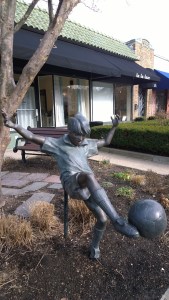
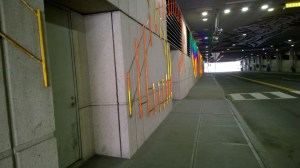
The soccer-playing kid is in a suburban-looking area on the East Side, and the glowing tunnel is right downtown.

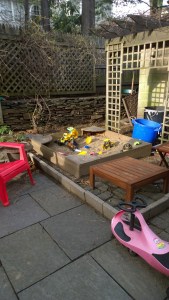
I thought the sandbox looked lonely.

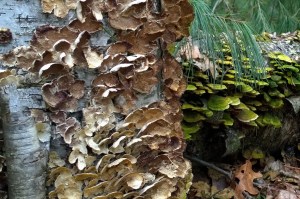
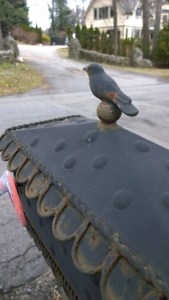
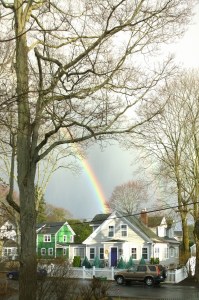
In Massachusetts, I went looking for skunk cabbage and jack-in-the-pulpit plants, but it was too early. Not spring yet. I did hear peepers. And I saw gracefully rotting tree stumps, a bird on a mailbox, and a wonderful rainbow.

031616-treehugger-tree

031616-teepee-Blackstone-Park-RI


031616-soccer-statue

031616-glow-in-the-dark


031616-lonely-sandbox

031816-fungus-on-stumps


031816-bord-on-mailbox

031816-rainbow-Concord

Read Full Post »

I am a fan of UTEC, the United Teen Equality Center, in Lowell, Mass., which has many programs for helping acting-out youth choose a better path. A couple aspects of UTEC’s approach strike me as fundamental to its success, which was recognized by the governor in his inaugural address.

For one thing, UTEC gives people a second, third, fourth, fifth … chance. (ROCA in Chelsea is like that, too.) It tries to remove barriers to success but holds that it’s up to the individual to take up opportunities. For another thing, teen decisions are key to the organization’s direction. After all, young people concerned about gang violence were the founders in 1999.

An impressive staff, led by Gregg Croteau, is also dedicated to making change.

One of UTEC’s initiatives, as I learned from a recent presentation at church, is called Teens Leading the Way. The members are actually working to change government policy. Right now they are focused on expungement of early criminal behavior after teens have served their time. They believe underage offenders must deal with the consequences of their actions but be able to start over and not be blocked from education and jobs.

Here’s what the website says, “Expungement essentially erases a criminal record, including police reports and arrest records, as if it never existed. This would be a unique opportunity for young people with criminal records to obtain a clean slate after completion of their sentences. In 2012 a report titled ‘An Exploration of Juvenile Records Maintenance Across America: A Way Forward for the Commonwealth’ looked into the status of juvenile records in Massachusetts and recommended policy changes to offer expungement to juveniles. …

“Teens Leading The Way youth … have coined the motto: “Erase our sentence so we may write a novel,” which highlights their belief that young people should be held accountable for their actions, but additional rehabilitative actions should be taken to remove barriers upon re-entry and to prevent recidivism.”

More here.

Photo: UTEC

Read Full Post »

At Mass Live, Carolyn Robbins writes that a retired math professor known for having a favorite number is being honored with his own road sign. This could only happen at Hampshire College.

“There are probably an infinite number of ways to say goodbye to a beloved math professor, but Hampshire College’s David Kelly would prefer his students and colleagues keep it to just 17.

“Kelly, who has taught the mathematical and social history of the number 17 during his four and a half decades of teaching, didn’t want a party. So, instead of a dinner reception, Hampshire College decided to give Kelly the lasting tribute he preferred. …

“Elizabeth Conlisk, a professor of public health, together with Hampshire College President Jonathan Lash, worked to make it happen. All of the 15 mph speed limit signs on campus have come down and been replaced with ones that read 17 mph.

“Kelly’s reaction of seeing the new 17 mph speed limit signs for the first time: ” ‘It felt very good,’ he said. ‘And soon after, someone from admissions told me a prospective student was visiting campus, and when he drove up and saw the 17 mph sign he said, “I’m going here.” ‘ ” More here.

Photo: Hampshire College, Amherst, Massachusetts
Professor David Kelly taught the mathematical and social history of the number 17. In his honor, all the 15 mph speed limit signs on campus came down, replaced by 17 mph speed limit signs.

Read Full Post »

« Newer Posts - Older Posts »