Feeds:
Posts
Comments

Posts Tagged ‘postaday’

Photo: BBC
BBC
Africa’s Sophie Ikenye visits a fish farm in Kenya.

The BBC recently called my attention to a surprising new trend in Africa: Young people, who used to flock to urban office jobs and spurn farming, are beginning to see the attractive side of a return to the land.

Sophie Ikenye writes, “Six years ago Emmanuel Koranteng, 33, gave up his job as an accountant in the US and bought a one-way ticket to Ghana. He now has a successful business growing pineapples in a village one-and-a-half hours away from the capital, Accra. He says that even when he was far away from the farm, it was always in his thoughts.

“Across the continent, Dimakatso Nono, 34, also left her job in finance … and moved from Johannesburg to manage her father’s 2,000 acre farm three hours away in Free State Province. She says she wanted to make an impact. …

” ‘At the beginning, we were not sure about what the animals were doing and where they were in the fields, so for me it was important to ensure that every single day, every activity that we do is recorded.’

“Life on the farm has not been easy. … Both young farmers have found it difficult to get funding for equipment. For this reason, Mr Koranteng has decided to stay small.

” ‘If you are small and you don’t have funding, don’t try to do anything big. It’s all about being able to manage and produce quality because if you produce quality, it sells itself,’ he says.

“But there is to be made money in farming. A World Bank report from 2013 estimates that Africa’s farmers and agribusinesses could create a trillion-dollar food market by 2030 if they were able to access to more capital, electricity and better technology.

” ‘Agriculture has a bright future in Africa,’ says Harvard University technology expert Calestous Juma. And it also means making the finished product, rather than just growing crops and selling them. ‘The focus should be … from farm to fork, not just production,’ he says.”

Check out one farming entrepreneur’s approach here.

Read Full Post »

Gudetama, a gloomy egg yolk in a Japanese cartoon series, is one manifestation of an offbeat sense of humor that some observers see as uniquely Japanese.

Patrick Winn wrote the Global Post story.

“Is it possible to market malaise? In Japan at least, the answer is yes. Meet Gudetama, the anthropomorphic embodiment of severe depression.

“Gudetama is a cartoon egg yolk that feels existence is almost unbearable. It shivers with sadness. It clings to a strip of bacon as a security blanket. Rather than engage in society, it jams its face into an eggshell and mutters the words, ‘Cold world. What can we do about it?’

“Gudetama may hate the world beyond its shell. But the world — within Japan’s borders, at least — sure loves Gudetama.

“The misanthropic egg was introduced last year by Sanrio, a Tokyo-based corporation devoted to creating cutesy characters and licensing out their images. Its flagship character, Hello Kitty, is valued at $7 billion and appears on lunch boxes and pajama sets across the globe.

“Gudetama is following Hello Kitty’s lead. Its distressed little face now appears on fuzzy slippers, iPhone covers, plush dolls and even a themed credit card by Visa. …

“Matt Alt, a Japanese-speaking American and specialist in Japan’s pop culture, [decodes] Japan for Western audiences. [He opines that] in Japan, there’s a long history of personifying and anthropomorphizing inanimate objects.

“Gudetama is the most recent of a long, long lineage of mascot characters. Many Japanese mascots will express emotions that Western mascots would not. In the West, mascots are used almost exclusively to cheer people up. In Japan, they’re often used to get a point across or act as mediators in situations where you wouldn’t want to express yourself directly.” More here.

Some US advocates for people with mental illness object strongly to  humor on the subject (even criticizing phrases like “wild and crazy guy”). Others recognize that there are those who use humor to help themselves get well. Wonder what they would think of this egg yolk.

Photo: Sanrio

Read Full Post »

Photo: Boston Globe
Al Filipov died on Sept. 11. He was on the plane from Boston.

After September 11, 2001, good works sprouted around the country, launched by people from all walks of life who were determined that goodness should have the last say.  The Huffington Post collected a bunch of these initiatives for one anniversary of the tragedy, here, but you can find examples in nearly every community.

In Concord, Al Filipov, who was on one of the planes, is honored in several ways, including by the Filipov Peace and Justice Forum.

Al’s son, Boston Globe reporter David Filipov, once recalled his father as “engineer, inventor, sailor, deacon, coach, husband, dad, raconteur.” The Filipov forum website adds that he was a painter and a human rights activist, noting,

“He sought out the best in people and cared passionately about the world in its beauty and pain. He earnestly believed in the power of an individual to make a difference in the world.”

The 2016 Al Filipov Peace & Justice Forum will take place on September 25 at the Trinity Congregational Church on Walden Street in Concord. Representatives from the Parents Circle-Families Forum are the featured guests. The Parents Circle is made up of bereaved Palestinian and Israeli families that have come together to support “peace, reconciliation and tolerance.”

As one member says in the video below, people from different sides of a conflict need to get to know one another as individuals and share commonalities in order to let go of “being right” all the time instead of creating peace. Otherwise any future agreement is just a cease fire.

The presentation will be from 4 p.m. to 6 p.m.

Read Full Post »

It’s not fair to make fun of Russians in general when only a few have a problem with Michelangelo’s “David,” but this is a funny story.

Claire Voon wrote at Hyperallergic in July that the city of St. Petersburg would vote in August on whether to cover the statue’s nakedness.

Here’s what she said, “St. Petersburg residents will vote on how to dress a replica statue of Michelangelo’s ‘David’ that came to the city in May, following a complaint from a woman who said his nudity ‘spoils the city’s historic appearance and warps children’s souls.’

“Erected as part of the ongoing Michelangelo. World Creation exhibition at St. Anne’s Lutheran Church in central St. Petersburg, the 16-foot-tall plastic copy compelled the outraged local to pen a letter last week to the Children’s Right’s Ombudsman, as Lenta first reported. …

“While the online post notes that officials have tried to convince Inna that many other naked statues have stood around town for years, she said she still intends to write to all relevant authorities to achieve an ‘early elimination of the giant.’ …

“The organizers of the show have been quite accommodating, though … This week, they launched the monthlong ‘Dress David’ initiative, which invites people to play stylist to the famous nude Renaissance work and submit ideas for outfits, complete with explanations for why David should appear in the proposed garb. An online voting session for selected concepts will open on August 16, with a winner announced a week later. Voters will also have the option to leave the statue as Michelangelo’s original has stood for centuries. …

“In the meantime, organizers have crudely taped a black circular object over the statue’s offending member to protect the untainted souls of passing schoolchildren.” More.

After a bit of Googling, I finally discovered how the voting went, here.

Photo: @misha.ivanov/Instagram
Some Russians actually think this sloppy covering of a David replica is a good idea.

Read Full Post »

Photo: Star Tribune
Ojibwe poet Jim Northrup

I have been trying to learn something about tribal cultures in the United States. I liked Spokane/Coeur d’Alene tribal member Sherman Alexie’s Thunder Boy (a charming picture book for young children) and The Lone Ranger and Tonto Fistfight in Heaven (an early, painful collection of short stories). Now I am reading some Native American poetry.

One poet, Jim Northrup, recently died. Here is a beautiful obit by Jana Hollingsworth in the Duluth News Tribune.

“Jim Northrup was a ‘tough man’ who taught his eldest sons to survive in the elements by living in a tepee on the Fond du Lac Reservation for several years, when money and jobs were scarce.

“But it was more than physical survival, said his son, Matthew, on Tuesday, the day after his father died from cancer-related complications. He taught them how to be strong in a world that didn’t treat everyone the same, he said, using humor — and education — as tools.

” ‘ “When you have really nothing else,” he said to me a lot, “you have your humor,” Matthew said. ” ‘When you grow up poor on the rez and when you grow up a lower class in society, you realize that.’

“Northrup, an award-winning writer of books, columns, plays and poetry — and a prominent member of the Fond du Lac Band of Lake Superior Chippewa — died [in July]. He was 73.

“Northrup was a storyteller, known for his stark and honest writing about his experience as a U.S. Marine in Vietnam and his early years at a federal boarding school. He was funny and pointed in his writings about everyday life on the reservation, politics and change in Indian Country. He wrote as a way to heal himself from some of the trauma he experienced during the war, he said earlier this year.

” ‘I knew my poetry was being used in vets’ groups to help people open up (and) maybe even write their own poetry as part of their healing,’ he told the News Tribune in March. ‘It worked for me, so I hoped it helped (others).’ ”

More here, where you can hear Northrup read a poem in Ojibwe about passing along the culture. Read the whole obit. It’s really lovely. I hated to cut it.

Read Full Post »

090716-blackstone-valley-visitor-center

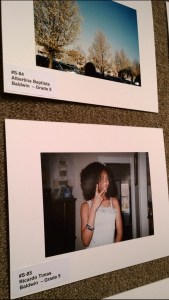
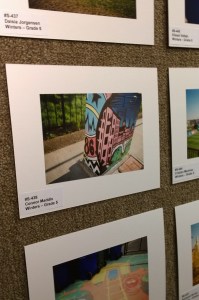
Pat Zacks at the Camera Werks in Providence feels compassion for inner-city kids whose schools can’t offer many enrichment activities. That’s why she volunteers every year to mount and hang 500+ juried photos by Pawtucket, Rhode Island, fifth graders (and a few grownups).

On Wednesday I stopped off at the gallery where the “Calling All Cameras” photos are on display until the end of September. The theme this year,  submitted by Linda C. Dugas, is “Pawtucket’s Color Palette.” Winners of this, the 18th, annual photo contest also get their work featured in the city calendar.

An impressive slate of judges are responsible for choosing this year’s winning photos (Butch Adams, Richard Benjamin, Christy Christopoulos, Jesse Nemerofsky, and Aaron Usher). Winners will be announced September 25.

I wish my photo of a child’s box turtle entry had turned out well enough to post, but I’m sharing a couple other favorites here.

Stop by the Blackstone River Valley National Heritage Corridor visitor center, just off Interstate 95 in downtown Pawtucket, to find the box turtle. The visitor center is opposite the historic Slater Mill, birthplace of America’s Industrial Revolution.

And if you are ever in Providence, please check out the Camera Werks on Hope Street. Pat’s Facebook page, here, has more information on the photo exhibit.

090716-pawtucket-calling-all-cameras

090716-pawtucket-photo-show-1


090716-pawtucket-photo-show-2


Read Full Post »

I confess that although I can see why children adore books by certain illustrators, sometimes I don’t like reading the artists’ words.

Richard Scarry, for example, with his delightful animals and five-seater pencil cars, writes text that can get boring pretty fast. And Beatrix Potter, whom I admire for a multitude of reasons, employs very big words and potentially scary themes.

Christian Blauvelt recently covered that angle at the BBC. He begins with Potter’s first line in a storybook.

“ ‘Your father had an accident there; he was put in a pie by Mrs McGregor.’

“Old Mrs Rabbit’s frightful warning to her children Flopsy, Mopsy, Cotton-tail and Peter appears on the opening page of Beatrix Potter’s first book, The Tale of Peter Rabbit. Aside from featuring perhaps the most dramatic use of a semicolon in children’s literature, it sets the tone for her work from the start: that horrors abound in a world of Darwinian struggle, but that these must be faced calmly.

“Your parents, and perhaps your children, may be devoured by a vengeful property owner, or sold for tobacco; you may have your tail ripped off by an angry owl; an invading rat might tie you up in string and include you as the key ingredient in a pudding. But life goes on – disappointments must be faced and tragedies overcome. …

“Potter’s tales have been consistently popular with adults, as well as children, since The Tale of Peter Rabbit was published in 1902 when she was 36 years old. This is not just because they feature adorable creatures in harrowing situations; her talking-animal stories also comment on the era’s class politics, gender roles, economics and domestic life.

“Did she examine British society through animals because she spent more time with animals than children, aside from her brother Bertram, when she was young? Because she wanted to rebel against the bourgeois values and morals of her wealthy middle class family – which had made its money in the textile industry – but only dared do so through furry surrogates? Because she could only publish children’s stories since her true passion, science, was a career field closed to women in the late 19th Century? Because she had a German tutor who introduced her to the back-to-nature ethos of the Romantics?” More.

Hmm. Maybe I’m being too anti-intellectual here, but I’d say Beatrix Potter just got a kick out of telling stories like that.

And maybe she was right that small children could handle the scary parts. My three-year-old grand-daughter for example, has always loved Peter Rabbit and could recite the fancy phrases by heart when she was only two. Reciting fancy phrases is great for language development.

Photo of Beatrix Potter’s art: Penguin
Beatrix Potter, an amateur scientist, was meticulous about representing nature accurately, even if the animals did wear clothes. Here Peter Rabbit gorges on Mr. McGregor’s carrots.

Read Full Post »

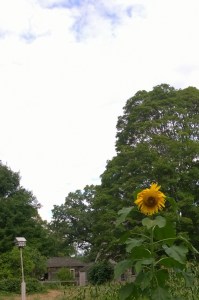
This healthy sunflower is at the Old Manse in Concord. The Trustees of Reservations always plant a big garden there, with pumpkins growing between the corn rows.

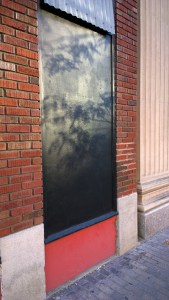
The lantern-like seed pods in the next photo embellish a tree beside the Providence River. The leaf shadows on brick were spotted not far away, along a grubby Providence sidewalk.

Can you read the plaque on the Providence Journal building? It shows the crazy height that the water reached in the infamous Hurricane of ’38. Golly!

My husband says the barrier at Fox Point will prevent flooding like that from ever happening again. I don’t know. Were the engineers aware of global warming when they started construction in 1960?

New Shoreham (in the next picture) was also battered in the hurricane of ’38. In fact, the storm wiped out the island economy on land and sea. The fishermen and farmers were not insured against such a catastrophe. No wonder people there remember that hurricane!

One thing that is different since 1938, as I learned in a splendid book called A Wind to Shake the World, communities in the path of a hurricane now get plenty of warning. But in 1938, when houses on Long Island, New York, were washing out to sea, no one up north knew it.

A few other shots of New Shoreham: a Wednesday farmers market, the Little Free Library, a view through a stone wall, a rumpled morning sky, and the North Light.

081916-sunflower-at-Old-Manse

082916-little-lanterns


083016-shadows

083026-sign-re-hurricane-of 1938


082816-Old-Harbpr-bye-for-now

082416-farmers-market-New-Shoreham


082016-Free-LIbrary-BI-3

082216-thru-a-wall-darkly


082816-morning-sky-New-Shoreham-RI

082616-North-Light-New-Shoreham


Read Full Post »

I Hear America Singing

By Walt Whitman

I hear America singing, the varied carols I hear,
Those of mechanics, each one singing his as it should be blithe and strong,
The carpenter singing his as he measures his plank or beam,
The mason singing his as he makes ready for work, or leaves off work,
The boatman singing what belongs to him in his boat, the deckhand singing on the steamboat deck,
The shoemaker singing as he sits on his bench, the hatter singing as he stands,
The wood-cutter’s song, the ploughboy’s on his way in the morning, or at noon intermission or at sundown,
The delicious singing of the mother, or of the young wife at work, or of the girl sewing or washing,
Each singing what belongs to him or her and to none else,
The day what belongs to the day—at night the party of young fellows, robust, friendly,
Singing with open mouths their strong melodious songs.

090116-working-on-the-railroad

Read Full Post »

Allison Keyes at American Public Media Marketplace reported recently on an unusual kind of cruise line — one that is looking for passengers who want a little altruism along with their fun.

“Carnival Corporation’s new brand, Fathom Travel,” she writes, “is seeking to tap into a growing market with its social impact cruises to the Dominican Republic and cultural immersion cruises to Cuba. …

“Its Social Impact cruises are now regularly bringing visitors who want to help out on humanitarian projects to the Dominican Republic.

“In the village of El Cupey, in the mountains above Puerto Plata, Maria Vargas sits on her porch with her family and a neighbor. The 43-year-old and the others are learning to speak English from passengers on Fathom’s cruise. Through an interpreter, Vargas explains that the weekly classes are giving them a chance to improve their lives, and the opportunity to get out of poverty.

“ ‘I want (my) family … to get a new opportunity for a job with this,’ Vargas explained. ‘It has been a big benefit.’

“Along with the English classes, Fathom’s social impact cruises allow passengers to do everything from laying cement floors in homes and planting trees to combat deforestation, to building ceramic water filters in a nation where more than 3 million people don’t have access to safe, piped water.”

Says Josh Elliott, international program director at Wine to Water, which “has built and distributed 316 water filters with the help of Fathom passengers since the cruises began, ‘Fathom came to us with the idea and has really provided us with not only filters from volunteers working alongside us in the Dominican Republic, but it’s also given us an amazing platform … We’re inspiring people to give back when they go home and get off the ship.’ …

“But for Fathom to be successful,” cautions Keyes, “it must attract more passengers like Florida native Ken Maida, who said this is different from the 20 previous cruises he’s taken.

“ ‘This one is more for humanity,’ Maida said. ‘This one’s more about volunteerism and giving back to the community, to people who don’t have as much as we do.’ ”

If it sounds a little superficial, it at least helps travelers to see another side of life and think about longer-term service projects.

More here.


Read Full Post »

Dorcas International of Rhode Island is a refugee-resettlement and immigrant-support organization that also offers education programs and services to native-born residents.

On the nonprofit’s website, you can find uplifting stories of DIIRI beneficiaries. Here is one.

Sidy Maiga, a master percussionist from Mali, wanted to take his skills to the next level. The first step was to get over his insecurity about education.

“His mastery of the djembe, a drum of West African origin that is rope-tuned [and] shaped like a large goblet, has taken him on tours all over the world and as a teacher in schools all over the East Coast … But without a high school diploma, he felt like he had hit a wall. …

“Sidy heard from friends about things you could do at Dorcas International Institute of Rhode Island. …

“He admits he was hesitant about going to school again. … He enrolled in an ESL [English as a Second language] class to get up to speed” before taking the high school equivalency test known as the GED “and felt himself getting discouraged — so he stopped going to class.

“However, after getting encouraging calls from DIIRI staff, Sidy decided he would give it another shot. … ‘I think they saved my life, and I’m glad I came back.’ …

“With the help and encouragement of DIIRI staaff, Sidy decided the next step would be college.”

Sidy starts at Berklee College of Music this year and says, “Once I learn the academic way of music, then I can teach African music to the world.”

More here.

Photo: Dorcas International Institute
Malian djembe drummer Sidy Maiga says Dorcas staff “saved my life.”

Read Full Post »

My husband is from Philadelphia and remembers hearing popular lines from a motivational speech in that city, about finding “acres of diamonds” in your own backyard.

“Today, Russell Conwell is best remembered as the founder and first president of Temple University,” says Vimeo. “But in his lifetime, Conwell had a very different claim to fame — that of popular orator.” (A Vimeo video “explores the history of Conwell’s most famous speech, ‘Acres of Diamonds,’ an inspirational message he delivered, by his own estimate, 6,100 times.”)

“Acres of Diamonds” was the first thing I thought of when Kai posted on Facebook about an initiative to turn China’s out-of-control air pollution into diamonds.

Rachel Hallett at the World Economic Forum wrote, “Dutch artist Daan Roosegaarde has come up with an innovative plan to tackle Beijing’s air pollution problem – and in doing so, turn a health hazard into a thing of beauty.

“After a pilot in Rotterdam, the Smog Free Project is coming to China. The project consists of two parts. First, a 7m tall tower sucks up polluted air, and cleans it at a nano-level. Second, the carbon from smog particles is turned into diamonds. Yes, diamonds. …

“Roosegaarde explained … ‘We’ve created environments that none of us want,’ he said. ‘Where children have to stay inside, and where the air around us is a health hazard.’

“The towers suck up polluted air, and clean it, releasing it back into parks and playgrounds. And according to Roosegaarde, these areas are 70-75% cleaner than the rest of the city. …

“The other aspect of the project will see the captured smog transformed into diamonds. 32% of Beijing’s smog is carbon, which under 30 minutes of pressure can be turned into diamonds.”

Can such wonders be? Read more here.

Photo: AP
Smog in Beijing will be turned into diamonds.

Read Full Post »

My childhood friend Caroline, now living in Colorado, writes, “As a person who has spent her life designing and building housing, I am pretty convinced that we need to figure out how to house more people closer to downtown areas rather than contributing to endless low density sprawl and destruction of open spaces.

“To this end Tom and I attended the first ever YIMBY (yes in my backyard) conference that was held here in Boulder in June. It is a movement driven primarily by millennials and I am forwarding this invitation to a lecture in Cambridge in case it piques your interest.”

It does pique my interest.

As anyone who has read the incredibly moving Evicted (by MacArthur award winner Matthew Desmond) knows, housing is one of the most critical issues, if not the most critical, for domestic policy today. Housing ties to everything else.

So here’s the opportunity for people in the Greater Boston area: Jesse Kanson-Benanav (chairman of A Better Cambridge) is giving a talk September 14 at 6:30 p.m. for the Cambridge Historical Society on the Yimby movement.

Click this EventBrite link to sign up.

This month we’re asking ‘What is a YIMBY?,’ with the help of Jesse Kanson-Benanav, Chair of A Better Cambridge.

What’s our goal?

The Cambridge Historical Society wants to facilitate dynamic conversations about the housing issues facing Cambridge residents today with a historical perspective.

Where and why?

We are heading out to meet you in the city. The historic Hong Kong in Harvard Square is the perfect setting to bring your friends (or make new ones), grab a drink, and settle in for some engaging conversation about our 2016 theme, “Are We Home?”

Tickets:

$5 members/ $10 non-members

Questions?

Email us at rprevite@cambridgehistory.org

or call 617-547-4252

Read Full Post »

Photo: Wally Skalij / Los Angeles Times

So, actually, he was an artist first and only did gardening to support himself as immigrant with no connections.

Los Angeles Times reporter Carolina A. Miranda wrote about him in July, around the time of the “Made in L.A.” biennial at the Hammer Museum.

She says, “When artist Kenzi Shiokava received a telephone call from a pair of curators organizing [the biennial], he says he had little clue of the meteoric effect it would have on his life.

“ ‘I’d never seen “Made in L.A.,” ‘ says the 78-year-old sculptor. ‘I’ve always been off the art establishment.’

“But as he does with anyone who is interested in seeing his work, he invited the curators — Hamza Walker and Aram Moshayedi — to his studio so that they could have a look at his totemic wood sculptures, junk-art assemblages and curiosity boxes featuring orderly, patterned displays of old toys, plastic fruit and discarded religious ephemera.

“Shiokava says he was buoyed by the visit but subdued in his expectations. ‘Lots of shows come and go,’ he says. …

” ‘I didn’t know it’d be like this,’ he says with a resplendent grin. ‘The response has been amazing.’…

“[Walker] says that from the moment he and Moshayedi stepped into Shiokava’s studio, early in 2015, they were sure that this was an artist they wanted to include in the show.

“ ‘It was pretty immediate,’ he says. ‘We were both speechless within 10 paces of the entrance. There were all of these totems right up front and we were like, woooowwww.’ …

“ ‘What’s always kept me going is people coming to my studio and enjoying the work,’ [Shiokava] says in his deeply accented English. ‘But now I know my work will have a legacy. My work will live.’ ”

Read about the artist’s early life as a Japanese immigrant in Brazil, how he ended up in LA, and how he began to develop his art while working as a gardener for Marlon Brando and others (here).

Photo: Wally Skalij / Los Angeles Times
Kenzi Shiokava in his studio.

Read Full Post »

There’s nothing like concentrating on something completely “other” to calm one down. Here, at the tension-filled demilitarized zone between North and South Korea, soldiers take a break to concentrate on ballet.

Kim Hong-Ji reports at Reuters the Wider Picture,”The 15 male ballet students groaned as they strained to do the splits and laughed with relief after their teacher counted to five and let them relax.

“Once a week, a group of South Korean soldiers near the Demilitarised Zone (DMZ) that divides the Korean peninsula trade army boots for ballet shoes in a class intended to ease the stress of guarding the world’s most heavily fortified border.

” ‘There’s a lot of tension here since we live in the unit on the front line, which makes me feel insecure at times,’ said Kim Joo-hyeok, a 23-year-old sergeant doing his nearly two years of military service that is mandatory for South Korean men.

” ‘But through ballet, I am able to stay calm and find balance as well as build friendships with my fellow soldiers,’ said Kim, who is learning ballet for a second year and plans to continue when he is discharged from the army. …

” ‘Being in the army itself can be difficult, so I wasn’t sure what kind of help I can be here,’ said Lee Hyang-jo, a ballerina at the Korean National Ballet who visits the base once a week to train the soldiers.

” ‘But as the soldiers learn ballet little by little, they laugh more and have a great time and seeing that makes me think that coming here is worthwhile,’ she said.”

I suspect it is fun for her, too, in the same way that teaching English lit to a class of engineers was fun for one professor I heard about. The fresh perspectives of those who come from an entirely different discipline has to be rewarding for a teacher.

More at Reuters.

Photo: Reuters

Read Full Post »

« Newer Posts - Older Posts »