Feeds:
Posts
Comments

Posts Tagged ‘postaday’

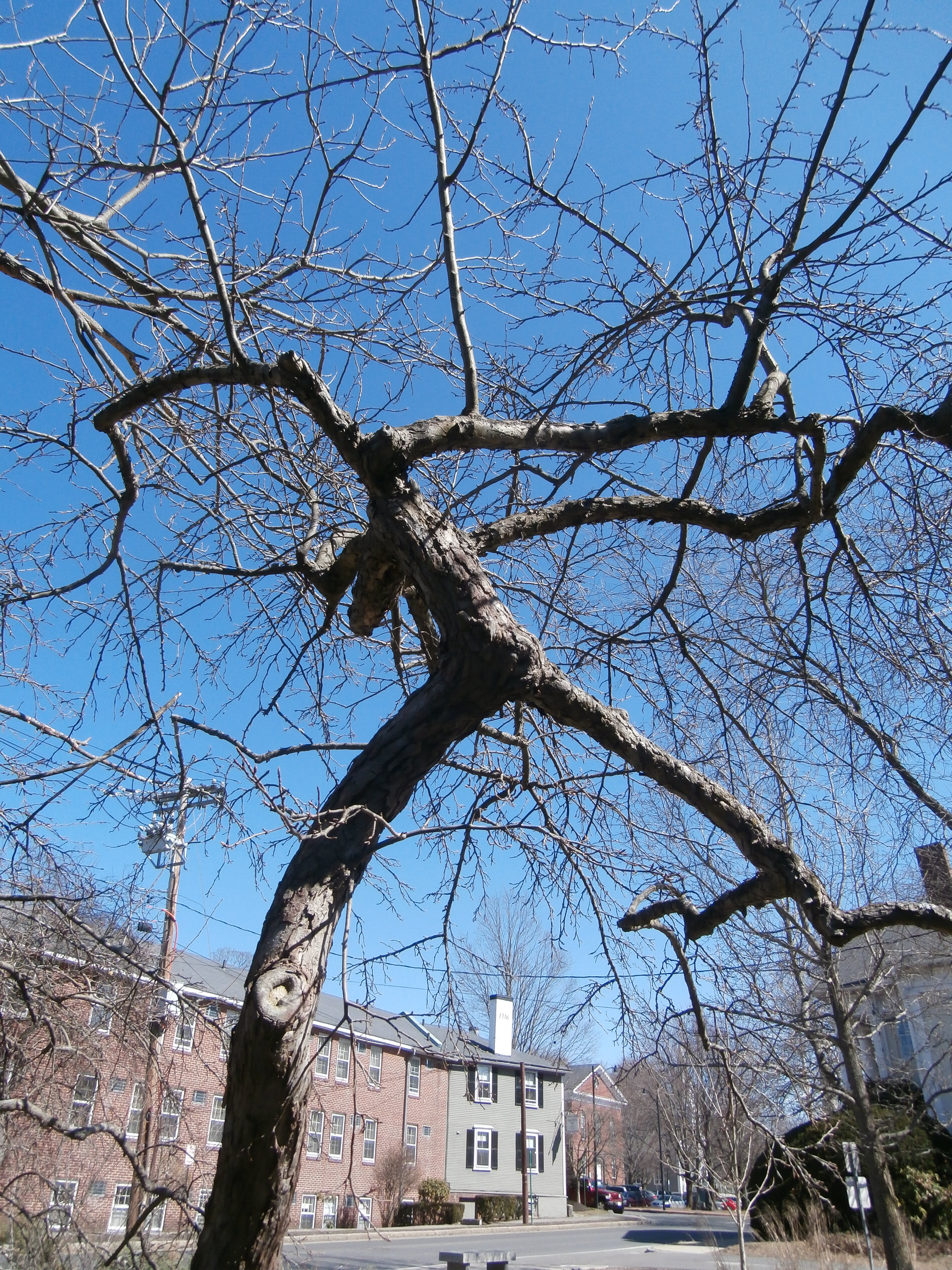
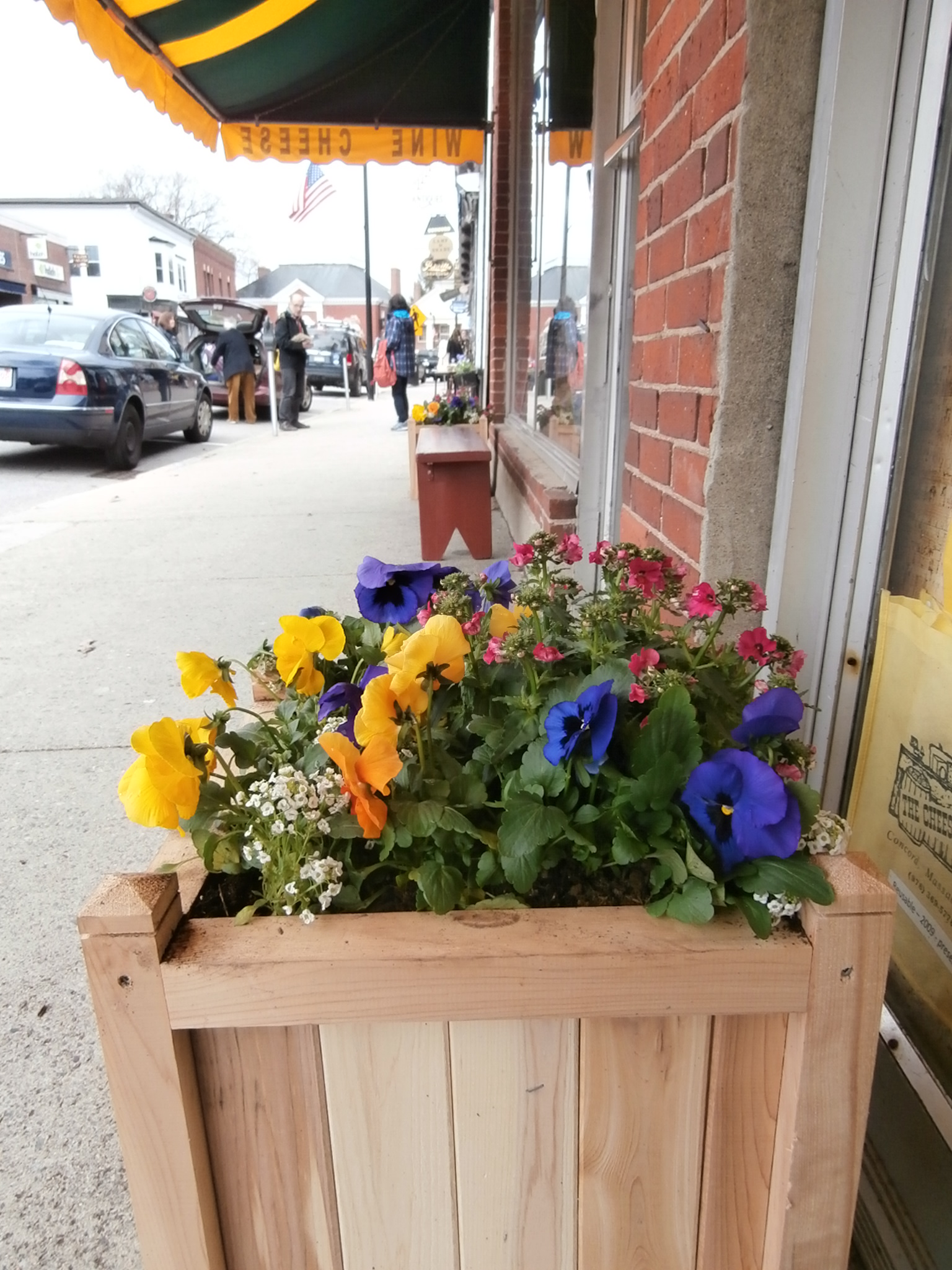
These recent photographs show the changing seasons — from a March storm at a T station to driving with the top down.

The weather changes fast around here — today on my walk I kept zipping and unzipping my coat because the sun kept going in and out of clouds and the temperature kept zooming up and down. As the saying goes, “If you don’t like New England weather, stick around for a few minutes — it will change.”

March-storm-MBTA

bare-branches-in-april

rogue-dog-in-convertible

dandelions-in-april

concordma-cheese-shop-flowers

Read Full Post »

As I mentioned the other day in the post about the Latin newscast on Finnish radio, I am interested in endangered languages.

Now a composer who is also interested has melded voices of  threatened languages with his music.

Corinna da Fonseca-Wollheim writes at the NY Times that the “Vanishing Languages” project by Kevin James, “a New York-based trombonist and composer, is a rare hybrid of conservation effort and memorial, new music and ancient languages.

“Prodded by Unesco statistics that predict that by the end of the century half of the world’s 6,000 languages will be extinct, Mr. James spent months in the field tracking down and recording the last remaining speakers of four critically endangered tongues: Hokkaido Ainu, an aboriginal language from northern Japan, the American Indian Quileute from western Washington, and Dalabon and Jawoyn, aboriginal languages from Arnhem Land in Australia.”

Reviewing a concert James gave at a New York venue, da Fonseca-Wollheim says, “ ‘Counting in Quileute,’ which opens with bells struck and bowed and swung in the air and ends with the ring of a Buddhist prayer bowl, had a strong ritualistic feel to it.

“The often puzzling actions of the players — flutists whispering into mouthpieces, a cellist tapping with both hands on the fingerboard as if playing a recorder — appeared like a secret choreography designed to bring forth the voices of the dead filtered through the crackle of old phonographs.

“The imperfections of these old recordings, which Mr. James used alongside those he made recently in the field, show how heavily smudged the window is that we have on these vanishing cultures. And yet at times it seemed as if it were these voices who were willing the performance into existence.” (Isn’t da Fonseca-Wollheim a lovely writer?) More.

For a couple other blog discussions of endangered language, click here or here.

Photo: Ruby Washington/The New York Times
Leah Scholes of Speak Percussion using a double bass bow to play a bowl as part of “Vanishing Languages.”

Read Full Post »

Photo from FBI site: An empty frame in the Dutch Room of the Gardner Museum, where Rembrandt’s The Storm on the Sea of Galilee and A Lady and Gentleman in Black once hung.

The agent overseeing the FBI investigation into the 1990 Isabella Stewart Gardner Museum heist spoke at my workplace today (a real perk of my job).

I learned a lot. Did you know, for example, that because Mrs. Gardner’s will specified that no art was to be moved, sold, or replaced, the paintings had no insurance? They were not be replaced. The agent said that the usual scenario is that stolen art is held for ransom from the insurance company. The thieves probably didn’t dream that there was no insurance on Rembrandts and Vermeers.

Our speaker was quite entertaining (for example, showing a slide from the Simpsons cartoon in which Vermeer’s The Concert is found in Montgomery Burns’s mansion ). He answered many questions and punted others as the investigation is ongoing.

As you may have seen recently, the FBI announced that they knew who had stolen the art and at least two of the places it had been seen. They have not announced the names of the thieves but may do so once they work through all the leads the latest announcement has brought. The statute of limitations ran out on the theft after five years (Mass. Senator Ted Kennedy subsequently pushed through a federal law extending the limit to 20 years), but possession of stolen art is a crime not subject to time limits.

I learned that the museum had good security. As most locals know, the guards let the thieves in believing they were cops. When you have a Trojan Horse inside, security doesn’t help, the agent said. Nowadays guards in different museums call each other every 20 minutes just to check.

Extensive research has shown there has never been a museum theft like this, where the thieves stole so much of value and also so much of little value and took a leisurely 81 minutes to do so.

And perhaps there has never been a crime at a major museum where the paintings were not insured.

The agent believes the art will be recovered one day. Read the FBI dedicated site, here.

Photo: Simpsons

Read Full Post »

When you consider all the minority languages that are endangered today — many of which I’ve blogged about (for example, here) — it seems a bit perverse to be bringing back Latin on the radio. But as one more way to interest people in languages, how bad can it be?

For the Finns, who have to speak many languages because hardly anyone speaks theirs, it’s just one more.

As John Tagliabue wrote in yesterday’s New York Times, the Internet has given a boost to “a weekly summary of world events and news broadcast by Finnish state radio — not in Finnish, but in classical Latin. …

“In recent weeks, the subjects have included the financial crisis in Cyprus, an unusually brilliant aurora borealis and the election of Pope Francis. …

“It may be no coincidence that the broadcast began in 1989, the year Communism collapsed in Eastern Europe and the Finns turned toward Western Europe. For educated Finns, Latin had long been the country’s link to Western culture, and they were required to study the language in school. …

“While the broadcasts once went out over the airwaves, with shortwave reception for listeners outside Finland, more and more listeners tune in to the program’s Web site, through podcasts and MP3 downloads.” More.

Image: Wikipedia
Cicero Denounces Catiline, fresco by Cesare Maccari, 1882–1888. It’s what Suzanne’s Mom thinks of when she thinks “Latin.”

Read Full Post »

On Saturday we watched the documentary Urbanized, about urban planning.

Although there were many discouraging notes (Mumbai slums, Beijing smog, destructive construction in Stuttgart), there were enough positive ones to give hope.

I liked the grassroots gardening efforts in Detroit, pedestrian/bike paths in Bogota (while cars were relegated to mud), miraculous transformations of aging infrastructure (the High Line in Manhattan), lighted paths in Cape Town, and bicycle commuting in Copenhagen.

The point was made that walkability (one of my favorite topics, as readers know) and similar quality-of-life improvements in cities can be hugely beneficial to the planet just because cities are so big and changes there affect so many people.

Doug Foy, who helped get Boston Harbor cleaned up and now consults with New York City’s Mayor Bloomberg, has spoken at my workplace a few times. He likes to talk about how New York avoided buying a whole new water supply simply by partnering with plumbers unions to get standard toilets gradually replaced with low-flush toilets.

Read Full Post »

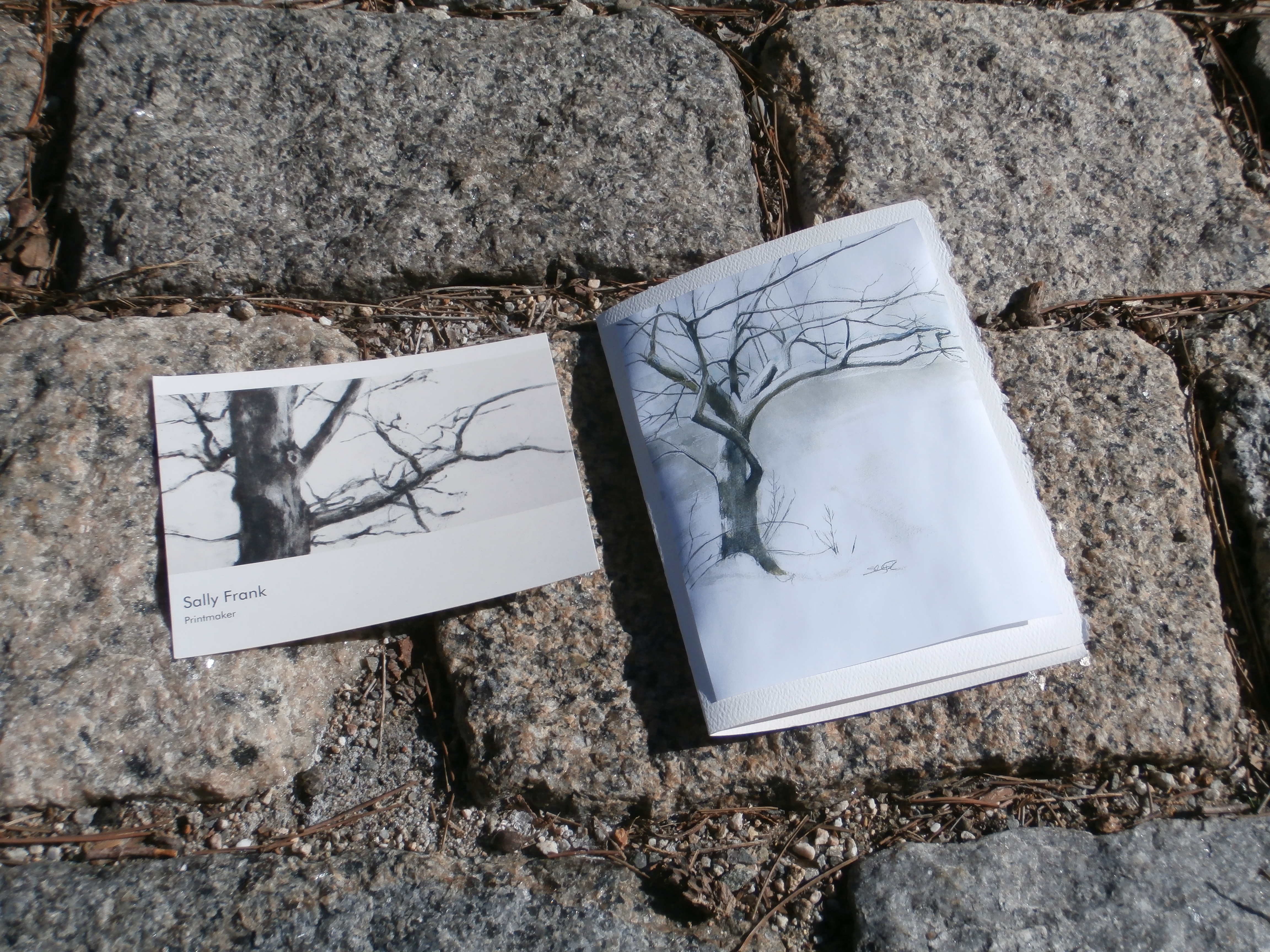
I enjoy blogging about my cousin the tree artist (here, for example). I’m a longtime fan.

Today I learned that one of Sally Frank’s miniprints has been accepted into the International Mini Print Exhibition at the Center for Contemporary Printmaking in Norwalk, Connecticut.

According to its website, “the Center for Contemporary Printmaking is the only nonprofit organization between New York City and Boston solely dedicated to the art of the print, including printmaking, papermaking, book arts, digital processes, and related disciplines.”

Sally Frank does many different kinds of prints and drawings. You can see how varied are the media she works in at her site, here.

Monotype: Sally Frank

trees-by-sally-frank

Read Full Post »

In January I blogged here about ForSpaciousSkies.com and a guy who thinks we would all be a lot better off if we looked at the sky more.

I have to say, he has a point. When we lived on the 18th floor in Minneapolis in the ’90s, we were constantly admiring clouds from our balcony. And now, since reading about Jack Borden’s crusade, I’ve begun to pay attention to the sky again.

I find that looking at clouds for a few minutes in the middle of everything else that is going on can really feel good.

Two of these photos were taken near my house, and one is over the Seekonk River in Providence.

cloud-study

clouds and trees


seekonk river providence


Read Full Post »

Planetizen’s Brent Toderian wrote a while back that he attended a book party in Vancouver where Simon Fraser University City Program Director Gordon Price asked “each member of the crowd to state an urban design decision that ‘they loved.’ …

“When it came to my turn, my answer took a big picture and perhaps surprising approach, depending on your definition of urban design. In Vancouver, a city often referred to as ‘a city by design,’ the most important urban design decision we ever made, the decision I loved most, is actually usually referred to as a transportation decision.

“In 1997, the city approved its first influential Transportation Plan.

“It was a game-changer for our city-making model in many ways, most notably in its decision to prioritize the ways we get around, rather than balance them. The active, healthy and green ways of getting around were ranked highest – first walking, our top priority, then biking, and then transit, in that order. The prioritization then went on to goods movement for the purposes of business support and economic development, and lastly, the private vehicle. …

“If you’re a driver who is worried about a ‘war on the car,’ remember this — our model of city building understands the ‘Law of Congestion’ and proves that when you build a multimodal city, it makes getting around better and easier for every mode of transportation, including the car. It makes our city work better in every way.”

Read Toderian’s whole Planetizen post, here.

Photo: Vancouver.ca

Read Full Post »

Back in first-grade, we learned to read from books featuring invariably blond, blue-eyed children. Today, primers have more variety, but multicultural pleasure reading, where it exists, is not always available to poor children.

Leslie Kaufman wrote recently at the NY Times that a  “nonprofit called First Book, which promotes literacy among children in low-income communities, announced the Stories for All project, a program intended to prod publishers to print more multicultural books. …

“In a 2012 study, the Cooperative Children’s Book Center at the University of Wisconsin-Madison evaluated some 3,600 books, looking for multicultural content. Of the books examined, 3.3 percent were found to be about African-Americans, 2.1 percent were about Asian-Pacific Americans, 1.5 percent were about Latinos and 0.6 percent were about American Indians.” More.

First Book picked two winning publishers in its first Stories for All competition — HarperCollins and Lee & Low Books — and purchased $500,000-worth of books from them. The books “will be available beginning in May through the First Book Marketplace, a website offering deeply discounted books and educational materials exclusively to schools and programs serving kids in need.”

Among the books are:  “Shooter”, Walter Dean Myers (HarperCollins); “Tofu Quilt”, Ching Yueng (Lee & Low Books); “In the Year of the Boar and Jackie Robinson”, Bette Bao Lord (HarperCollins); “The Storyteller’s Candle: La Velita de Los Cuentos”, Lucia Gonzalez (Lee & Low Books); “El Bronx Remembered: A Novella and Stories”, Nicholasa Mohr (HarperCollins); and “Passage to Freedom: The Sugihara Story”, Ken Mochizuki (Lee & Low Books).

More information at FirstBook.org.

Photograph: Strategies for Children

kids--teacher

Read Full Post »

Photo of Patricia McCarthy: Agenda

The editor of a small poetry journal in England was desperate for money to keep the magazine going, so she entered a poem of her own in a contest — and won.

The poem came straight from her mother’s memories of World War I. WW I poems — mostly written by young men in service who never came home — are some of the saddest ever composed.

At the Guardian, Alison Flood has the story on Agenda editor Patricia McCarthy’s win.

“McCarthy, who has published several poetry collections of her own, beat 13,040 other entries to win the anonymously-judged prize. Her winning poem, ‘Clothes that escaped the Great War,’ tells of the plodding carthorse who would take boys away to war, and then return, later, with just their clothes. ‘These were the most scary, my mother recalled: clothes / piled high on the wobbly cart, their wearers gone,’ writes McCarthy. …

“McCarthy said winning the £5,000 prize was ‘just extraordinary.’ “I’ve never even won a raffle. I don’t go in for competitions – the only other time I did was decades back, when I got runner-up,’ she said. ‘But I’m really down on my finances – I edit Agenda, and was really struggling, and thought this was probably better than a gamble on the horses.’ ”

More.

Read Full Post »

Longtime readers may recall I took a playwriting class a couple years ago. One of the assignments — which I blogged about here — was to listen in on a conversation in a public place and write it down word for word. Very awkward, but a good lesson in the random way people really talk.

Now the artist/cabby Daniel J. Wilson has taken the concept to an extreme, recording customers’ conversations and using them in his art.

Matt Flegenheimer writes at the NY Times that while driving a taxi in New York, Wilson “secretly recorded the conversations of his passengers, assembled the highlights into an audio collage of the back-seat musings and installed the final product in his taxi, playing the clips for his riders …

“ ‘It’s this world where people act like you don’t exist, even though you’re three feet away,’ Mr. Wilson, 35, said from the front seat of his cab recently. ‘You get this fragment of a person.’ ” More.

Much has been done with the invisibility theme in literature: Ralph Ellison’s Invisible Man, the powerful Mammy in The Sound and the Fury, the murderer disguised as an “invisible” waiter in an Agatha Christie novel — you can probably come up with more.

The Times article discusses the invasion of privacy. I think invasion of privacy might be the penalty for treating humans as invisible.

Photo: Hiroko Masuike/The New York Times
Victoria Reis, left, called Daniel J. Wilson’s audio collage “the least pretentious and most experimental” work she had seen all week, and tipped him.

Read Full Post »

My husband heard that the Kiev subway is a popular place for older Russians and Ukrainians to go dancing. So I Googled around a bit and found stories at Odd Stuff Magazine, here, and the Daily Mail, here. And a video at YouTube. In today’s world, you can’t keep a good story down.

At the Daily Mail (which seems to favor bullet points) Helen Lawson writes, “Saturday night fever: The subway where Kiev’s pensioners dance and find love.

  •     The dancers cannot afford to pay for a venue so they use a metro subway
  •     The group meets every Saturday at 7 pm to socialise and dance
  •     About 20 couples are known to have met thanks to the meet-ups
  •     Reuters photographer Gleb Garanich documented the weekly gatherings

At Odd Stuff, photographer Garanichev Hleb (is that the same Reuters guy?) asks the subjects of his photos about the dance scene. “Milevsky Nicholas was born in 1938 and Natalia Stolyarchuk born in 1955 met at these dances and has since moved in together. This is one of the 20 couples who met at these clubs. ..

“Despite his age, both retired and still work together earn about 4,000 hryvnia per month. …

“These people do not communicate in social networks, but still remember all the holidays of childhood and youth, when put on the table, to visit friends and neighbors come, everywhere sounded cheerful sounds of accordion.” More.

Read Full Post »

If I come to work early, I often take a walk at lunch. I love the Greenway, which is especially nice in spring and summer. And the Fort Channel district (the Mayor likes to call it the Innovation District) seems to have something new to see almost every week — repurposed warehouses, galleries, restaurants, pocket parks.

Fort Point Arts got bumped from its space next to Flour (a yummy restaurant) on Farnsworth, so one lunchtime I made a point of checking out its new space off A Street.

I especially like that they show art depicting the Fort Point neighborhood — partly because walking there makes me attached to that part of Boston, and partly because Fort Point is changing fast. (About 18 years ago, when I went to an arts open house there, many artists had studios with beds on ledges and  tiny kitchens. Some artists were squatting in dangerous buildings with wires hanging down, no heat, no doors, no lighting. That world is gone.)

Laura Davidson was one of the featured artists when I was last in the Fort Point Arts shop. She had some block prints of her neighborhood that I admired.

Be sure to check her home page. Everyone should have a home page that looks like a treasure map.

Art:Endangered Neighborhood” reprint of 1995 view of Fort Point), 2012, Laura Davidson

Read Full Post »

Being in the aging-happily business, Erik is always on the lookout for stories about how seniors are putting their own stamp on their later years, after they have given up skydiving.

He sent me an article about a gentleman called Martin Bayne, who has become a bit of an expert on assisted living, having tried one facility that literally drove him crazy and having eventually found one he loves.

Writes Judith Graham in the NY Times, “Sometimes Martin Bayne speaks in little more than a whisper, like many people with advanced Parkinson’s disease. But his voice has a way of carrying.

“Many consider him the nation’s foremost advocate for people in assisted living. … Dr. William Thomas, a geriatrician and nursing home reformer, wrote in an e-mail, ‘He has been able to do what very few others have done — he has told the story of life on the inside of long-term care.’

After his first assisted-living experience, says Graham, “Mr. Bayne relocated to a facility in northeastern Pennsylvania, where he has a single room and receives several hours of help from aides every day. From this perch, Mr. Bayne blogs about assisted living at thevoiceofagingboomers.com  …

Bayne tells Graham how critical he believes it is to reach out to the others around you when they feel down, “Sometimes just a hand on someone’s shoulder is all it takes. Sometimes picking up a fork that someone drops in the dining room on the floor. Sometimes, just sitting with someone. Trying to make people more comfortable. The simplest things in the world can lead to what I call incremental victories. That’s what I go for in my life.

“I sneak in touches whenever I can. I call them sneak attacks. I just go over and touch someone’s hand or some other part of them. Men are in need of it the most. Men are never touched, at least in this culture.”

Graham asks Bayne how he would run his dream facility, and he says, “First of all, when a prospective resident came to visit, I would have him sit down with 10 other residents. And we would ask, ‘What’s your passion? What motivates you? What’s your mission in life?’ If you don’t have an answer to those questions, then we don’t accept you. Because we want a community that is alive.

“There would be a welcoming committee for every new resident. You’d be taken around and treated like royalty when you first come in. We’d show you that we care about you.

“Once you’re here, you’d get a job. No matter how seemingly insignificant, you’d have responsibilities every day. And the emphasis wouldn’t be on you, the emphasis would be on the community.” More.

Some of the article is sad, but the idea that you can keep making things work for you — over a longer period of time than you may have thought —  is something to ponder.

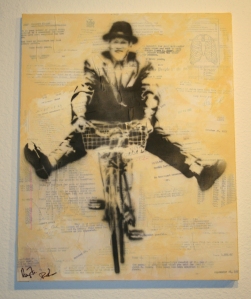
“Dear Sir,” below, is the first art collaboration of Rhian and Ray Ferrer. Please visit Rhian’s WordPress blog for lots more art, http://artgland.wordpress.com.
Read Full Post »

The plant-identification site Mister Smarty Plants, which I first blogged about here on May 23, 2011, just keeps getting better.

One innovation from the past year has been rounding up tweets containing photos of flowers and plants that people around the world want help identifying and bringing them to the site to be identified by the growing number of readers.

I used to get a lot of identifications right, but Mister Smarty Plants queries are quite exotic now, which makes the site both exciting and challenging.

Today, John announced a new design with special features like kudos to the week’s most successful plant identifiers.

The Smarty Plants concept has always been that the more people who come to the site with their questions, the more who will be available to identify plants. John has been persistent about finding new ways to reach the folks who need the service.

Even if you think you don’t know much about plants, check it out. It’s almost like playing a game, and believe it or not, there are people in other parts of the world who don’t know what a dandelion is.

MisterSmartyPlants

Read Full Post »

« Newer Posts - Older Posts »