Feeds:
Posts
Comments

Archive for November, 2016

The Royal Frog Ballet recently staged an outdoor event to welcome fall, but according to the lead players, it wasn’t so much a performance for strangers as a gift to new friends. The effect was surreal and entertaining.

Amelia Mason reports at WBUR, “A masked woman in an apron and kerchief jumps up on a picnic table and addresses a crowd.

“ ‘I’m your grandmother, and I’m here to help you throughout this show …  The first thing to know is that when I ring this bell it means we’re all going to move to the next thing and you’re going to have to follow my directions, OK?’

“It is the opening night of the Royal Frog Ballet’s ninth-annual ‘Surrealist Cabaret.’ Our guide — Shea Witzo, in the role of the Granny — gives us some more instructions: Watch out for holes. Stick close together. But first — wait. We pause for a moment, unsure of where to look.

“Then, 6-year-old Aiden Bairstow catches sight of something.

“ ‘Oh, I know what’s happening,’ he says. ‘I see it right behind you.’ We turn to see a band — fiddle, accordion and drums — approaching from across the field.

“The farm, it turns out, has many secrets in store. No matter where we look, something strange and surprising is bound to appear: a tall, swaying monster on stilts, for instance, or the pair of scientists who inform us that we are part of their experiment. At one point, our guide delights us with a salty parody of Bruce Springsteen’s ‘Dancing in the Dark.’ The pieces are linked loosely around a theme. …

“ ‘A lot of us are trying to make work that is like a gift, rather than a performance for [the audience],’ says Sophie Wood, one of the founders of the ‘Surrealist Cabaret.’ The project started in 2007, when Wood and a group of artist friends decided to perform some of their works-in-progress at a farm in Amherst. They mounted the production in a big barn and served the audience dinner. …

“The collective goes by the name the Royal Frog Ballet, and it has mounted weird and whimsical performances every year since its founding. … This fall, the theme is ‘hope and joy.’ …

“ ‘It feels like an old tradition,’ says Leah Sakala. … ‘It feels like we’re partaking in something, the kind of art that’s been made for a very long time, but at the same time it manages to be very relevant.’ ”

More here.

Photo: Sarah Ledbetter for WBUR
A performance of the “Surrealist Cabaret” in Essex, Mass., in October.

Read Full Post »

Photo: STR/Reuters /Landov
Prisoners at Halden in Norway have private rooms, which all have a fridge, desk and flat-screen TV. Inmates who don’t follow the rules and attend classes and counseling are sent to conventional prisons. NPR story here.

A perhaps surprising finding: In Norway, spending time in prison, where there are intensive job-training opportunities, results in 27 percent less recidivism than being sentenced to something lighter, like community service or probation.

As reported last summer in Science Newsline, “The research project ‘The Social Costs of Incarceration’ is the largest study of imprisonment and return to a normal life that has ever been conducted in Europe.

“In the study, researchers looked at prison sentences linked to recidivism. In addition, the researchers looked at the extent to which former inmates have returned to work. What makes the project unique is linking large administrative data sets to data sets from the courts.

“They have done this to measure the effect of what happens when the criminals have received different penalties for the same offense because they randomly met different judges in court with different leniency towards incarcerating. In other words: if a judge incarcerates differently for the same offense, what will be the consequences for the offender in the long term?

” ‘The results show that the Norwegian prison model with extensive use of labour training while serving time, gives surprisingly good results,’ says Professor Katrine Løken at the Department of Economics, University of Bergen (UiB), who led the research project.

“The study shows: Five years after conviction, there is a 27 per cent lower risk that convicts who have been in prison have committed new crimes, compared to those who were given more lenient penalties, like probation and community service. For the 60 per cent of inmates who had not been employed for the last five years preceding the conviction, the decline in criminal activity is even bigger. … The study is published as a Working Paper in Economics at the University of Bergen.”

Løken doesn’t necessarily think the answer is sending more people to prison; providing more job training outside of prison might be.

” ‘A relevant question is whether we should aim for full package of job-training outside prison. But research shows that work training outside of prison is more difficult to enforce. It appears that a certain element of coercion is needed to get offenders on a new track.’

“Katrine Løken stresses that the research does not take a stand on the principle of imprisonment, but simply says something about how prison is perceived for the individual, and shows the effects of different sentencing.”

Many studies show that incarceration in the United States leads to more crime, not less. Different kinds of prisons, for sure.

More here.

Read Full Post »

suzanne-john-and-mommom-and-jewelry

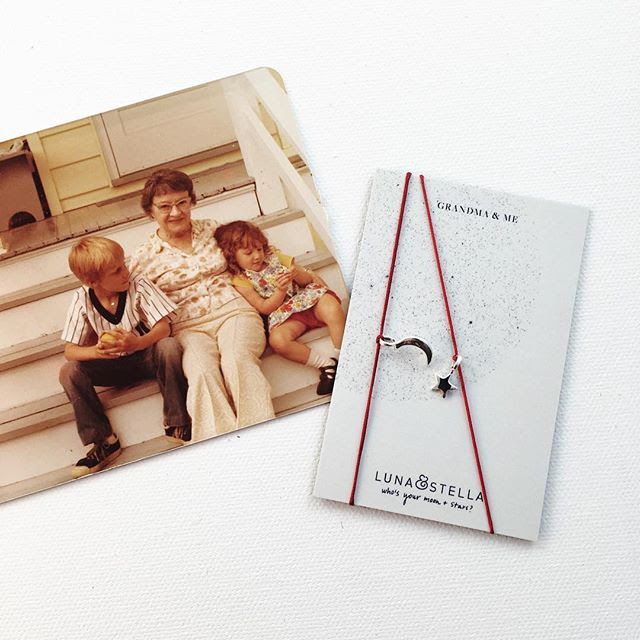
Suzanne (seen here with her paternal grandmother and John) sent this message to her customers today:

“At Luna & Stella, we make fine jewelry that celebrates our closest connections, the relationships between parents and grandparents, sons and daughters, aunts and uncles, sisters and brothers, partners and the friends that are our family.  I believe those relationships are the greatest treasures we have.

“But recently I have been thinking more about the extension of these relationships — community. Specifically, I have thinking about what the role of businesses in civil discourse is and should be, and what my role as a small business owner should be in being a part of the conversation.

“I am the first to admit I don’t have all the answers. But I think we owe it to our children and communities to start somewhere. The place we are starting is with Facing History and Ourselves.  For over 40 years, Facing History has been training educators to teach empathy, tolerance, and civic responsibility through the lens of history.

“On #givingtuesday, November 29, Luna & Stella will give 20% of all sales on our website to Facing History. 

“Thank you for your support of this important work.

“In gratitude,

“Suzanne

“P.S.  As a thank you, use code FACINGHISTORY for free shipping on your order.  If you are not able to shop on #givingtuesday, we will make a donation equal to 20% of your purchase all season long with this code.

“P.P.S. My friend and Facing History Los Angeles Director Liz Vogel interviewed me for Facing History’s website. Read the interview here.”

Read Full Post »

Art: Jean-François Millet (1814-1875)
“The Gleaners, “1857

When farmers are done harvesting their crops, or when homeowners grow fruit trees for decoration but don’t eat the fruit, an opportunity arises for gleaners. Some gleaners may scavenge for food for their own tables, but nowadays it’s become more of an activity to feed people who need extra help. I blogged about the concept in 2011, here, and 2014, here.

A recent article by Henry Schwan in WickedLocal provides an update.

He writes, “Ruth Lyddy bent over and used a sharp farm tool to take a whack out of a thick stalk of kale at Barrett’s Mill Farm in Concord. Lyddy had the look of a full-time farmer, but she’s a volunteer gleaner, which is someone rescuing crops before they are plowed over and destroyed.

“She joined other volunteers Nov. 17 at Barrett’s Mill Farm in Concord, and their leader was Dylan Frazier, who works for Boston Area Gleaners, Inc. (BAG). …

“The nonprofit formed in 2004, and is in the midst of its ’10 Tons in 10 Days’ campaign. As the name says, the goal is to gather 10 tons of food in 10 days, which is distributed to local food pantries.

“Frazier said many farms only harvest what they can sell, so BAG swoops in, takes the excess and hands it over to Food For Free in Cambridge, which distributes it to local food banks and pantries. …

“The volunteers also harvested purple-top turnips, red beets, leaks, daikon radish and Savoy cabbage, and all of it was piled into a truck, paid for with a $25,000 grant from the Harvard Pilgrim Health Care Foundation. …

“Volunteer John Pilch summed up why people give their time to BAG as he carried a box full of kale that he just cut. ‘It’s very grounding for me. I love to give back, because I’ve been so blessed in my life,’ Pilch said.”

Read Full Post »

Actor Finn Wittrock wrote recently at the New York Times about helping to start a mini Shakespeare company in the 1990s to entertain his parents and other theater professionals. He recalls with wonder his young self’s confidence of success.

“I was born in the Berkshires in Western Massachusetts. I lived there until I was 6, then moved to Evanston, Ill., and later to Los Angeles. But every summer for most of my youth, I would go back East with my brother, my mom and my dad, who most summers was acting or teaching for Shakespeare & Company. I would often be cast as a page or an altar boy in one of the professional productions.

“I went in lieu of a summer camp; I went to romp in the Berkshires, see old friends, get out of the city. But mostly I went for the Very Young Company.

“Starting at the age of 8 and until I was 16, my oldest friends and I would get together every summer: Rory, Reilly, Wolfe, and later my brother, Dylan, and Wolfe’s brother, Tiger (yes, their real names) would arrange five or six scenes from Shakespeare, rehearse them on our own time in the sun-drenched Berkshire afternoons and perform them for the adult company after one of their Mainstage shows. We began the company ourselves and it ended when we were no longer ‘very young.’

“For a kid, it was an epic undertaking; an outlet for pre- and post-adolescent energies. We were totally self-motivated; nobody told us to do it, which was in itself an incentive. We’d choose a scene based on our own criteria: Had the company done it before? Could we make fun of them for it? Could we put Reilly in a wig and have him play a girl? And, most important: Did it end in a sword fight? …

Sometimes I yearn to have the boldness of one who knows nothing, who jumps onstage for no other reason than because he is young and has a loud voice.”

Later in his essay, Wittrock recalls something the celebrated director Mike Nichols once said about his own early years: ” ‘Why was I so confident back then? I had no business being that confident.’ And yet he attributed most of his early success to that unreasonable confidence. …

“No one gave us permission to do the Very Young Company; no one ordered us to do it, and no one had to boost our confidence to do it. We just did it. We were just kids howling Shakespeare to the Berkshire trees, and our readiness was all.” More at the New York Times, here.

At one point in my  childhood, I, too, was confident. I thought, if my parents would only call the movie theater and set it up, four of us kids — the Gordons, one of my brothers, and I — would be a smashing success performing our version of “Snow White and Rose Red” before the feature. The grownups didn’t quite believe in it.

Some neighbors and I did perform an original play about a snowman for family members. One of the actors returned a copy of the pencil-scrawled script to me at my aunt’s funeral in 2002, decades later.

Photo: Lauren Lancaster for the NY Times
Finn Wittrock, right, and Rory Hammond, enacting the killing of Lady Macduff and her son in a mini-“Macbeth.” The young actors formed their own company more than 20 years ago to entertain their parents and other professionals at Shakespeare & Company in Lenox, Mass.

Read Full Post »

In Denmark, a beekeeping program is not only beneficial to the environment but a good way for refugee workers to settle in to a new culture.

Jennifer Hattam writes at Take Part about bees atop Copenhagen’s convention center that pollinate crops, produce honey, provide employment, and help flavor a local beer.

“The honey and the beer are the fruits of the innovative project Bybi, named after the Danish word for ‘city bee.’ Its mission: to use urban beekeeping to create a greener Copenhagen, connect residents with the city around them, and bring together and employ people from diverse backgrounds, including refugees and the formerly homeless.

“Syrian beekeeper Aref Haboo is among Bybi’s small staff. He kept dozens of hives back in his home village while also working as a civil servant and agricultural consultant. Like millions of refugees fleeing Syria’s civil war, Haboo made the treacherous journey to Europe, part of it smuggled in the cargo hold of a truck, leaving behind his wife and three children to find a safer place for them all to live. A year ago, he was able to reunite his family in Denmark. …

“Haboo recently helped teach a season-long apiculture course to a mixed group of around 20 Syrians, Africans, and Europeans, who produced 450 kilograms of honey from hives in a Copenhagen park. Graduates who want to continue working with bees will receive support from Bybi, and proceeds from the sale of the first course’s honey will help fund training sessions.

“ ‘A lot of our residents have difficulties getting into the Danish labor market, whether because of language issues, skills gaps, or health problems. Working with Bybi is good for them in terms of getting out to meet people and doing something constructive, something they can be proud of,’ says Simon Christopher Hansen, cultural coordinator for the Copenhagen public housing association 3B. …

“With relatively high rates of winter mortality among honeybees in Denmark, Bybi’s urban hives also help ensure that bee populations stay healthy — along with the green environment they nurture and depend on.

“In a way, [social entrepreneur Oliver Maxwell, who founded Bybi in 2010] sees the hive as a model for Bybi and for humanity. ‘We’re looking at ways we can work together that protect our communities and enrich our environment,’ he says. ‘That’s what bees do: They create bigger apples, richer strawberries; they help everything thrive.’ ”

More here.

Photo: Bybi
Beekeeping in Copenhagen helps refugees and the environment.

Read Full Post »

Photo: Prezi
Something Shakespeare didn’t have to worry about: expensive energy for productions and emissions that increase global warming.

Christy Romer over at the UK website Arts Professional recently posted on the money British arts groups are saving by cutting their energy emissions — a win for them and a win for the environment.

“Arts Council England’s National Portfolio Organisations (NPOs) have saved £8.7m by cutting greenhouse gas emissions since 2012/13, according to a major new report by environmental charity Julie’s Bicycle. …

“The report draws on data submitted via an online reporting tool, an evaluation survey and case studies, ultimately concluding environmental action is making the sector more financially resilient.

“Compared to doing nothing, the reduction in energy emissions has saved £8.7m since 2012/13. The report predicts that if the 4.5% annual decrease continues until 2019/20, emissions will be 46% lower than in 2012/13 and £54m will have been saved in energy costs.

“Alongside a fall in the overall emissions output, and a fall in the amount of electricity and gas used, there has been a 210% growth in the generation of on-site renewable energy since the project started in 2012/13. …

“Julie’s Bicycle pledges to develop Arts Council England’s (ACE) approach to environmental sustainability at the operational, planning and policy development levels. …

“Darren Henley, Chief Executive of ACE, added: ‘Our collaboration with Julie’s Bicycle is introducing us all to new ways of working. … We all believe that art and culture can make the world a better place; this programme shows how our actions can make a real difference.’ ”

More at Arts Professional, here.

Read Full Post »

101516-early-thanksgiving-arlington

Read Full Post »

This year, I’ve been volunteering with refugee organizations — four altogether — and am always grateful for positive stories about this population. Here’s a story from Sweden.

Bridie Witton writes at the UK’s Independent, “Immigration has helped fuel Sweden’s biggest economic boom in five years, new figures have revealed.

“The Swedish government, whose policies saw the country take in more refugees per capita than any other in Europe last year, helped lower unemployment rates by increased spending on welfare for asylum seekers from war torn countries like Syria, Afghanistan and Iraq.

“The move helped the Nordic region’s largest economy expand 4.5 percent on an annual basis in the fourth quarter of 2015, the most in almost five years and more than twice the growth of Germany, according to Bloomberg. Increased consumer spending and borrowing and high house prices also contributed to the boom which, although projected to fade, has consolidated Sweden as one of Europe’s success stories.

“National Institute of Economic and Social Research fellow Jonathan Portes said economies benefitted from more workers, but emphasised the difference between immigrants and refugees.

” ‘What the Swedish experience tells us is that even in the short term, even when you have a very large influx of refugees, there is a perception this is an impossible burden on the state,’ he told The Independent. ‘But in the short term it increases growth.’

“He said the Swedish government needed to have a long-term strategy to successfully integrate refugees and continue the growth.”

Careful planning is needed, for sure, but history shows that an influx of workers with needed skills helps countries grow.

More at the Independent, here.

Photo: Getty
Sweden took in more refugees per capita than any other country in Europe in 2015.

Read Full Post »

Photo: Canadian Press/Andrew Vaughan
Halifax firm Fowler Bauld & Mitchell won a Governor General’s Medal in Architecture for its work on the Halifax Central Library.

Sandy and Pat drove up to Nova Scotia from Rhode Island this year, a trip that had been on their bucket list for some time. I loved hearing their blow-by-blow account when they returned and, among other things, their enthusiasm for the Halifax Central Library, where returned books reshelve themselves with little-to-no human assistance.

I Googled around to see what I could find about the library.

CBCNews reported, “The team behind one of Halifax’s architectural diamonds has won a crown jewel of an award. Fowler Bauld & Mitchell, the Halifax-based firm that designed the Halifax Central Library, was one of 12 recipients announced Thursday of the Governor General’s Medals in Architecture. …

“Halifax’s library was lauded by jury members as an ‘inviting, light and playful public space.’

” ‘This outstanding new civic building is a community gathering place that responds to the diversity of its users, accommodating many more activities than the traditional library,’ the jury wrote.

” ‘The jury commends the process of early user engagement that led to the design, and the public’s embrace of the building is a testament to its value.’

“The library has been a resounding success since the day it opened, with visitor numbers far exceeding expectations. A big reason for its success was in the design process, which relied heavily on community consultation and inclusion, said [George Cotaras, the architect of record for the project]. …

“The proof that people’s opinions mattered and were considered showed on the day the library opened, said Cotaras.

” ‘They knew what it was going to be like but they had never been able to see inside and when they came in they went, “Wow,” and people were going around saying “Wow, that was my idea. I suggested that.” ‘ ” More.

Can’t help thinking that community involvement would be a good idea for every area of public life.

Photo: Anjuli Patil/CBC
A view from the second floor of the new library.

Read Full Post »

Vanessa Thorpe wrote recently at the Guardian about some old nursery tales that are finding a new audience.

“Old-fashioned language and quaint illustrations are part of the ageless appeal of a classic children’s book, so stop modernising them: this is a growing plea from the parents of young readers – and it seems publishers are beginning to listen.

“[A September 2016] decision to turn back to the original look and vocabulary of the Famous Five books by Enid Blyton has opened the door for another classic children’s author, a forgotten star of storytelling, to be republished, as written, this autumn. Convinced that the best stories stand the test of time, editors at Pikku Books are to bring out original versions of stories by writer Elizabeth Clark, once a familiar sight on nursery bookshelves.

“ ‘There’s always going to be a market there for an elegant turn of phrase and a beautifully crafted story,’ said Elena Sapsford, founder of Pikku. ‘As a child, there are a few well-known classics you work your way through, but it is quite obvious there must have been more good writing going on, and often things are out of print just because copyright contracts have been lost.’

“Clark was a Winchester vicar’s eldest daughter, born in 1875. She found her vocation telling stories to the children in her village and began to teach others, moving to London and becoming a lecturer at teachers’ training colleges as well as the author of a series of successful children’s books, often illustrated by the acclaimed Nina Brisley.

“Clark’s stories, including ‘Dobbin and the Silver Shoes’ and ‘The Cat that Climbed the Christmas Tree,’ were often drawn from foreign folklore and legend and many were broadcast on the BBC’s Children’s Hour radio show in the 1920s. Sapsford came across the writer when secondhand editions were given to her family, and she then set about tracking down the Clark literary estate.

“ ”You have to become a detective because there was a lot of poor record-keeping in many publishing companies and I had to dig quite deep,’ she said. ‘I really don’t think they need any change of vocabulary.

People are looking for something fresh but we tend to forget that for young children everything is new.

More.

Children do seem to like the flowery language. My three-year-old granddaughter, for example, is a fan of the way Beatrix Potter tells the story of Peter Rabbit and can fill in the blanks when an adult reads the book to her. I myself like that explaining a word can lead to an interesting discussion or tangent.

Reprint from the Talkative Sparrow & Other Stories, by Elizabeth Clark 

Read Full Post »

In Tanzania, women farmers appearing on a TV show called in English “Female Food Heroes” are bringing attention to the importance of their work and the barriers to expansion.

Oxfam America reporter Coco McCabe writes about contestant Edna Kiogwe, “She grew up in a farming family and knows well the hurdles they face, especially women farmers who, in her country, own only a small fraction of the land. …

“It’s that inequality — and the lost opportunities buried beneath it — to which Kiogwe and 14 other women farmers helped to bring attention this year as contestants in the fifth season of a highly popular reality TV show shot in Tanzania and aired across East Africa. Called Mama ‘Shujaa wa Chakula ,’ or ‘Female Food Heroes,’ the Oxfam-sponsored show celebrates the vital contributions women farmers make in feeding the planet, and highlights the challenges many encounter on a daily basis, including limited access to land, credit, and training opportunities. …

“In the village of Kisanga, where ‘Mama Shujaa wa Chakula’ was filmed [in 2015], the 15 contestants learned a great deal about the struggles local farmers face in feeding their families. Each of the women stayed with a village family for the duration of the three-week shoot, and daily contests included designing tools that could be useful to Kisanga farmers, interviewing them about their agricultural challenges, and putting together skits to help bring attention to those hurdles. …

“Kiogwe [now] spends most of her time in Dar es Salaam, a coastal city about a two-and-a-half hour drive away, where she lives and works as a civil servant. But her city life belies her village roots — and her keen interest in farming. Unlike most women in Tanzania, Kiogwe owns her own land, given to her by her forward-thinking father on her wedding day. She harvests corn, cassava, rice, and sugar cane, carefully aligning her 28 days of annual leave from her city job with peak work times on her small farm in the Morogoro region. …

“ ‘I want to make agriculture like a business,’ says Kiogwe. … With a little effort, greater value can be added to the fruits farmers grow, for instance.

“ ‘Change it from fruit to juice, we can sell it … We can add value to maize — maize flour for porridge — and you can have a good label and good packaging and compete with international businesses. That is my dream.’ ” More here.

According to OXFAMCloseup, the nonprofit’s quarterly magazine, the episodes shot in Kisanga, Tanzania, aired in five countries and had 14 million people tune in. The magazine adds, “Versions of the program are now being produced in Ethiopia and Nigeria, and some finalists have become involved in local, national, and even global farmer advocacy.”

Photo: Coco McCabe / Oxfam America
Edna Kiogwe helps her host family with the morning chores in Kisanga, where the TV show “Female Food Heroes” was filmed in 2015.

Read Full Post »

I know I’m a broken record talking about what one determined person can accomplish, but I want share another example.

At ecoRI News, Sonya Gurwitt writes about a retired Massachusetts harbormaster who made up his mind to put an end to what was polluting a cove near his home.

Horace Field, says Gurwitt, “has lived only meters from Brandt Island Cove for nearly two decades. The water’s edge is connected to Field’s backyard by a short, grassy path. …

“Field wanders through the grasses along the shoreline, untangling the occasional piece of plastic or bit of Styrofoam from vegetation. … Field pinches a a small piece of dirty Styrofoam between his fingers, examining it. This, he said, is a small reminder of the pollution that used to cover the salt marsh — Styrofoam everywhere. …

“It was during his tenure as harbormaster that he noticed more and more pieces of Styrofoam cropping up on his property and along the rest of the Mattapoisett shoreline, from small beads to large chunks.

“The source of the pollution was no mystery — Field knew that the Leisure Shores Marina used uncovered Styrofoam blocks to keep its docks afloat. These were beginning to break down, allowing pieces of foam to float away. …

“In 2005, Field wrote a letter to the Board of Selectmen. He didn’t receive a response or even an acknowledgement of its receipt. Undeterred, Field kept at it — attending town meetings and talking to various committees and boards. …

“It wasn’t until early 2013, after Field retired from the position of harbormaster, that he began to make progress. Fed up with the lack of response from the town and other government agencies, Field contacted the Buzzards Bay Coalition (BBC), a nonprofit ‘dedicated to the restoration, protection, and sustainable use and enjoyment’ of Buzzards Bay and its watershed.

“Field said the BBC took action immediately, sending a team to examine the problem. …

“With the help of the Harvard Law School’s Emmett Environmental Law and Policy Clinic, [Korrin Petersen, senior attorney for the coalition] began to research which laws the pollution might violate. Petersen said they discovered that the saltwater marsh is a protected resource under the Massachusetts Wetlands Protection Act. This meant that the Styrofoam debris altering the salt marsh was a violation of that law. …

“Field said the process taught him some important lessons.

Be persistent, and be honest. Have a cause that is bulletproof, and don’t let up on it until you get satisfactory results.

More here.

Photo: Joanna Detz/ecoRI News photos
Horace Field took it upon himself to get Brandt Island Cove in Mattapoisett, Massachusetts, cleaned up.

Read Full Post »

There is still so much to be discovered about the cosmos, medicine,  psychology, nature … and human history.

Claire Voon’s story at Hyperallergic about a “new” 2,800-year-old painted sarcophagus is a case in point. The colorful hieroglyphs promise to add to our knowledge.

Voon reports, “Archaeologists in Luxor have found an exquisitely decorated, millennia-old sarcophagus near the pharaonic temple of Thutmose III that still contains the remains of its ancient owner. The discovery is the most recent to emerge from the Spanish Thutmosis III Temple Project excavation, which since 2008 has explored the 18th Dynasty pharaoh’s funerary complex, situated along the west bank of the Nile. …

“Archaeologists are now starting to piece together the history of the coffin’s permanent resident. Although termites had eaten away at parts of the slim, wooden container, as the team’s head, Myriam Seco Alvarez, told El Mundo, the surface still retains a rich array of hieroglyphs that offer clues. Sarcophagi are much more than simple containers for the departed, and the pictorial script on this one records that it belonged to a man named Amenrenef, who once served as a royal court advisor.

“The images, whose bright pigments have been preserved after all this time, also depict religious figures such as the ancient goddesses Isis and Nephtys and the four sons of Horus.

“The archeologists have since removed the sarcophagus from its tomb and brought it to a lab, where it will undergo restoration. The team also plans to carry out X-ray examinations to determine the exact state of the remains inside.” More here.

Photo: Thutmosis III Temple Project
A decorated sarcophagus recently found by Spanish archaeologists near Luxor.

Read Full Post »

Photos with meaning. Well, maybe not all these photos have meaning. Some exist for their own sakes.

The first, from my backyard, captures two things I love — fall colors and shadows. The second shows the Concord River flowing through Minuteman Park; the third, shadows on the monument at the North Bridge.

The restaurant with the kitchen facing the street is a delightful new entrant to the celebrated Providence restaurant scene. It’s on Westminster Street and is called Bao Bao.

The winged creature on a Boston building looks like a gryphon to me. Do correct me if I’m wrong. Next is a rhino outside the Museum of Fine Arts museum school. That’s followed by the amazing cloister of the Isabella Stewart Gardner Museum and an illuminated manuscript from a current exhibit in the new wing.

Finally, I couldn’t capture the whole Leonard Cohen lyric on the sidewalk in Wayland Square — would have had to stand in a busy street at rush hour. But it’s from his song “Anthem” —

“Ring the bells that still can ring / Forget your perfect offering / There is a crack in everything / That’s how the light gets in.”

110416-colorful-japanese-maple

110416-colorful-japanese-maple

110416-north-bridge-shadows

111516-bao-bao-restaurant

111716-gryphon-in-boston

111716-mfa-museum-school-rhino

111716-gardner-museum-cloister

111716-everything-is-illuminated

111516-leonard-cohen-in-chalk

Read Full Post »

Older Posts »