Feeds:
Posts
Comments

Posts Tagged ‘food’

A Native American chef trained in French cuisine has a mission to teach the world about an older, unrecognized culinary tradition that has influenced most of us. Hanna Choi reported the story for National Public Radio.

“When Nephi Craig enrolled in the culinary program at Arizona’s Scottsdale Community College, there was nothing like ‘Native American Cuisine 101’ in the curriculum. Craig identifies as White Mountain Apache and Navajo, and the first mention he can recall of anything remotely related to his background was a class discussion on fry bread, a crispy fried concoction that ‘is really a taste of American colonialism,’ he says …

“Since then, he increasingly came to sense a sort of dismissiveness and sloppiness towards Native Americans and indigenous food ways in the mainstream culinary world.

“Craig grew up immersed in his culture through art, music and ceremony, and food always played a large role. He wanted to find a way to bridge the gap. …

“Upon graduating from culinary school in 2000, Craig launched the Native American Culinary Association. Based in Arizona, NACA is a network of Native chefs — professionals and those just starting out — dedicated to the research, refinement, and development of Native American cuisine. Since 2011, the association has organized a yearly Indigenous Food Symposium, bringing people from different fields together to share and learn about Native foods, agriculture and landscapes.

‘Craig is also the executive chef of The Summit Restaurant at Sunrise Park Resort in Whiteriver, Arizona. … Craig’s culinary team there is staffed entirely by cooks and other food workers who identify either with the White Mountain Apache tribe or as Navajo/Dineh.”

In the NPR interview, Craig tells Choi, “I had always been cooking since I was a kid, growing up here on the rez with my mom and my family. We didn’t have a lot of money and so we would bake and sell our goods and I would bag up stuff in sandwich bags and sell them as a little guy.

“I’ve been cooking my entire life, all through my adolescence and I had ultimately wanted to do something creative. …

“I had no idea the world that I would be entering in the long classical legacy that is French cuisine. But that’s kind of where I started out, just in childhood, and then realizing just by pure observation that we were left out of this picture of world cuisine even when about 70 percent of foods consumed around the world today were developed and domesticated by Indigenous peoples of the Americas.”

Craig explains more here. Check it out.

Photo: Evan Sung/Nephi Craig
Nephi Craig, executive chef of The Summit Restaurant at Sunrise Park Resort in Whiteriver, Arizona.

Read Full Post »

It seemed clear from the start that the refugee job-training company Providence Granola Project was onto something.

Now I’m realizing that related concepts can spring up independently in other places. Maybe there should be a trade group.

Check out this story about a food-delivery business in New York that hires refugees.

Autumn Spanne writes at the Guardian, “When Manal Kahi arrived in New York from Lebanon two years ago, to pursue a master’s degree in public administration, she longed for authentic hummus, but couldn’t find a restaurant or supermarket that came close to her expectations. So she started making her own, based on a recipe from her Syrian grandmother.

“The recipe was a hit with her friends, and it occurred to Kahi that there might be a successful business in it. The idea also dovetailed with her growing concern about the Syrian refugee crisis. …

“She decided to start a social enterprise designed to help refugees from all over the world get established in their new country and provide New Yorkers a positive entry point for interacting with the city’s refugee community. Kahi’s efforts put the spotlight on the role business has to play in the refugee crisis, and whether there’s a need for new approaches to help recently arriving refugees integrate and become self-sustaining. …

“The result went far beyond hummus. [In January], Kahi and her brother launched Eat Offbeat, a for-profit meal delivery startup that employs recently resettled refugees from around the world as chefs who prepare traditional dishes from their countries of origin. …

“Al Janabi, who uses only her last name out of concern for the safety of family still in Iraq, was one of Eat Offbeat’s first hires. … For months, she was afraid to go anywhere alone. Her first solo trip on the subway was to the Eat Offbeat kitchen in Brooklyn. …

“ ‘I want people in the US to know that refugees have few opportunities here, but we bring our skills with us,’ she said. ‘We come in difficult circumstances.’ …

“Al Janabi and two other refugees from Nepal and Eritrea … learned basic food preparation and hygiene techniques – skills that they can use to get other jobs, or perhaps eventually open their own business, said Kahi.

“ ‘Ultimately we want to change the narrative around refugees, for New Yorkers and the rest of world to see that refugees don’t have to be a burden, they have economic value.’ ” More here.

Photo: Eva Cruz/Eat Offbeat
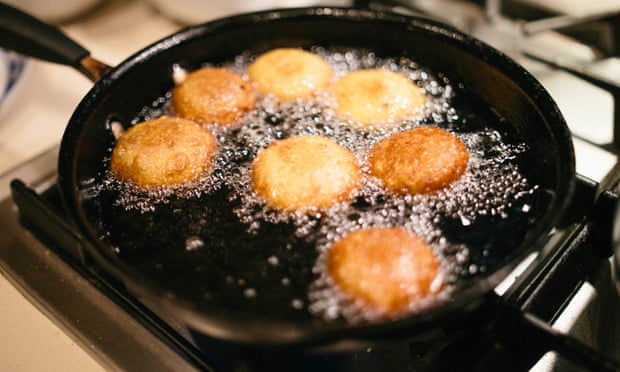
Potato kibbeh is one of the dishes on the Eat Offbeat menu.

Read Full Post »

In India, a civic-minded restaurant put a working fridge out front so patrons could join the eatery in offering leftovers to the hungry instead of throwing good food away.

Elyse Wanshel writes at the Huffington Post, “Pappadavada, a popular restaurant in Kochi, is urging customers and the community to put their leftover food in a refrigerator located outside of the eatery for the hungry to take. …

“The fridge is open 24-hours a day, seven days a week and stays unlocked. … Pauline told the Huffington Post that despite a huge response from the community and ample donations, the fridge needs to be restocked regularly. Pauline herself adds around 75 to 80 portions of food from Pappadavada a day in the fridge. …

“The idea to put a fridge on the street came to Pauline late one night when she saw a lady searching in a trashcan for food. As she watched the woman, she had a terrible thought:

“ ‘That the woman had been sleeping and was woken up by her hunger, so she had to go in search of food instead of sleeping.’

“She was especially saddened because that particular night, her restaurant had made a ton of food that they could’ve easily given the woman, instead of her searching for it.

“The experience made her feel like she contributed to waste, and avoiding waste is what Pauline is focused on.

“ ‘Money is yours but resources belong to society,” she told HuffPost. “That’s the message I want to send out. If you’re wasting your money, it’s your money, but you’re wasting the society’s resources. Don’t waste the resource, don’t waste the food.’ ”

More here.

Photo: Thesny Alikhan
Minu Pauline, right, the restaurateur behind the free food fridge, with a supporter, actor/director Thesny Alikhan

Read Full Post »

Over at the Brain Pickings blog, Maria Popova has a review of a book that features photos of famous meals in fiction.

“Food and literature have a long and arduous relationship … But nowhere does that relationship come alive more vividly and enchantingly than in Fictitious Dishes: An Album of Literature’s Most Memorable Meals  … an ingenious project by designer and writer Dinah Fried, who cooks, art-directs, and photographs meals from nearly two centuries of famous fiction. Each photograph is accompanied by the particular passage in which the recipe appeared, as well as a few quick and curious factlets about the respective author, novel, or food.

“The project began as a modest design exercise while Fried was attending the Rhode Island School of Design a couple of years ago, but the concept quickly gripped her with greater allure that transcended her original short-term deadline.

“As she continued to read and cook, a different sort of self-transcendence took place. [Although] a near-vegetarian, she found herself wrestling with pig kidney for Ulysses and cooking bananas eleven ways for Gravity’s Rainbow. …

“All of Fried’s photographs are immensely thoughtful (Ishmael’s austere dinner from Moby-Dick is not only a nautically appropriate serving of clam chowder, but also appears lit by candlelight), and some bear a distinct undertone of cultural meta-satire (representing A Confederacy of Dunces is the ultimate edible Americana, a hot dog on a classic All-American diner tablecloth).”

Check out Popova’s review here, and revel in photographs that include Sylvia Plath’s avocado and crabmeat salad, Oliver Twist’s request for “More,” Proust’s petite madeleine, Alice’s Mad Tea Party, and Heidi’s toasted cheese.

Photo: Dinah Fried
“On buffet tables, garnished with glistening hors-d’oeuvre, spiced baked hams crowded against salads of harlequin designs and pastry pigs and turkeys bewitched to a dark gold.” — The Great Gatsby, by F. Scott Fitzgerald, 1925

Read Full Post »

My husband’s new favorite news source is the US edition of the Guardian, and I can see why. It covers national and world affairs well and has some really unusual articles.

This one by Johanna Derry on Native American cuisine appealed to us both because of several years spent in Minneapolis. Back in the 1990s, there was no Native American food truck, but there was a nice restaurant on Franklin Street next to a Native American store, and we ate there a few times.

Derry writes, “Travel across the US and the cuisine doesn’t change much from state to state. It has a reputation for being sodium-filled, sweetened and glutenous (though, arguably, delicious) food. But chef Sean Sherman, known as the Sioux Chef, is hoping to redefine what we think of as ‘American’ food.

“At his newly launched Minneapolis food truck Tatanka, named after the American bison, dishes are made with ingredients that could be found living or growing locally before the arrival of European settlers. So you can forget processed sugars, wheat flour, beef, chicken and pork, Sherman serves wild rice and taco-style cornflour cakes with bison, turkey or rabbit, topped with wild greens and washed down with maple water. As well as being truly American, the food is super-healthy, organic – and local.

“ ‘We’ve worked with a couple of native-run farms to grow back some heirloom varieties of beans, squash, melon and corn,’ says Sherman.

“As well as introducing Minnesotan foodies to indigenous foods, the truck – which is supported by Little Earth, an urban Native American community – will head out to reservations, too, to reintroduce native populations to the healthier diet of their ancestors.”

Read more at the Guardian.

Photo: The Guardian
Tatanka Food truck, Native-American cuisine in Minneapolis

Read Full Post »

Good news for Letterbox Farm Collective in New York State! The environmental nonprofit Scenic Hudson’s interest in protecting a Hudson River tributary has enabled the young farmers to purchase land.

Scenic Hudson’s Jay Burgess writes, “Scenic Hudson has acquired a conservation easement protecting 62 acres of productive farm fields and watershed lands in Greenport, just south of the City of Hudson. The easement’s purchase enabled a group of young farmers who had been leasing the property to purchase it, securing the future of their farm operations.

“Known as the Letterbox Farm Collective, the farm partners supply specialty vegetables, herbs, pork, poultry, rabbits and eggs to a variety of regional and New York City markets — local bakeries and food trucks, many restaurants (including New York City’s renowned Momofuku restaurants) and two farmers’ markets. In the spring the farmers will launch a diversified Community Supported Agriculture (CSA) operation. …

“ ‘Achieving the goal of Scenic Hudson’s Foodshed Conservation Plan — meeting the growing demand for fresh, local food in the Hudson Valley and New York City — depends on successful partnerships like this, which provides a stable base of operations for the dedicated young farmers in the Letterbox Farm Collective. We also thank these farmers for enabling a future public access point to our protected lands along South Bay Creek, which present exciting opportunities for Hudson residents and visitors to enjoy the outdoors,’ said Steve Rosenberg, executive director of The Scenic Hudson Land Trust. …

“ ‘We were lucky to have Scenic Hudson with us while we gathered our financing and at the closing table when the moment came and we were able to buy our land,” said Letterbox’s Faith Gilbert.” More here.

Thanks to Sandy and Pat for letting me know and congrats to their niece for being successfully launched in farming.

Photo: Nathaniel Nardi-Cyrus

Read Full Post »

Looking through a pile of magazines recently, I found a 2011 newspaper article I had cut out about Hardwick, Vermont. It’s about reinventing the local culture around food and food-related businesses.

Dirk Van Susteren wrote at the Boston Globe, “If there were a ‘Locavore Capital of America’ one would expect it to be in sunny California or perhaps somewhere in the heartland … But, surprisingly, in rocky northern New England, just 45 miles from the Canadian border, is a place that could contend for that honor: Hardwick, a former quarrying town that until recently knew more pain than promise.

“In recent years Hardwick, population 3,200, located along a tumbling stretch of the Lamoille River, has seen a half-dozen innovative agricultural enterprises crop up, many with mission statements including such words as ‘community-based,’ ‘sustainable,’ and ‘organic.’

“The town, always a bit scruffy, and with a high jobless rate, might be on a green trajectory. And people are taking notice.

“Among the new operations here or in nearby towns: Jasper Hill Farm, which makes artisanal cheeses and provides aging, distribution, and marketing services to local cheesemakers; High Mowing Seed Co., an organic seed business, whose owner likes traveling around the country to tell the Hardwick farm and food story; Highfields Center for Composting, a soil-making business that collects its raw materials from restaurants, farms, and schools; Pete’s Greens, a CSA (community-support ed agriculture) farm that grows organic vegetables in gardens and greenhouses; and, finally, Vermont Soy, a tofu and soymilk producer.

“The area also has dozens of small-scale producers, from orchardists to maple sugarmakers. Their products sell at farm stands, at the summer farmers’ market, and at Buffalo Mountain Food Co-op and Cafe, a landmark in its 36th year. …

“Monty Fischer, the executive director of the Center for an Agricultural Economy, the nonprofit organization that helped spur these farm efforts, has kept count. ‘People from 40 states and 40 countries have come to ask about our agricultural cluster,’ he reports, from his downtown office.”

Read about the 2011 federal grant for the Vermont Food Venture Center, an incubator facility, the organic North Hardwick Dairy, where sunflowers are grown as a value-added crop, mead maker Caledonia Spirits, and more here.

And if anyone has been up there recently, I sure would love to know if the food culture is still going strong.

Photo: Wikipedia
North Main St., Hardwick, Vermont

Read Full Post »

What a good idea for economic development in Rhode Island! Rhode Island is where Johnson & Wales has been building a strong gastronomic culture for decades. And the school is not alone. You have your oysters and your Point Judith fishing industry, of course — and I’m leaving out nearly everyone.

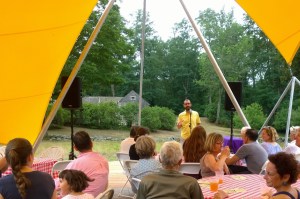
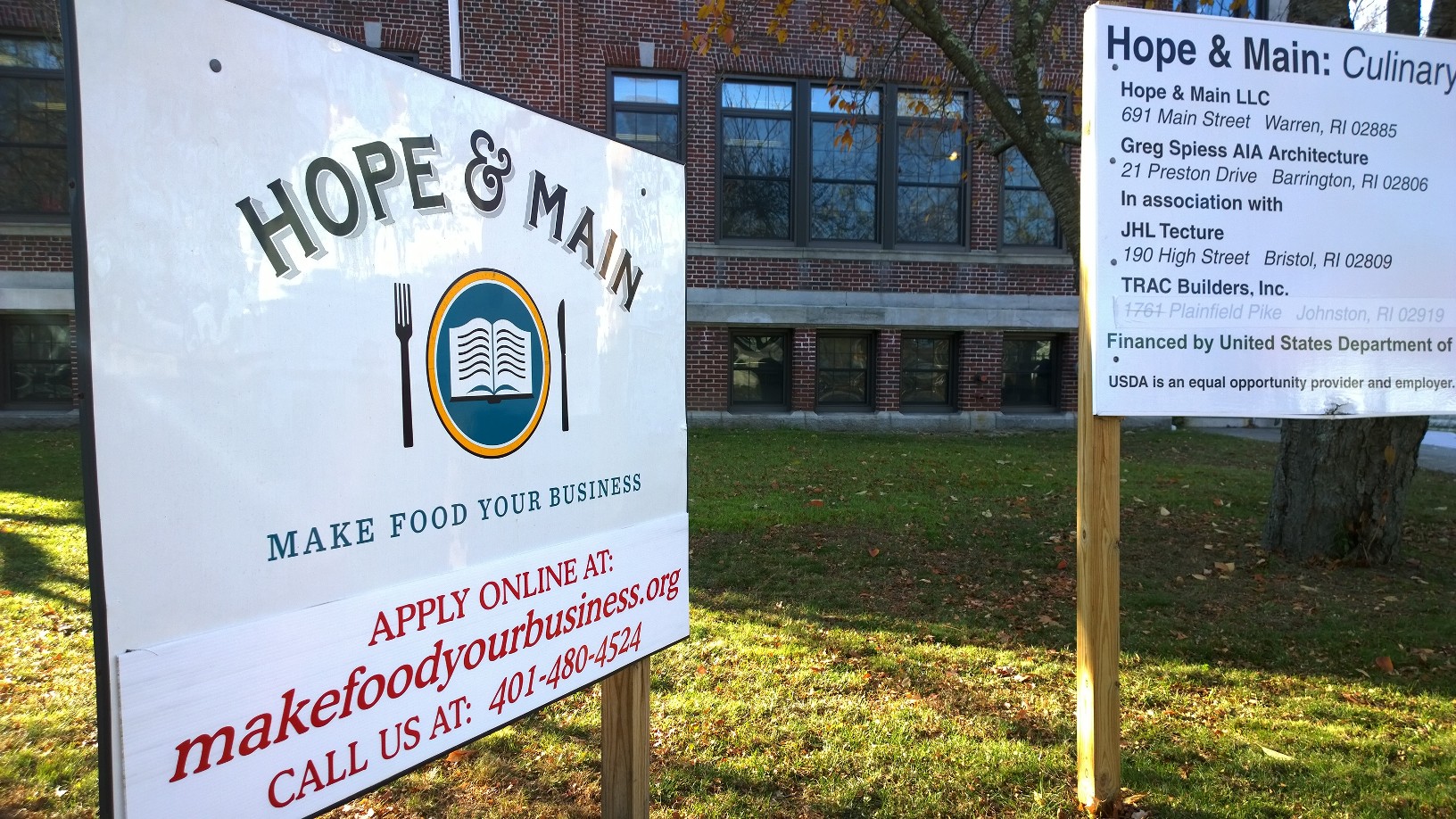
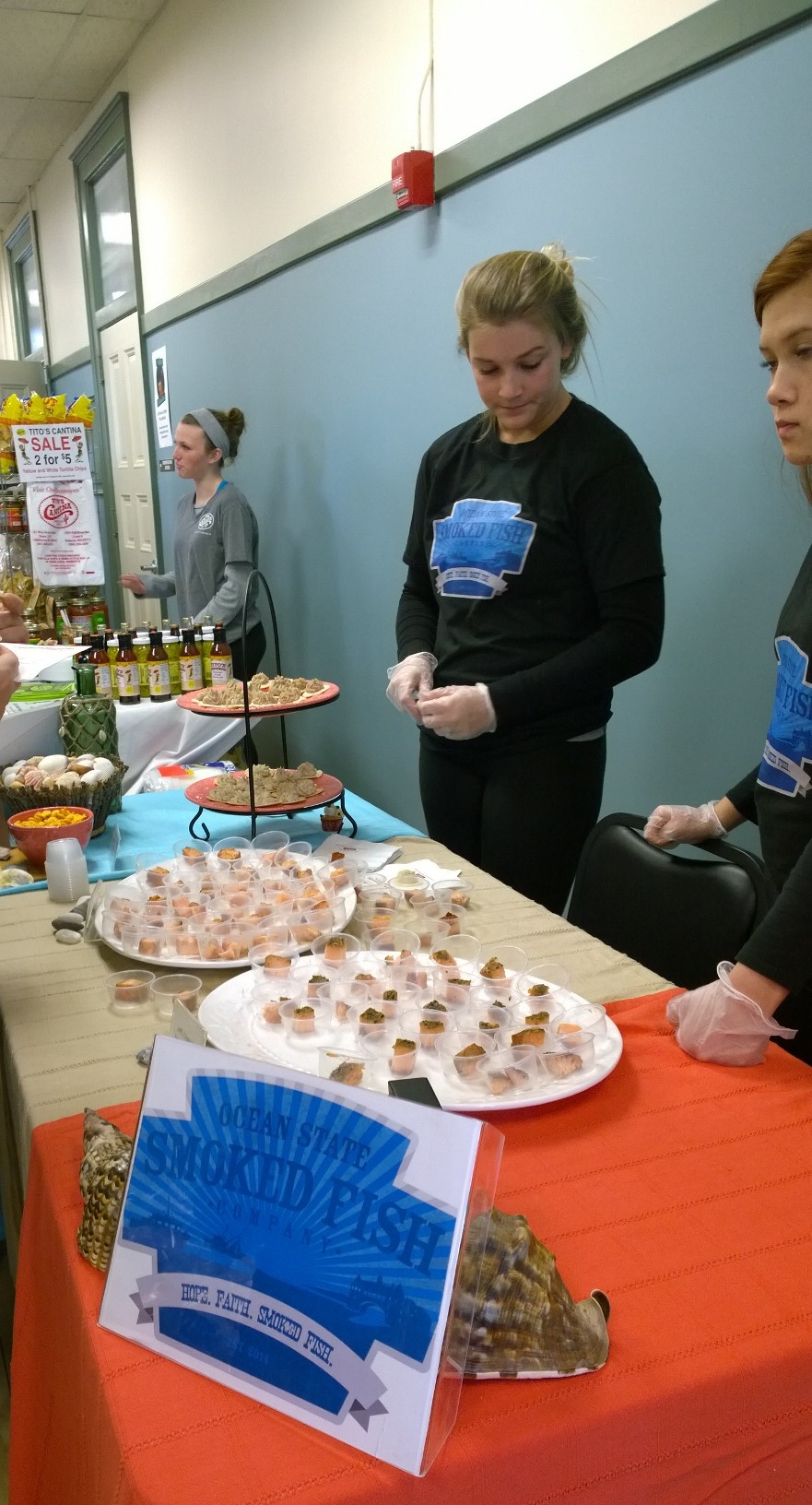
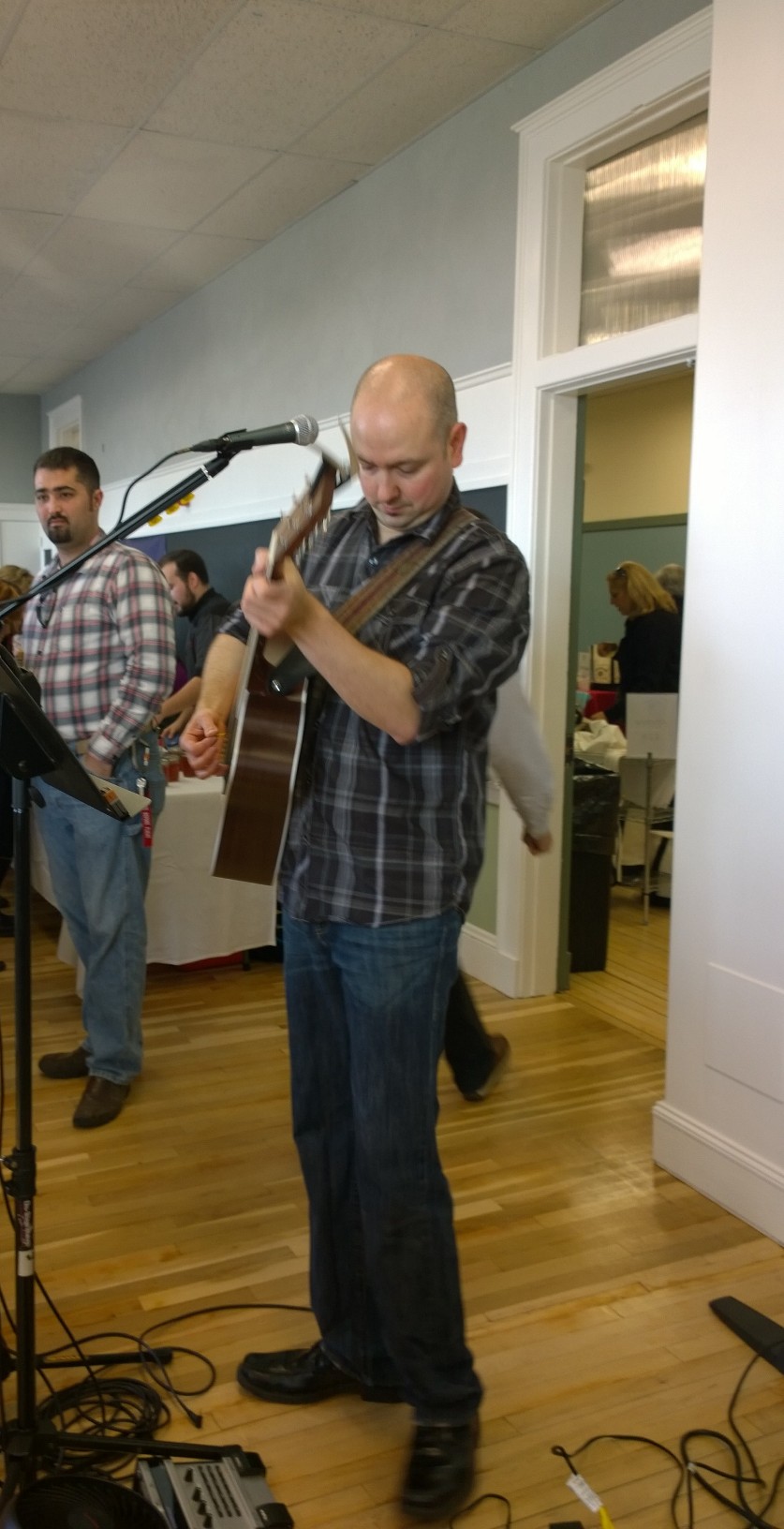
Yesterday, my husband and I checked out the state’s first food-business incubator, Hope & Main, at a festive event in the nonprofit’s new, permanent location. The story was posted in October on their website.

“Hope & Main today celebrated the opening of its 17,500-square-foot culinary business incubator facility in Warren, Rhode Island. U.S. Senators Jack Reed and Sheldon Whitehouse spoke at the ribbon-cutting ceremony, as well as other honored guests including USDA Director of Community Programs Daniel R. Beaudette, Warren Town Council President Christopher W. Stanley, and Founder and President of Hope & Main, Lisa J. Raiola, MPH.

“ ‘Hope & Main is about helping food entrepreneurs get started in a licensed kitchen. …  It’s also a place where people can congregate and collaborate, take a class or develop and test new recipes. I am proud to be part of this effort to support start-up food entrepreneurs and help them launch their own food businesses,’ said Senator Reed. ‘This is a great example of what’s possible when federal, state, and local officials collaborate with the private sector to support innovation. …’

“Housed in the historic Main Street School building, located at 691 Main Street in Warren, the renovation project transformed the 100-year-old structure into a state-of-the-art workspace for the region’s food entrepreneurs. [The] building’s highlights include three code-compliant, shared-use commercial kitchens, including a gluten-free kitchen and artisanal bakery, over 6,000-square-feet of production space, cold and dry storage, and a range of commercial equipment to support small-scale operations for baking, food processing and catering. Designed to facilitate collaboration and community involvement in the local food economy, the rehab also features a demonstration kitchen, co-working and meeting spaces, and a 2,000-square-foot community event space. A weekly market will be located on the grounds to give Hope & Main member companies and other local producers direct access to local consumers. …

“The Hope & Main project is funded in large part by a $2.9 million U.S. Department of Agriculture (USDA) Rural Development Community Facilities Loan.” More at MakeFoodYourBusiness.org, here.

My husband and I left with several business cards and goodies, including a a tomato jam with a great slogan: “To boldly go where no tomato has gone before.” I had a big smile on my face.

hope-and-main-RI-food-biz-incubator

hope-and-main-food-incubator


salmon-at-RI-food-incubator

112314-Hope-and-Main-entertainment

Read Full Post »

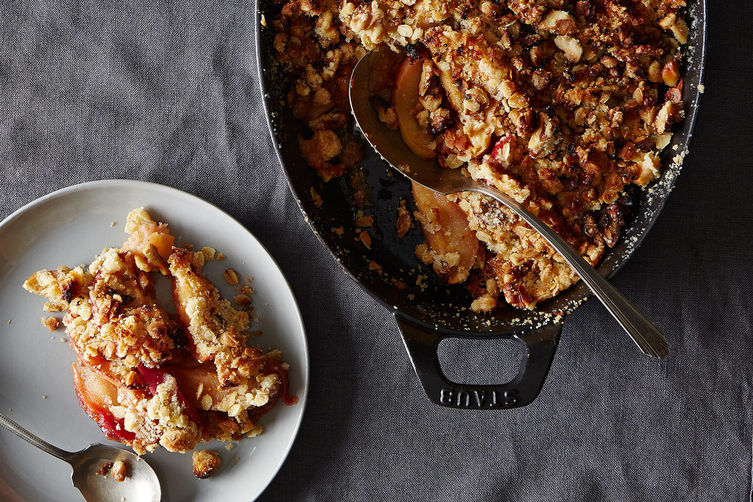
On days when you are thinking a lot about a faraway relative in need of heavy doses of good vibes, it may make sense to do some baking.

Fortunately, I worked at home today, so I was able to spend the time between 5 and 6:15 baking rather than running for trains. The no-peel apple crisp recipe I attempted was one that Lisa posted recently on Facebook. Although it didn’t specify an oven temperature or size of pan, I guessed 350 degrees and 9 x 13, and it came out great. The ingredients include dried apricots, an orange, and walnuts. Oh, boy. Here’s the link.

More constructively, many of us sent loving messages both for the relative and her son in San Francisco, and posted and contributed to a GoFundMe site. I especially liked Suzanne’s recommendation of a visit to Glide Memorial, a comforting San Francisco church she learned about when a former colleague suffered something dark. (I have mentioned the church a few times on the blog.)

What else can you do but let people know you are thinking of them a lot? In spite of everything, I think my relative will be deeply thankful at Thanksgiving for two Good Samaritans who chose not to pass by.

Photo: http://food52.com/blog/11755-no-peel-apple-crisp

Read Full Post »

I saw an article in the paper today about 3-D machines making protein snacks for soldiers. The results looked like not very appealing beef jerky.

Other 3-D food creations in the works run the gamut from unappealing to gorgeous.

Jane Dornbusch wrote in a September Globe article, “The most popular application in 3-D food printing seems to be in the decidedly low-tech area of cake decoration.

“Well, not just cake decoration, but sugary creations of all kinds. The Sugar Lab is the confectionary arm of 3-D printing pioneer 3D Systems, and it expects to have the ChefJet, a 3-D food printer, available commercially later this year.”

3-D printing, says ChefJet co-inventor Liz von Hasseln, “is additive manufacturing. Instead of carving away at something, with 3-D printing you build something up layer by layer. That’s the hallmark. You build it exactly as it exists in a file.” More here.

As lovely as the sugar sculptures in the Globe story appear, the beef jerky, veggie burgers, and chicken nuggets are kind of scary. But let’s put it in context: could they be any more strange than certain staples of your childhood? 3-D burgers are probably no worse than, say, canned fruit cocktail. Here is poet Amy Gerstier on that old-time delicacy:

what was fruit cocktail’s secret
meaning? It glistened as though varnished.
Faint of taste and watery, it contained anemic
grapes, wrinkled and pale. Also deflated
maraschino cherries. Fan-shaped pineapple
chunks, and squares of bleached peach
and pear completed the scene. Fruit cocktail’s
colorlessness, its lack of connection to anything
living, (like tree, seed or leaf) seemed
cautionary, sad.

Photo: 3-D Systems
3-D printed sugar design by The Sugar Lab.

Read Full Post »

Here’s an interesting start-up by a couple of entrepreneurs who love to eat. The two women decided to build a business around helping travelers find truly authentic cooking.

According to Aashi Vel and Steph Lawrence’s website, “Traveling Spoon believes in creating meaningful travel. We are passionate about food, and believe that by connecting people with authentic food experiences in people’s homes around the world we can help facilitate meaningful travel experiences for travelers and hosts worldwide.

“To help you experience local cuisine while traveling, Traveling Spoon offers in-home meals with our hosts. In addition, we also offer in-home cooking classes as well as market tours as an extra add-on to many of the meal experiences. All of our hosts have been vetted to ensure a safe and delightful culinary experience.

“Traveling Spoon currently offers home dining experiences in over 35 cities throughout Bangladesh, Cambodia, China, Hong Kong, India, Indonesia, Japan, Singapore, South Korea, Sri Lanka, Taiwan, Thailand, Turkey and Vietnam, and more countries are coming soon!” More here.

I have no doubt that Traveling Spoon is also boosting international understanding. What a good way to use an MBA! Business school is not all about becoming an investment banker, as Suzanne and Erik would tell you.

Photo: Traveling Spoon
Traveling Spoon founders Aashi Vel and Steph Lawrence met at the Haas School of Business.

Read Full Post »

Martha Bebinger had a great story at WBUR recently. It’s about an immigrant from Burundi with a mission.

“There were still drops of dew on the stalks of thick, spear-shaped leaves Fabiola Nizigiyimana slashed and tossed into a box one early morning.

“ ‘We call them lenga lenga, in our language,’ she said, laughing the words. “They are [a] green.’

“The 40-year-old single mother of five farms a one-acre plot in Lancaster. She’s one of 232 farmers who share the 40-acre Flats Mentor Farm. Last year, Nizigiyimana helped found a co-op that teaches farmers, many of whom can’t read or write in English or their native tongue, how to turn their plots into a business.

“They get help with packaging and selling their goods to local restaurants, ethnic food stores and farmers’ markets, many of them creating budgets and balance sheets for the first time.

“Nizigiyimana [was] honored for her work … at a White House ceremony after being selected as one of 15 USDA Champions of Change, who represent the next generation of farmers and ranchers.”

Read about all that this optimistic, cheerful woman has overcome and what challenges lie ahead for her business here.

Photo: Martha Bebinger/WBUR
Fabiola Nizigiyimana helped found a co-op that teaches farmers how to turn their plots into a business.

Read Full Post »

In today’s Boston Globe, Kelly Gifford wrote about a new effort to hop over the generation of adults who don’t cook and teach children how.

“Short single-file lines form beside a table with three hot plates at the Blue Hill Boys & Girls Club in Dorchester. …

“This is the first time the majority of the 10 girls have ever cooked an omelet — a fact that [Bill] Yosses, Sally Sampson, president and founder of ChopChop Magazine, and the Harvard Pilgrim Health Care Foundation are hoping to change through a series of healthy eating classes at several New England Boys & Girls Clubs.

“The Dorchester program is part of the series, which is aimed at 8- to 12-year-olds. The weeklong program kicked off in Worcester in early July and will continue in six Boys & Girls Clubs in the Boston area and eight in New Hampshire this fall, to reach about 200 kids total. The program is funded through a $100,000 grant from the Harvard Pilgrim foundation.

“ ‘There is a whole generation of parents across the income and age spectrum that can’t cook, so they do takeout,’ says Harvard Pilgrim president Karen Voci. ‘So we decided to skip a generation and see if these kids could bring the skills they learned back home to their families.’ ”

The children seem to be enjoying trying new tastes and showing off what they can prepare. Read the whole article here.

Photo: Pat Greenhouse/Globe staff
Former White House pastry chef Bill Yosses (standing) helps teach children to make yogurt parfaits and other healthful dishes.

Read Full Post »

It’s not always easy for low-income people to get access to food that is healthful, and once children get accustomed to salty, fatty, sugary snacks, junk food becomes comfort food and stores see little demand for better items. But if children know what would taste good and be good for them, they are on the road to better nutrition.

That is why the folks fighting childhood obesity are enlisting the support of several hip-hop artists that young people admire.

Winnie Hu at the NY Times writes, “Adrian Harris, known as Easy A.D. to his fans, has rapped about street life in the South Bronx as a member of the Cold Crush Brothers, a group that is among the pioneers of hip-hop.

“Now Mr. Harris also raps about broccoli.

“ ‘If you think you eat healthy, say ‘”me,” ‘ Mr. Harris called out over a pounding bass that shook the gym at the Future Leaders Institute, a charter school in Harlem, on a recent morning. A photo of a cart laden with fruits and vegetables filled a screen behind him. ‘Boys and girls,’ he added, ‘there are no Doritos on that cart.’

“Mr. Harris, calling himself a ‘health M.C.,’ aims to reach children who might otherwise tune out nutrition lessons. His vegetable rap is part of a growing public health campaign that has enlisted hip-hop artists such as Doug E. Fresh, Chuck D and DMC of Run-DMC to work alongside doctors and nutritionists in fighting obesity and related illnesses in poor communities. The campaign is being rolled out this year in 18 cities.” More here.

Photo: Ozier Muhammad/The New York Times
Adrian Harris, also known as Easy A.D., made a pitch for healthy eating recently at the Future Leaders Institute in Harlem.
 

Read Full Post »

More and more cities are adding mini parklets, pocket vegetable gardens, food trucks, and tiny outdoor businesses to their parks and playground amenities.

Sara Feijo writes for the Cambridge Chronicle, “Parking spots have always been reserved for cars and motorcycles, but that’s no longer the case in Cambridge. The city is now leasing them to restaurants for pop-up cafes. Tasty Burger in Harvard Square was the first to apply for the permit. …

” ‘It’s a cool idea, David Dubois, owner of Tasty Burger, said. …

” ‘The pop-up cafes work in places where the sidewalks don’t facilitate outdoor dining,’ said Katherine Watkins, city engineer for DPW. “It enables us to expand the outdoor program. We’re really excited to see this one go in.’ …

“Unlike outdoor dining, food is not sold in the pop-up café. Folks have to order food inside and then bring it outside. According to Iram Farooq, acting deputy director for the Community Development Department, pop-up cafes must be placed in locations where there is plenty of parking and they must be adjacent to the permitted business.” Read more.

There really are a lot of wasted mini spaces in cities and towns. I myself would like to see something other than weeds growing around the parking meters on Thoreau St. (Anyone want to go with me under cover of darkness and plant tomatoes there?)

Photo: Wicked Local / Sam Goresh
Cambridge restaurants may now lease ‘pop-up cafes’, where diners are invited to eat their take-out orders.

Read Full Post »

« Newer Posts - Older Posts »